


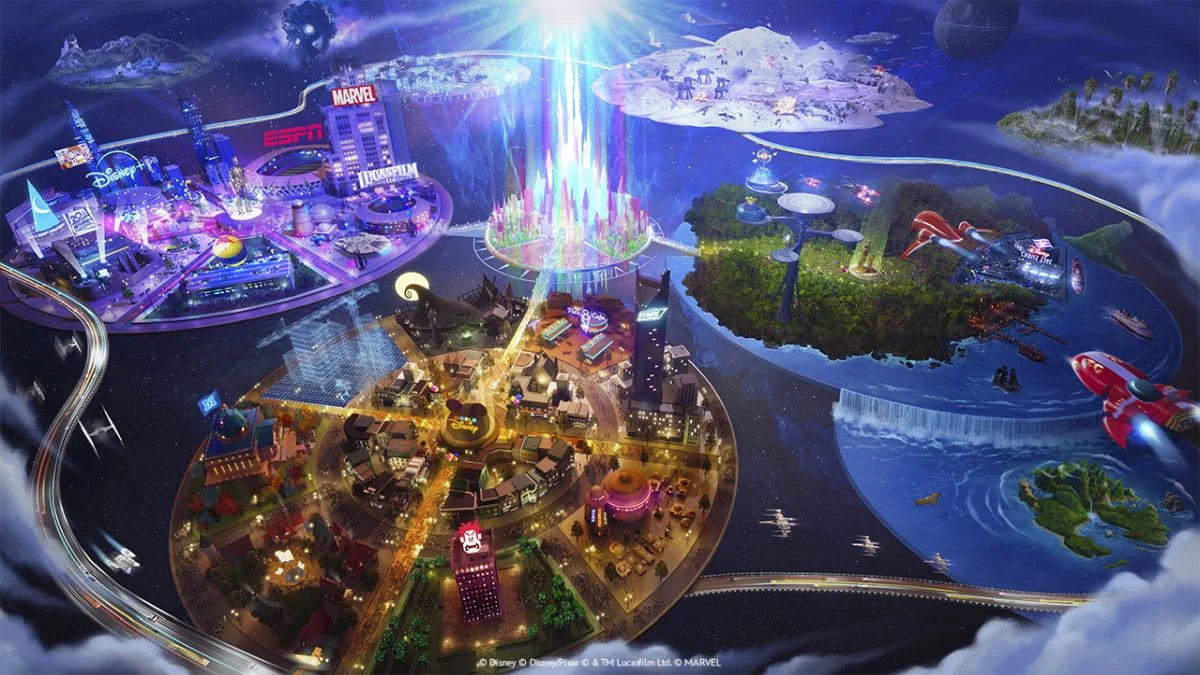
The Walt Disney Corporation has announced a monumental investment of $1.5 billion in Epic Games, signaling a strategic partnership aimed at creating a groundbreaking new universe for games and entertainment. This significant capital infusion positions Disney as a major player in the evolving digital landscape, leveraging Epic Games’ renowned Unreal Engine and the immense popularity of its flagship title, Fortnite. The collaboration promises to weave together Disney’s vast portfolio of beloved franchises with the interactive and social dimensions of Fortnite, offering fans unprecedented opportunities to engage with their favorite stories and characters.
This ambitious venture, described by Disney as a "multiyear project," aims to establish a "world-class" gaming experience that will be persistent and interoperable with Fortnite. The envisioned universe will serve as a platform for consumers to "play, watch, shop, and engage" across a spectrum of Disney’s iconic brands, including classic Disney animation, Pixar, Marvel, Star Wars, and even the expansive worlds of James Cameron’s Avatar. The underlying technology powering this ambitious endeavor will be Epic Games’ proprietary Unreal Engine, a testament to its industry-leading capabilities in creating immersive and visually stunning digital environments. The agreement is, however, contingent upon customary regulatory approvals, a standard procedural step for such large-scale acquisitions.
Disney CEO Bob Iger articulated the strategic significance of this partnership in the official announcement, stating, "Our exciting new relationship with Epic Games will bring together Disney’s beloved brands and franchises with the hugely popular Fortnite in a transformational new games and entertainment universe. This marks Disney’s biggest entry ever into the world of games and offers significant opportunities for growth and expansion. We can’t wait for fans to experience the Disney stories and worlds they love in groundbreaking new ways." This statement underscores Disney’s commitment to expanding its reach beyond traditional media and into the rapidly growing interactive entertainment sector, recognizing the immense potential for synergistic growth.
A History of Intertwined Fandom and Technological Synergy
The collaboration between Disney and Epic Games is not entirely unprecedented. Fortnite has previously incorporated elements from various Disney properties, most notably through Marvel and Star Wars-themed in-game events, character skins, and cosmetic items. These integrations have proven to be highly successful, demonstrating a clear appetite among Fortnite‘s massive player base for content derived from these popular universes.
Disney itself has been actively increasing its presence in the video game industry. Titles such as Disney Dreamlight Valley, a life-simulation game that has garnered significant attention, and more action-oriented experiences like Disney Illusion Island, Marvel Snap, and the critically acclaimed Jedi: Survivor (developed by Respawn Entertainment, a studio owned by Electronic Arts, but featuring Disney’s Star Wars IP), showcase a diversified approach to gaming. These efforts indicate a broader strategy to engage audiences through interactive entertainment, aligning with the company’s long-standing tradition of storytelling across multiple platforms.
Epic Games, while celebrated for its technological prowess and the enduring success of Fortnite, has navigated a complex corporate landscape. The company has consistently evolved Fortnite from a battle royale game into a broader social platform, introducing new game modes like Festival and Rocket Racing to foster a more diverse and engaging ecosystem. This expansion mirrors a trend within the gaming industry towards interconnected digital spaces that offer a variety of experiences beyond core gameplay.
However, the company has also faced economic headwinds. In the past year, Epic Games underwent significant workforce reductions, laying off approximately 16% of its employees, a move that reflected broader industry trends of consolidation and cost-cutting. Furthermore, Epic has been involved in protracted legal disputes with major tech companies like Apple and Google concerning their app store policies, highlighting the ongoing challenges of platform control and digital distribution within the mobile gaming sphere.
Epic Games CEO Tim Sweeney expressed his enthusiasm for the deepened partnership, remarking, "Disney was one of the first companies to believe in the potential of bringing their worlds together with ours in Fortnite, and they use Unreal Engine across their portfolio. Now we’re collaborating on something entirely new to build a persistent, open, and interoperable ecosystem that will bring together the Disney and Fortnite communities." Sweeney’s statement emphasizes the mutual recognition of shared vision and technological alignment as foundational to this monumental undertaking.
The Strategic Imperative of a Digital Frontier
The $1.5 billion investment signifies a profound commitment from Disney, positioning this initiative as a cornerstone of its future growth strategy. In an era where digital engagement is paramount, particularly among younger demographics, this partnership represents a strategic move to secure a dominant presence in the metaverse and emergent forms of interactive entertainment. The sheer scale of the investment underscores the perceived potential of a unified Disney-Epic Games universe to become a significant revenue generator and cultural touchstone.
Supporting Data and Industry Context:
- Global Gaming Market Growth: The global video game market is a multi-billion dollar industry. Projections from Newzoo, a leading games market intelligence firm, estimated the global games market revenue to reach over $180 billion in 2023, with continued growth anticipated in the coming years. This underscores the immense financial opportunity associated with successful gaming ventures.
- Fortnite’s Dominance: Fortnite boasts an enormous and dedicated player base, with hundreds of millions of registered accounts and peak concurrent player numbers often in the tens of millions. This established audience provides a ready-made foundation for Disney’s content.
- Metaverse Investment Trends: Major technology and entertainment companies are increasingly investing in the metaverse concept, envisioning interconnected virtual worlds where users can socialize, play, and consume content. Disney’s move into this space with Epic Games aligns with this broader industry trend, albeit with a more focused and franchise-driven approach.
- Unreal Engine’s Pervasiveness: Unreal Engine is a leading real-time 3D creation tool used across a vast array of industries, including gaming, film, television, and automotive. Its widespread adoption and advanced capabilities make it an ideal engine for building complex and visually rich virtual environments.
A Timeline of Evolving Collaboration
While the $1.5 billion investment represents a new chapter, the relationship between Disney and Epic Games has been developing over several years.
- Early Integrations (circa 2018-2020): Initial collaborations saw the introduction of Marvel and Star Wars-themed content within Fortnite, capitalizing on the popularity of these franchises. These early efforts served as a testing ground for audience reception and the technical feasibility of integrating diverse IP.
- Increasing Interoperability (circa 2021-2023): As Fortnite evolved into a more expansive platform, Disney and Epic Games explored deeper forms of integration. This period saw more frequent and substantial crossovers, including major character skins, themed events, and narrative tie-ins that blurred the lines between the Fortnite universe and established Disney properties.
- Strategic Investment Announcement (February 2024): The formal announcement of Disney’s $1.5 billion investment marks the most significant development in their partnership, signaling a long-term commitment to building a dedicated, persistent universe. This investment is not merely for content creation but for the foundational development of a shared digital ecosystem.
Official Responses and Industry Analysis
The announcement has generated considerable excitement and discussion within the gaming and entertainment industries.
- Disney’s Strategic Vision: For Disney, this partnership is about more than just games; it’s about future-proofing its intellectual property and engaging with audiences in novel ways. The company has historically excelled at cross-platform storytelling, and this venture extends that strategy into the interactive realm with a leading industry partner. The investment can be seen as a direct response to the growing influence of gaming as a primary form of entertainment, particularly for younger generations who are digital natives.
- Epic Games’ Ecosystem Expansion: For Epic Games, this collaboration validates its strategy of transforming Fortnite into a multifaceted platform. The financial backing from Disney will likely accelerate the development of its ecosystem and further solidify its position as a key player in the metaverse. The partnership provides Epic with significant resources and a wealth of beloved IP to leverage, potentially expanding its reach to new demographics.
- Analyst Perspectives: Industry analysts have noted the strategic alignment and potential for significant market impact. The combination of Disney’s unparalleled IP library and Epic’s technological expertise and massive player base creates a powerful synergy. However, questions remain about the execution of such an ambitious project, the specific nature of the "persistent universe," and how it will integrate with existing Fortnite experiences without alienating its current player base. The success will hinge on delivering an experience that feels both authentic to Disney’s brands and compelling as a gaming and entertainment platform.
Broader Impact and Future Implications
The implications of this Disney-Epic Games partnership extend beyond the immediate creation of new games and entertainment experiences. It represents a significant trend in the convergence of traditional entertainment powerhouses with leading technology and gaming companies.
- The Future of IP Integration: This collaboration could set a precedent for how intellectual property is leveraged in the digital age. The creation of a persistent, interoperable universe suggests a move towards more integrated and expansive storytelling across different media, with gaming at its core. This could lead to a future where the boundaries between passive consumption and active participation become increasingly blurred.
- Competition in the Metaverse: The substantial investment and ambitious scope of this project signal a new level of competition in the burgeoning metaverse space. Disney’s entry, backed by Epic Games’ infrastructure, could significantly reshape the landscape, potentially influencing how other entertainment giants approach their own metaverse strategies.
- Technological Advancements: The reliance on Unreal Engine for this new universe is likely to drive further innovation in real-time 3D rendering, artificial intelligence, and social interaction technologies within virtual environments. The demands of creating and maintaining such a vast and dynamic digital space will push the boundaries of what is currently possible.
- Consumer Engagement Models: The focus on "play, watch, shop, and engage" points towards a holistic approach to consumer interaction. This could involve integrated e-commerce within the virtual world, new forms of interactive viewing experiences, and deeper community building around shared digital spaces. The success of this model could influence how brands connect with consumers across all sectors.
Ultimately, Disney’s $1.5 billion investment in Epic Games is a bold statement of intent, signaling a commitment to shaping the future of interactive entertainment. The success of this ambitious venture will be closely watched, as it holds the potential to redefine how audiences engage with beloved stories and characters in the digital age, potentially ushering in a new era of immersive and interconnected entertainment.