


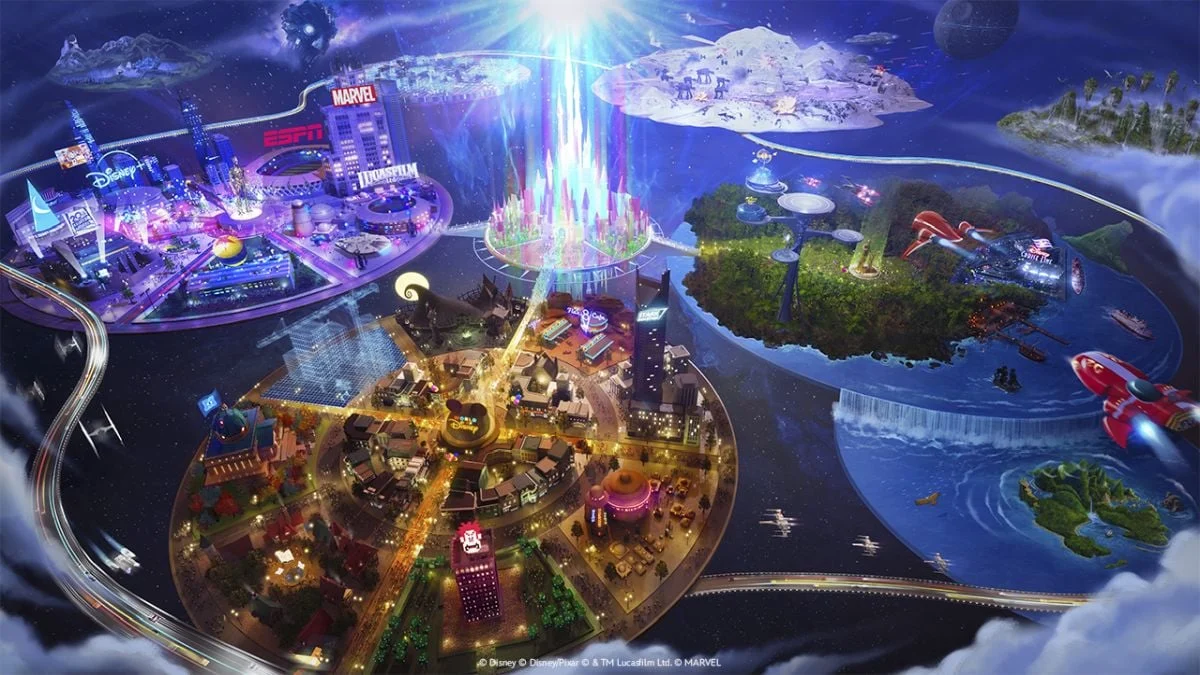
The Walt Disney Corporation has made a monumental strategic investment, injecting $1.5 billion into Epic Games, the creator of the ubiquitous Fortnite. This significant capital infusion is earmarked for the development of a groundbreaking, persistent universe that promises to blend Disney’s iconic intellectual property with Epic’s pioneering gaming technology and massive player base. The ambitious collaboration, announced today, signifies Disney’s most substantial foray into the video game industry to date and signals a new era of digital entertainment where interactive experiences will be deeply intertwined with beloved franchises.
This multiyear endeavor aims to construct a "world-class" gaming experience, meticulously designed to be interoperable with Fortnite, a platform that has evolved far beyond a simple battle royale game into a vibrant social and entertainment hub. The new universe will offer unprecedented opportunities for consumers to engage with Disney’s vast portfolio, which spans classic animation from Walt Disney and Pixar, the expansive Marvel Cinematic Universe, the galaxy-spanning saga of Star Wars, and even the visually stunning worlds of James Cameron’s Avatar franchise. This integration is expected to allow fans to "play, watch, shop, and engage" with these cherished properties in ways previously unimaginable. At the core of this ambitious project will be Epic Games’ powerful Unreal Engine, a testament to the technological foundation upon which this new digital frontier will be built. The transaction remains subject to customary regulatory approvals, a standard procedure for acquisitions and significant investments of this magnitude.
A Transformative Vision for Digital Engagement
The announcement was accompanied by a statement from Disney CEO Bob Iger, who articulated the transformative potential of this partnership. "Our exciting new relationship with Epic Games will bring together Disney’s beloved brands and franchises with the hugely popular Fortnite in a transformational new games and entertainment universe," Iger stated. He further emphasized the scale of this move, noting, "This marks Disney’s biggest entry ever into the world of games and offers significant opportunities for growth and expansion. We can’t wait for fans to experience the Disney stories and worlds they love in groundbreaking new ways." This sentiment underscores Disney’s recognition of the evolving entertainment landscape and its commitment to meeting audiences where they are increasingly congregating: in interactive digital spaces.
This collaboration is not an entirely novel encounter between Disney and Epic Games. In recent years, Fortnite has frequently integrated elements from Disney’s extensive properties. The game has showcased numerous cosmetic items, weapons, and in-game events featuring characters and themes from Marvel and Star Wars, demonstrating a successful synergy that has resonated with players. These past integrations have likely served as a foundational step, providing both companies with valuable insights into the potential and mechanics of cross-franchise digital experiences.
Disney’s Growing Gaming Footprint
The investment in Epic Games is the latest in a series of strategic moves by Disney to bolster its presence in the video game sector. The company has been actively developing and publishing a diverse range of titles that cater to various player preferences and genres. Disney Dreamlight Valley, an early-access life simulation game, has garnered significant attention and player engagement, allowing users to create their own avatars and interact with beloved Disney characters in a charming, customizable world. Beyond this, Disney has also released other notable titles such as the cooperative platformer Disney Illusion Island, the critically acclaimed collectible card game Marvel Snap, and has had a significant presence in the gaming world through its ownership of Lucasfilm Games, which produced the highly successful Star Wars Jedi: Survivor. These varied ventures highlight Disney’s intent to establish a robust and multifaceted gaming division, capable of delivering compelling experiences across different platforms and gameplay styles.
Epic Games’ Strategic Evolution Amidst Industry Challenges
For Epic Games, this partnership arrives at a pivotal moment. The company has been intensely focused on expanding Fortnite‘s capabilities beyond its initial battle royale format. Recent initiatives like Fortnite Festival, a rhythm-based music game, and Rocket Racing, a vehicle-based racing game, exemplify Epic’s strategy to transform Fortnite into a comprehensive entertainment ecosystem. This vision aligns directly with Disney’s objective of creating a connected and interactive universe.
However, Epic Games has also navigated significant operational challenges. In the past year, the company implemented a substantial workforce reduction, laying off approximately 16% of its employees, a move that reflected broader trends of layoffs impacting the global video game industry. These cuts were reportedly made to streamline operations and refocus resources. Furthermore, Epic Games has been a prominent figure in ongoing legal battles with tech giants Apple and Google, stemming from disputes over app store policies and revenue sharing. These protracted legal campaigns, which have involved Epic advocating for more open platform practices, underscore the company’s commitment to shaping the future of digital distribution and player access.
Epic CEO Tim Sweeney, in his commentary on the announcement, highlighted the existing relationship and future aspirations. "Disney was one of the first companies to believe in the potential of bringing their worlds together with ours in Fortnite, and they use Unreal Engine across their portfolio," Sweeney stated. He elaborated on the collaborative vision: "Now we’re collaborating on something entirely new to build a persistent, open and interoperable ecosystem that will bring together the Disney and Fortnite communities." This statement emphasizes the shared vision of creating a unified digital space that leverages the strengths of both companies.
Analyzing the Implications: A New Frontier for Entertainment
The $1.5 billion investment represents a significant financial commitment, underscoring the strategic importance Disney places on this venture. The creation of a "persistent, open, and interoperable ecosystem" linked to Fortnite suggests a long-term vision that extends beyond individual game releases. This approach could fundamentally alter how intellectual property is leveraged and experienced in the digital age, moving towards a model where digital worlds are continuously evolving and offering a multitude of interactive possibilities.
The implications of this partnership are far-reaching for both the gaming industry and the broader entertainment sector. For Disney, it offers a direct pathway to engage younger demographics and capitalize on the lucrative gaming market, a segment where it has historically been less dominant compared to its other media ventures. By integrating its vast library of characters and stories into a platform with hundreds of millions of active users, Disney stands to significantly expand its reach and deepen fan engagement.
For Epic Games, the partnership provides substantial financial backing and a powerful validation of its Fortnite ecosystem strategy. The infusion of capital will undoubtedly accelerate development and innovation, while the association with Disney lends considerable credibility and market influence. This alliance could set a precedent for future collaborations between major entertainment companies and gaming platforms, potentially ushering in an era where the lines between traditional media and interactive entertainment become increasingly blurred.
The concept of a "persistent universe" within Fortnite also raises intriguing questions about the future of gaming. Such an environment, where player actions and experiences have lasting impact and where diverse content can coexist and interact, could represent a significant evolution from the standalone game model. It hints at a future where digital entertainment is more interconnected, immersive, and participatory, offering a rich tapestry of experiences that cater to a wide array of interests. The success of this ambitious undertaking will be closely watched as a bellwether for the direction of digital entertainment in the coming years.