


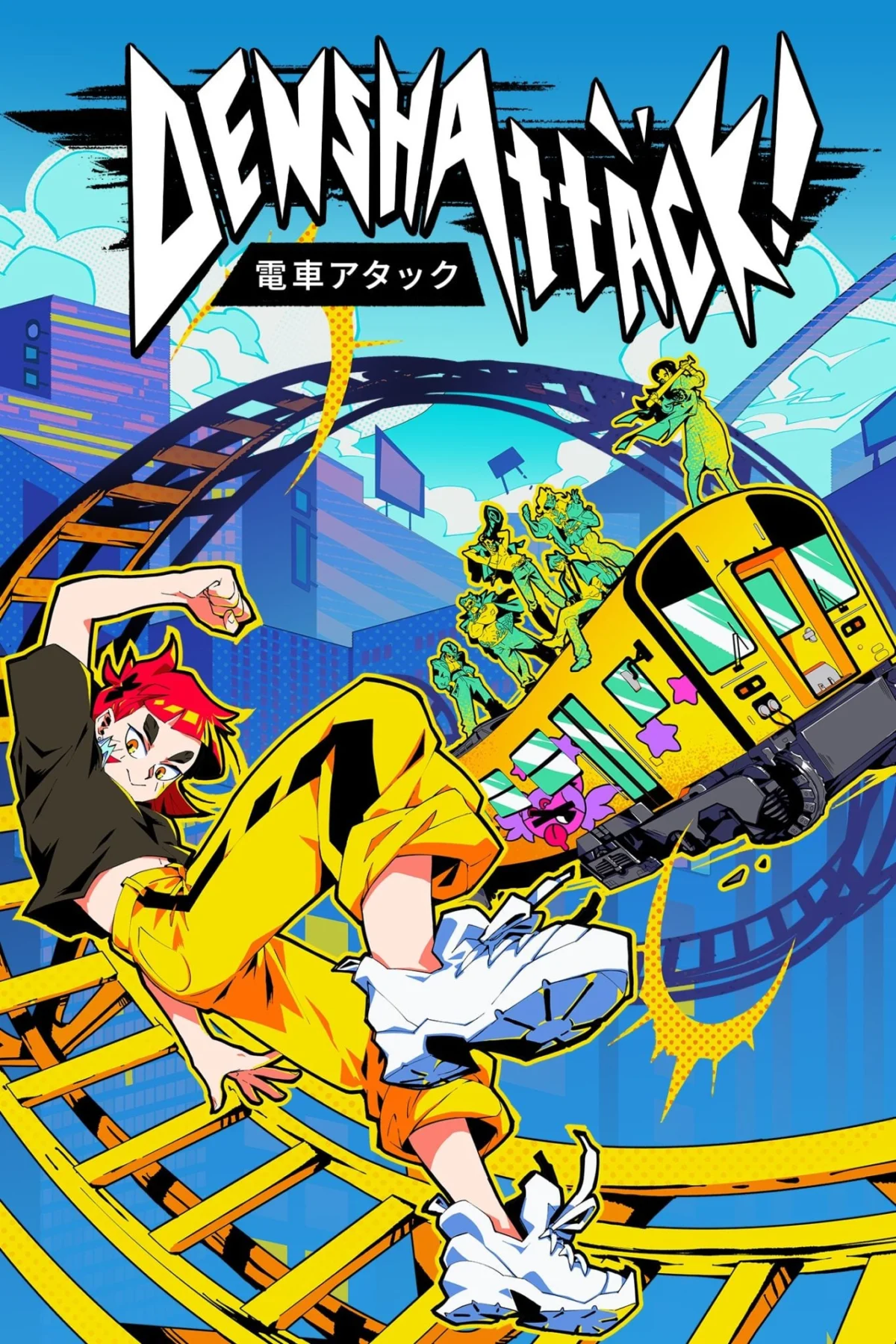
Denshattack! represents a bold genre-defying entry into the sports-action category, merging the mechanical depth of classic extreme sports titles like Tony Hawk’s Pro Skater with the high-speed transit combat of a futuristic rail-shooter. Developed by the Spanish studio Undercoders and published by Fireshine Games, the title has officially launched across a wide array of platforms, including the Nintendo Switch 2, PlayStation 5, and PC via Steam. Notably, the game has also secured a high-profile position as a Day One addition to the Xbox Game Pass library, signaling a significant push for visibility in the competitive digital storefront landscape of 2026. Set against the backdrop of a vibrant, "not-hellish" post-climate-catastrophe Japan, Denshattack! challenges players to navigate complex railway systems while engaging in acrobatic maneuvers and tactical combat against various factions, including the Yakuza and the oppressive Maraido Corporation.

Narrative Architecture and Socio-Economic Setting
The story of Denshattack! follows Emi, a seemingly ordinary delivery driver tasked with transporting ramen to a character named Fernando. The narrative catalyst occurs when Fernando recognizes Emi’s latent potential and innate skill on the railway tracks, subsequently introducing her to the underground world of "Denshattack." In this universe, Denshattack is more than a pastime; it is a high-stakes series of obstacle courses and races utilized by local populations as both a competitive sport and a primary method of resistance.
The game’s setting provides a unique take on the climate catastrophe subgenre. Rather than the drab, grey aesthetics common in post-apocalyptic media, the developers have opted for a "beautifully not-hellish" future. While the world has been fundamentally altered by environmental shifts, the result is a lush, neon-soaked landscape where nature has reclaimed much of the urban sprawl. However, this beauty masks a deep socio-economic divide. The wealthy upper class resides within massive, climate-controlled domed cities, while the working class and the "Denshattackers" live in the exposed outer world.

The primary antagonist is the Maraido Corporation, a conglomerate that manages the domed cities and maintains a private police force to suppress outsiders. Adding a layer of surrealism to the corporate oppression is the company’s mascot—a "weird little mole"—which serves as the face of the surveillance state. Over the course of nine narrative chapters, Emi evolves from a delivery driver into a symbol of revolution, utilizing the "power of friendship" to dismantle the corporate hegemony. This progression is facilitated by a diverse cast of allies who teach Emi specialized techniques, such as the ability to perceive hidden "rainbow tracks" and navigate thermal vents.
Core Gameplay Mechanics and Physics Systems
At its core, Denshattack! functions as a trick-based racing game where the player controls a train rather than a skateboard or bike. The physics system prioritizes "game feel" and player agency over realism, allowing for maneuvers that defy traditional locomotive constraints. Each round begins with a timed countdown, requiring the player to time their initial acceleration to gain an early advantage. Once in motion, the train moves forward automatically, shifting the player’s focus toward speed management, trick execution, and obstacle avoidance.

A critical component of the movement system is the braking mechanic, mapped to the left trigger. When approaching sharp corners, players must engage the brakes to maintain their line. A "sweet spot" within the brake meter allows for a precision-timed release, which grants a massive speed boost, rewarding players who can balance aggression with control.
The scoring system is multifaceted, evaluating performance based on three primary metrics:

- Tricks: Executed via the right analog stick during jumps.
- Time: The speed at which the course is completed.
- Dares: Specific challenges embedded within each level that require high-risk maneuvers.
As players progress through the nine chapters, the game introduces a rapid succession of new mechanics to prevent gameplay stagnation. These include track-hopping, rail grinding, wall driving, and magnetic gravity transfers. The latter allows the train to transition between different planes of movement, effectively turning the environment into a 360-degree playground. Boss encounters further diversify the experience by introducing unique mini-games that deviate from the standard racing format.
Progression, Collectibles, and Customization
Denshattack! offers a robust progression system designed to appeal to both casual players and completionists. The primary campaign can be completed in approximately 12 hours, though achieving "Gold" medals on all tracks and discovering every secret is estimated to take between 20 and 30 hours.

The game features several tiers of collectibles that feed into the customization and lore-building aspects of the experience:
- Spray Paint Cans: Scattered throughout the tracks, these are used as currency to purchase stickers and cosmetic upgrades for the player’s train.
- Train Cogs: Collected to unlock new locomotive models. These models are not merely cosmetic; they feature a "pros and cons" system. For example, one train may prevent the player from falling during a grind but significantly reduce the score multiplier for that specific action.
- Film Rolls: These are utilized by Fernando to create "fanzines." Each fanzine provides background information on the specific area or chapter, enriching the game’s world-building without relying solely on cutscenes.
The absence of a traditional leaderboard system in the pre-release builds suggests a focus on personal mastery and narrative completion, though the competitive nature of the gameplay makes it a likely candidate for future post-launch updates involving global rankings.

Technical Performance and Aesthetic Direction
From a technical standpoint, Denshattack! demonstrates high optimization for modern hardware. On the ASUS ROG Ally X, the game maintains a frame rate exceeding 100fps at medium settings, ensuring the fluid motion necessary for high-speed trick execution. The aesthetic direction is a blend of European and Japanese influences, reflecting the collaboration between the Spanish development team and the Japanese setting.
The visual style utilizes cel-shading to create a "painterly" look that makes colors pop, particularly in the neon-lit urban sections. However, critics have noted a slight visual discrepancy between the environments and the character models. While the environments are lush and detailed, the in-game character models often resemble "paper cutouts," which contrasts with the high-quality, hand-drawn art used during narrative interludes and dialogue sequences.

The audio experience is equally high-energy, featuring a soundtrack that blends electronic and high-paced tracks to match the velocity of the gameplay. The game offers full voice acting in both English and Japanese, catering to its international audience and further leaning into its anime-inspired roots.
Market Implications and Broader Impact
The release of Denshattack! on the Nintendo Switch 2, alongside the PlayStation 5 and Xbox Series X/S, positions it as a key title for the mid-2020s console generation. Its inclusion in the Xbox Game Pass library is a strategic move by Microsoft to bolster its indie offerings with titles that provide high "engagement density."

The game’s design philosophy echoes the "Sega Dreamcast" era of gaming—a period defined by experimental, arcade-style titles like Jet Set Radio and Crazy Taxi. By reviving this spirit, Undercoders is tapping into a significant vein of nostalgia while updating the mechanics for modern audiences. The "exhausting" but rewarding nature of the gameplay, which requires high levels of cognitive engagement, aligns with the trend of "flow-state" gaming seen in titles like Titanfall 2 or Ghostrunner.
Furthermore, the game’s handling of its "climate-catastrophized" setting offers a fresh perspective on environmental themes in gaming. By focusing on community, friendship, and the reclamation of nature rather than pure desolation, Denshattack! provides a more optimistic, albeit still critical, take on the future. This narrative approach, combined with its deep mechanical layers, ensures that the title stands out in a crowded market of sports and action hybrids.

As the industry moves toward more service-oriented models, the self-contained, 12-to-30-hour experience offered by Denshattack! provides a focused alternative for players seeking a high-quality, finished product at launch. Whether it will spawn a new franchise remains to be seen, but its initial reception suggests that the "Tony Hawk with trains" concept has successfully transitioned from a quirky premise to a mechanically sound reality.