


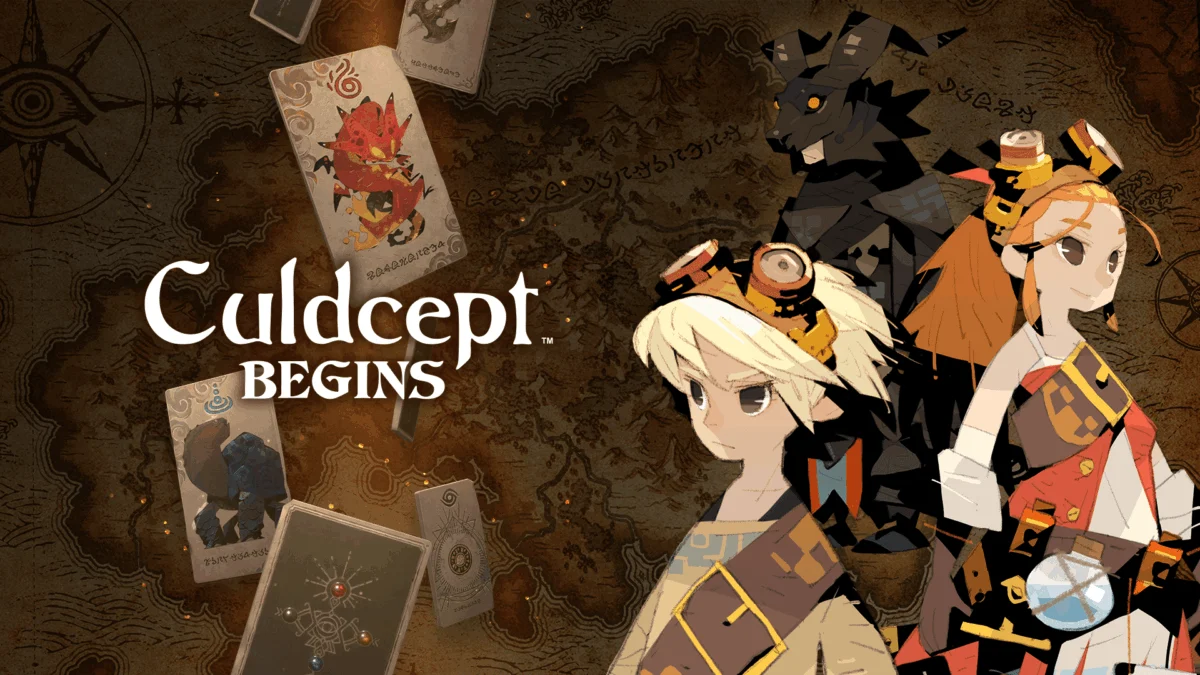
Neos Corporation has officially expanded its portfolio with the launch of Culdcept BEGINS, a strategic title that synthesizes the competitive nature of digital board games with the tactical depth of collectible card games. Released for the Nintendo Switch 2, the game represents a modern evolution of a franchise that traces its origins back to the late 1990s. By integrating territory control, resource management, and deck-building mechanics, Culdcept BEGINS seeks to capture both the nostalgia of long-time fans and the interest of a new generation of strategy enthusiasts. The title places players in the role of a "Cepter," a mystical individual capable of summoning creatures known as "Culds" to seize territory and accumulate the magical energy required to achieve victory.
Core Gameplay Mechanics and Victory Conditions
The foundational structure of Culdcept BEGINS is built upon a turn-based, dice-rolling framework reminiscent of traditional property-trading board games. However, the complexity is significantly heightened through the introduction of card-based combat. Each match involves up to four players navigating a variety of maps with the primary objective of reaching a predetermined "Magic" threshold. Once a player accumulates the necessary Magic, they must return to the starting point—or "Gate"—to secure their win.
Magic is the central currency and scoring metric in Culdcept BEGINS. It is acquired through several channels:

- Laps: Players receive a Magic bonus for every full circuit they complete around the board.
- Territory Tolls: When an opponent lands on a tile occupied by a player’s Culd, they must either pay a toll in Magic or attempt to defeat the occupying creature in a card battle.
- Land Development: Players can reinvest their Magic into their controlled tiles to "level up" the territory. Higher-level tiles demand exponentially larger tolls from opponents, creating a high-stakes environment where a single move can lead to a massive transfer of wealth.
The strategic depth lies in the "Culd" system. These creatures, largely inspired by Western mythological traditions, possess unique stats and elemental affinities. The game features four primary elements—Fire, Water, Earth, and Air—which correspond to specific tiles on the board. Placing a monster on a tile that matches its elemental type grants defensive bonuses, making it harder for opponents to dislodge.
The Intersection of Luck and Strategy
While the movement in Culdcept BEGINS is dictated by the randomness of die rolls, the outcome of the game is heavily influenced by deck construction and tactical decision-making. Players manage a deck consisting of monsters, items, and spell cards. When a battle is initiated on a tile, the attacker and defender both have the opportunity to play item cards to modify their stats.
The combat system is designed to favor the defender, but specific item cards—such as weapons that boost strength or shields that negate damage—can turn the tide. Furthermore, many Culds possess passive or active abilities that disrupt standard play. For instance, certain low-level creatures like the Goblin can negate an opponent’s item card entirely, proving that raw power is often secondary to utility. This creates a meta-game where players must anticipate their opponents’ decks and hold onto specific "counters" for critical encounters.
The volatility of the board is a defining characteristic of the experience. Because players can lose their highly developed territories if they are defeated in battle, the lead can shift dramatically in a single turn. This "Monopoly-style" tension is balanced by the card game mechanics, which offer players a degree of agency that traditional board games lack.

Narrative Structure and Single-Player Campaign
Culdcept BEGINS features a comprehensive single-player campaign that serves as both a narrative journey and an extended tutorial. The story centers on a protagonist named Kamru and his companions, Ishara and Tarhunt, as they navigate the challenges of the Cepter Academy. While the narrative follows familiar tropes of the genre—focusing on the growth of young mages in a competitive academic setting—it provides the necessary context for the game’s various mechanics.
The campaign is structured through a series of "Scenarios" that introduce new cards and environmental hazards at a steady pace. As players progress through the Cepter Academy, they encounter diverse opponents with specialized decks, forcing them to reevaluate their own strategies. Victory in these matches rewards players with in-game gold, which can be spent at the "Shoppe" to purchase specific cards or randomized booster packs. This progression loop ensures that players are constantly expanding their tactical options before venturing into the more competitive online modes.
Multiplayer Infrastructure and Technical Limitations
A significant aspect of Culdcept BEGINS is its multiplayer functionality, which supports both online and local connectivity via the Nintendo Switch 2’s GameShare feature. However, the title has drawn scrutiny for its lack of a traditional "couch co-op" or single-console local multiplayer mode.
The current multiplayer options are categorized as follows:

- Online Matches: Requires a paid subscription service. This mode allows for full four-player competitive play across all unlocked maps.
- GameShare (Local Wireless): Allows players with separate consoles to play together. However, this mode is restricted to a limited selection of maps and a truncated card pool if the guest players do not own the full game.
- Offline Battle Mode: A local mode where players can compete against AI opponents on maps unlocked through the campaign.
The omission of same-screen multiplayer is a notable departure from the board game genre’s roots. Industry analysts suggest this may be due to the "hidden hand" mechanic prevalent in card games; since players must keep their decks secret from opponents, sharing a single screen would require a complex UI workaround to prevent "screen-peeking." Nevertheless, for a game marketed as a digital board game, the requirement for multiple consoles and subscriptions remains a point of contention among the community.
Historical Context: The Legacy of Culdcept
To understand the significance of Culdcept BEGINS, one must look at the franchise’s history. The series was created by Omiya Soft and first debuted on the Sega Saturn in 1997. It gained a cult following for its unique fusion of Monopoly-style property management and Magic: The Gathering-style card battles. Over the decades, the series has seen releases on the PlayStation, Dreamcast, Nintendo DS, and 3DS.
Neos Corporation’s involvement with Culdcept BEGINS marks a revitalization of the IP for modern hardware. The "Saturn Tribute" mentions in recent marketing materials highlight the developers’ intent to honor the series’ roots while utilizing the increased processing power of the Nintendo Switch 2 to deliver smoother animations and more complex AI. The narrator, who provides vocal cues for card names and game events, adds a layer of presentation that bridges the gap between old-school tabletop gaming and modern digital media.
Market Analysis and Broader Implications
The release of Culdcept BEGINS arrives at a time when the digital board game market is experiencing a resurgence. Titles like Mario Party Superstars and various digital adaptations of tabletop games have proven that there is a significant appetite for competitive, turn-based experiences. Culdcept BEGINS distinguishes itself by targeting a slightly more "hardcore" demographic—those who enjoy the intricacies of deck-building and elemental math.

From a commercial perspective, the game’s reliance on in-game gold and booster packs mirrors the "Gacha" and TCG models that have become highly profitable in the mobile and console gaming sectors. However, by keeping these transactions within the realm of in-game currency earned through play (rather than aggressive microtransactions), Neos Corporation appears to be prioritizing game balance and player retention.
The game also serves as a technical showcase for the Nintendo Switch 2’s wireless capabilities. The use of GameShare highlights Nintendo’s continued push for "local-wireless" ecosystems, even if it comes at the expense of traditional single-console play.
Conclusion
Culdcept BEGINS is a robust addition to the strategy genre, offering a deep and often chaotic experience that rewards both long-term planning and quick tactical thinking. By blending the high-stakes territory development of a board game with the customizable combat of a TCG, it provides a unique gameplay loop that is rarely found in the current market.
While the lack of local single-console multiplayer may limit its appeal as a casual "party game," its deep campaign, extensive card library, and competitive online play position it as a premier title for strategy fans. As players take on the roles of Kamru and his peers at the Cepter Academy, they are not just playing a game of chance—they are participating in a decades-old legacy of tactical excellence. Through the "RNG chaos" and the strategic use of Culds, Culdcept BEGINS proves that the fusion of cards and boards remains a potent formula for digital entertainment.