


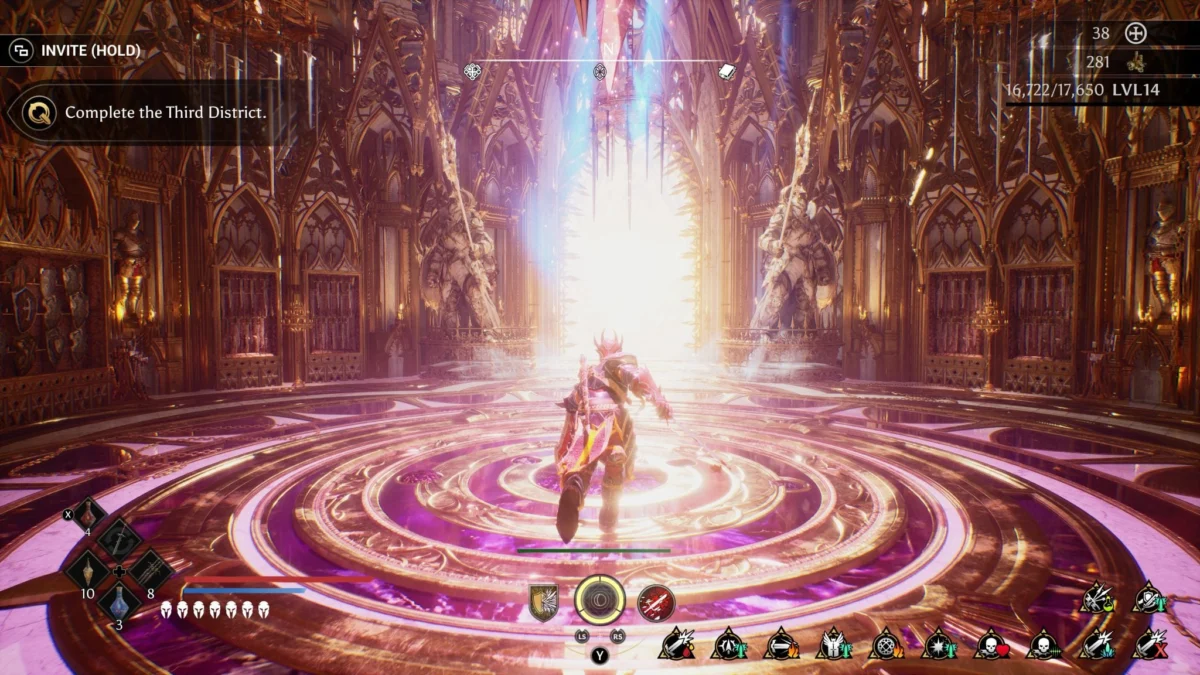
The debut of Crimson Moon represents a strategic attempt by developers Team Metal and Probably Monsters to carve out a niche within the increasingly congested "Soulslike" and "Roguelike" hybrid market. In an era where players are inundated with high-difficulty action RPGs, the title seeks to distinguish itself not merely through its punishing mechanics, but through a unique fusion of run-based progression and high-fidelity presentation. Positioned at a competitive price point of $19.99 USD, the game challenges the traditional "AA" and "AAA" boundaries, offering a visual experience that belies its modest cost.

Narrative Framework and the Nephilim Protagonist
The narrative of Crimson Moon centers on the Nephilim, a hybrid entity of angelic and human descent. This protagonist serves as the primary operative for "The Order of the Crimson Moon," a church-affiliated organization tasked with the eradication of supernatural threats, including demons, vampires, and eldritch horrors. While the genre often prioritizes environmental storytelling over direct exposition, Crimson Moon utilizes a mission-based structure where the protagonist is dispatched to various high-risk zones to collect ancient stones and neutralize colossal entities.
The lore is further expanded through collectible fragments scattered throughout the world. These pieces of history provide context for the world’s decline and the theological conflict at the heart of the game. To assist players in narrative discovery, the developers implemented an audio cue system—reminiscent of the hidden collectibles in the Halo franchise—which alerts players to the proximity of lore items, ensuring that the world-building remains accessible even during high-intensity combat sequences.

Chronology of Development and Market Entry
Crimson Moon first gained significant public attention during the Summer Game Fest (SGF) in June 2026. At this event, a playable demo showcased the core combat loop and the atmospheric environmental design, generating early interest among enthusiasts of the genre. Following three months of final polish and optimization, the game saw its full release in early September 2026.
The development timeline suggests a focused production cycle aimed at delivering a stable experience on PC, while the Xbox console version remains in the final stages of certification. This phased rollout is a common strategy for smaller development teams prioritizing performance on a primary platform before expanding to the broader console ecosystem.

Structural Mechanics: The Zone and Subzone System
The gameplay loop of Crimson Moon is defined by its rigid yet rewarding "run" mechanics. Unlike traditional Soulslikes that feature a singular, interconnected world, Crimson Moon organizes its challenges into distinct zones. Each zone is subdivided into smaller subzones, each with specific objectives. These objectives generally fall into three categories:
- Total Elimination: Requiring the player to defeat every enemy within the subzone boundaries.
- Relic Retrieval: Focusing on exploration and the collection of specific artifacts.
- Elite Assassination: Tasking the player with defeating a specific "Big Boy" or mini-boss to progress.
Upon the completion of a subzone, the player is presented with a choice of three randomized buffs, or "boons," which enhance the character’s capabilities for the remainder of the run. Simultaneously, the player’s healing flasks are restocked, providing a necessary reprieve before the next challenge. This structure ensures a rhythmic pacing that balances intense combat with strategic decision-making.

A critical component of the run mechanic is the persistence of the "active run" state. Successfully completing a full area returns the player to the central hub, but the player remains locked into their current loadout. This design choice emphasizes the Roguelike element of the game; a player who dies after exhausting their revives must restart the entire sequence from the first zone, losing their accumulated boons but retaining their long-term meta-progression.
Meta-Progression and Economic Systems
To mitigate the frustration inherent in the Roguelike genre, Team Metal has implemented a robust meta-progression system. This is governed by an overall account level that persists regardless of individual run failures. As players increase their account level, they unlock permanent upgrades, including:

- Increased Revives: Providing a larger margin for error in later stages.
- Enhanced Healing: Improving the potency of the healing flasks.
- Gear Drop Quality: Increasing the probability of finding high-rarity equipment.
- Economic Persistence: Gold, the primary currency used for upgrading armor and weaponry, is not lost upon death, allowing for steady power growth over time.
This dual-layered progression system ensures that even unsuccessful runs contribute to the player’s long-term viability. By the time a player reaches account level 10, the difficulty curve significantly flattens, as the accumulation of revives and upgraded armor provides the necessary durability to tackle the game’s more complex late-game encounters.
Combat Dynamics: Parrying, Magic, and Build Variety
The combat in Crimson Moon is characterized by its responsiveness and tactile feedback. The system utilizes the standard Soulslike template of light and heavy attacks, supplemented by a quick dodge and a high-risk, high-reward parry mechanic. Parrying is essential for neutralizing larger mobs, though the game allows for a "roll-heavy" playstyle for those who prefer mobility over precision timing.

Magic and special abilities are tied directly to equipment. Depending on the weapon equipped, players may gain access to:
- Offensive Maneuvers: Such as shield bashes, weapon throws, or whirlwind attacks.
- Passive Enchantments: Including elemental effects like burning or freezing enemies.
- Sustain Mechanics: Certain rare weapons offer life-steal or flask-recharge capabilities, rewarding aggressive playstyles.
The synergy between weapon abilities and the boons selected at the end of subzones allows for the creation of specialized builds. For example, a player might focus on a "high-sustain" build by pairing a fast-attacking sword with boons that trigger healing upon enemy death, effectively making them immortal as long as they maintain offensive momentum.

Environmental Design and Technical Performance
One of the most striking aspects of Crimson Moon is its visual fidelity. Utilizing advanced rendering techniques, Team Metal and Probably Monsters have created a world that rivals the production values of full-priced $70 titles. The environmental variety is a highlight, featuring:
- Ruined Villages: Highly detailed domestic ruins that encourage vertical exploration.
- Grand Cathedrals: Featuring intricate gothic architecture and atmospheric lighting.
- Lush Forests: Showcasing dense foliage and organic environmental storytelling.
On the technical front, the PC version demonstrates high optimization. Testing on high-end hardware reveals that the game can maintain a near-locked 60 frames per second at 4K resolution on Ultra settings. The sound design complements the visuals, with ghoulish audio cues for enemy positioning and a heavy metal soundtrack that dynamically activates during boss encounters to enhance the intensity of the fight.

Critical Analysis: Limitations in Variety and Technical Hurdles
Despite its strengths, Crimson Moon faces challenges regarding content variety. The weapon system is currently limited to two primary move sets: one-handed (swords, axes, maces) and two-handed (polearms, spears, heavy axes). For a Roguelike, where variety is the engine of replayability, the lack of diverse attack patterns can lead to a sense of repetition during extended play sessions.
Similarly, enemy variety is somewhat constrained. While the lack of diverse mobs allows players to master parry timings more effectively, it may diminish the sense of discovery in later zones. Furthermore, the game’s camera system occasionally struggles when locked onto larger enemies in confined spaces, leading to "camera flinging" that can disrupt the flow of combat.

Market Implications and Future Outlook
The release of Crimson Moon at a $20 price point is a significant market move. It positions the game as a "no-brainer" for fans of the genre, offering a high-quality experience for a fraction of the cost of its competitors. This pricing strategy may serve as a blueprint for other independent developers looking to compete in the high-fidelity action space.
Team Metal has indicated that post-launch support is a priority, with plans for updates that may address the current lack of weapon variety. The inclusion of a co-operative mode also adds significant value, potentially extending the game’s lifespan through community engagement and multiplayer experimentation.

In summary, Crimson Moon is a technically impressive and mechanically sound hybrid that successfully blends two of gaming’s most popular genres. While it suffers from some limitations in content breadth, its presentation, responsive combat, and fair progression systems make it a standout entry in the 2026 release calendar. For players seeking a challenging yet rewarding experience that respects their time and investment, Crimson Moon offers a compelling proposition that punches well above its weight class.