


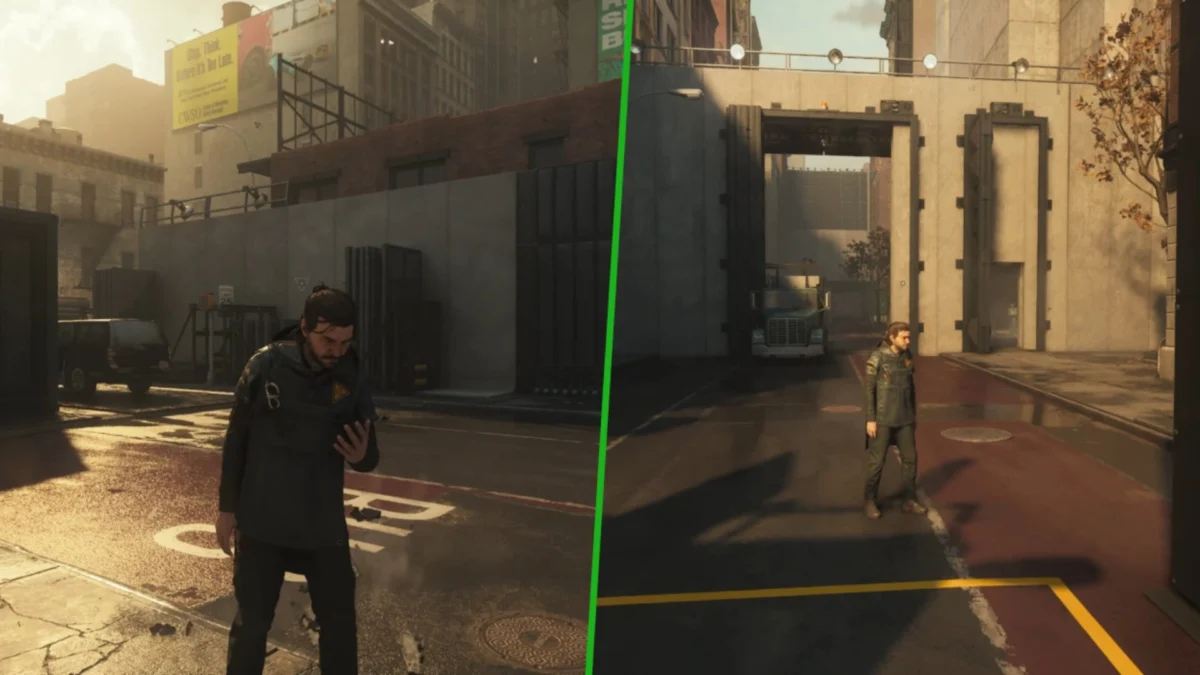
The imminent release of Control Resonant on Xbox platforms has prompted a thorough technical examination of its performance across the Xbox Series X and Series S consoles, offering prospective players a clear understanding of the game’s fidelity and fluidity. With reviews commencing and detailed analyses now publicly available, the technical community has provided extensive raw footage and comprehensive breakdowns, setting expectations for this significant new release from Remedy Entertainment. The findings indicate a largely robust, albeit not entirely unblemished, experience across both current-generation Xbox machines.
Key insights into the game’s technical performance have been primarily sourced from two reputable outlets: Digital Foundry, renowned for its in-depth technical analyses, and Fuzion Xbox Testing, which provides extended, unadulterated gameplay footage. Digital Foundry’s meticulous breakdown offers a statistical overview of resolutions, frame rates, and graphical modes for each console, while Fuzion Xbox Testing complements this with prolonged visual demonstrations devoid of commentary, allowing viewers to observe gameplay dynamics and visual integrity firsthand.
Performance on Xbox Series X: Achieving Parity with PlayStation 5
On the more powerful Xbox Series X console, Control Resonant offers players two distinct graphical modes, each targeting different priorities: visual fidelity or performance. The game achieves a native resolution of 864p in its performance-oriented mode, with dynamic resolution scaling and advanced upscaling techniques applied to reach a higher output. In this mode, the game largely maintains a smooth 60 frames per second (FPS), prioritizing fluid gameplay responsive to player input. For those who prefer enhanced visual quality, a second mode targets a native resolution of 1260p, again leveraging upscaling, and aims for a stable 30 FPS.
Digital Foundry’s analysis underscores that this performance profile positions Control Resonant on the Xbox Series X to achieve "visual and performance parity with the PlayStation 5." This is a significant benchmark, indicating that Xbox players can expect a comparable experience to their counterparts on Sony’s flagship console, a common point of comparison for multi-platform releases. However, it is also acknowledged that the PlayStation 5 Pro, with its enhanced hardware capabilities, is understandably identified as offering the superior console experience, likely due to higher resolutions, more consistent frame rates, or improved visual effects.
Performance on Xbox Series S: A Consistent, Single-Mode Experience
For the Xbox Series S, designed as a more accessible entry point into current-generation gaming, Control Resonant presents a streamlined offering. The console features a single graphical mode, running at a native resolution of 864p and targeting a consistent 30 FPS. Crucially, the frame rate on the Series S appears to be largely stable, indicating effective optimization for its hardware profile. Furthermore, the visual settings employed in this single Series S mode are reported to match those of the Series X’s 30 FPS performance mode, suggesting that while the resolution and frame rate are constrained by the hardware, the overall visual presentation (e.g., texture quality, draw distance, effects) remains consistent with the Series X’s fidelity-focused option. This approach ensures a uniform visual experience across the Xbox ecosystem, albeit with necessary adjustments for the Series S’s capabilities.
Identifying Visual Anomalies Across Non-PS5 Pro Consoles
Despite the generally positive assessment of core performance, Digital Foundry’s detailed scrutiny revealed several visual issues that manifest across all non-PlayStation 5 Pro consoles, including both the Xbox Series X and Series S. These observations highlight the inherent challenges and compromises developers face when optimizing graphically intensive titles for a range of hardware specifications.
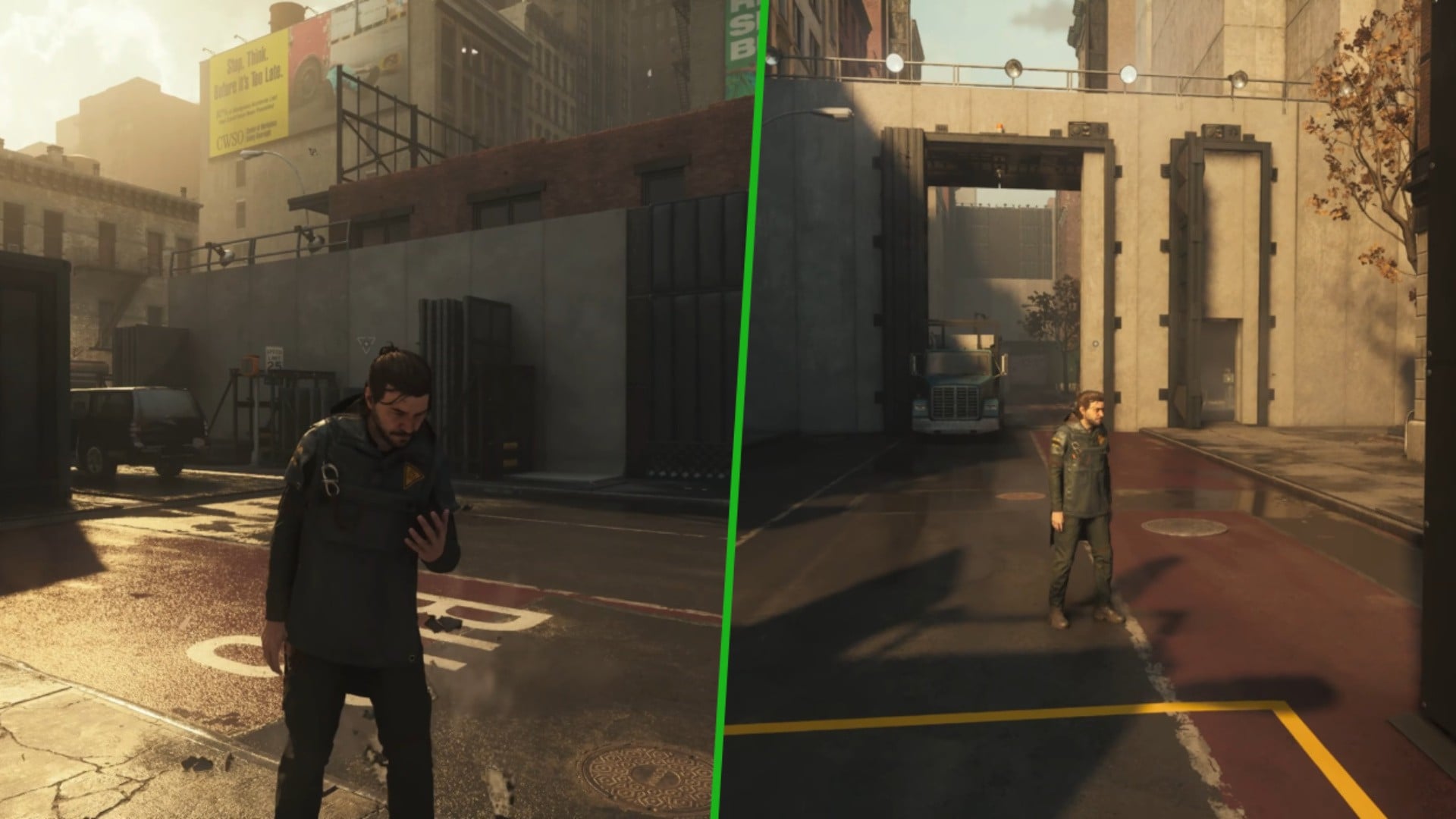
One prominent issue pertains to the game’s cascaded shadow maps. These advanced shadow rendering techniques are crucial for realistically depicting shadows in complex environments, particularly across varying distances. However, DF notes that these shadows "often look incoherent and artifact-ridden from distant views." This can manifest as flickering, blocky, or improperly rendered shadows in the background, detracting from the overall environmental realism. Such artifacts can stem from aggressive level-of-detail (LOD) transitions for shadows, low-resolution shadow maps at a distance, or issues with shadow cascade blending, where different shadow maps merge.
Screen-space reflections (SSR) also come under scrutiny. While recognized as a "fine solution for specular lighting," especially given the performance cost of more advanced ray-tracing techniques, the implementation in Control Resonant exhibits limitations. Specifically, "reflection detail isn’t preserved when on-screen details are occluded." This is a common characteristic of SSR, which relies on information visible on the screen to generate reflections. If an object or detail is not currently rendered on-screen, it cannot be reflected, leading to incomplete or inaccurate reflections, particularly noticeable in reflective surfaces that should show off-screen elements.
Another observation relates to the game’s camera system. The camera, designed to follow the player character at a "considerable distance to frame brawls," occasionally "collides awkwardly with walls and other geometry." This can result in jarring movements, sudden shifts in perspective, or the camera clipping through environmental elements, disrupting player immersion and situational awareness, especially during intense combat sequences. Optimizing camera collision in dynamic open-world environments, where players can quickly move through complex geometry, is a perennial challenge for game developers.
Finally, image quality on non-PS5 Pro consoles is described as "not great," exhibiting "substantial breakup and a poor resolve on fine details." This observation likely ties back to the native resolutions (864p, 1260p) and the subsequent reliance on upscaling techniques. While modern upscalers like FSR or DLSS can produce impressive results, they inherently start with less pixel data at lower native resolutions. This can lead to a less sharp image, aliasing artifacts, and a loss of fidelity in intricate textures or distant objects, where fine details become blurred or pixelated.
Remedy’s Northlight Engine: Balancing Ambition with Reality
Digital Foundry’s overarching assessment also serves as a testament to the capabilities and inherent limitations of Remedy Entertainment’s proprietary Northlight Engine. The engine, known for powering visually stunning and technologically advanced titles such as the original Control and Alan Wake 2, has historically excelled in creating highly detailed, atmospheric, and effects-rich environments, often within more contained or semi-open levels. Control Resonant, by transitioning into a "wider urban sandbox," represents a significant evolutionary step for the engine, pushing its capabilities in rendering expansive open-world territories.
The analysis concludes that "Ultimately, Control Resonant demonstrates both the flexibility and the limits of Remedy’s Northlight engine as it transitions into open-world territory." This statement encapsulates the dichotomy of game development: the engine proves flexible enough to adapt to the demands of a larger, more interconnected world, showcasing its adaptability and robust rendering pipeline. However, this transition also exposes its "limits," particularly when faced with the rendering budgets of current-generation base consoles. Maintaining the engine’s signature visual flair while populating a vast open-world environment, all while targeting acceptable performance across multiple platforms, necessitates strategic compromises. The visual issues identified—particularly concerning draw distance limitations, shadow quality, and overall image clarity—are often direct consequences of these trade-offs, where developers must balance the ambition of an open-world design with the technical realities of hardware constraints. Despite these challenges, the outlet concludes that "the overall graphical presentation remains engaging," highlighting that the artistic direction, atmospheric design, and core gameplay experience still shine through, captivating players despite the technical imperfections. This suggests that Remedy has successfully preserved the stylistic integrity and immersive qualities for which their games are renowned.
The Broader Context: Cross-Platform Development and Player Expectations
The technical findings for Control Resonant on Xbox Series X and S are illustrative of the broader landscape of cross-platform game development in the current console generation. Developers are tasked with optimizing titles for a diverse range of hardware, from the more powerful Series X and PS5 to the more budget-conscious Series S, and sometimes even last-generation consoles. This requires scalable solutions, often involving dynamic resolution scaling, variable graphical settings, and careful asset streaming to ensure a playable experience across the board.
The acknowledgment of the PlayStation 5 Pro as the definitive console experience for Control Resonant also points to the emerging trend of mid-generation console refreshes. These enhanced consoles, equipped with more powerful GPUs and CPUs, often allow developers to push visual boundaries further, offering higher resolutions, more consistent frame rates, or additional graphical effects (such as enhanced ray tracing) that are simply not feasible on the base models. For players, this creates a tiered experience, where the "best" console version may require an investment in the latest hardware.
For Xbox players, the detailed performance analysis of Control Resonant provides valuable information ahead of its official launch. While there are clearly a few areas where visual fidelity could be enhanced, particularly concerning certain graphical effects and overall image sharpness on non-Pro consoles, the consensus is that Control Resonant delivers a "perfectly good experience" on both Xbox Series X and Xbox Series S. This assessment implies that the core gameplay loop, the narrative, and the overall enjoyment of the game are not significantly hindered by the identified technical nuances.
Anticipation and Launch Details
The release of Control Resonant is scheduled for September 24th for Xbox players. This allows prospective buyers ample time to review the technical data and decide on their purchase. Pre-orders are currently available on the Xbox Store, enabling interested players to secure their copy ahead of the official launch. The game is poised to be a significant addition to the Xbox library, continuing the critically acclaimed Control franchise and offering a new, expanded experience within its distinctive universe. The initial technical evaluations suggest that while the visual presentation on Xbox Series X and S may not be entirely flawless in every minute detail, the core experience remains engaging and robust, upholding Remedy Entertainment’s reputation for delivering compelling and technically ambitious titles.