


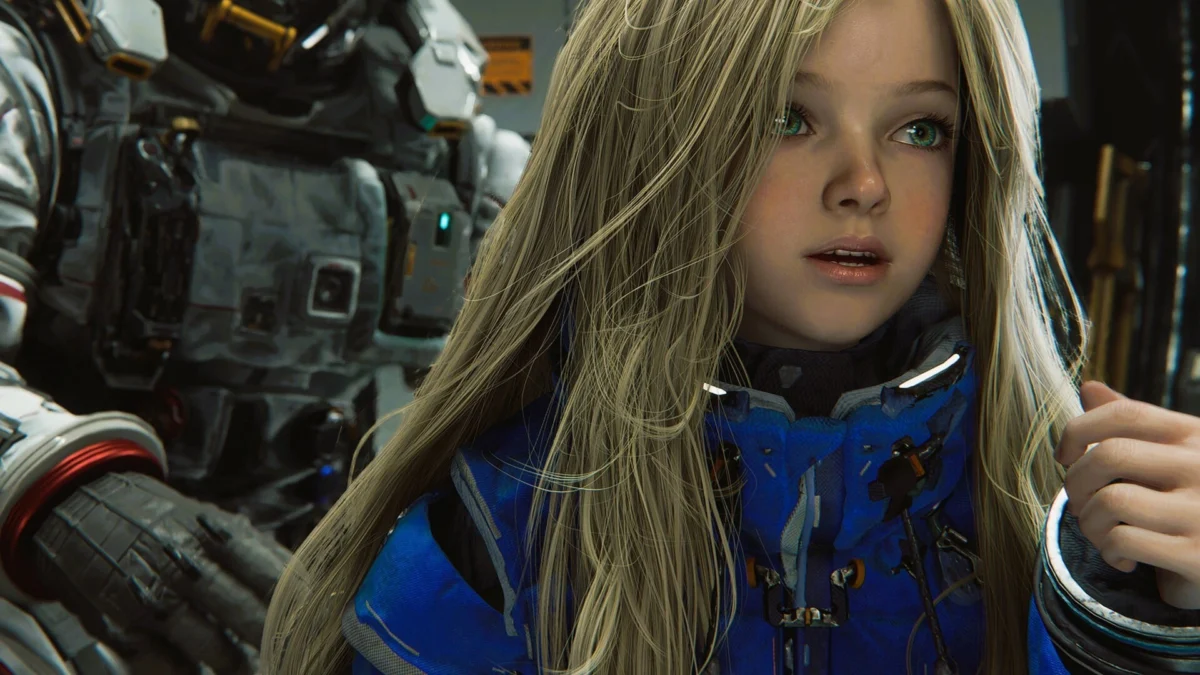
Capcom’s highly anticipated new intellectual property, Pragmata, is set to launch on Xbox Series X|S consoles later this week, and early critical reception indicates a significant success for the ambitious title. With reviews now emerging across various gaming publications, Pragmata has garnered impressive aggregate scores, signaling a positive trajectory for what Capcom hopes will become a foundational new franchise. This blend of genres, spearheaded by a development team boasting veterans from the acclaimed Resident Evil and Monster Hunter series, appears to have resonated strongly with critics.
The game currently holds an aggregate score of 85 on Metacritic and 87 on OpenCritic, reflecting a consensus of high praise for its innovative gameplay mechanics, compelling narrative elements, and striking sci-fi presentation. These scores position Pragmata as one of the most promising new IPs to emerge in recent memory, underscoring Capcom’s continued commitment to both refining its established franchises and venturing into uncharted creative territories. Gamers eager to experience this new adventure will be able to do so starting Friday, April 17th.
A Bold New Frontier: Capcom’s Strategy and Pragmata’s Origins
The journey of Pragmata has been a notable one, marked by its initial reveal during Sony’s PlayStation 5 reveal event in June 2020. At the time, the enigmatic trailer, featuring an astronaut and a young girl on a desolate, lunar-like landscape, immediately captured industry attention. Initially slated for a 2022 release, the game underwent multiple delays, pushing its launch window to 2023 and then to an unspecified date, before the recent confirmation of its April 2026 debut. Such delays are not uncommon in the highly complex world of AAA game development, often indicating a dedication to polishing the experience, optimizing for next-generation hardware, and ensuring the final product meets the developer’s ambitious vision.
Capcom, a venerable Japanese publisher and developer, has enjoyed a period of immense critical and commercial success in recent years, largely driven by the revitalization of its core franchises. Titles like Resident Evil Village, the critically lauded Resident Evil remakes (Resident Evil 2, 3, and 4), the global phenomenon Monster Hunter: World and Monster Hunter Rise, and the triumphant return of Street Fighter 6 have cemented Capcom’s reputation for delivering high-quality, polished experiences. Against this backdrop of established success, the decision to invest heavily in a completely new intellectual property like Pragmata represents a significant strategic move. It demonstrates the company’s confidence in its creative teams and its willingness to take calculated risks to diversify its portfolio and cultivate future blockbuster franchises. The involvement of personnel with experience on Resident Evil (known for its atmospheric storytelling and refined third-person combat) and Monster Hunter (celebrated for its deep combat systems and expansive worlds) undoubtedly contributed to the high expectations surrounding Pragmata.
Critical Consensus: A Blend of Innovation and Narrative Depth
The early reviews highlight several recurring strengths that contribute to Pragmata‘s positive reception. Critics consistently praise the game’s ability to seamlessly integrate diverse gameplay elements while delivering a compelling narrative.
Gameplay: Hacking, Shooting, and Puzzles
At the core of Pragmata‘s appeal is its innovative combat system, frequently described as a sophisticated blend of third-person shooting, hacking, and puzzle-solving. GameSpew, awarding a perfect 10/10, lauded Capcom for "blending together multiple genres to create something that feels fresh and unique," specifically citing "hacking-infused third-person shooter combat, which remains engaging and exciting throughout." This sentiment is echoed by IGN, which highlighted "Punchy shooting action and a creative hacking-puzzle gameplay mechanic [as] the true highlight of Pragmata."
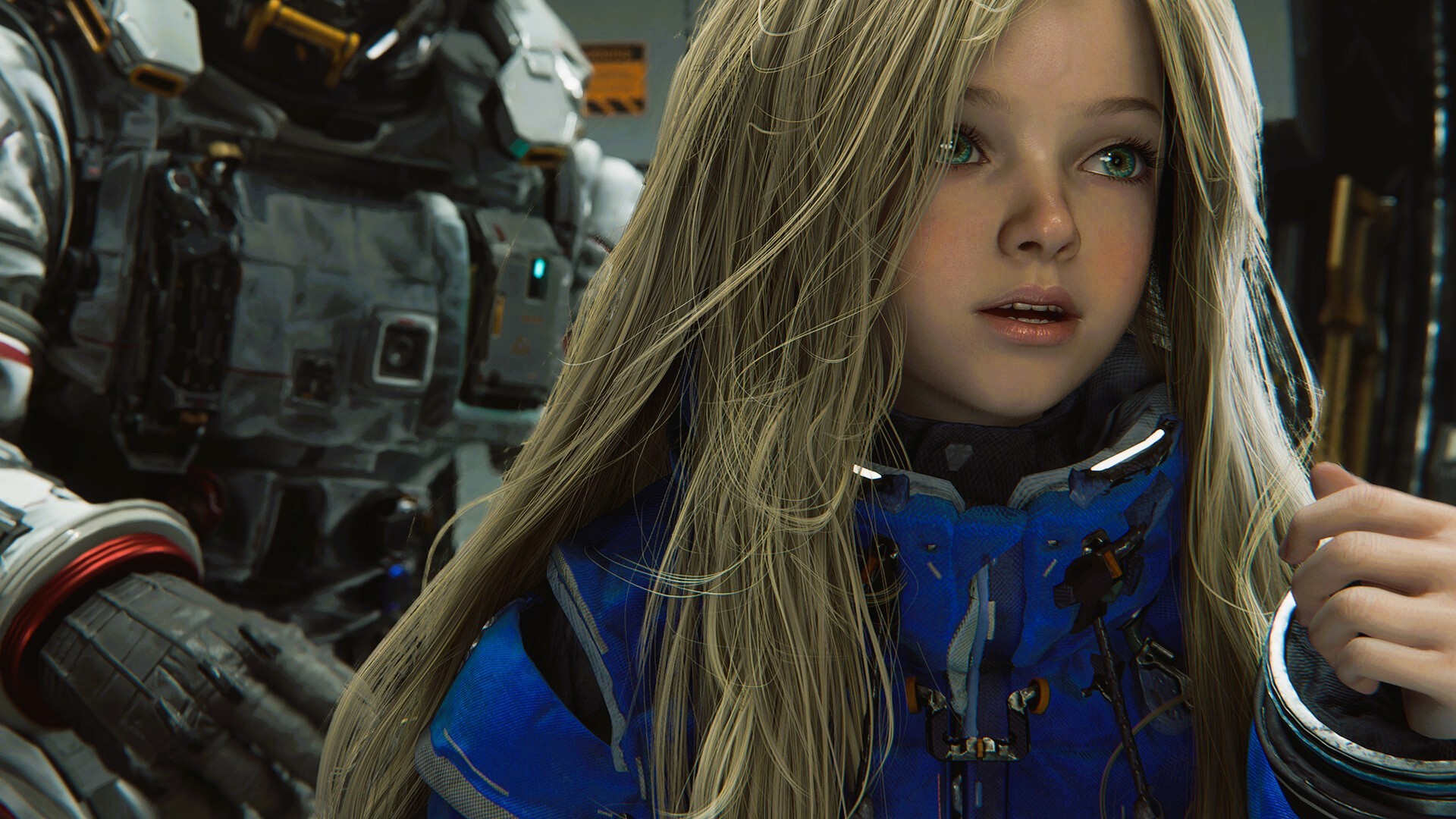
Push Square, giving an 8/10, celebrated the game’s ability to "lean into those [strengths] hard," resulting in "a cracking action game that just feels brilliant to play." The review specifically praised the "unique hack-and-shoot combat" as "so fun and so satisfying to pull off." GameSpot, also with a 9/10, underscored the "sharp combat mechanics, rich strategic depth," suggesting that the game consistently challenges players to utilize its varied toolkit effectively. This focus on inventive combat distinguishes Pragmata from many contemporary action titles, providing a fresh take on established mechanics.
Story and Character: Emotional Resonance
Beyond its innovative combat, Pragmata has been commended for its narrative depth and the endearing relationship between its dual protagonists, Hugh and Diana. GameSpew noted the pairing of engaging combat "with a story that tugs on the heartstrings, the result is something rather special." Nintendo Life, awarding a 9/10, emphasized the "strong relationship at its core" and positioned the "adventures of Hugh and Diana" as a potential start to a "new blockbuster franchise."
GameSpot further elaborated on the emotional impact, stating that the game’s conclusion "tested my skills, stirred my heart, and left me wanting more." Push Square similarly appreciated the "charming dual leads," indicating that the character dynamics play a crucial role in the overall experience. While some reviews found aspects of the story to be conventional, the emotional core and the bond between the characters appear to be a consistent strength, elevating the narrative beyond a mere backdrop for action.
Visuals and Atmosphere
The game’s distinctive sci-fi aesthetic and high production values have also garnered praise. Nintendo Life mentioned a "striking sci-fi aesthetic," contributing to the game’s overall appeal. Game Informer, while noting some conventional elements in the story, lauded the "beautiful futuristic visuals" as a "solid win." These comments suggest that Pragmata successfully creates an immersive and visually compelling world that enhances the player’s experience.
Nuances and Areas for Refinement
Despite the overwhelmingly positive reception, some critics identified minor areas where Pragmata could potentially improve. These observations, while not detracting significantly from the overall enjoyment, offer a balanced perspective on the game’s design.
Push Square suggested that the game "could do with a little more variety throughout its campaign," implying that while the core combat is excellent, additional diverse activities or mission structures might have further enriched the experience. IGN, while praising combat, noted that the "story may seem like an afterthought" in comparison, though it "gives enough to see it all the way through." Similarly, Game Informer found the "story and structure as a whole feel a bit by-the-numbers," despite appreciating the game’s experimental nature.
VGC, offering a 4/5 score, described Pragmata as "charming, if fairly generic, story," and highlighted its relatively linear, 8-hour structure as a "breath of fresh air" in an industry often dominated by sprawling open worlds. GameReactor, with a 7/10, felt there was "magic lost in the empty spaces," and desired "a bit of edge beneath the cool exterior." GameRant, also giving a 7/10, echoed sentiments about the game’s ability to maintain engagement throughout, stating it "doesn’t have quite enough to stay completely engaging all the way to the end credits," and cited "lackluster story and characters" as factors preventing it from reaching its "full potential."
These minor critiques generally point to a desire for more narrative depth or structural variety, but they do not diminish the widespread appreciation for Pragmata‘s core gameplay and bold innovation. They reflect the high standards critics hold for a developer of Capcom’s caliber and the inherent challenges in launching a completely new universe.

Aggregate Scores and Market Positioning
The impressive aggregate scores of 85 on Metacritic and 87 on OpenCritic are robust indicators of Pragmata‘s strong critical standing. For a brand-new IP, these figures are particularly significant, often exceeding the launch scores of many established franchises. They place Pragmata firmly in the upper echelon of new releases for the year, suggesting that Capcom has successfully delivered on its promise of a fresh and engaging experience.
In an industry increasingly reliant on sequels, remasters, and live-service models, a successful single-player, narrative-driven new IP is a notable achievement. It demonstrates that there is still a significant appetite among players and critics for original concepts and creative risks, particularly when executed with the high level of polish and expertise that Capcom is known for. The positive reception positions Pragmata as a potential contender for "Game of the Year" accolades, as suggested by GameSpew, and certainly establishes it as a major new player in the action-adventure genre.
The Road Ahead: Implications for Capcom and the Industry
The critical success of Pragmata carries significant implications for Capcom’s future strategy and potentially for the broader gaming industry. For Capcom, it validates their substantial investment in developing new intellectual properties, providing a strong incentive to continue fostering innovation alongside their highly successful legacy franchises. The positive reception could encourage the company to greenlight more experimental titles and expand the Pragmata universe, potentially with sequels, spin-offs, or other forms of media adaptation. GameSpot explicitly hoped that the game’s robust post-game content isn’t the last players see of Hugh and Diana, underscoring the franchise potential.
For the gaming industry, Pragmata‘s success serves as a powerful testament to the viability of new IPs. It challenges the prevailing notion that only established brands can achieve widespread critical and commercial success, offering a counter-narrative that creativity and original design can still capture the market’s imagination. This could, in turn, inspire other major publishers to take more calculated risks on unproven concepts, enriching the diversity of games available to consumers.
Furthermore, the Nintendo Life review’s specific mention of Pragmata as "another excellent Switch 2 port from Capcom" is particularly noteworthy. While Nintendo has yet to officially announce a successor to the Nintendo Switch, this comment from a reputable Nintendo-focused publication strongly implies Capcom’s multi-platform strategy and potential early access or optimization for Nintendo’s unconfirmed next-generation console. If true, it underscores Capcom’s commitment to reaching the widest possible audience across all major platforms, further solidifying Pragmata‘s potential to become a truly cross-platform blockbuster. This also highlights the advanced planning and coordination between major developers and platform holders for future hardware.
In conclusion, Pragmata represents a significant triumph for Capcom. By blending compelling gameplay with an engaging story and delivering it with characteristic polish, the company has not only introduced a promising new franchise but also reaffirmed its position as a leading innovator in the global video game industry. Its impending release on Xbox Series X|S is set to be a major event for gamers worldwide, offering a fresh adventure that stands out in a crowded market.
Pragmata arrives on Xbox Series X|S on Friday, April 17th.