


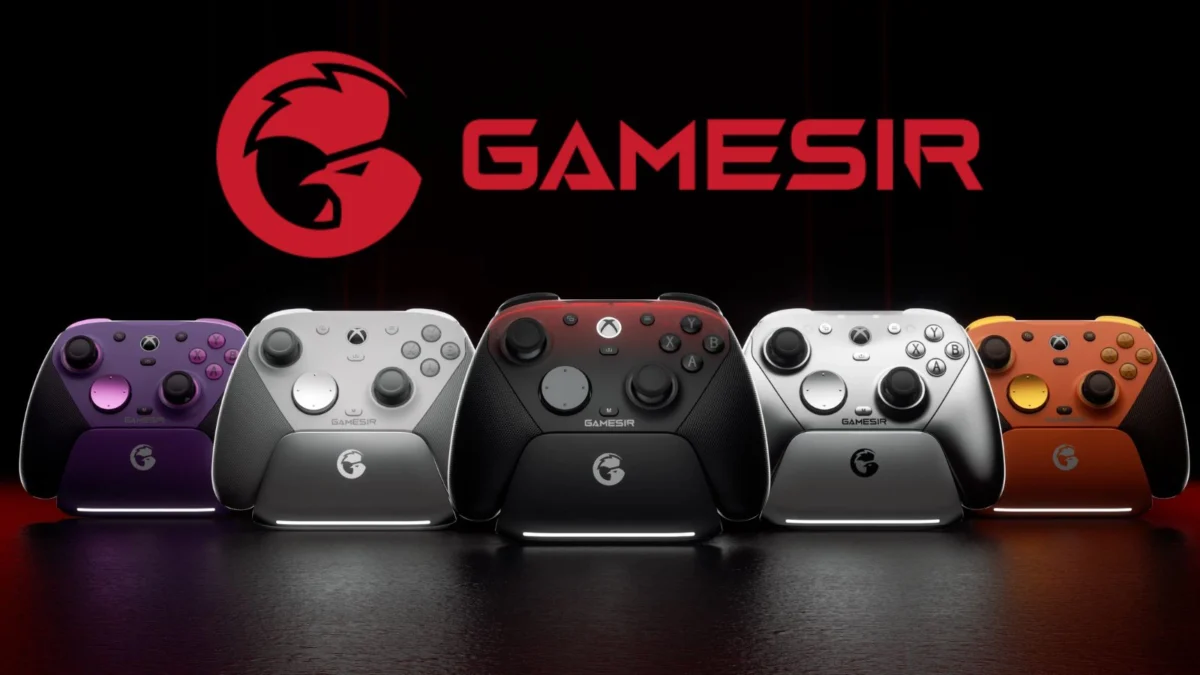
The competitive landscape of Call of Duty esports is currently abuzz with a significant controversy surrounding GameSir controllers, with professional players reportedly considering a collective agreement to ban the hardware due to suspicions of unfair advantages. While GameSir vehemently denies any built-in cheating mechanisms, the debate highlights the ongoing tension between technological innovation in gaming peripherals and the paramount importance of maintaining a level playing field in professional competition.
GameSir has, in recent times, carved out a notable niche within the Call of Duty pro scene. Their controllers have gained traction among competitive players due to a suite of performance-oriented features. These often include high polling rates, which allow for faster communication between the controller and the console or PC, potentially leading to quicker in-game reactions. Additionally, customizable buttons and programmable macros are frequently cited as key selling points. These features allow players to assign complex sequences of inputs to a single button press, theoretically streamlining execution of intricate in-game maneuvers. For players operating at the highest echelons of Call of Duty esports, where split-second decisions and flawless execution are the difference between victory and defeat, such enhancements can appear highly attractive.
However, this surge in popularity has been met with growing apprehension. Reports have emerged indicating that several players within the Call of Duty League (CDL) are in discussions to establish a "gentlemen’s agreement" (GA). A GA in esports is a de facto pact among players to collectively refrain from using specific equipment or employing certain tactics deemed to offer an unfair advantage, even if not explicitly prohibited by official tournament rules. The core of the current contention revolves around specific functionalities present in some GameSir controller models, particularly "turbo modes" and "programmable macros." Critics argue that these features can be leveraged to automate actions that would otherwise require precise manual input, such as rapid firing or complex movement combinations. This automation, they contend, could translate into an undeniable edge over opponents relying on standard, un-enhanced controllers, thereby undermining the spirit of fair competition.
The gravity of these concerns prompted GameSir to issue a direct response. In a public statement, the manufacturer firmly refuted the allegations, asserting that its controllers are entirely legitimate and adhere to standard hardware specifications. The company explicitly denied offering or supporting any form of built-in cheats, specifically mentioning anti-recoil and auto-aim functionalities. This direct denial is a critical juncture in the unfolding situation, attempting to assuage the fears of the professional player base and tournament organizers.
GameSir Offers Unprecedented Transparency to CDL Professionals
In an effort to directly address the mounting scrutiny, GameSir extended an open invitation to CDL professionals, offering to provide sample controllers for thorough testing and examination. The company’s statement, disseminated via its official channels, acknowledged the circulating discussions about a potential GA against their products.
"Recently it has come to our attention that several CDL pros are considering a GA against GameSir controllers, suspecting our controllers include built-in cheats," the company stated. This candid acknowledgment of the situation underscored their commitment to transparency and resolving the issue proactively.
GameSir’s response further emphasized their stance: "We want to state clearly: GameSir controllers are 100% legitimate, standard hardware. We do not support or offer cheats or illegal mods, including anti-recoil and auto-aiming. And we welcome organizer inspections." This declaration is a direct counter to the accusations, positioning GameSir as a legitimate hardware provider committed to fair play.
To facilitate this transparency, GameSir announced its readiness to supply sample units to any interested professional players. The company promised to offer "complete technical transparency" regarding the internal workings of their devices. This proactive measure aims to dismantle any lingering doubts by allowing direct, hands-on verification of the controller’s capabilities.
Among the models specifically highlighted for testing were the Tarantula Pro 8K PC controller, distinguished by its symmetrical button layout, and the G7 Pro 8K PC controller, which adopts a more traditional asymmetrical design reminiscent of Xbox controllers. These offerings showcase GameSir’s diverse product line, catering to different player preferences while ostensibly adhering to standard technological frameworks.
"Integrity is and always will be our top priority," GameSir concluded in their statement. "We welcome everyone to test and verify our controllers and really appreciate your trust and support." This reiteration of their core values seeks to rebuild confidence and foster a collaborative approach to resolving the controversy.
Historical Context and the Evolution of Gaming Peripherals
The debate surrounding specialized gaming peripherals is not new to the esports arena. Throughout the history of competitive gaming, players and organizers have grappled with the introduction of hardware that could potentially alter the inherent skill-based nature of the games. Early controversies often centered on custom arcade sticks or modified console controllers that offered faster response times or unique button configurations.
As technology advanced, so did the complexity of these peripherals. The advent of programmable buttons and macro functionality on mainstream controllers, initially marketed as convenience features, began to raise questions in the competitive sphere. Players who mastered these functionalities could, in theory, execute complex sequences with greater consistency and speed than those who did not. This disparity led to a constant dialogue between hardware manufacturers, game developers, and esports governing bodies to define what constituted an acceptable advantage versus an unfair exploit.
The Call of Duty esports scene, in particular, has a history of stringent rules regarding hardware. The Call of Duty League (CDL), as the premier professional league, operates under a strict set of rules designed to ensure fair competition. These rules often include limitations on controller modifications and the types of peripherals that can be used in official matches. The current situation with GameSir controllers represents a modern iteration of this long-standing challenge, pushing the boundaries of what is considered standard and acceptable in the high-stakes world of professional gaming.
The Mechanics of Concern: Turbo and Macros Explained
To understand the heart of the controversy, it is essential to delve into the functionalities in question: turbo modes and programmable macros.
Turbo Modes: Typically, turbo functionality allows a button to be pressed repeatedly at a very high frequency when held down. In games where rapid button presses are required for actions like shooting, meleeing, or activating abilities, a turbo button can simulate hundreds of rapid inputs per second with a single physical press. This can be particularly impactful in games with high fire rates or where rapid successive inputs are crucial for optimal performance. For instance, a player could theoretically hold down a single button to achieve a sustained automatic fire rate that would otherwise require extremely fast and precise manual button mashing.
Programmable Macros: Macros are sequences of commands that can be programmed and assigned to a single button. In the context of gaming, this could involve a complex sequence of button presses, joystick movements, or trigger pulls that are executed automatically when the designated macro button is pressed. For example, a macro could be programmed to execute a specific movement combination (like a "slide cancel" in many Call of Duty titles) or a specific firing pattern that is difficult to replicate consistently through manual input. The concern is that these automated sequences can bypass the need for individual player skill and timing, effectively giving the user an automated advantage.
The argument from the professional players is that while these features might be available on off-the-shelf controllers, their use in a competitive setting crosses a line. They argue that the intent of a competitive game is to test individual skill, reflexes, and strategic thinking, not the ability to program or utilize automated sequences that mimic or exceed human capabilities.
GameSir’s Technical Specifications and Industry Standards
GameSir’s claim that their controllers are "100% legitimate, standard hardware" hinges on their adherence to established industry standards for controller input. High polling rates, for instance, are becoming increasingly common in gaming peripherals across various brands, aiming to reduce input lag and improve responsiveness. Many high-end controllers from major manufacturers like Sony (DualSense Edge), Microsoft (Xbox Elite Series), and third-party brands like Scuf Gaming, Razer, and Astro Gaming, also offer customizable buttons and, in some cases, programmable back paddles or remappable inputs.
The distinction, according to GameSir’s statement, lies in the absence of "cheats or illegal mods, including anti-recoil and auto-aiming." Anti-recoil is a modification that actively counteracts the natural recoil pattern of a weapon in-game, making it easier to keep weapons on target during sustained fire. Auto-aim, while less common on controllers due to its more intrusive nature, would essentially lock the player’s aim onto nearby enemies. These are widely considered to be explicit forms of cheating that fundamentally alter the gameplay experience and are almost universally banned in competitive settings.
The challenge for both GameSir and the competitive community lies in the gray area between legitimate performance enhancement and disallowed automation. Programmable macros, for example, can be used for simple convenience (like remapping a button) or for complex automation that bypasses intended gameplay mechanics. The perception of unfairness often arises when these programmable features are used to replicate or exceed humanly achievable levels of speed, accuracy, or execution.
Broader Implications for Esports Integrity
The GameSir controller controversy has significant implications that extend beyond the immediate Call of Duty professional scene. It serves as a microcosm of the ongoing battle to define and uphold integrity in esports.
Firstly, it underscores the need for clear and consistently enforced hardware regulations. As technology evolves, governing bodies and tournament organizers must continually review and update their rulesets to address new innovations and potential exploits. The speed at which new peripherals emerge often outpaces the regulatory process, creating a window for controversy.
Secondly, the situation highlights the power of collective action within the player community. The reported consideration of a gentlemen’s agreement demonstrates the players’ commitment to preserving fair play. However, such agreements can be difficult to enforce and may lead to fragmentation within the player base if not universally adopted.
Thirdly, the incident emphasizes the importance of transparency from hardware manufacturers. GameSir’s offer for testing and technical disclosure is a positive step. If such offers are genuinely made and accepted, it could lead to a more informed decision-making process for players and organizers.
Finally, the controversy could influence the development of future gaming peripherals. Manufacturers may become more cautious about incorporating features that could be perceived as offering an unfair advantage, or they may invest more in technologies that allow for verifiable auditing of their hardware’s functionalities. Conversely, players may become more discerning about the peripherals they adopt, prioritizing those with a proven track record of fair play and compliance with competitive standards.
The coming weeks will likely see further developments as players, tournament organizers, and GameSir continue to engage in discussions. The resolution of this issue will undoubtedly shape the future of peripheral usage in Call of Duty esports and potentially set precedents for other competitive gaming titles. The ultimate goal remains the same: to ensure that victory in esports is a testament to a player’s skill, dedication, and strategic prowess, uninfluenced by technological advantages that undermine the fundamental principles of fair competition.