


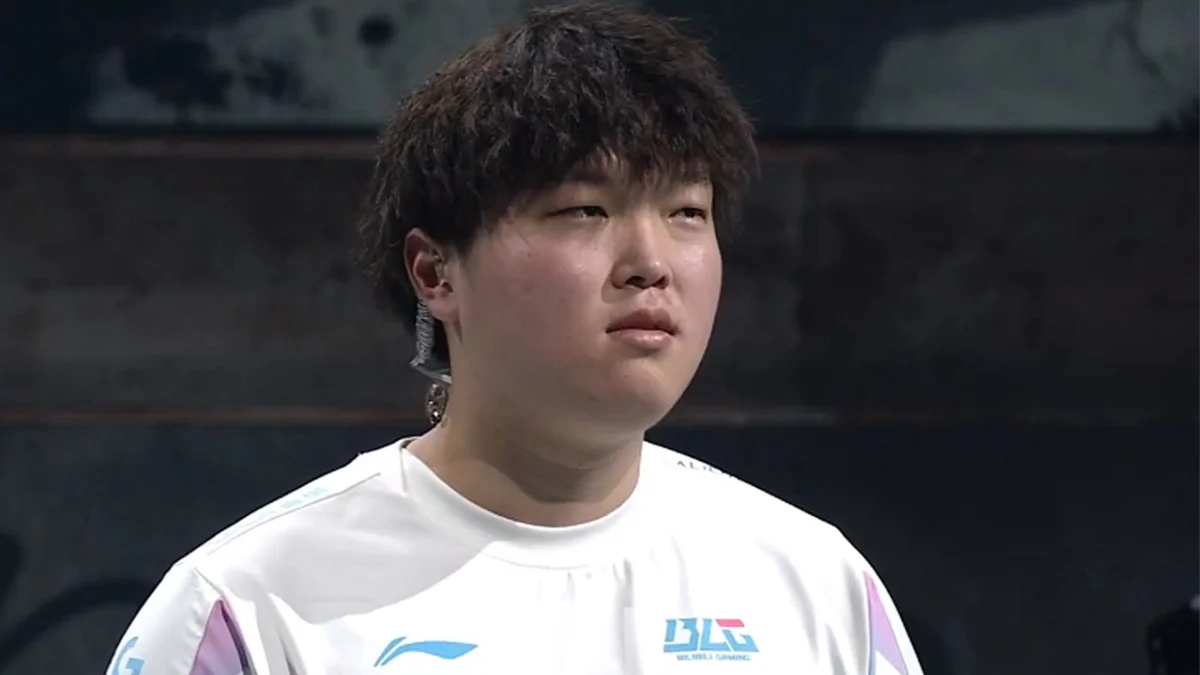
The League of Legends Pro League (LPL) has imposed significant financial penalties and a public reprimand on Chen "Bin" Zebin, the top laner for Billibilli Gaming (BLG), for failing to fulfill his on-stage contractual obligations following a decisive victory against EDWard Gaming (EDG). The incident, which occurred on Wednesday, June 3rd, has sparked debate within the esports community regarding player conduct, contractual adherence, and the fan experience in professional League of Legends.
The LPL’s official statement detailed that Bin’s failure to engage in high-five interactions with fans after the match constituted a breach of his contractual duties. This omission, according to the league, "disrupted the match and negatively impacted the viewing experience and enthusiasm of the audience." BLG, as a team, was also held accountable for insufficient oversight of their player’s conduct, leading to a substantial fine and a formal reprimand for the organization.
A Timeline of the Incident and LPL’s Response
The events leading to the fine unfolded immediately after BLG’s commanding 3-0 sweep over EDG in a highly anticipated LPL fixture. The match itself was a testament to BLG’s current form, with their performance on the Rift being nearly flawless. However, the post-match ceremonies became the focal point of controversy. Following the conclusion of the final game, as is customary in many professional sports, players are expected to interact with the audience present at the venue. For Bin, this included a mandatory requirement to engage in high-five exchanges with fans.
Eyewitness accounts and subsequent LPL investigations confirmed that Bin did not participate in these high-five interactions as expected. While the exact circumstances and Bin’s immediate reasons for abstaining remain officially unarticulated by the player himself, the LPL’s ruling indicates a clear violation of established protocols. The league’s disciplinary committee conducted a thorough review, which not only focused on Bin’s individual actions but also on the broader management practices of BLG.
On June 3rd, the LPL issued its official ruling. The investigation concluded that BLG’s "management of their players and their behavior before the day’s matches were inadequate and failed to effectively fulfill its supervisory and management responsibilities." This assessment suggests a systemic issue within the team’s operational framework, which allowed for such a breach of protocol to occur.
The punitive measures were swift and substantial. BLG was fined a significant sum of ¥50,000 (approximately $7,300 USD), accompanied by a public reprimand. More critically, Bin himself faced an even heftier individual fine of ¥150,000 (approximately $22,000 USD). Beyond the financial penalties, Bin was also subjected to public criticism and mandated to undergo "relevant training and education." This multi-faceted disciplinary action underscores the LPL’s stance on player accountability and the importance of maintaining positive fan engagement.
Supporting Data and Contractual Obligations
Professional esports leagues like the LPL operate under a stringent set of rules and regulations designed to ensure fair play, competitive integrity, and a high-quality fan experience. These regulations often include specific clauses regarding player conduct, media obligations, and public appearances. The high-five tradition, while seemingly minor, is often embedded within these contractual agreements as a tangible way for players to connect with the fanbase that supports them and the league.
The LPL’s statement explicitly references "contractual obligations," implying that Bin’s actions were not merely a lapse in judgment but a direct violation of terms he, as a professional player, had agreed to. These obligations typically stem from broadcast rights agreements, sponsorship deals, and the league’s overarching mandate to cultivate a passionate and engaged audience. For fans who attend matches, especially those who purchase premium tickets, these moments of direct interaction are often a significant part of their experience and perceived value.
The financial scale of the fines also provides insight into the league’s priorities. The ¥150,000 fine for Bin represents a considerable sum for a professional player, signaling the seriousness with which the LPL views such breaches. Similarly, the ¥50,000 fine for BLG highlights the responsibility of organizations to manage their rosters effectively and ensure compliance with league rules. In the context of the LPL’s overall prize pools and player salaries, these fines are substantial enough to serve as a strong deterrent. For instance, LPL tournament prize pools can range from hundreds of thousands to over a million dollars, and top player salaries are in the high six figures or even seven figures annually, making these fines significant but not crippling.
Official Statements and League Mandates
The LPL’s official statement articulated a clear philosophy underpinning their disciplinary action: "Players should strictly adhere to professional conduct and maintain a positive attitude both on and off the field, respecting the competition and the audience." This statement emphasizes the dual responsibility of players to perform at their peak within the game and to represent the league and their team positively in all public interactions.

Furthermore, the league extended its directive to the clubs, stating, "Clubs need to comprehensively improve their management mechanisms to prevent similar incidents from recurring." This call for improved organizational oversight suggests that the LPL views player misconduct not solely as an individual failing but also as a potential indicator of broader management shortcomings. The league’s closing remarks, "We hope that all league personnel will learn from this incident, adhere to professional standards, and cherish every viewer," underscore a commitment to fostering a culture of respect and appreciation for the fanbase.
The inclusion of "relevant training and education" for Bin is a pedagogical element designed to reinforce the importance of his responsibilities beyond in-game performance. This could encompass workshops on professional etiquette, fan engagement strategies, and the significance of contractual obligations in the professional sports landscape.
Fan Reactions and Community Discourse
The news of Bin’s fine has generated a diverse range of reactions from the League of Legends community, particularly on social media platforms like X (formerly Twitter). The discourse reflects a spectrum of opinions, from disbelief and perceived leniency towards the player to strong agreement with the LPL’s disciplinary measures.
Some fans expressed astonishment at the severity of the penalty for what they perceived as a minor infraction. Comments such as "This is a prank, right?" captured a sentiment of incredulity. These reactions often stem from a perception that high-fives are a casual gesture and that the financial penalty is disproportionate to the act itself.
Conversely, a significant portion of the fanbase supported the LPL’s decision, emphasizing the contractual nature of the obligation. One widely cited comment noted, "He didn’t high-five the VIP ticket section where you’re supposed to give high-fives. VIP is probably hella expensive, and fans paid extra for that interaction." This perspective highlights the perceived value of exclusive fan interactions for those who invest more financially in attending events. It also points to the specific nature of the omission, suggesting it may have occurred in a designated area for fan engagement.
This division in opinion underscores the ongoing discussion within esports about the professionalization of the scene. As esports continue to grow and mirror traditional sports in structure and fan engagement, the expectations for player conduct are also evolving. The incident serves as a case study in the balance between player autonomy and the league’s need to uphold standards that ensure the sustainability and appeal of the professional ecosystem.
Broader Implications for LPL and Esports
The Bin incident carries several broader implications for the LPL and the wider esports industry. Firstly, it reinforces the LPL’s commitment to enforcing its rulebook rigorously, regardless of a player’s individual stature or a team’s performance. This consistent application of rules is crucial for maintaining the integrity and credibility of the league in the eyes of players, teams, and fans.
Secondly, it emphasizes the increasing importance of fan engagement as a core component of professional esports. Leagues and teams are recognizing that beyond the competitive aspect, the connection between players and their fanbase is a vital element for sustained growth, viewership, and commercial success. The LPL’s firm stance signals that these fan-facing obligations are not optional extras but integral parts of a player’s professional responsibilities.
Thirdly, the fine levied against BLG highlights the accountability of organizations in managing their players. The league expects teams to have robust internal systems in place to ensure compliance with all regulations. This includes player education, pre-match briefings, and effective supervision to prevent such incidents from occurring. The implication is that team management plays a critical role in shaping player behavior and adherence to league standards.
Finally, this event serves as a cautionary tale for all LPL players and personnel. The LPL’s explicit call for all league personnel to "learn from this incident" suggests a desire to use this situation as a learning opportunity across the entire ecosystem. By publicly addressing and penalizing this infraction, the LPL aims to set a clear precedent for expected professional conduct, ensuring that future interactions between players and the passionate fanbase are positive and mutually respectful.
As of the reporting of this incident, neither Bin nor Billibilli Gaming had issued a public response to the LPL’s fine. The absence of immediate comment from the player or the team leaves the motivations behind Bin’s omission open to speculation, but the LPL’s ruling has firmly established the consequences of failing to meet contractual fan interaction requirements in the highly professionalized environment of the LPL.