


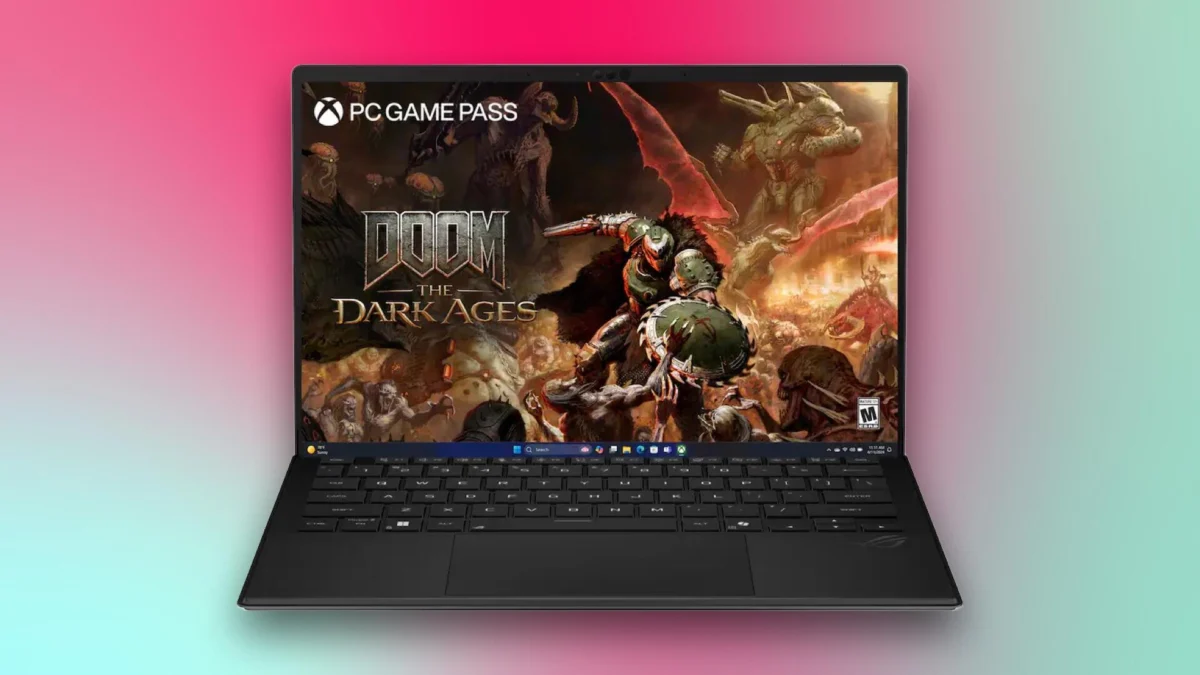
The premium segment of the portable computing market is currently experiencing significant shifts, underscored by a substantial discount on the Asus ROG Flow Z13, a device lauded for its unique blend of gaming performance and ultra-portability. This versatile 2-in-1 gaming laptop is now available for $2,100, representing a remarkable $900 reduction from its original price of $3,000. This pricing adjustment brings a high-end, AI-powered gaming solution into a more accessible bracket, signaling potential strategic moves by manufacturers in response to market dynamics and the growing demand for hybrid computing solutions.
The ASUS ROG Flow Z13: Redefining Portable Gaming Power
The Asus ROG Flow Z13 stands as a testament to engineering innovation, challenging the traditional notion that serious gaming performance necessitates a bulky form factor. Its design philosophy centers on extreme portability without compromising on core capabilities, making it a compelling option for gamers, content creators, and professionals who require potent hardware on the go.
At its core, the ROG Flow Z13 is powered by AMD’s advanced Ryzen AI Max Plus 395 processor. This CPU is a critical component, not only delivering robust processing power for demanding games and applications but also integrating dedicated AI acceleration. The "AI Max Plus" designation signifies enhanced Neural Processing Unit (NPU) capabilities, positioning the laptop as a formidable "Copilot Plus PC." This integration allows for efficient handling of AI-powered tasks, from real-time language translation and advanced image editing to intelligent system optimization, thereby extending its utility beyond conventional gaming scenarios. The processor’s architecture is designed to manage complex computations with greater efficiency, a crucial factor in maintaining performance within a compact chassis.
Complementing this powerful processor is an impressive 64GB of LPDDR5X memory. This high-capacity, high-speed RAM is essential for seamless multitasking, allowing users to run multiple demanding applications simultaneously without performance bottlenecks. For instance, a gamer might be streaming their gameplay, communicating on Discord, and running a web browser, all while the game itself demands significant memory resources. Similarly, a content creator editing 4K video or working with large graphical files will benefit immensely from the ample RAM, ensuring smooth operation and faster rendering times.
Storage is equally critical for a high-performance machine, and the ROG Flow Z13 delivers with a fast 1TB SSD. This Solid State Drive, likely leveraging NVMe technology, provides rapid boot times, near-instant application loading, and swift file transfers. For gamers, this translates to significantly reduced loading screens, enhancing the overall gaming experience. For professionals, it means quicker access to large datasets and project files, boosting productivity.
The visual experience on the ROG Flow Z13 is equally impressive, featuring a 13.4-inch 2.5K ROG Nebula touchscreen. The "ROG Nebula" branding typically denotes a display that meets stringent performance standards, including high brightness, excellent color accuracy, and fast response times. The 2.5K resolution (likely 2560×1600) offers crisp, detailed visuals, while the silky-smooth 180Hz refresh rate is a significant advantage for competitive gaming, providing fluid motion and reduced input lag. Furthermore, 100% DCI-P3 color coverage makes this display ideal for professional content creation, ensuring accurate color representation for video editing, graphic design, and photography. The touchscreen functionality, combined with a flexible 170-degree kickstand, allows the device to effortlessly transition between a traditional laptop, a presentation tool, and a tablet, providing unparalleled versatility for both work and play.
Despite its slim profile, the laptop incorporates premium features designed to enhance user experience. Its "whisper-quiet cooling" system is a notable engineering feat, as managing heat dissipation in a compact, high-performance device is notoriously challenging. This ensures sustained performance during intense gaming sessions without excessive fan noise, which can be a common drawback of powerful portable machines. Audio is handled by Dolby Atmos speakers, delivering an immersive soundscape that enriches gaming, movie-watching, and music listening.
Connectivity options are robust for its size, including dual USB4 ports, which offer high-speed data transfer, video output, and power delivery, making them incredibly versatile. An HDMI 2.1 port ensures compatibility with modern high-resolution, high-refresh-rate external displays, further expanding its utility as a desktop replacement when docked. Up to 10 hours of battery life for productivity tasks underscores its capability as a mobile workstation, offering users freedom from power outlets for extended periods. This balance of power, portability, and versatility, augmented by its Copilot Plus AI capabilities, makes the current $900 discount a particularly attractive proposition for a device that truly blurs the lines between a gaming powerhouse and a productivity tablet.
Market Context: The Evolution of Gaming Laptops and AI Integration
The gaming laptop market has undergone a dramatic transformation over the past decade. What once were bulky, desktop-replacement machines have evolved into sleek, powerful, and increasingly portable devices. This evolution has been driven by advancements in CPU and GPU technology, more efficient cooling solutions, and a growing consumer demand for devices that can serve multiple purposes. The Asus ROG Flow Z13 epitomizes this trend, targeting users who prioritize both uncompromised gaming performance and extreme portability.
The introduction of "AI PCs" like the ROG Flow Z13, featuring dedicated NPUs, marks the next major inflection point in personal computing. Microsoft’s Copilot Plus initiative, deeply integrated with Windows, leverages these NPUs to deliver enhanced AI experiences directly on the device, rather than relying solely on cloud processing. This shift promises faster, more private, and more efficient AI functionalities, ranging from advanced search and content generation to sophisticated photo and video editing tools. For a gaming laptop, this means not only improved performance in AI-accelerated games but also a significant boost in productivity for creative tasks, making the device a more holistic solution for a diverse user base.
The competitive landscape for premium gaming laptops is intense, with manufacturers constantly pushing boundaries in terms of performance, design, and cooling. ASUS, with its Republic of Gamers (ROG) brand, has consistently positioned itself at the forefront of this innovation. The Flow series, including the Z13, represents a bold foray into the ultra-portable and convertible gaming segment, aiming to capture users who might otherwise consider high-end ultrabooks or even traditional tablets in conjunction with a separate gaming PC.

The $900 Discount: Strategic Pricing and Consumer Value
The substantial $900 discount on the Asus ROG Flow Z13 is not merely a seasonal promotion; it reflects broader strategic considerations within the tech industry. Such aggressive pricing can serve multiple purposes: clearing inventory, stimulating demand for premium products, and maintaining a competitive edge in a fast-moving market. For consumers, this translates to an exceptional opportunity to acquire a top-tier device at a significantly reduced price point.
An original price of $3,000 places the ROG Flow Z13 firmly in the high-end category, competing with some of the most powerful and feature-rich laptops available. At $2,100, it enters a more competitive segment, making it an attractive alternative to other premium gaming laptops that might not offer the same level of portability or 2-in-1 versatility, let alone the integrated AI capabilities of the Ryzen AI Max Plus processor. This price adjustment democratizes access to cutting-edge technology, enabling a wider audience to experience the benefits of a portable AI-powered gaming and creative workstation.
Industry analysts might interpret such a discount as a move to capitalize on the growing interest in AI PCs, positioning ASUS as a leader in offering these advanced machines. It could also be a response to evolving market conditions, where consumers are increasingly looking for value without sacrificing performance, particularly in a landscape with frequent hardware refreshes. The timing of such deals often aligns with major retail events or the introduction of newer generations of hardware, making way for new models while ensuring current, still highly capable devices find eager buyers.
Comparative Analysis: HP Omen 16 as a Value Alternative
While the Asus ROG Flow Z13 carves out a niche in the ultra-portable 2-in-1 gaming market, the traditional gaming laptop segment remains robust, offering compelling alternatives for those with different priorities. The HP Omen 16 serves as an excellent example of a value-oriented gaming laptop that prioritizes raw performance and expandability.
The HP Omen 16, which CNET has previously highlighted as a "favorite budget gaming laptop with the best design," offers a different proposition. It provides "good 3D performance," indicating strong graphical capabilities suitable for modern gaming. Its design features like RGB keyboard backlighting, particularly highlighting the WASD keys, cater directly to the gamer aesthetic and functionality. Crucially, the Omen 16 offers internal expansion for adding more RAM and storage, a feature often appreciated by enthusiasts who wish to upgrade their machines over time. Its "surprisingly lengthy" battery life also adds to its appeal, balancing gaming power with practical endurance for daily use.
Normally priced at $2,100, the HP Omen 16 is also currently subject to a significant discount, with $850 off, bringing its price down to $1,250. This places it in a much more budget-friendly category compared to the discounted ROG Flow Z13. The Omen 16’s appeal lies in its more conventional, yet refined, gaming laptop form factor, offering solid performance for its price. It represents a strong choice for gamers who prefer a larger screen, a dedicated keyboard, and potentially more straightforward upgrade paths, without necessarily needing the 2-in-1 functionality or the bleeding-edge AI processing of the Flow Z13.
The presence of both these deals in the market simultaneously highlights the diverse strategies manufacturers employ to capture different segments of the gaming audience. The Asus ROG Flow Z13 targets the premium, versatile, and ultra-portable niche with integrated AI, while the HP Omen 16 caters to the performance-per-dollar value segment for a more traditional gaming experience. These offerings ensure that consumers at various price points and with differing preferences can find a compelling gaming laptop deal.
The Broader Impact of AI and Portability in Computing
The significant price reduction on the Asus ROG Flow Z13, coupled with its advanced specifications and AI capabilities, underscores a pivotal moment in the computing industry. The confluence of high-performance mobile processors, advanced display technologies, and dedicated AI hardware is rapidly redefining what a "laptop" can be. Devices are becoming more adaptable, capable of seamlessly transitioning between professional productivity, creative endeavors, and immersive gaming.
The integration of AI, particularly with the rise of Copilot Plus PCs, promises a future where personal computers are not just tools but intelligent companions, anticipating user needs and streamlining complex tasks. This shift will likely influence future software development, user interfaces, and even how we interact with our devices. For the gaming sector, AI can lead to more dynamic game worlds, smarter NPCs, and even AI-assisted development tools, further blurring the lines between player and creator.
From a manufacturing perspective, the challenge lies in continually innovating while also making these advanced technologies accessible. Deals like the one on the ROG Flow Z13 demonstrate a commitment to both aspects: pushing the boundaries of what’s possible in hardware design and then strategically pricing these innovations to reach a broader market. This competitive landscape ultimately benefits consumers, who gain access to more powerful, versatile, and intelligent computing devices at increasingly attractive price points.
In conclusion, the $900 saving on the Asus ROG Flow Z13 is more than just a fleeting deal; it is a significant market event that reflects the ongoing evolution of portable gaming and the burgeoning era of AI PCs. It offers a unique opportunity for discerning buyers to invest in a cutting-edge device that combines serious gaming prowess with unparalleled portability and future-proof AI capabilities, setting a new benchmark for what a premium laptop can achieve.