


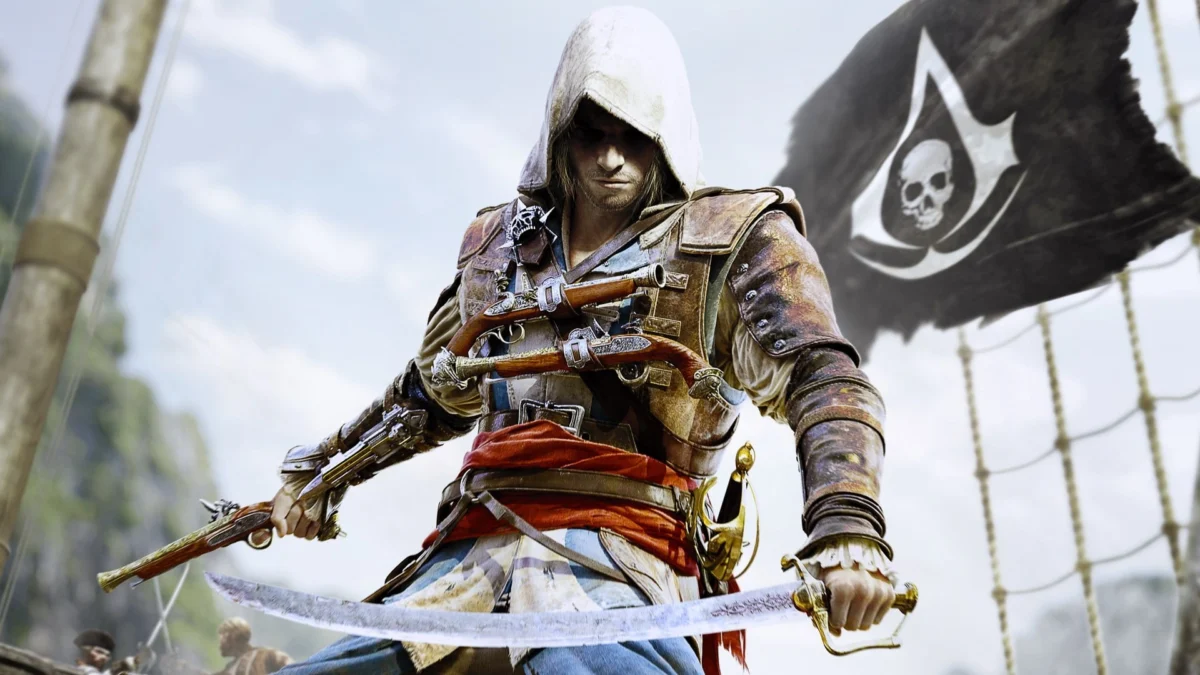
The global gaming landscape witnessed a significant milestone this week with the official launch of Assassin’s Creed Black Flag Resynced, a comprehensive remake of the 2013 classic that redefined the open-world pirate genre. Developed by Ubisoft, this release marks a strategic effort to modernize one of the most commercially successful and critically acclaimed entries in the long-running Assassin’s Creed franchise. Arriving alongside major content updates such as DOOM: The Dark Ages Revelations, the launch of Resynced highlights a broader industry trend of revisiting seminal titles to leverage the processing power of ninth-generation consoles. For the Xbox ecosystem, this release is particularly noteworthy as it signifies the third consecutive console generation—spanning the Xbox 360, Xbox One, and now the Xbox Series X/S—to host the adventures of Edward Kenway.
The launch of Assassin’s Creed Black Flag Resynced is not merely a high-definition remaster but a fundamental "resyncing" of the original game’s mechanics, assets, and narrative pacing. Ubisoft has utilized a modernized version of the Anvil engine to overhaul the Caribbean setting, introducing advanced ray-tracing, volumetric fog, and a complete rework of the ocean physics that were the hallmark of the 2013 original. Early performance metrics on the Xbox Series X indicate a native 4K resolution targeting a stable 60 frames per second, a significant leap from the 900p/30fps limitations seen during the early years of the previous console generation.
A Chronological Overview of the Black Flag Legacy
To understand the weight of the Resynced release, one must examine the timeline of the original title’s influence. Assassin’s Creed IV: Black Flag originally debuted in October 2013. At the time, the franchise was at a crossroads, transitioning from the colonial American setting of Assassin’s Creed III to a more swashbuckling, systemic open world.
The original 2013 launch served as a bridge between console generations, appearing on the Xbox 360 and PS3 before becoming a flagship launch title for the Xbox One and PS4. Between 2013 and 2015, the title sold over 15 million units, cementing Edward Kenway as a fan-favorite protagonist. In 2017, the game received various "Gold Edition" updates, and in 2019, it was ported to the Nintendo Switch as part of The Rebel Collection. However, the announcement of a full remake—codenamed "Project Resynced"—only surfaced in late 2023 following rumors of Ubisoft Singapore shifting resources away from other projects to assist in the revitalization of the pirate epic. The 2024/2025 development cycle focused on rebuilding the naval combat systems from the ground up, ensuring that the transition between land-based parkour and ship-to-ship warfare was seamless, eliminating the loading screens that hampered the original experience.
Technical Enhancements and Supporting Data
The "Resynced" edition introduces several technical benchmarks that differentiate it from the 2013 source material. According to technical analysis, the texture density in the Havana and Nassau hubs has increased by approximately 400%, utilizing high-fidelity assets originally developed for more recent titles like Assassin’s Creed Valhalla.

One of the most significant upgrades involves the "Water Tech 2.0" system. In the original game, waves were largely pre-calculated animations. In Resynced, the Caribbean Sea is a fully simulated physics environment where ship buoyancy and wave height react dynamically to wind speed and weather patterns. Data provided by Ubisoft indicates that the Xbox Series X utilizes its Velocity Architecture to reduce initial load times from the original 35-40 seconds down to less than 4 seconds. Furthermore, the integration of Spatial Audio provides a 360-degree soundscape, allowing players to hear the creaking of the Jackdaw’s hull and the distant thunder of Spanish galleons with unprecedented precision.
The game also features a revised "Modern Day" segment. While the original focused on an anonymous Abstergo Entertainment employee, Resynced adds subtle narrative layers that bridge the gap between the 2013 storyline and the current "Infinity" hub being developed for the franchise. This includes new collectible files and updated dialogue that contextualize Edward Kenway’s legacy within the broader lore established in later games like Assassin’s Creed Odyssey and Mirage.
Official Responses and Market Reception
The response from the gaming community and industry analysts has been largely positive, though it reflects the ongoing debate regarding the necessity of remakes in the current market. In a recent press briefing, Ubisoft representatives emphasized that the goal of Resynced was to provide a "definitive version" that honors the original vision while removing the technical friction of the past decade. "We recognized that Black Flag remains a cornerstone of the Assassin’s Creed identity," a Ubisoft spokesperson stated. "By bringing it to the Xbox Series X and S with modern standards, we are ensuring that both returning veterans and a new generation of players can experience the Golden Age of Piracy without compromise."
Critical reception has mirrored this sentiment. Initial reviews for Assassin’s Creed Black Flag Resynced have praised the visual fidelity and the retention of the original’s "fun factor." On aggregator sites, the remake is currently tracking a high 80s score, similar to its 2013 predecessor. Market analysts suggest that the release is strategically timed to capture the "nostalgia cycle," where titles from ten to twelve years ago are ripe for reimagining for an audience that may have missed them during their childhood.
Player polls conducted on Xbox community platforms show a high level of engagement. Early data suggests that over 65% of players purchasing Resynced are "returning fans" who owned the original on Xbox 360 or Xbox One. However, a significant 35% of the player base consists of newcomers who have entered the franchise through the Game Pass ecosystem or more recent releases, indicating a strong lifecycle for the intellectual property.
Comparative Analysis: Remake vs. Original
While the core narrative of Edward Kenway—a privateer-turned-pirate-turned-Assassin—remains untouched, the gameplay loop has seen significant refinement. The "Resynced" version addresses several "quality of life" issues that were criticized in 2013.

- Stealth Mechanics: The social stealth system has been updated to include the "crouch" button, a feature missing from the original that was only introduced later in the series with Assassin’s Creed Unity.
- Naval Customization: The upgrade paths for the Jackdaw have been expanded. Players now have access to more cosmetic options and functional upgrades, such as specialized ammunition types that were previously restricted to DLC content.
- Boarding Actions: The transition from ramming a ship to boarding it is now instantaneous. The AI for crew members has been enhanced to engage in more complex combat maneuvers, making the chaotic ship-to-ship battles feel more organic.
- World Density: The Caribbean map, while keeping the same geographical layout, features more "emergent events." This includes random merchant convoys, dynamic weather events like waterspouts that occur more frequently, and improved wildlife AI for hunting and harpooning activities.
Broader Industry Impact and Implications
The success of Assassin’s Creed Black Flag Resynced carries significant implications for Ubisoft’s future strategy. For several years, the publisher has faced internal and external pressure regarding the development of Skull and Bones, another pirate-themed title that saw numerous delays. The overwhelming positive reception of the Black Flag remake suggests that players still crave the specific blend of historical fiction and naval combat that only the Assassin’s Creed brand provides.
Furthermore, this release signals a potential shift in how Ubisoft manages its "legacy" catalog. If Resynced continues to perform well commercially, it may pave the way for similar "Resynced" treatments of other fan-favorite entries, such as Assassin’s Creed II or the original 2007 game. This strategy allows the company to maintain a steady release cadence while the development of massive new entries, such as Assassin’s Creed Codename Red and Hexe, continues.
From a platform perspective, the Xbox Series X and S versions benefit from specific ecosystem features. The inclusion of Quick Resume allows players to jump between the Caribbean high seas and other titles like DOOM: The Dark Ages Revelations in seconds. The game also supports Xbox Cloud Gaming, enabling players to continue their piracy career on mobile devices, a feature that was unimaginable during the original 2013 launch.
In conclusion, Assassin’s Creed Black Flag Resynced is more than a simple exercise in nostalgia. It is a technically proficient reconstruction of a title that many consider the peak of the series. By balancing the preservation of the original’s spirit with the demands of modern hardware, Ubisoft has successfully re-established Black Flag as a premier title for the current generation. As players return to the helm of the Jackdaw this weekend, the industry will be watching closely to see if this "Resynced" model becomes the new standard for revitalizing the classics of the previous decade. Whether it is viewed as a necessary update or a luxury remake, the data suggests that Edward Kenway’s journey remains as compelling today as it was when it first set sail over ten years ago.