



The video game industry has undergone a radical transformation over the last four decades, evolving from a niche hobby into a global entertainment powerhouse that rivals the film and music industries combined. At the heart of this evolution is the "console launch"—a high-stakes event where hardware manufacturers like Microsoft, Sony, and Nintendo release their latest technological marvels to a public increasingly hungry for higher fidelity, faster processing, and innovative gameplay mechanics. For the dedicated consumer, the decision to purchase a console on its launch day is often a complex calculation involving financial risk, software availability, and the desire to be at the bleeding edge of interactive entertainment. While the "early adopter tax" is a well-documented phenomenon, the long-term value of these hardware investments varies significantly across different generations and platforms.
The Economic and Strategic Framework of Console Launches
Historically, a console launch serves as the starting gun for a "generation," a period typically lasting five to seven years during which hardware specifications remain relatively static while software developers push the limits of the silicon. For manufacturers, the launch is a moment of extreme vulnerability. Most consoles are sold at a loss or at thin margins during their first year, with the expectation that software licensing fees and digital services will eventually lead to profitability.
For the consumer, the value proposition of a launch-day purchase is often tied to the "launch window" software lineup. However, as the industry has matured, the definition of value has shifted. In the early 2000s, value was defined by exclusive titles. In the current era, value is increasingly defined by backward compatibility, service integration like Xbox Game Pass, and hardware longevity. The recent Ninth Generation, headlined by the Xbox Series X|S and the PlayStation 5, demonstrated a unique economic anomaly: due to global supply chain disruptions and inflation, these consoles did not see the traditional price cuts associated with aging hardware. In some regions, prices actually increased years after launch, retroactively validating the "day one" purchase as a sound financial decision.
A Chronological Analysis of Launch Successes and Failures
To understand the sentiment surrounding launch-day purchases, one must examine the pivotal moments in console history where hardware met—or failed to meet—consumer expectations.
The Rise of the Xbox Ecosystem (2001–2013)
Microsoft’s entry into the hardware space with the original Xbox in 2001 was a significant gamble. Launching with Halo: Combat Evolved, the system provided immediate value that justified its $299 price tag. However, it was the 2005 launch of the Xbox 360 that solidified the "day one" culture for the brand. Despite the looming threat of the "Red Ring of Death" hardware failure—which eventually cost Microsoft over $1 billion in warranty repairs—the 360’s launch was seen as a watershed moment for high-definition gaming and online infrastructure via Xbox Live.
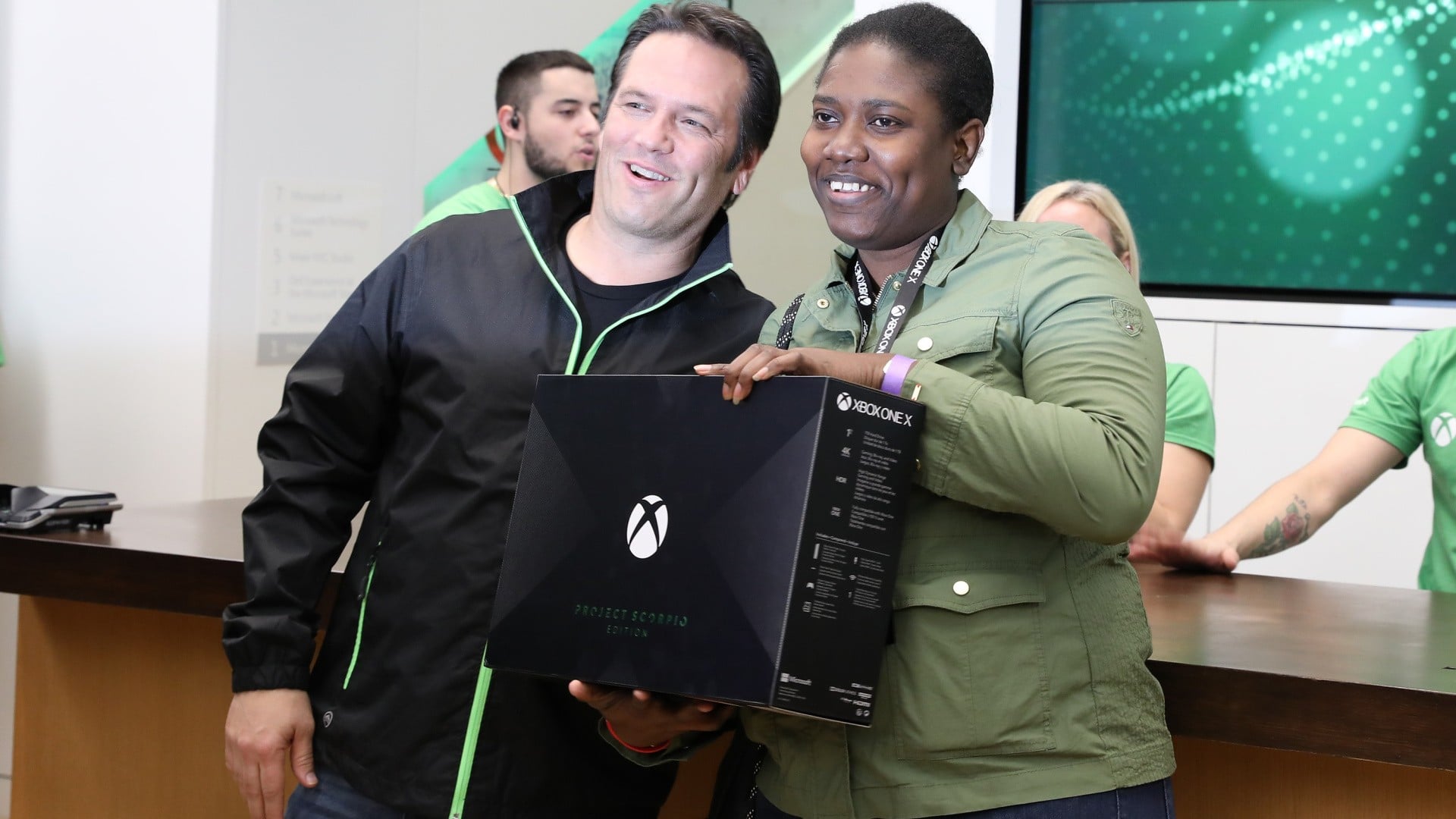
The subsequent launch of the Xbox One in 2013 serves as a primary case study in the risks of poor marketing alignment. Initially positioned as an "all-in-one" media hub with a mandatory Kinect sensor and a $499 price point, the console faced immediate backlash. Despite this, consumers who purchased at launch found a robust ecosystem. By 2014, titles like Titanfall and Sunset Overdrive began to justify the hardware, proving that even a "horribly marketed" console could offer significant entertainment value if the software pipeline remained consistent.
The Ninth Generation and the SSD Revolution (2020–Present)
The launch of the Xbox Series X and Series S in November 2020 marked a shift toward performance-driven value. While the generation lacked a "killer app" exclusive on launch day, the technical upgrade over the Xbox One was quantifiable. The introduction of NVMe SSD technology reduced loading times from minutes to seconds, and "Quick Resume" changed the fundamental way users interacted with their libraries.
Data from the first four years of the Ninth Generation suggests that the Xbox Series X has maintained its value better than almost any previous console. Unlike the Xbox 360 or Xbox One, which saw price drops or "S" model revisions that lowered the entry price within three years, the Series X has remained at its $499 MSRP in the United States and has seen price hikes in international markets such as the UK and Japan. This has led to a rare scenario where launch-day buyers feel they secured the best possible deal by not waiting.
Hardware Reliability and the "Early Adopter" Risk
A significant factor in consumer "buyer’s remorse" is hardware reliability. The history of console launches is littered with technical failures that punished early adopters.
- The Xbox 360 (2005): The aforementioned "Red Ring of Death" (RROD) remains the most famous example of launch-day hardware failure. It was caused by thermal stress that cracked solder joints.
- The PlayStation 3 (2006): Early adopters faced the "Yellow Light of Death" (YLOD) and a prohibitively high $599 price tag, leading to significant market share loss for Sony in the early years of that generation.
- Nintendo Switch (2017): While the console was a massive success, launch-day units were prone to "Joy-Con drift," a mechanical failure in the analog sticks that led to class-action lawsuits and forced Nintendo to offer free repairs globally.
Conversely, some launch-day purchases are remembered for their over-engineered quality. The original "fat" PlayStation 3 models are highly sought after today because they contained the physical Emotion Engine chip from the PlayStation 2, offering perfect hardware-based backward compatibility that was stripped out of later, cheaper models.
The Expansion of the Market: Handhelds and PC Hybrids
The "launch day" discussion is no longer limited to traditional home consoles. The emergence of powerful handheld PCs has created a new category for early adopters. The Valve Steam Deck (2022) and the ASUS ROG Ally (2023) represent a new frontier where hardware is updated at a much faster cadence—more akin to the smartphone market than the traditional console cycle.
Early adopters of the Steam Deck were rewarded with a device that saw massive software optimization post-launch, significantly increasing its value over time. However, the rapid release of the Steam Deck OLED just 20 months later introduced a sense of "obsolescence" that traditional console owners rarely feel so early in a cycle. This highlights a growing tension in the gaming industry: the desire for the latest technology versus the stability of a long-term hardware platform.
Supporting Data: Sales and Retention Trends
Market analysis from firms like Circana (formerly NPD Group) and Ampere Analysis provides a data-driven look at launch-day behavior.

- Initial Velocity: The PlayStation 5 and Xbox Series X|S both set records for their respective manufacturers in terms of launch-month sales, despite being released during a global pandemic. This suggests that the "pull" of new hardware remains at an all-time high.
- The Price of Waiting: Historical data shows that in the Fourth through Seventh generations, a $100 price drop typically occurred within 24 months of launch. In the Ninth generation, this trend vanished. In fact, the "value" of a used Xbox Series X or PS5 remained within 80-90% of its MSRP for nearly three years due to scarcity.
- Software Attach Rates: Launch-day buyers are more likely to subscribe to services. Microsoft reported that a significant percentage of Xbox Series X|S owners were Game Pass subscribers from day one, suggesting that the "value" of the console is now inextricably linked to the service it provides rather than just the physical box.
Broader Impact and Industry Implications
The trend of buying consoles at launch has significant implications for how games are developed. When a large install base exists on "day one," developers are more likely to abandon cross-generational development (making games for both old and new systems) and focus on utilizing the full power of the new hardware. This "clean break" is what drives graphical and mechanical innovation.
However, the industry is currently facing a "mid-gen" crisis. With rumors of a PlayStation 5 Pro and future Xbox revisions, the "worth it" factor of launch-day hardware is being questioned again. If a console is replaced or significantly upgraded within three or four years, the value of being a day-one owner of the base model diminishes.
Furthermore, the rise of cloud gaming (Xbox Cloud Gaming, NVIDIA GeForce Now) presents a theoretical future where "launch day" for hardware becomes irrelevant. If the latest games can be streamed to any screen, the $500 investment in a specialized box becomes a luxury rather than a necessity.
Conclusion: The Verdict on Launch Day Acquisitions
Ultimately, the question of whether a console was "worth it" at launch depends on the intersection of hardware reliability, software support, and economic timing. For many, the Xbox Series X represents a peak in launch-day value due to its immediate performance benefits and subsequent price stability. For others, the "buyer’s remorse" of the Xbox One or the hardware failures of the Xbox 360 serve as cautionary tales.
As we move toward the inevitable Tenth Generation of consoles, the data suggests that the "early adopter" is no longer just a hardware tester, but a vital part of a digital ecosystem. The success of a console launch is now measured not just in units moved, but in the long-term retention of users within a service-based framework. Whether it is a retro Atari or a modern Steam Deck, the act of buying at launch remains a statement of faith in the future of the medium—a faith that, more often than not, has been rewarded with years of entertainment and a front-row seat to the technological progress of the digital age.