


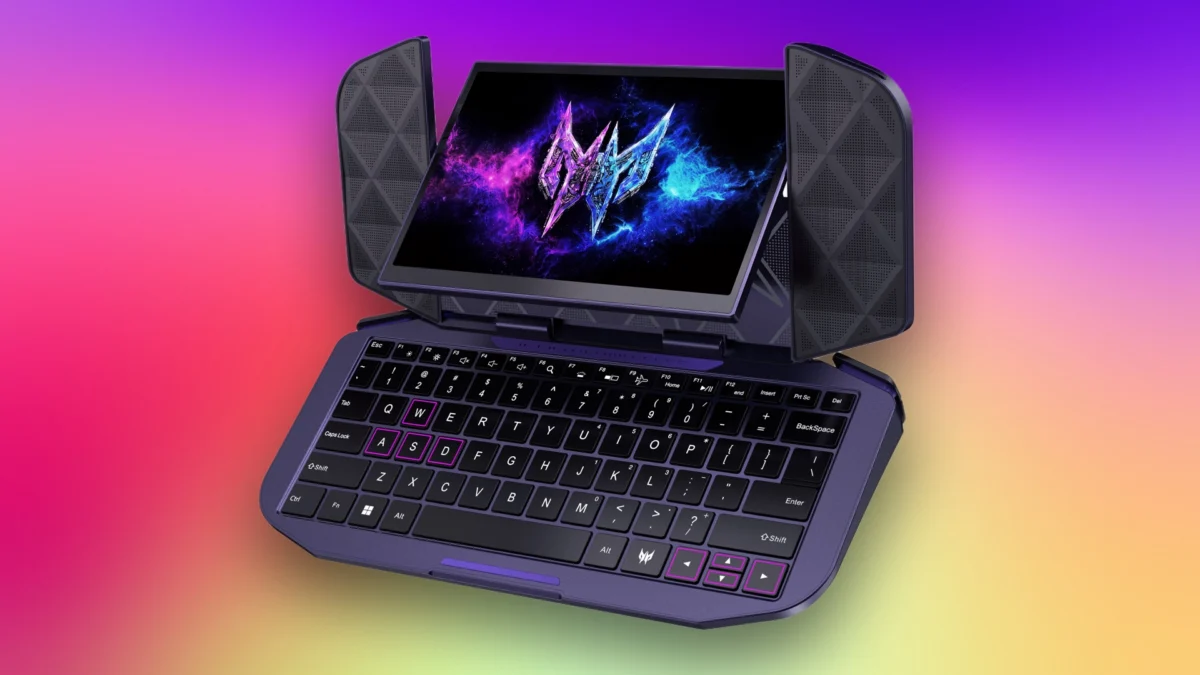
Taiwanese technology giant Acer has unveiled Project DualPlay Mini, a groundbreaking concept device poised to redefine the intersection of portable gaming and general-purpose computing. Revealed at a recent industry event, this innovative design proposes a Windows gaming handheld that can seamlessly transform into a clamshell laptop, complete with an integrated keyboard. The concept addresses a burgeoning demand for versatile devices that transcend the traditional boundaries of gaming-centric handhelds, offering a compelling solution for users seeking both high-performance gaming and efficient productivity in a single, portable form factor.
The Genesis of a Hybrid Vision: Addressing the Modern User
The landscape of personal computing has witnessed a significant shift in recent years, propelled by advancements in mobile processors and a growing consumer appetite for portability. Windows gaming handhelds, spearheaded by devices like Valve’s Steam Deck, Asus ROG Ally, and Lenovo Legion Go, have carved out a substantial niche, offering powerful gaming experiences on the go. However, despite running a full Windows operating system and leveraging capable mobile processors with integrated graphics, these devices are predominantly perceived and utilized as gaming machines. Their design often prioritizes ergonomic gaming grips and a large, vibrant display, frequently at the expense of productivity features essential for general computing tasks.
The inherent challenge lies in the input methods. While suitable for gamepad-driven gaming, using a virtual keyboard for typing or navigating a desktop environment can be cumbersome. More critically, engaging in keyboard and mouse (KBM) intensive games or performing serious work often necessitates connecting external peripherals or relying on a dedicated dock setup, thereby diminishing the device’s portability and ease of use. This limitation often restricts users to specific locations or requires them to carry additional accessories, counteracting the very essence of a portable device.

Adding to this context is the current economic climate impacting the technology sector. Reports of fluctuating component prices, colloquially termed "RAMageddon" in some circles, have contributed to elevated costs for both traditional laptops and high-end gaming handhelds. In this environment, a device that can effectively serve dual roles – a powerful gaming console and a functional mini-laptop – presents an increasingly attractive value proposition for consumers looking to maximize their investment in a single piece of hardware. Acer’s Project DualPlay Mini is a direct response to these market dynamics and user pain points, proposing an elegant solution to bridge the gap between dedicated gaming and versatile computing.
Project DualPlay Mini: A Glimpse into Acer’s Innovative Design
At the heart of Project DualPlay Mini lies its "Transformers-like" design philosophy, which allows for a fluid transition between handheld gaming and laptop modes. When configured for general computing or KBM gaming, the device resembles a compact clamshell laptop. It features an 8-inch display flanked by speakers, which form an integral part of its transformation. The ingenious aspect of the design is how the screen flips up, revealing a full, albeit compact, physical keyboard underneath. Crucially, when the device is closed for handheld gaming, the grips are ingeniously positioned on the back of these speaker modules, creating a natural and ergonomic form factor for traditional portable play.
This integrated keyboard is a significant differentiator. While users would still need to connect an external mouse for a complete desktop experience, the presence of a physical keyboard eliminates the most awkward design issue inherent in many current Windows handhelds. It allows for comfortable typing, efficient web browsing, and seamless interaction with productivity software without the need for additional, bulky accessories. This design choice elevates the device from a mere gaming gadget to a truly functional mini-computer, capable of handling a broader spectrum of tasks, from email and document creation to light coding or content consumption.
Furthermore, like its contemporaries, the Project DualPlay Mini concept envisions connectivity options that allow users to extend its capabilities. The ability to connect to an external monitor transforms the compact device into a full-fledged desktop workstation, leveraging the power of its mobile processor on a larger screen. This flexibility underscores Acer’s vision for a device that adapts to various usage scenarios, whether on the go, in a café, or at a home desk.

In comparison to existing market offerings, Acer’s concept pushes the boundaries of integration. While devices like the Lenovo Legion Go series have explored ways to enhance versatility – for instance, through a built-in kickstand that facilitates desktop use – these solutions still largely rely on external keyboards and mice for optimal productivity. The Legion Go Fold concept, though intriguing, represents a different approach to screen flexibility rather than a full transformation of the base unit into a laptop. Project DualPlay Mini stands out by incorporating the primary input method directly into its core design, offering a more self-contained and immediately functional hybrid experience.
The Expanding Ecosystem of Handheld PCs
The concept of the Windows gaming handheld has rapidly evolved from niche enthusiast products to a mainstream category, driven by significant technological advancements and a shift in consumer preferences towards portable gaming. The market for handheld gaming PCs is experiencing robust growth, with industry reports estimating its value in the billions of dollars and projecting substantial expansion in the coming years. This growth is fueled by several factors:
- Technological Maturity: Modern mobile processors, particularly those from AMD (like the Ryzen Z1 series) and Intel (like the G3 chips mentioned for Acer’s devices), now integrate powerful graphics processing units (iGPUs) capable of running demanding PC games at respectable resolutions and frame rates. This eliminates the need for bulky dedicated graphics cards, making compact designs feasible.
- Software Ecosystem: The ubiquity of Windows OS allows users to access their entire PC game library from platforms like Steam, Epic Games Store, and Xbox Game Pass, providing a vast content catalog that dedicated handheld consoles often lack.
- Consumer Demand for Flexibility: Gamers increasingly seek the freedom to play their favorite titles anywhere, without being tethered to a desktop or a large laptop. The ability to switch between gaming on the couch, during commutes, or while traveling has become a major draw.
Acer’s decision to unveil Project DualPlay Mini, even as a concept, signals its strong commitment to this burgeoning market. The company is actively building out its product portfolio in this segment, as evidenced by its recent announcements. The Predator Atlas 8, featuring Intel G3 chips, was announced at Computex earlier this year and is slated to ship later this month (June 2024). This device represents Acer’s entry into the high-performance 8-inch handheld segment. Following this, the company also unveiled the Predator Atlas 7, a slightly smaller and lighter 7-inch model, expected to ship around October or later in 2026. While no specific technical specifications have been released for the Project DualPlay Mini, Acer has indicated that it would leverage the same Intel G3 chip architecture as its Predator Atlas siblings. This strategic alignment suggests a unified approach to performance and component sourcing across Acer’s handheld line.
Market Dynamics and Economic Imperatives

The market for personal computing devices is perpetually influenced by economic factors, and the current landscape presents a compelling argument for the versatility offered by devices like the Project DualPlay Mini. The aforementioned "RAMageddon" – a period characterized by volatile and often high pricing for essential memory components – contributes to the overall cost of traditional laptops and desktop PCs. When combined with the general inflation and supply chain challenges that have impacted the electronics industry, consumers are increasingly scrutinizing the value proposition of their purchases.
In this environment, a single device capable of fulfilling multiple roles becomes economically more attractive. Instead of investing in a dedicated gaming handheld and a separate laptop for productivity, a hybrid solution offers a streamlined approach. For students, frequent travelers, or those with limited space, the ability to consolidate devices can represent significant cost savings and practical benefits. Project DualPlay Mini, with its integrated keyboard and transformative design, directly taps into this consumer need for greater utility and flexibility per dollar spent.
Furthermore, the growing sophistication of integrated graphics within mobile processors means that the performance gap between dedicated gaming laptops (especially mid-range ones) and high-end handhelds is narrowing. While a high-end gaming laptop with a discrete GPU will still outperform a handheld, the mobile processors powering these handhelds are now capable of delivering satisfying gaming experiences for a vast majority of titles, particularly at their native screen resolutions. This allows handhelds to serve as genuinely viable gaming platforms, further enhancing their appeal as a primary computing device.
Industry Reactions and Future Outlook
While Project DualPlay Mini remains a concept, its unveiling has sparked considerable interest within the tech industry and among consumers. Industry analysts view Acer’s exploration of a truly hybrid handheld as a significant move, indicative of a broader trend towards device convergence. "Acer’s DualPlay Mini concept is a bold statement about the future of portable computing," commented a hypothetical industry analyst. "It directly addresses the friction points users experience when trying to use gaming handhelds for productivity, and if executed well, could define a new sub-category of versatile personal devices."

The implications of such a device reaching mass production are multi-faceted:
- For the Handheld Market: It could elevate the entire category, pushing other manufacturers to consider more integrated productivity features beyond simple kickstands. It might normalize the idea of a handheld as a primary computer rather than just a secondary gaming device.
- For the Laptop Market: It further blurs the lines between form factors, potentially creating a new class of ultra-portable, highly versatile mini-laptops that also excel at gaming.
- User Experience: The success of Project DualPlay Mini would heavily depend on the quality of its implementation. Factors such as the keyboard’s ergonomics and key travel, the robustness of the hinge mechanism, the overall weight distribution in both modes, and the thermal management for sustained performance will be critical. Battery life, a perennial challenge for powerful portable devices, will also be a key determinant of its practicality.
- Technological Challenges: Bringing such a complex transforming design to market presents significant engineering hurdles, including miniaturization of components, durable mechanical parts, efficient cooling solutions within a compact, variable form factor, and optimizing software for seamless mode switching.
The Road Ahead: Concept to Reality
As a concept, Project DualPlay Mini currently lacks specific release dates or pricing information. Acer’s decision to showcase it as a "project" rather than a finished product indicates that it is still in the research and development phase, serving as a testbed for innovative ideas and gauging market reaction. However, its existence demonstrates Acer’s forward-thinking approach and its commitment to exploring new paradigms in personal computing.
The path from concept to commercial reality is often fraught with challenges, from manufacturing complexities to cost optimization. Yet, the clear articulation of a solution to a prevalent user dilemma, coupled with Acer’s ongoing investment in the Predator Atlas series, suggests that the underlying principles of Project DualPlay Mini are likely to influence future product designs, whether directly in a similar transforming device or indirectly through the integration of more productivity-focused features into their gaming handhelds.
Ultimately, Acer’s Project DualPlay Mini is more than just a piece of hardware; it’s a vision for a more integrated and adaptable future of portable computing. It challenges the traditional segmentation of devices and offers a compelling glimpse into a world where a single, elegantly designed gadget can empower users to game, work, and create with unprecedented freedom and flexibility. The industry will be watching closely to see how this ambitious concept evolves and whether it will ultimately transform the way we think about and interact with our personal computers.