


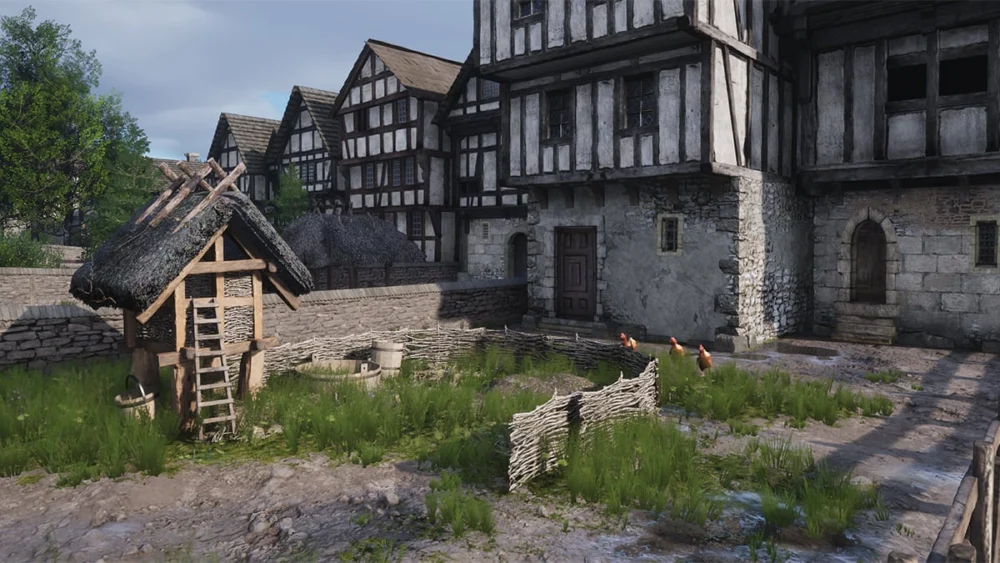
Upon embarking on the challenging journey of medieval settlement in Manor Lords, players are initially provided with a meager five families, a number quickly revealed to be insufficient for the ambitious task of forging a thriving community. The immediate and paramount objective becomes understanding the intricate mechanisms governing population growth, a process that is not immediately intuitive but is fundamental to success. The game, developed by Slavic Magic and published by Hooded Horse, places a significant emphasis on organic, sustainable expansion, where the well-being of the populace directly translates into the village’s prosperity and strategic capabilities. The early access launch of Manor Lords has highlighted the critical nature of this mechanic, as a stagnant population inevitably leads to economic bottlenecks and vulnerability.
The Dual Pillars of Demographic Expansion: Approval and Living Space
Attracting new families to a nascent settlement in Manor Lords hinges primarily on two interconnected factors: the village’s overall Approval rating and the availability of adequate Living Space. These elements are not merely arbitrary metrics but reflect the core tenets of medieval town planning and societal welfare, demanding a thoughtful and proactive approach from the player.
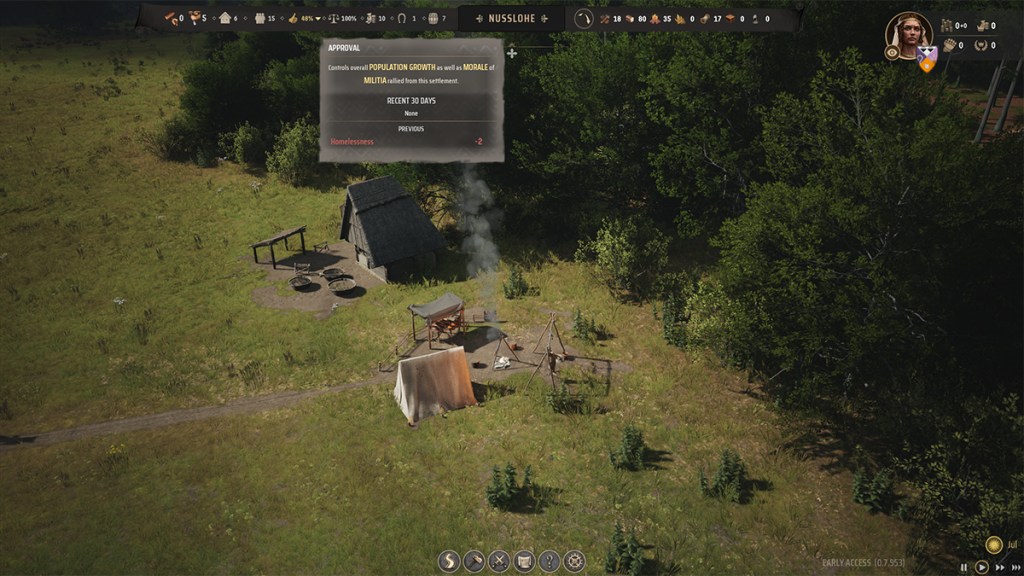
Approval, a dynamic indicator visible at the top-left of the user interface, serves as a direct barometer of the villagers’ contentment and the settlement’s desirability. Its importance cannot be overstated, as it dictates the rate at which new families are willing to migrate. A village must achieve at least a 50% Approval rating for a single new family to arrive each month. Surpassing this threshold significantly accelerates growth, with an Approval rating of 75% or higher attracting two families monthly, effectively doubling the demographic influx. This rapid growth rate is crucial for accelerating development, especially in the mid-game where labor demands escalate. Conversely, vigilance is crucial; should Approval plummet below 25%, existing families will begin to abandon the village in search of better conditions, leading to a detrimental population decline that can cripple nascent economies and defenses, potentially leading to a death spiral for the settlement.
Living Space, primarily provided through the construction of Burgage Plots, is the second critical component. New families require homes upon their arrival. Without available housing, even a high Approval rating will not translate into population growth. This means that simply having a high Approval score is not enough; the infrastructure must be in place to accommodate new arrivals. The strategic allocation and construction of these residential plots are therefore as vital as maintaining a high Approval score. This dual requirement underscores a foundational principle of Manor Lords: growth is not simply about attracting people, but about being prepared to house and sustain them, reflecting the practicalities of medieval settlement expansion.
Cultivating Contentment: Strategies for Boosting Approval
The journey to consistently high Approval ratings begins with addressing the most fundamental needs of the populace. In the early stages of Manor Lords, the most accessible and impactful strategies revolve around ensuring a diverse food supply and readily available housing, laying the groundwork for future prosperity.
I. Early Game Foundations: Food Variety and Basic Shelter (Chronology)
The initial hours of gameplay are critical for establishing the basic infrastructure that supports early population growth.
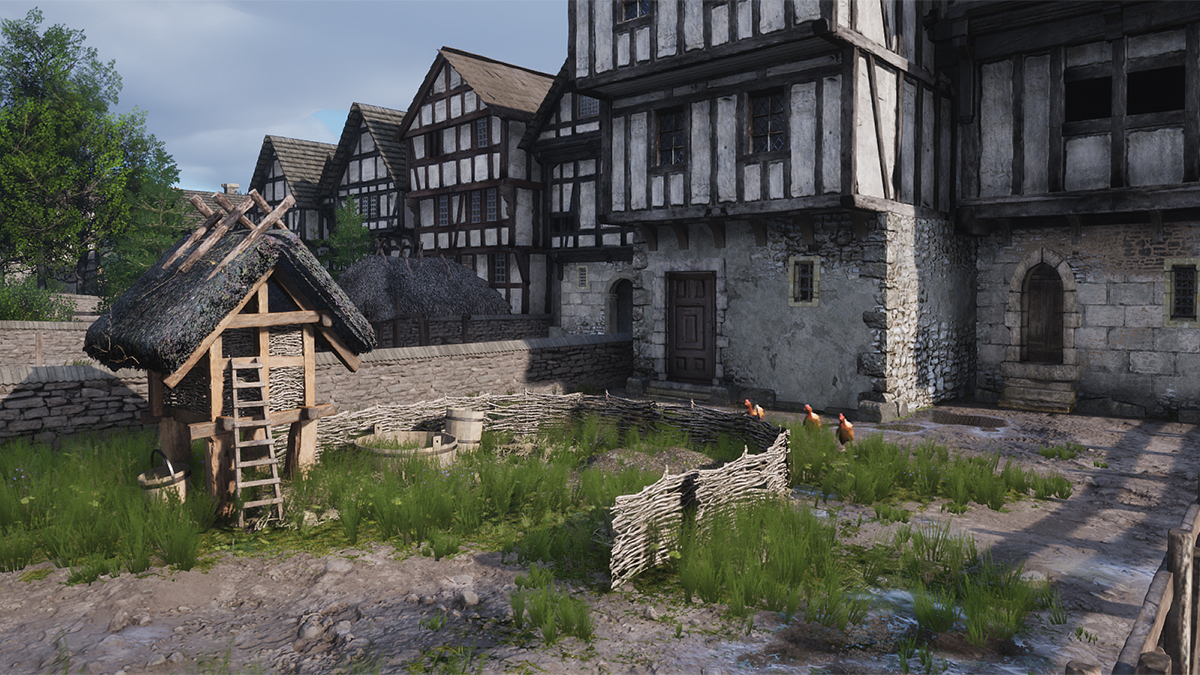
- Diverse Food Supply: Villagers are not content with a single food source. To achieve initial Approval boosts, players must establish a varied diet. Constructing a Hunting Camp provides a steady supply of meat from local wildlife, while a Forager Hut allows for the collection of berries, particularly abundant in spring and summer. These two structures, when operational and productive, typically satisfy the early-game requirement for food variety, significantly contributing to the initial Approval rating. Beyond just having these buildings, ensuring they are productive and that the harvested food is accessible via a Marketplace is crucial. A well-stocked Marketplace acts as the central distribution hub, making goods available to all Burgage Plots within its radius, preventing localized food shortages that could impact Approval.
- Sufficient Housing (Burgage Plots): The immediate construction of Burgage Plots is paramount. These residential units not only provide homes for existing families but also serve as the primary mechanism for attracting new ones. Each Burgage Plot can house one family. It is often a wise strategic decision to build a few more Burgage Plots than immediately necessary, creating a buffer for incoming families and preventing the negative Approval impact of homelessness, which can rapidly erode villager morale. The initial five families will need homes, and anticipating the first wave of new arrivals with at least one or two extra plots is a sound strategy.
- Essential Amenities for Level 1 Burgage Plots: As the village grows, Burgage Plots can be upgraded through three levels, each demanding progressively more sophisticated amenities and market access. For Level 1 Burgage Plots, the initial requirements are modest but critical for foundational Approval:
- Well: Access to clean water is a basic human necessity in any settlement. Constructing a Well within proximity to Burgage Plots is a straightforward way to meet this amenity requirement and prevent disease, thereby boosting Approval. Its placement should consider coverage for multiple plots.
- Church: Spiritual welfare also plays a significant role in medieval society. Building a Wooden Church provides the necessary religious amenity for Level 1 Burgage Plots, further solidifying the community’s contentment and fulfilling a core societal need. These early amenities are low-cost but high-impact investments that yield immediate returns in Approval.
II. Mid-Game Progression: Enhancing Quality of Life (Supporting Data & Analysis)
As the village matures beyond its nascent stage, maintaining and increasing Approval requires a more sophisticated approach, focusing on expanding market diversity, providing advanced services, and ensuring economic stability. This phase typically begins after the first few seasons, when basic food and housing needs are met, and the population has grown to around 10-15 families.
- Marketplace Diversity and Supply Chains: Upgrading Burgage Plots to Level 2 and Level 3 necessitates a greater variety of goods available in the Marketplace. This requires establishing robust supply chains and production facilities:
- Clothing: Villagers require clothing. Producing Linen (from Flax grown on farms) or Leather (from animal hides processed at a Tannery) and then crafting it into clothing at a Tailor’s Shop becomes essential for higher-level Burgage Plot requirements and overall Approval. A steady supply of two types of clothing is often needed for Level 2 and three for Level 3.
- Fuel: Beyond basic firewood from a Woodcutter’s Lodge, which has limited efficiency, charcoal production (from a Charcoal Kiln using timber) offers a more efficient and longer-lasting fuel source. Providing diverse fuel options contributes significantly to villager comfort during colder months and boosts Approval.
- Food Variety Expansion: While berries and meat suffice initially, higher-level Burgage Plots demand a wider array of foodstuffs. This involves establishing dedicated farms for grain (leading to flour at a Windmill and bread at a Communal Oven or Bakery), cultivating vegetable gardens within Burgage Plots (a backyard extension), and potentially raising livestock for additional meat, dairy, and hides. The goal is to offer at least four distinct food types for Level 2 and five for Level 3.
- Tools: Providing tools (forged at a Blacksmith from iron ore) not only equips workers for more efficient labor but also contributes to market diversity, indirectly boosting Approval as villagers value access to such essential items.
- Advanced Amenities: Higher-level Burgage Plots require more advanced amenities that cater to social and spiritual needs:
- Tavern: A tavern, once established and consistently supplied with ale (produced from Barley grown on farms and processed at a Malt House and Brewery), provides a significant boost to Approval, reflecting the social and recreational needs of the villagers. This amenity is crucial for reaching Level 2 Burgage Plots and significantly impacts overall morale.
- Education (School): While not explicitly listed for early Burgage Plot upgrades, services that improve the overall quality of life, such as education, can contribute to a more stable and content population in the long run. A schoolhouse allows for the training of specialized workers.
- Stone Church: Upgrading the Wooden Church to a more substantial Stone Church signifies a more established and prosperous settlement, contributing to higher-tier Burgage Plot requirements and overall Approval, reflecting spiritual devotion.
- Homelessness Prevention: The game actively penalizes homelessness with significant Approval penalties. Even if there are vacant Burgage Plots, if a family is unhoused for too long due to allocation issues, Approval will drop. This emphasizes the need for proactive housing construction and ensuring that all incoming families have a place to live immediately upon arrival. A common player observation is that building Burgage Plots in batches of 2-3 provides sufficient buffer for consistent growth.
III. Economic Stability and Defense: Indirect Approval Factors (Broader Impact and Implications)
While direct amenities and goods are crucial, broader village health, encompassing economic stability and security, also profoundly impacts Approval and the long-term viability of population growth.
- Regional Wealth and Trade: A healthy economy, facilitated by robust trade networks and the production of surplus goods, ensures that villagers have access to necessary items and that the lord can invest in further improvements. Exporting high-value goods like planks, tools, or clothing to neighboring regions can generate Regional Wealth, which can then be used to import scarce resources or fund public works, such as upgrading roads or constructing new production facilities, all of which indirectly contribute to villager satisfaction.
- Security and Defense: A safe village is a happy village. While not a direct amenity, the ability to raise a militia and defend against bandit incursions or rival lords contributes to the villagers’ sense of security, preventing Approval dips that could arise from fear or instability. The availability of weapons and armor, crafted by local artisans or imported, directly impacts militia effectiveness and thus, indirectly, village morale. An undefended village with frequent raids will see its Approval plummet, leading to emigration.
- Road Networks: While not directly tied to Approval metrics, efficient road networks facilitate faster transport of goods to the Marketplace and resources to production buildings. This efficiency improves supply chains, reduces travel time for workers, and thereby indirectly improves villager satisfaction by ensuring consistent access to necessities and fostering economic fluidity.
The Strategic Imperative of Population Growth (Fact-Based Analysis of Implications)
The pursuit of increased population in Manor Lords extends far beyond merely filling Burgage Plots. A growing populace is the lifeblood of a thriving medieval economy and a formidable military force, dictating the pace and scope of a player’s strategic options.
- Labor Force and Specialization: Each new family represents a unit of labor that can be assigned to various tasks. A larger population allows for greater specialization, enabling the player to staff more production buildings simultaneously. This means more farmers for expanded fields, more loggers for timber, more miners for essential ores, and more artisans for crafting goods. Without sufficient labor, even the richest resource nodes or most fertile lands remain untapped, bottlenecking economic development. For example, establishing a robust mining operation for iron and clay, or a large-scale agricultural sector with multiple fields and associated processing buildings (windmill, bakery), is simply impossible with a handful of families. Each production building typically requires at least one family, and complex chains might require multiple families across several structures.
- Economic Diversification: As the population expands, so does the capacity for economic diversification. Players can move beyond subsistence farming and basic resource extraction to establish complex production chains, such as transforming raw timber into planks, iron ore into tools, or flax into linen and then into clothing. This diversification not only creates more valuable trade goods but also provides a wider array of items for the villagers, further boosting Approval and reinforcing growth. This also allows for the development of specialized industrial zones within the settlement.
- Military Strength: A critical strategic implication of population growth is its direct correlation with military strength. Every family can contribute a male member to the militia, provided they are not otherwise engaged in critical work. A larger population directly translates into the ability to raise a more numerous and therefore more powerful fighting force. This is essential for defending against bandit camps, fending off rival lords, and asserting regional dominance. Neglecting population growth can leave a settlement vulnerable, undermining all other economic progress and potentially leading to conquest. A village with 20 families can field a basic militia, while one with 50-100 families can support a formidable fighting force capable of defending multiple regions.
- Territorial Expansion and Influence: A strong, growing population provides the necessary manpower and economic base to expand the player’s influence across the map. Claiming new regions, establishing trade routes, and developing specialized outposts (e.g., dedicated mining settlements or logging camps) all require a robust demographic foundation. A larger population ensures enough unassigned families to establish a new settlement without crippling the home village’s economy.
Developer Philosophy and Player Experience (Inferred "Statements" / Official Responses)
Manor Lords, still in its early access phase, has garnered significant attention for its blend of city-building, real-time tactics, and grand strategy. The game’s design, as inferred from statements by solo developer Greg Styczeń (Slavic Magic), strongly encourages players to adopt a holistic and organic approach to settlement management. The emphasis on Approval and the gradual nature of population growth reflects a design philosophy that prioritizes thoughtful planning and resource management over rapid, artificial expansion. This aligns with the historical context the game seeks to emulate, where medieval settlements grew incrementally, driven by the well-being and productivity of their inhabitants. The game intends to make every family feel valuable, and their satisfaction directly impactful.
The player community has largely embraced this design, recognizing that the challenge of attracting and sustaining villagers is central to the game’s immersive experience. Discussions across forums and social media often revolve around optimal building layouts, efficient supply chains, and the delicate balance required to keep Approval high, reflecting the strategic depth embedded in these core mechanics. Feedback from the early access community has been instrumental in fine-tuning these systems, with players reporting that the feeling of seeing a small cluster of homes grow into a bustling town is one of the game’s most rewarding aspects. The ongoing development cycle means that while the core principles remain, specific balancing and new features may continue to refine the population growth experience, further enriching the player’s journey.
Common Pitfalls and Mitigation Strategies
Even experienced players can encounter setbacks in managing population growth. Several common pitfalls can quickly derail a village’s expansion:
- Neglecting Housing: Failing to construct new Burgage Plots in anticipation of incoming families will halt growth, regardless of Approval. This is a common early-game mistake. Mitigation: Proactive housing construction, building 1-2 extra plots for every 5-10 existing families, is key.
- Food Shortages or Lack of Variety: Relying on a single food source, or experiencing a general food shortage, will rapidly depress Approval. Mitigation: Diversifying food production (hunting, foraging, farming, livestock, vegetable gardens) and ensuring consistent supply to the Marketplace is paramount. Pay attention to seasonal changes in food availability.
- Fuel Depletion: Villagers require fuel (firewood or charcoal) for warmth, especially in colder months. A lack of fuel will lead to rapid Approval drops and even illness. Mitigation: Investing in Woodcutter’s Lodges and Forester’s Huts (for sustainable timber) or Charcoal Kilns is essential. Ensure sufficient families are assigned to these tasks.
- Unaddressed Homelessness: While having vacant plots is good, a bug or misassignment can sometimes leave families homeless. Mitigation: Monitoring the homelessness indicator in the UI and ensuring immediate housing for any unhoused families is crucial. Relocate families if necessary.
- Lack of Amenities: Ignoring the amenity requirements for Burgage Plot upgrades will prevent them from reaching higher levels, thereby capping potential Approval boosts and limiting advanced production. Mitigation: Regularly check Burgage Plot upgrade requirements and prioritize construction of Wells, Churches, and Taverns.
Conclusion
The success of any burgeoning medieval settlement in Manor Lords is inextricably linked to its ability to attract and retain a vibrant population. By meticulously managing Approval through a diverse food supply, essential amenities, robust market access, and a secure environment, and by consistently providing adequate Living Space, players can foster a continuous influx of new families. This demographic expansion, in turn, unlocks the capacity for advanced economic specialization, formidable military strength, and ultimately, the transformation of a humble starting camp into a sprawling, prosperous medieval manor. The journey is challenging, requiring foresight and adaptability, but the rewards of a bustling, contented populace are the very foundation of enduring success in Manor Lords. Understanding and mastering these mechanics is not just a game strategy; it is the essence of medieval city-building simulation presented by Slavic Magic.