


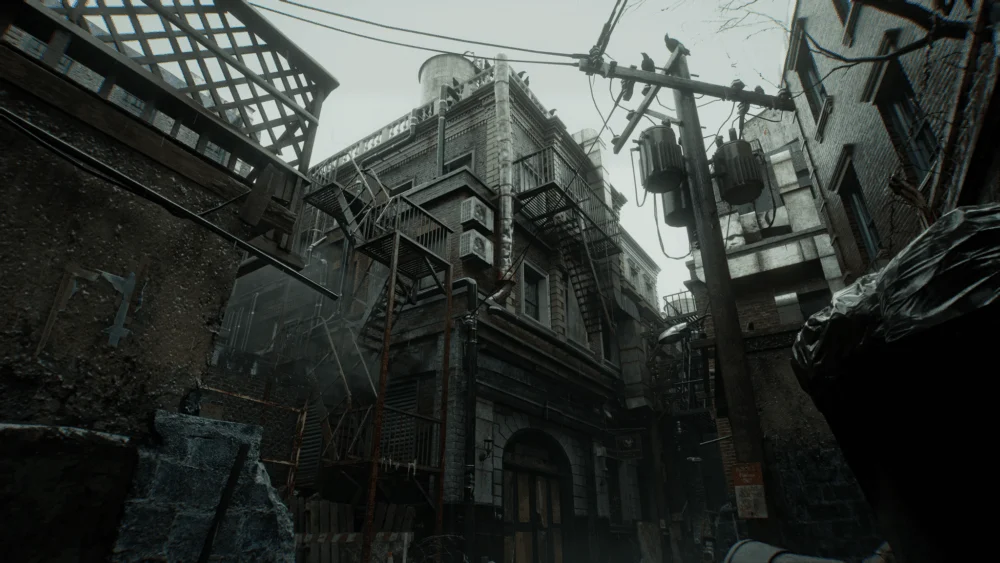
Capcom has officially expanded its flagship survival horror franchise with the release of Resident Evil Requiem, a title that attempts to bridge the historical divide between the series’ atmospheric horror roots and its high-octane action iterations. Developed on an evolved version of the proprietary RE Engine, the game introduces a dual-protagonist system featuring series veteran Leon S. Kennedy and a new character, FBI analyst Grace Ashcroft. According to technical evaluations and early gameplay data, the title offers a campaign lasting between 10 and 15 hours, characterized by a narrative structure that runs parallel storylines through shared environments. Resident Evil Requiem serves as a mechanical successor to both the survival-focused Resident Evil 7: Biohazard and the action-heavy Resident Evil 4, effectively positioning itself as a corrective measure for the polarizing design choices seen in Resident Evil 6.

Narrative Framework and Character Dynamics
The plot of Resident Evil Requiem centers on a cold case investigation that escalates into a biological outbreak. Grace Ashcroft, an FBI analyst rather than a field operative, is dispatched to a secluded hotel and industrial complex—the site where her superior’s mother was murdered years prior. This setup provides the foundation for the game’s "vulnerability" phase. Ashcroft’s narrative is defined by a lack of combat experience, forcing players to rely on environmental puzzles and resource management.
In contrast, Leon S. Kennedy enters the narrative as a seasoned counter-terrorism agent. His sections of the game occur in the wake of Ashcroft’s movements, often intersecting at critical plot junctions. This parallel storytelling allows Capcom to explore the same physical spaces through two distinct lenses: one of abject terror and another of tactical dominance. While Ashcroft’s gameplay is paced deliberately to emphasize the horror of the unknown, Kennedy’s segments provide the "power fantasy" elements that have become a staple of the franchise’s modern era.

Mechanical Innovation: The Injector System and Combat Pacing
The most significant mechanical addition to the Resident Evil formula in Requiem is the "Injector System." This crafting mechanic replaces the traditional herb-combining system with a more complex biological interaction. Players must collect samples of infected blood and various chemical reagents to create specialized serums.
Data regarding the Injector System reveals several key functions:

- Offensive Utilities: The creation of viral agents, such as a "purple liquid" that causes cellular instability in infected enemies, leading to explosive neutralization.
- Defensive Enhancements: Temporary stat boosts or health recovery via injectable syringes.
- Resource Management: The system is tied to a restricted inventory. While Grace Ashcroft begins with minimal carrying capacity (expandable via "fanny packs"), Leon Kennedy starts with a significantly larger inventory, reflecting his professional equipment loadout.
Combat pacing is strictly divided between the two protagonists. Ashcroft is equipped with low-caliber firearms and fragile melee weapons, necessitating a "fight or flight" approach. Kennedy, conversely, utilizes an indestructible tactical axe—which requires a sharpening mechanic similar to firearm reloading—and a vast array of high-powered weaponry. This bifurcation ensures that the game satisfies both the survival horror purist and the action enthusiast without compromising the integrity of either style.
Technical Specifications and Platform Performance
Resident Evil Requiem showcases the latest advancements in the RE Engine, particularly in its handling of lighting, global illumination, and character physics. Technical benchmarks conducted on high-end PC hardware (specifically utilizing the AMD Radeon RX 7900 XTX) indicate that the game is capable of maintaining a 4K resolution at an average of 100 frames per second with maximum settings, including ray tracing.

However, performance varies significantly across console platforms. The PlayStation 5 Pro and the newly released Nintendo Switch 2 versions reportedly received bespoke optimizations to leverage their respective hardware advantages. On the PS5 Pro and PC, the game utilizes advanced hair strand effects and high-fidelity skin shaders that eliminate the "waxy" appearance occasionally noted in standard console versions.
The Xbox Series X and base PlayStation 5 versions appear to target a unified performance profile. While the game remains visually striking on these platforms, reports suggest that the Xbox port lacks the specific refinements seen in the "Pro" or PC iterations, representing a standardized parity rather than a platform-specific optimization. The Xbox Series S and Nintendo Switch 2 versions omit the demanding hair strand simulation but maintain the core lighting and environmental fidelity that define the title’s atmosphere.

Chronology of Development and Franchise Context
The development of Resident Evil Requiem follows a specific timeline of engine iteration. Following the success of the Resident Evil 4 Remake in 2023, Capcom focused on "RE Engine Next," aiming to solve the pacing issues that had plagued longer entries in the series. Requiem is the result of a three-year development cycle aimed at perfecting the "dual-campaign" logic first attempted in the original Resident Evil 2 (1998) and later expanded in Resident Evil 6 (2012).
By limiting the campaign to a "snappy" 10-to-15-hour window, the developers have avoided the "pacing bloat" that critics often cited in the latter half of the Resident Evil 4 Remake. The inclusion of classic save mechanics, such as typewriters and the return of ink ribbons for the highest difficulty settings, serves as a direct nod to the franchise’s legacy, rewarding players who master the game’s spatial logic and resource constraints.

Atmospheric Audio and Sound Engineering
Sound design in Resident Evil Requiem is utilized as a primary tool for psychological tension. The game employs sophisticated Foley work to create an immersive industrial environment. Audio analysis highlights the use of "music stings"—sudden orchestral shifts—to trigger startle responses, balanced by ambient low-frequency drones that maintain a baseline of anxiety during exploration.
Voice acting remains a high priority for the production. Angela Sant’Albano provides the voice for Grace Ashcroft, delivering a performance that emphasizes the character’s transition from a terrified analyst to a resilient survivor. Nick Apostolides returns to voice Leon S. Kennedy, opting for a more weathered and cynical tone that reflects the character’s aging process and long history of biological warfare. While some critics have noted the repetitive nature of certain incidental dialogue lines (e.g., Ashcroft’s reaction to environmental noises), the overall vocal production is regarded as being of cinematic quality.

Broader Impact and Industry Implications
The release of Resident Evil Requiem marks a pivotal moment for Capcom and the survival horror genre at large. By successfully integrating two disparate gameplay styles into a single cohesive narrative, Capcom has provided a blueprint for how long-running franchises can evolve without alienating their core demographics.
Several industry implications emerge from this release:

- Engine Longevity: The continued success of the RE Engine demonstrates that proprietary software, when properly maintained, can outperform licensed engines like Unreal Engine 5 in specific genres, particularly regarding optimization and load times.
- Narrative Scaling: The use of a "grounded" character (Ashcroft) alongside a "legacy" character (Kennedy) allows Capcom to introduce new lore and stakes without needing to reboot the established timeline.
- Cross-Generational Optimization: The ability of Requiem to scale from the Nintendo Switch 2 to the PS5 Pro suggests a shift in development philosophy toward "elastic" assets that can accommodate a wide range of hardware power.
In conclusion, Resident Evil Requiem stands as a comprehensive distillation of thirty years of survival horror evolution. It balances the terror of the "Biohazard" with the thrill of the "Resident Evil," offering a technical showcase that pushes the boundaries of current-generation hardware while remaining faithful to the tension and resource management that defined the genre in 1996. For the gaming industry, it serves as a testament to the value of iterative design and the enduring appeal of the struggle against the undead.