


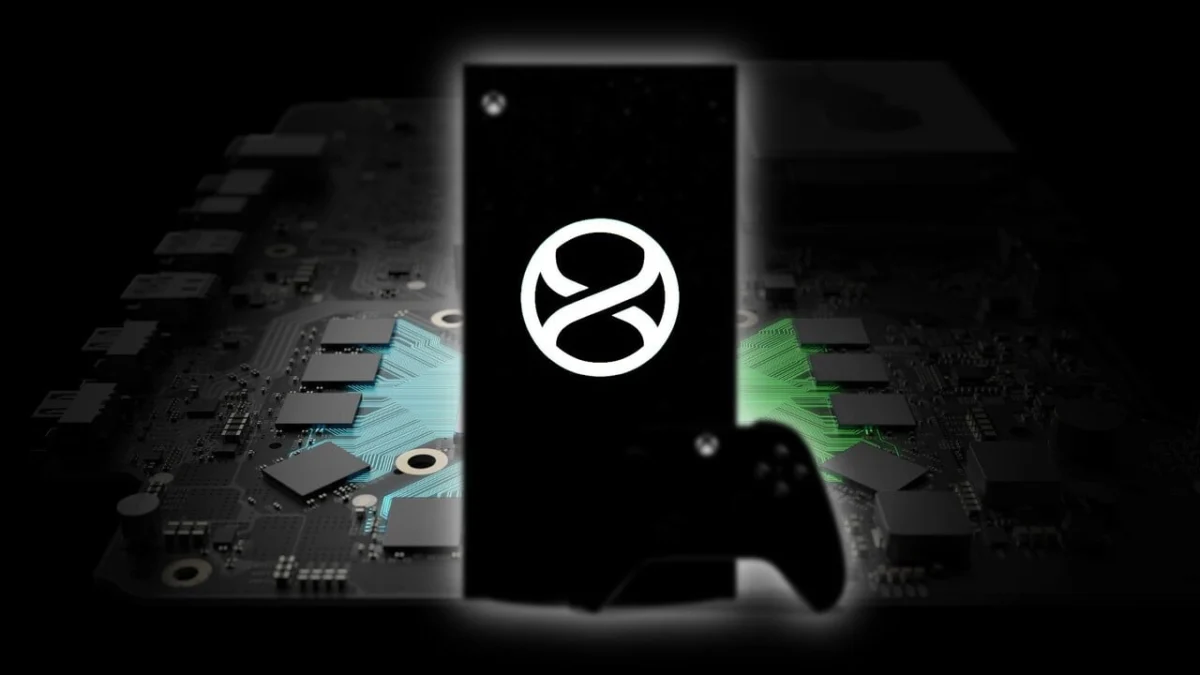
The global interactive entertainment industry is facing a transformative economic challenge as a tightening "component crisis" threatens to redefine the pricing and availability of next-generation hardware. Throughout the 2026 fiscal year, leadership at Microsoft’s Xbox division has repeatedly signaled alarm regarding an escalating shortage of critical memory and storage components. This crisis, driven by the explosive growth of artificial intelligence (AI) data centers, has created a supply-demand imbalance that experts suggest will persist well into the end of the decade. Xbox boss Asha Sharma recently emphasized that the industry must prioritize innovation in affordability and efficiency, a directive that highlights the growing difficulty of launching a high-performance console like the rumored "Project Helix" in a market where component costs are spiraling upward.
The Escalation of the Component Crisis
The roots of the current instability can be traced back to the mid-2020s, as the global semiconductor market shifted its focus toward the high-margin requirements of AI infrastructure. By June 2026, Xbox officials issued a stark warning regarding the trajectory of manufacturing costs. Internal data shared by the company revealed that the prices for console-grade storage and Dynamic Random-Access Memory (DRAM) had surged by more than 2.5 times within a short window. More concerning for long-term planning was the projection that these costs would likely double again by the fall of 2027.
While the consumer electronics sector at large is grappling with these fluctuations, the console industry is uniquely vulnerable. Unlike the smartphone or PC markets, where manufacturers can more easily pass costs to consumers or offer a wide range of tiered models, gaming consoles traditionally rely on a fixed, subsidized entry price to build a massive user base. The current volatility in the component market disrupts this "razor and blades" business model, forcing hardware architects to reconsider the baseline specifications of upcoming machines.
Micron Technology Forecasts Prolonged Market Tightness
Validation of Xbox’s internal concerns arrived this week via Micron Technology, one of the world’s three primary providers of DRAM. During the company’s fiscal year 2026 earnings call, CEO Sanjay Mehrotra provided a sobering outlook for the semiconductor landscape. Micron, which serves as a critical link in the global supply chain for both Microsoft and Sony, indicated that the current "supply-demand environment is only getting tighter."
Mehrotra noted that the industry is seeing greater tightness in 2027 and 2028 than was experienced in 2026. "We do not have line of sight to when supply and demand will return to balance," Mehrotra stated, suggesting that the era of cheap, abundant memory has effectively ended. The primary driver for this shift is the massive reallocation of manufacturing capacity toward High Bandwidth Memory (HBM) and enterprise-grade NAND flash, both of which are essential for the training and deployment of Large Language Models (LLMs) used by tech giants. As fabrication plants (fabs) prioritize these high-value orders, the capacity available for the GDDR6 and GDDR7 memory typically used in gaming consoles has dwindled.
A Chronology of Supply Chain Instability (2024–2028)
To understand the severity of the current situation, it is necessary to examine the timeline of events that led to the 2027–2028 forecast:
- 2024–2025: The initial surge in AI investment leads to a pivot in semiconductor R&D. Major suppliers begin converting traditional DRAM production lines to HBM production to meet the demands of companies like NVIDIA and AMD.
- Early 2026: Xbox leadership identifies a "component crisis." Initial reports indicate a 2.5x increase in memory and storage costs compared to 2023 levels. Asha Sharma is appointed to lead Xbox’s hardware strategy with a focus on "Project Helix."
- June 2026: Microsoft issues an official statement warning that console storage prices could double again by 2027. Speculation begins regarding the viability of a sub-$500 next-generation console.
- October 2026: Micron’s FY2026 earnings call confirms that demand will exceed supply through 2028. This marks the first time a major supplier has publicly written off a return to equilibrium within a two-year window.
- November 2026 (Forecasted): Xbox approaches its 25th anniversary. The industry anticipates a formal reveal of "Project Helix" or a roadmap for the future of the ecosystem, though economic pressures remain a primary talking point.
Technical Analysis: Why Consoles Are Hit Harder
The "component crisis" is not a uniform burden across all tech sectors. Consoles are particularly susceptible due to their reliance on specific types of high-speed memory. While a standard laptop might utilize DDR5 memory, a high-performance console requires GDDR (Graphics Double Data Rate) memory to handle the massive throughput required for modern 4K and 8K rendering.
Furthermore, the "next-generation" promise of consoles like Project Helix and the PlayStation 6 (PS6) hinges on ultra-fast Solid State Drive (SSD) technology. The NVMe protocols used in these machines share the same NAND flash supply that is currently being vacuumed up by enterprise data centers. As data centers expand to support AI-driven cloud services, the "spot price" for this silicon increases. For a company like Microsoft, which may be aiming to include 2TB or 4TB of storage in a premium Helix console, a doubling of prices could add $100 to $150 to the bill of materials (BOM) for the storage component alone.
Strategic Responses from Microsoft and Sony
The response from platform holders has been one of cautious adaptation. Asha Sharma’s public comments regarding "efficiency and affordability" suggest that Xbox may be looking at unconventional ways to offset hardware costs. This could include:
- Modular Storage Solutions: Returning to proprietary or expandable storage formats that allow the base console to ship with less internal memory, thereby keeping the "shelf price" lower.
- Hybrid Cloud Integration: Shifting some of the computational and storage burdens to the cloud to reduce the need for expensive on-board silicon.
- Extended Lifecycle Subsidies: Microsoft may choose to sell the Project Helix hardware at a significant loss, recouping the investment through Game Pass subscriptions and digital storefront fees. However, with component prices doubling, the "loss per unit" could become unsustainable even for a company with Microsoft’s balance sheet.
Sony faces a similar dilemma with the development of the PlayStation 6. Analysts suggest that the "Pro" iterations of current-gen consoles (such as the PS5 Pro) served as a bellwether for consumer price elasticity. If the market demonstrates a willingness to pay $700 or more for hardware, both Microsoft and Sony may abandon the traditional $499 price point entirely.
Broader Impact on the Nintendo Switch 2 and Beyond
The crisis extends beyond the high-end powerhouses. Nintendo, which has traditionally avoided the "bleeding edge" of silicon to maintain profitability, is also caught in the crossfire. The successor to the Nintendo Switch is expected to require significantly more RAM and faster storage than its predecessor to support modern engines like Unreal Engine 5. While Nintendo’s requirements are less intensive than Xbox’s, the general "tightness" in the market described by Micron means that even lower-spec silicon is seeing price inflation.
If the Nintendo Switch 2 (or its equivalent) launches into a market where memory prices are doubling, Nintendo may be forced to choose between a higher-than-expected MSRP—potentially $399 or $449—or hardware specifications that are already outdated upon arrival.
The Future of Project Helix and the 25th Anniversary
As the November 15th anniversary of the original Xbox approaches, the industry is looking for a sign of confidence from Microsoft. Project Helix represents more than just a new console; it is viewed as a convergence of Xbox’s hardware, cloud, and PC ecosystems. However, the "bold move" of launching a console in 2027 or 2028, as some rumors suggest, now looks increasingly risky.
If Microsoft proceeds with a 2027 launch, they will be entering the market at the exact moment Micron predicts the "tightest" supply-demand imbalance. This could result in chronic stock shortages reminiscent of the 2020–2022 era, or a launch price that alienates the core gaming audience.
The "component crisis" of 2026-2028 is more than a temporary supply chain hiccup; it is a fundamental shift in the economics of silicon. As AI continues to dominate the priorities of semiconductor giants like Micron, Samsung, and TSMC, the gaming industry must find a way to coexist in a world where it is no longer the primary driver of chip demand. For Xbox and its Project Helix, the path forward will require a delicate balance between cutting-edge power and the harsh reality of a market where "affordability" is becoming an increasingly difficult target to hit.