


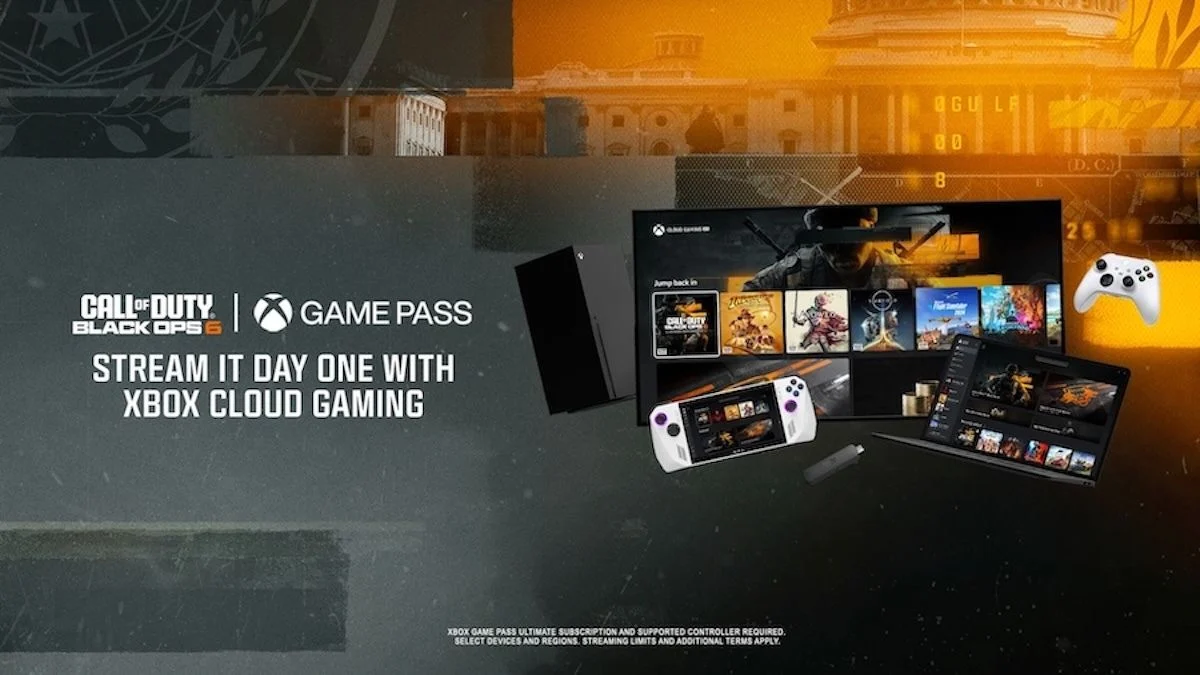
Microsoft has officially confirmed that Call of Duty: Black Ops 6, alongside the battle royale phenomenon Call of Duty: Warzone and last year’s installment, Call of Duty: Modern Warfare III, will be made available through Xbox Cloud Gaming for Game Pass Ultimate subscribers. This strategic expansion means that on October 25, 2024, the highly anticipated Black Ops 6 will not only launch Day One on select Game Pass membership options but will also extend its reach to a multitude of devices via cloud streaming. This move underscores Microsoft’s ongoing commitment to broadening access to its premier gaming titles and leveraging its colossal acquisition of Activision Blizzard to enhance the value proposition of Xbox Game Pass.
The Strategic Imperative: Bringing Call of Duty to the Cloud
The announcement, initially made via an Xbox Wire blog post, solidifies a crucial component of Microsoft’s post-acquisition strategy for Activision Blizzard. Following its historic $69 billion acquisition, the tech giant has been systematically integrating Activision Blizzard’s vast catalog into the Xbox ecosystem, with Call of Duty serving as a tentpole franchise. While the initial revelation that Black Ops 6 would be a Day One Game Pass title for console and PC users marked a significant shift, its immediate inclusion in Xbox Cloud Gaming (Beta) for Game Pass Ultimate members on launch day, October 25 at 10:00 a.m. PT, amplifies the strategic implications.
This initiative is not limited to the newest entry. Call of Duty: Modern Warfare III and Call of Duty: Warzone will also join the Cloud Gaming lineup on the same date, providing a robust suite of the franchise’s most popular current offerings to cloud-enabled devices. This means that subscribers with Game Pass Ultimate can access these graphically intensive titles on a range of devices, including smartphones, tablets, and lower-spec PCs, without the need for high-end local hardware or extensive downloads.
A Timeline of Strategic Moves and Market Consolidation
The journey to this point has been long and complex, rooted in Microsoft’s ambition to expand its footprint in the gaming industry and solidify its position in the rapidly evolving subscription and cloud gaming markets.
- January 2022: Microsoft announces its intent to acquire Activision Blizzard for nearly $69 billion, marking the largest acquisition in the history of the video game industry. The stated goal was to accelerate the growth of Microsoft’s gaming business across mobile, PC, console, and cloud, providing the building blocks for the metaverse.
- Early 2023 – Mid 2023: The acquisition faces intense scrutiny from regulatory bodies worldwide, including the U.S. Federal Trade Commission (FTC), the UK’s Competition and Markets Authority (CMA), and the European Commission. Concerns primarily revolve around potential market dominance, particularly regarding the future availability of Call of Duty on competing platforms like PlayStation.
- July 2023: After concessions, including agreements to license Call of Duty to rival cloud gaming services and maintain its availability on PlayStation for a decade, the European Commission and the FTC eventually clear the deal.
- October 2023: The UK’s CMA, initially the most resistant regulator, finally approves the revised deal after Microsoft agrees to divest Activision Blizzard’s cloud streaming rights outside the European Economic Area to Ubisoft. This clears the final major hurdle, allowing the acquisition to close.
- December 2023: Microsoft begins the integration of Activision Blizzard titles into Game Pass, with Call of Duty: Modern Warfare III being added to the subscription service a few months after its initial launch, signaling the beginning of the franchise’s deeper integration.
- May 2024: Microsoft officially announces that Call of Duty: Black Ops 6 will launch Day One on Xbox Game Pass for console and PC. This marks a pivotal moment, as it’s the first time a mainline Call of Duty title has debuted directly into the subscription service.
- October 2024: The current announcement confirms the cloud gaming availability for Black Ops 6, Warzone, and Modern Warfare III on October 25, coinciding with Black Ops 6‘s global launch.
This chronology highlights Microsoft’s persistent efforts to leverage the Activision Blizzard acquisition, not just for content ownership, but as a catalyst for its broader ecosystem strategy, with Game Pass and cloud gaming at its core.
The Power of Cloud Gaming: Accessibility and Expansion
Xbox Cloud Gaming (Beta), a feature of Game Pass Ultimate, enables subscribers to stream games directly from Microsoft’s cloud servers to various devices. This technology effectively decouples the gaming experience from the hardware, allowing players to enjoy high-fidelity titles without owning an Xbox console or a powerful gaming PC. The benefits are manifold:
- Enhanced Accessibility: Players can jump into games instantly on compatible devices (smartphones, tablets, smart TVs, web browsers, low-end laptops) without long download times or installation processes. This significantly lowers the barrier to entry for many potential players.
- Hardware Independence: The computational heavy lifting is done in Microsoft’s data centers, meaning even a basic mobile phone or an older laptop can run the latest AAA games, provided there’s a stable internet connection.
- Cross-Device Play: The ability to seamlessly switch between devices, picking up gameplay where one left off, offers unparalleled flexibility for modern lifestyles.
- Market Expansion: Cloud gaming allows Microsoft to tap into demographics that might not traditionally invest in dedicated gaming hardware, potentially expanding the Call of Duty player base beyond its existing console and PC strongholds.
While cloud gaming offers immense potential, it also presents challenges, primarily latency and the requirement for a robust, stable internet connection. Microsoft has invested heavily in its Azure cloud infrastructure to minimize latency and optimize the streaming experience, but regional internet disparities can still impact performance. However, for a fast-paced, competitive shooter like Call of Duty, the success of cloud integration will heavily rely on delivering a smooth, responsive experience.
Impact on Game Pass Subscriptions and the Broader Ecosystem
The inclusion of Black Ops 6 Day One on Game Pass, and particularly its immediate availability on Cloud Gaming, is expected to have a significant impact on Game Pass Ultimate subscriptions. As of early 2023, Xbox Game Pass boasted over 25 million subscribers. While exact, updated figures are not regularly disclosed, the service continues to be a cornerstone of Microsoft’s gaming strategy.
- Subscriber Growth: The Call of Duty franchise commands an enormous global player base, with hundreds of millions of players across its various titles. Bringing Black Ops 6 to Game Pass Day One, especially with cloud access, is a powerful incentive for new subscribers and a strong retention tool for existing ones. Many players who might otherwise purchase the game outright may opt for a Game Pass Ultimate subscription to gain access, along with a library of hundreds of other titles.
- Increased Engagement: For existing Game Pass Ultimate members, this addition significantly enhances the value of their subscription. The ability to play Black Ops 6, Warzone, and Modern Warfare III on mobile devices during commutes or away from their primary gaming setup could lead to increased player engagement and time spent within the Call of Duty ecosystem.
- Competitive Edge: This move further differentiates Xbox Game Pass from competing subscription services and traditional game purchasing models. No other major subscription service currently offers a AAA title of Call of Duty‘s caliber Day One, especially with comprehensive cloud support. This puts pressure on competitors to innovate their own offerings.
- Monetization Strategy: While Day One Game Pass releases might impact initial upfront sales of Black Ops 6, Microsoft’s strategy pivots towards long-term recurring revenue and in-game monetization. Call of Duty titles are known for their robust in-game economies, including Battle Passes, cosmetic microtransactions, and seasonal content. By expanding the player base through Game Pass and cloud gaming, Microsoft can potentially increase the total addressable market for these lucrative post-launch revenue streams.
Official Responses and Market Reception
While specific new statements directly tied to the cloud gaming announcement beyond the blog post are pending, Microsoft’s leadership has consistently articulated a clear vision for Game Pass and cloud gaming. Satya Nadella, Microsoft CEO, has repeatedly emphasized the importance of content and community, stating that Game Pass is central to the company’s ambition to "bring the joy and community of gaming to everyone on the planet." Phil Spencer, CEO of Microsoft Gaming, has championed Game Pass as a consumer-friendly service designed to lower barriers to entry and expand the reach of gaming.
The market’s reaction to Call of Duty‘s deeper integration with Game Pass has generally been positive among players, who see it as a significant value proposition. Analysts largely view the move as a strategic necessity for Microsoft, given the substantial investment in Activision Blizzard. It validates the acquisition by demonstrating how Call of Duty can drive subscriptions and engagement, which are crucial metrics for a service-based business model. Concerns about cannibalizing upfront sales are often offset by the potential for increased long-term engagement and recurring revenue from subscriptions and in-game purchases.
Beyond Black Ops 6: The Future of Activision Blizzard on Game Pass
The inclusion of Black Ops 6, Warzone, and Modern Warfare III on Xbox Cloud Gaming sets a precedent for how future Activision Blizzard titles will be integrated into the Game Pass ecosystem. It is highly probable that other major franchises acquired through the deal, such as Diablo, Overwatch, and World of Warcraft, will see similar expansions onto Game Pass and potentially cloud gaming in due course, albeit with different release strategies tailored to their respective communities and business models.
- Diablo and Overwatch: These titles, already popular on PC and console, could significantly benefit from cloud gaming accessibility, potentially attracting new players on mobile devices. Diablo IV, for instance, could find a broader audience among players seeking a high-quality RPG experience on the go.
- World of Warcraft: While an MMO like World of Warcraft presents unique challenges for cloud streaming (especially regarding input methods on mobile), the long-term vision could involve cloud-based access for casual play or specific content, broadening its reach beyond dedicated PC players.
This phased integration of Activision Blizzard’s catalog, starting with the most prominent franchise, Call of Duty, illustrates Microsoft’s methodical approach to maximizing the return on its historic investment and solidifying Game Pass as the definitive "Netflix of Gaming."
Conclusion: A New Era for Call of Duty and Cloud Gaming
The confirmation that Call of Duty: Black Ops 6, Warzone, and Modern Warfare III are coming to Xbox Cloud Gaming Day One for Game Pass Ultimate members on October 25, 2024, is more than just a service update; it represents a landmark moment in the ongoing evolution of the video game industry. It signifies the maturation of cloud gaming technology, Microsoft’s strategic leveraging of its Activision Blizzard acquisition, and a decisive step towards making premium gaming content more accessible than ever before.
For players, it means unprecedented flexibility in how and where they experience one of the world’s most popular gaming franchises. For Microsoft, it reinforces Game Pass as a formidable force in the subscription economy, driving subscriber growth, increasing engagement, and solidifying its position in the competitive landscape. As the gaming industry continues its shift towards digital distribution and service-based models, this move by Microsoft firmly establishes Call of Duty at the vanguard of this new, cloud-powered era. The future of gaming is increasingly looking hardware-agnostic, and Call of Duty‘s arrival on the cloud is a testament to this transformative vision.