


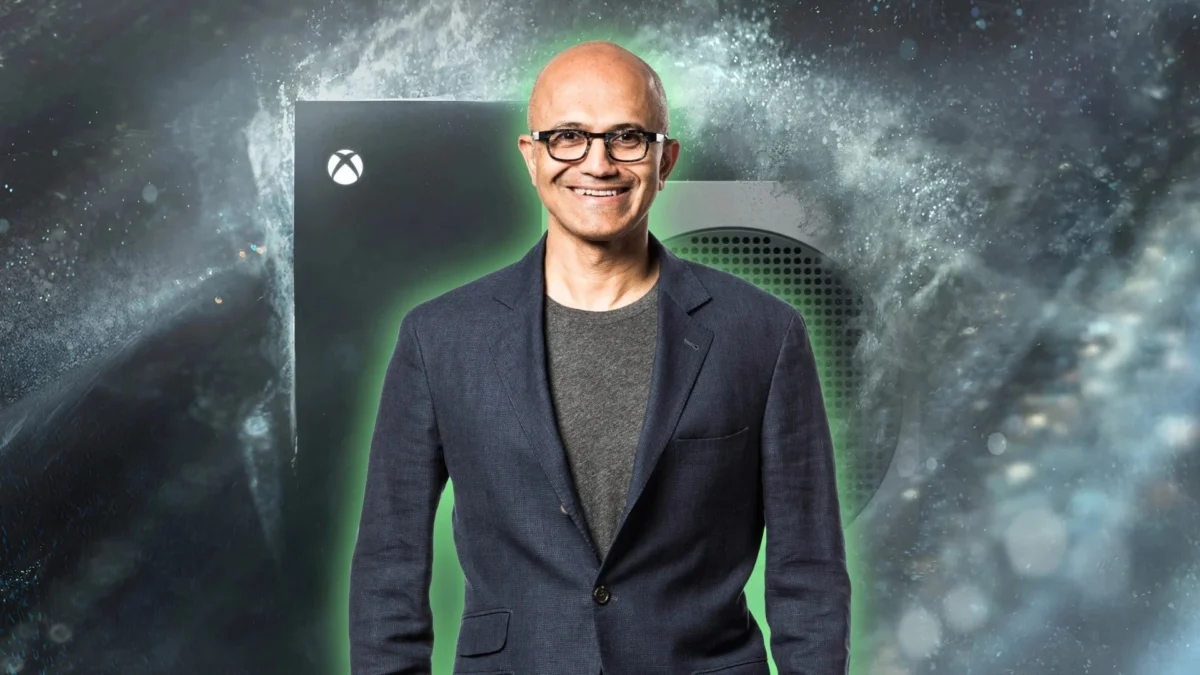
Microsoft CEO Satya Nadella recently provided further clarity on the strategic direction of Xbox, underscoring the company’s commitment to operating as both a leading publisher and a robust platform provider. Speaking during an interview on the Sources Podcast, which reportedly took place at a Copilot event in Seattle, Nadella articulated a vision centered on leveraging Xbox’s extensive intellectual property (IP) portfolio and establishing a sustainable business model for long-term success. The interview snippet, though brief, offered a reaffirmation of previous statements from Microsoft leadership, aiming to address ongoing industry speculation regarding the future of Xbox’s hardware division.
Nadella’s Core Message: IP, Sustainability, and Dual Identity
During the podcast segment, Nadella expressed strong confidence in Xbox’s current IP holdings, stating, "I feel fantastic about the IP we have right now. If I look at the studios, the IP portfolio we have, and our ability to then take that and produce great games going forward, I feel fantastic." This sentiment directly follows a period of significant strategic acquisitions for Microsoft Gaming, including ZeniMax Media (Bethesda Softworks) and Activision Blizzard, which dramatically expanded Xbox’s stable of world-renowned franchises.
Beyond content ownership, Nadella highlighted the critical need to "invent the right sustainable business model that allows us to deliver gaming to more and more people." This pursuit of sustainability is not new for Microsoft’s gaming division, having been a recurring theme in executive discussions. The CEO explicitly reiterated Xbox’s overarching goal: "That has always been the goal, which is we want to be a great publisher and a great platform provider for games across both PCs and Xboxes."
Further reinforcing the immediate operational focus, Nadella acknowledged ongoing efforts within the Xbox team, noting, "There’s a certain amount of streamlining the team is doing and Asha [Sharma, Xbox President] is doing which is great to see." This comment arrives in the wake of recent significant layoffs and studio closures within Microsoft Gaming, actions that have been framed internally as necessary adjustments for efficiency and strategic alignment. Nadella concluded by affirming the leadership’s commitment to growth: "Asha and team have said that Xbox is going to get back to growth this next fiscal year, and that’s the plan they’re executing on. And in that process, do a bang up job of producing some great games."
Chronology of Xbox’s Evolving Strategy
The narrative of Xbox’s strategic evolution under Satya Nadella’s leadership is marked by several key phases and decisions.
- Early Nadella Era (2014-2017): Upon becoming CEO in 2014, Nadella appointed Phil Spencer to lead Xbox, signaling a renewed focus on gaming. The initial years saw a pivot away from the Xbox One’s controversial "always-on" and TV-centric strategy, toward a more gamer-focused approach. The introduction of Xbox Game Pass in 2017 was a watershed moment, shifting the business model towards subscriptions and services.
- Content Acquisition Spree (2018-2023): This period saw Microsoft aggressively expand its first-party studio count. Major acquisitions included:
- Obsidian Entertainment and inXile Entertainment (2018): Bolstering RPG development.
- Ninja Theory, Playground Games, Compulsion Games, Undead Labs (2018): Adding diverse talent.
- ZeniMax Media (Bethesda Softworks) (2020): A massive acquisition bringing franchises like The Elder Scrolls, Fallout, Doom, and Starfield under the Xbox umbrella for $7.5 billion.
- Activision Blizzard (2022-2023): The colossal $69 billion acquisition, finalized in October 2023 after extensive regulatory scrutiny, brought Call of Duty, Warcraft, Candy Crush, and many other iconic IPs into Microsoft Gaming. This acquisition solidified Xbox’s position as one of the largest publishers globally.
- The Sustainability Imperative (2023-Present): The immense investment in acquisitions, coupled with a challenging macroeconomic environment and evolving market dynamics, brought the concept of "sustainability" to the forefront.
- June 2023: Nadella himself remarked that the company had "invested a lot into Xbox over the years," emphasizing the need to "turn this into a sustainable business."
- February 2024: Following widespread rumors, Xbox confirmed a strategy to bring certain first-party exclusive titles to rival platforms, specifically PlayStation 5 and Nintendo Switch. Games like Hi-Fi Rush, Pentiment, Grounded, and Sea of Thieves were announced for multi-platform release. This move sparked intense debate among the gaming community and industry analysts about Xbox’s long-term commitment to its hardware platform.
- March-May 2024: Microsoft Gaming initiated significant restructuring, including layoffs affecting approximately 1,900 employees across Xbox, Activision Blizzard, and ZeniMax. This was followed by the closure of several studios within Bethesda, including Arkane Austin (known for Redfall) and Tango Gameworks (critically acclaimed for Hi-Fi Rush). These actions, while generating controversy, were framed by leadership as part of "realigning resources" and "streamlining" operations to ensure the future health of the business.
Supporting Data and Market Dynamics
Xbox’s recent financial performance provides a mixed picture, highlighting both strengths and areas necessitating strategic adjustment. In Microsoft’s Q3 FY24 earnings report (covering January-March 2024), gaming revenue saw a substantial increase of 51% year-over-year. This surge was largely driven by the inclusion of Activision Blizzard, contributing significantly to content and services revenue, which grew by 62%. However, Xbox hardware revenue declined by 31% during the same period, underscoring the challenges in the console market and potentially validating the strategic shift towards software and services.
The emphasis on IP is a cornerstone of Xbox’s strategy. The acquisition of Activision Blizzard, in particular, diversified Microsoft’s gaming portfolio beyond its traditional strengths (e.g., Halo, Forza, Gears of War) to include highly lucrative franchises like Call of Duty and Candy Crush. Call of Duty alone consistently ranks among the best-selling games annually, while Candy Crush dominates the mobile gaming market, generating billions in revenue. This vast IP library provides multiple avenues for revenue generation, from direct game sales to subscriptions (Game Pass) and cross-platform licensing.
The "sustainable business model" articulated by Nadella likely encompasses several interdependent elements:
- Game Pass Growth: The subscription service remains a key differentiator. While Microsoft no longer provides exact subscriber figures regularly, Game Pass is crucial for driving recurring revenue and customer engagement across console, PC, and cloud. Expanding its appeal and retaining subscribers is paramount.
- Multi-Platform Revenue: By bringing select first-party titles to rival consoles, Xbox can tap into new revenue streams from players outside its ecosystem, potentially offsetting slower hardware sales. This strategy, sometimes referred to as "agnostic publishing," allows the IP to reach the broadest possible audience.
- Cloud Gaming: Xbox Cloud Gaming (part of Game Pass Ultimate) represents a long-term bet on the future of game delivery, enabling access to games on a multitude of devices without requiring dedicated hardware. Its scaling and adoption are vital for future growth.
- Cost Efficiency: The recent restructuring and layoffs, while difficult, are intended to optimize operational costs and streamline development processes, ensuring that investments yield maximal returns.
Official Responses and Consistent Messaging
Nadella’s recent comments are not isolated but rather form part of a consistent message delivered by Microsoft’s top brass regarding Xbox’s future.
- Phil Spencer (CEO of Microsoft Gaming): Following the multi-platform announcements in February, Spencer hosted an "Xbox Business Update" podcast alongside Sarah Bond (President of Xbox) and Matt Booty (Head of Xbox Game Studios). Spencer explicitly stated, "Xbox consoles will continue to be a flagship experience for players," and "We are committed to the hardware." He positioned the multi-platform strategy as a natural evolution to bring games to more players, not a retreat from hardware.
- Sarah Bond (President of Xbox): During the same podcast, Bond teased future hardware innovations, stating, "There’s some exciting stuff coming in hardware that we’re going to share this holiday." This was a direct reassurance to those fearing an abandonment of the console business, hinting at a new console generation or mid-generation refresh.
- Asha Sharma (President of Xbox): As cited by Nadella, Sharma and her team are tasked with steering Xbox back to growth in the upcoming fiscal year. This commitment underscores the internal drive for tangible results following the period of integration and restructuring.
The consistent message from these leaders is that Xbox is committed to a multi-pronged approach: maintaining a strong hardware presence, expanding the reach of its first-party content through publishing on other platforms, and growing its services like Game Pass. The "great publisher and great platform provider" mantra encapsulates this dual identity.
Broader Impact and Implications for the Gaming Industry
Nadella’s reaffirmation carries significant implications for various stakeholders and the broader gaming industry:
- For Investors: The emphasis on "sustainable business model" and "growth this next fiscal year" aims to reassure investors that Microsoft’s substantial investments in gaming will yield profitable returns. The recent acquisitions, while costly, are now expected to contribute significantly to the bottom line through diversified revenue streams. The stock market often reacts positively to clear, long-term strategic visions, especially after periods of uncertainty.
- For Gamers: For those concerned about Xbox abandoning its console roots, Nadella’s reiteration of being a "great platform provider" offers a measure of relief. It suggests that while some games may appear elsewhere, Xbox hardware and Game Pass will remain central to the experience. However, the exact balance between exclusivity and multi-platform releases will continue to be a point of keen interest. The promise of "producing some great games" is a universal positive for all players.
- For Developers: The "streamlining" mentioned by Nadella, following recent studio closures, highlights a sharper focus on efficiency and performance within Xbox Game Studios. While unsettling for affected employees, it signals a strategic shift towards ensuring that all projects align with the overarching goals of sustainability and IP leverage. Developers within Xbox will likely face increased pressure to deliver high-quality, impactful titles that contribute to growth.
- For the Industry at Large: Xbox’s evolving strategy reflects a broader trend in the gaming industry towards platform agnosticism and service-based models. As development costs soar and competition intensifies, publishers are exploring every avenue to reach players and monetize their IP. Microsoft’s approach could serve as a blueprint or a cautionary tale for other platform holders grappling with similar challenges, particularly Sony with PlayStation and Nintendo with its unique hardware strategy. The move away from strict console exclusivity for some titles could further blur traditional platform lines.
- Future of Hardware: While Microsoft is committed to hardware, the declining revenue from console sales suggests that the emphasis might increasingly be on the value proposition of the ecosystem (Game Pass, cloud) rather than solely on cutting-edge hardware specifications. Future Xbox consoles might be designed with even greater integration with cloud services and cross-device play in mind, reinforcing the platform provider aspect in a broader sense.
In conclusion, Satya Nadella’s latest comments provide a robust articulation of Xbox’s future: a strategic balance between leveraging its expansive IP as a top-tier publisher and maintaining its foundational role as a platform provider. The journey towards achieving "sustainable growth" in the volatile gaming market will involve continued adaptation, meticulous execution, and a steadfast commitment to delivering high-quality content across an ever-widening array of devices and services. The upcoming fiscal year will be a crucial test of this refined strategy, as Xbox aims to demonstrate tangible growth and solidify its dual identity in the global gaming landscape.