


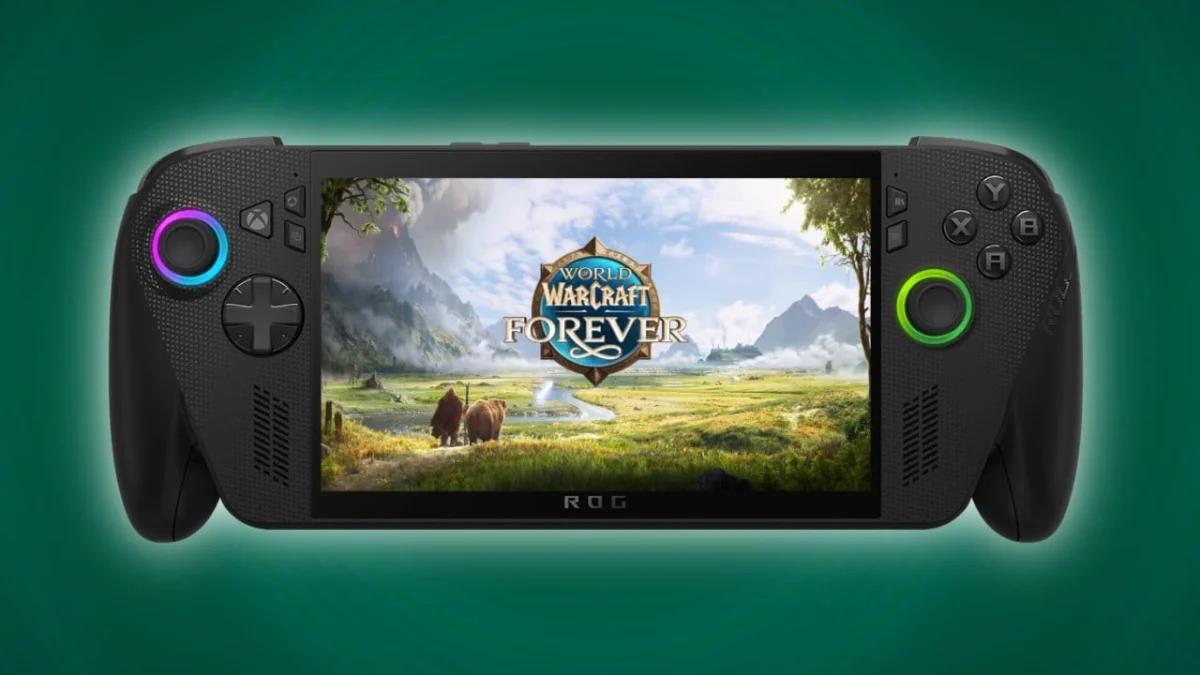
The landscape of massively multiplayer online role-playing games (MMORPGs) is undergoing a significant shift as Blizzard Entertainment integrates native Xbox controller support into its latest project, World of Warcraft: Forever. This development, currently observable in the game’s beta phase, marks a departure from two decades of mouse-and-keyboard exclusivity for the franchise. Early reports from industry analysts and hardware testers indicate that the implementation of native controller mapping has transformed the user experience, particularly on high-performance handheld gaming PCs such as the ASUS ROG Ally X. The integration serves as a pivotal milestone in Blizzard’s broader strategy to expand the reach of its flagship IP following its acquisition by Microsoft.
The Evolution of Control Schemes in Azeroth
For the majority of its history, World of Warcraft has been synonymous with the complex peripheral requirements of PC gaming. With dozens of abilities, intricate inventory management, and precise targeting systems, the game was long considered incompatible with the limited inputs of a standard game controller. While the community developed third-party modifications, such as the "ConsolePort" addon, to bridge this gap, these solutions often required extensive manual configuration and lacked the seamless optimization of a first-party implementation.
The introduction of native support in World of Warcraft: Forever represents a fundamental architectural change. Unlike previous iterations where controller inputs were merely emulated, the new system includes dedicated UI elements, radial menus, and context-sensitive targeting logic designed specifically for the Xbox Wireless Controller and compatible hardware. This transition aligns World of Warcraft with contemporary genre competitors like Final Fantasy XIV and The Elder Scrolls Online, both of which have demonstrated that complex MMORPG systems can thrive on console-style inputs.
Performance Benchmarks on the ROG Ally X
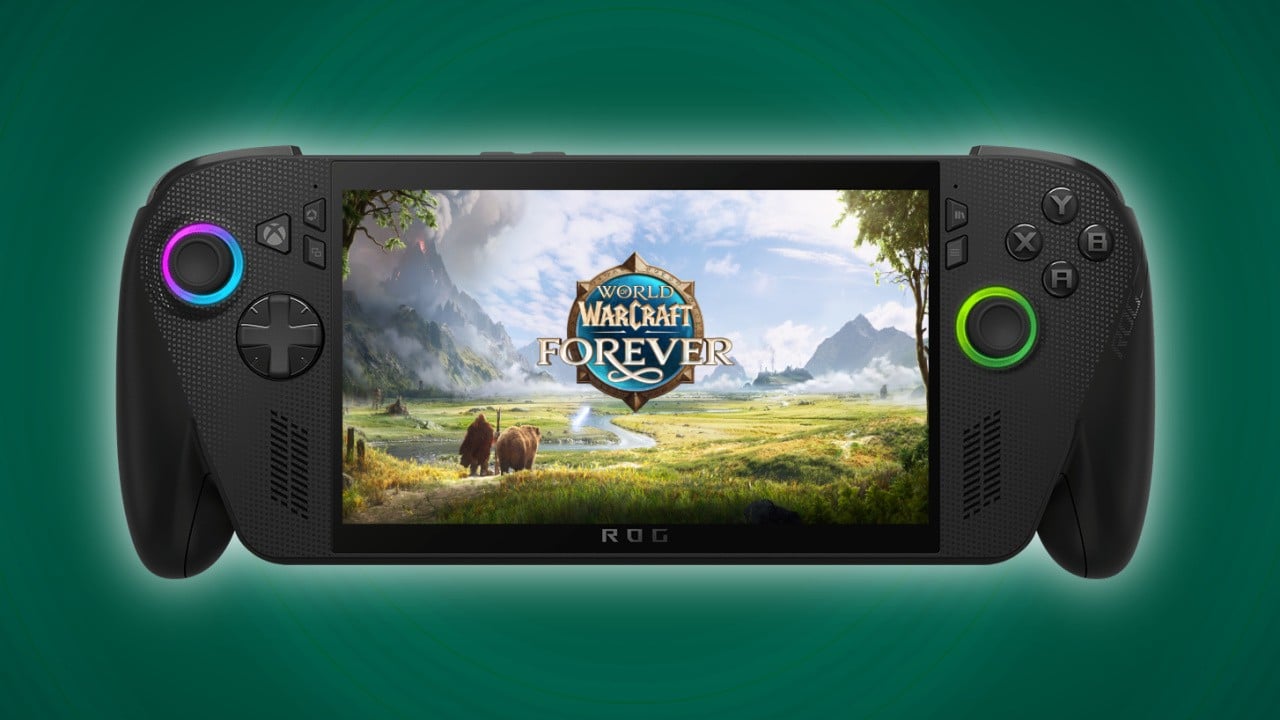
The ASUS ROG Ally X has emerged as a primary testing ground for this new control paradigm. Windows Central editor Jez Corden, who recently conducted extensive hands-on testing with the World of Warcraft: Forever beta on the device, described the experience as a "fever dream," noting the surprising fluidity of the gameplay. The ROG Ally X, which features an AMD Ryzen Z1 Extreme processor and 24GB of LPDDR5X RAM, appears uniquely suited to handle the demands of the new engine while utilizing the native controller mappings.
Technical observations indicate that the game is highly optimized for the handheld form factor. Corden reported that the game maintains stable performance even when the device is set to its "low power" or "silent" mode. This efficiency is critical for handheld gaming, where battery life and thermal management are paramount. The ROG Ally X’s 80Wh battery, combined with the optimized software, suggests that players may be able to engage in extended questing sessions or dungeon runs without being tethered to a power source.
Strategic Context of the Microsoft-Activision Blizzard Merger
The timing of native controller support cannot be separated from the corporate restructuring following Microsoft’s $68.7 billion acquisition of Activision Blizzard. Since the deal’s closure in October 2023, Xbox leadership, including Microsoft Gaming CEO Phil Spencer, has expressed a desire to bring Blizzard’s storied catalog to a wider audience.
Industry analysts suggest that the inclusion of native controller support is the strongest evidence to date that a dedicated console version of World of Warcraft is in development for the Xbox Series X and Series S. By perfecting the controller interface on Windows-based handhelds like the ROG Ally X, Blizzard is effectively beta-testing the user interface that would be required for a living-room console experience. This strategy reduces the technical risk associated with a console port and ensures that the game’s "Forever" iteration is platform-agnostic from its inception.
Timeline of Release and Access Tiers
World of Warcraft: Forever is scheduled for a full commercial release on November 4. The current beta phase serves as a stress test for both the servers and the newly implemented control systems. Blizzard has structured the beta access into two primary categories to manage player influx and gather diverse feedback:
- Guaranteed Access: Players can secure a position in the beta by purchasing specific high-tier editions of the game, starting at a price point of $59.99. This tier is aimed at dedicated fans and those seeking to test the native controller support immediately.
- Opt-In Selection: A "Beta Opt-In" button is available on the official World of Warcraft website. This allows the developer to select participants based on specific hardware configurations and geographic locations, ensuring a representative sample of the player base.
This phased rollout allows Blizzard to fine-tune the "action combat" feel that often accompanies controller-based gameplay, ensuring that the balance between casual handheld play and competitive end-game raiding remains intact.
Impact on the Handheld PC Market
The success of World of Warcraft: Forever on devices like the ROG Ally X is expected to have a ripple effect across the handheld PC market. Currently, the market is divided between the Steam Deck, Lenovo Legion Go, and various ASUS models. While the Steam Deck utilizes SteamOS (a Linux-based system), the ROG Ally X runs on Windows 11, making it a natural fit for Blizzard’s Battle.net launcher.
The ability to play a "retail-grade" version of World of Warcraft natively on a handheld—without the latency issues associated with cloud streaming services like NVIDIA GeForce Now—positions Windows-based handhelds as a premium choice for MMO enthusiasts. The data suggests that as more "PC-first" titles adopt native controller support, the demand for high-performance handhelds will continue to rise, potentially leading to further hardware iterations optimized for long-form RPG play.
Technical Hurdles and UI Innovations
Implementing controller support in an MMO requires solving the "button bloat" problem. World of Warcraft players typically use between 20 and 40 keybindings during high-level play. To address this, the beta for World of Warcraft: Forever utilizes a combination of "modifier" buttons (using the L2/LT and R2/RT triggers) to swap between different action bars.
Furthermore, the game has introduced an improved "Interact Key" system and "Action Combat" targeting. The former allows players to interact with NPCs and objects by simply facing them and pressing a button, rather than needing to click with a mouse. The latter allows for a "soft lock" on enemies, which is essential for maintaining combat fluidity on a joystick. These features, while subtle, represent a significant engineering effort to modernize the aging engine for a new generation of hardware.
Broader Implications for the MMORPG Genre
The move by Blizzard is likely to force other developers to reconsider their input philosophies. For years, the barrier to entry for many potential players was the perceived complexity of keyboard-and-mouse gaming. By lowering this barrier, World of Warcraft: Forever could see a surge in new or returning players who prefer the ergonomics of a controller or the portability of a handheld.
From a competitive standpoint, the introduction of native support raises questions about "input parity" in player-versus-player (PvP) environments. Blizzard has not yet officially commented on whether controller users will receive any form of aim-assist or if they will be placed in separate matchmaking pools, though the current consensus in the beta community is that the system is designed for parity rather than advantage.
Conclusion and Future Outlook
As the November 4 release date approaches, the focus remains on how well Blizzard can polish the controller experience for the final build. The positive reception of the ROG Ally X performance indicates that the technical foundation is solid. With the backing of Microsoft’s infrastructure and a clear path toward a console release, World of Warcraft: Forever is positioned to redefine the accessibility standards of the MMO genre.
The transition from a "fever dream" to a standard feature reflects a broader trend in gaming where the lines between PC, console, and handheld continue to blur. For the millions of players who have spent two decades in Azeroth, the ability to take the world with them on a handheld device—with controls that feel native and intuitive—marks the beginning of a new era for the franchise. Whether this leads to a formal announcement of an Xbox Series X|S version in the coming months remains the subject of high anticipation within the industry, but the technical groundwork is undeniably complete.