


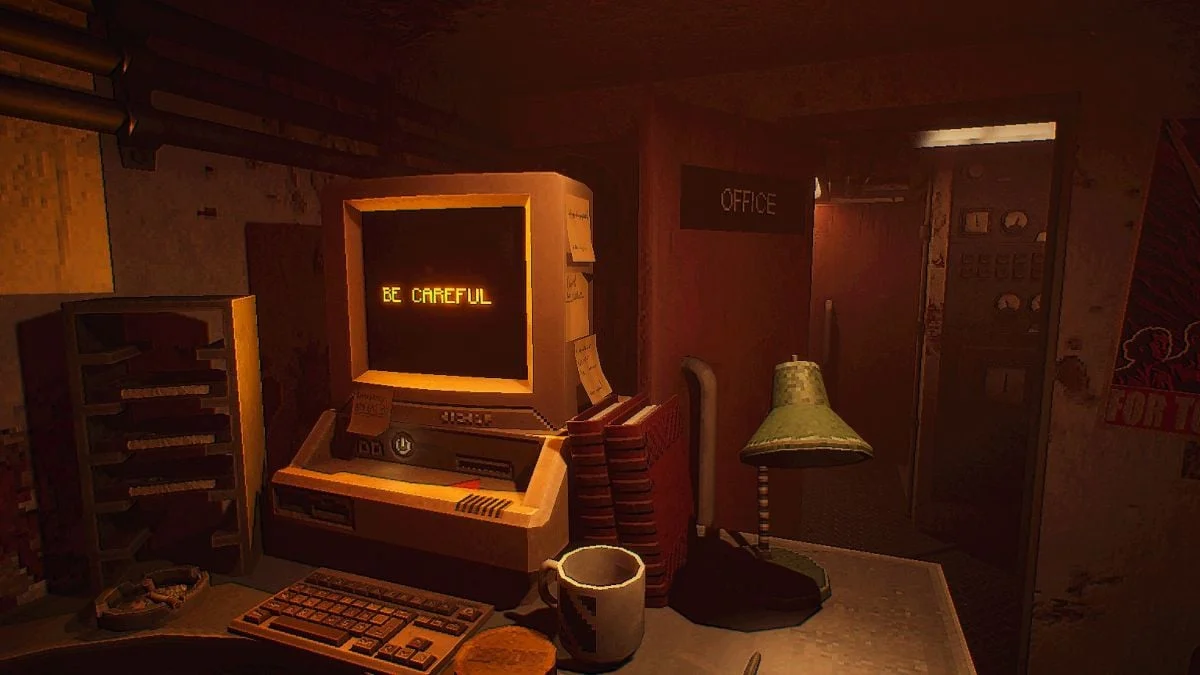
The chilling depths of MOLE, a psychological horror experience, demand more than just reflexes; they require keen intellect and a sharp eye for detail. As players are plunged into a disorienting abyss, much like the seminal System Shock, the game eschews explicit hand-holding, compelling them to "keep digging" to unearth the fragmented narrative and the protagonist’s unraveling psyche. This guide aims to illuminate the intricate puzzle mechanics within MOLE, providing solutions and steps to help players navigate its labyrinthine challenges and uncover its ultimate "masterpiece ending."
The game’s design philosophy centers on an immersive, player-driven discovery process. Unlike many modern horror titles that offer extensive tutorials or visual cues, MOLE trusts its audience to interpret environmental storytelling and deduce solutions independently. This approach, while rewarding for seasoned players, can present a significant barrier to entry, necessitating detailed guides for those seeking to progress without succumbing to frustration. The puzzles are meticulously crafted to vary in their environmental context and solution methodology, ensuring that each obstacle feels fresh and organically integrated into the unfolding narrative of the protagonist’s mental deterioration.
The Labyrinth of the Mind: Unpacking MOLE’s Puzzle Design
MOLE‘s puzzle design is intrinsically linked to its thematic core: the psychological fragmentation of its protagonist. Each puzzle serves not only as an interactive gameplay element but also as a metaphorical representation of the character’s deteriorating mental state and their desperate attempts to regain control or understanding. The lack of explicit guidance mirrors the protagonist’s own disorientation and isolation within the game’s oppressive environments. This intentional design choice fosters a sense of vulnerability and encourages players to engage deeply with the game’s world, piecing together clues from the environment and sparse in-game documentation.
Harnessing Power: The Fusebox Puzzle
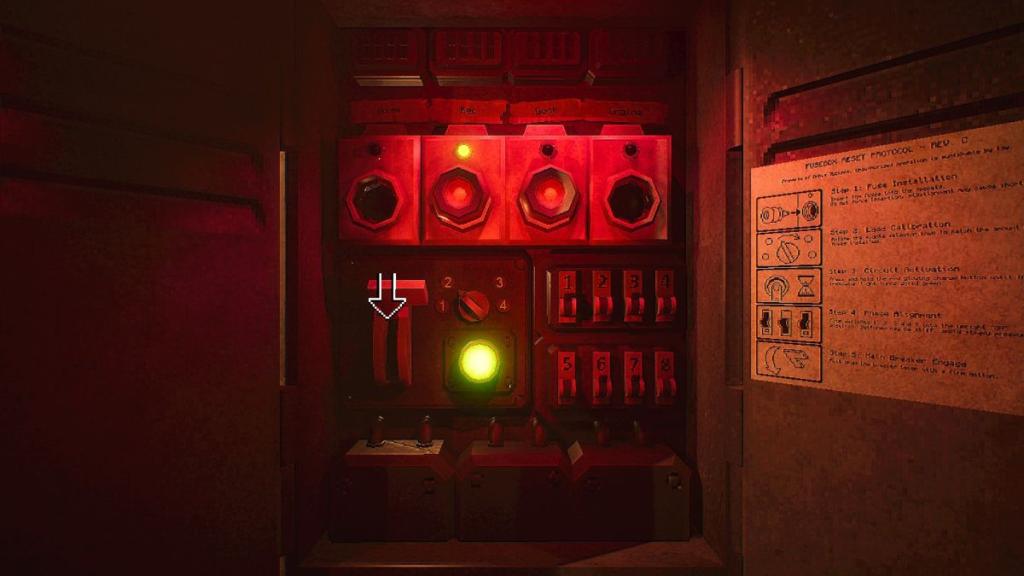
The initial hurdle players encounter in MOLE is the critical task of restoring power to various sectors of the facility. This is achieved through the judicious management of the Fusebox. The game introduces a core mechanic: power must be re-established every time a new sector is accessed or activated. The Fusebox puzzle, while presented early, establishes a foundational understanding of resource management and sequential activation that will be relevant throughout the game.
The objective is to correctly position fuses to energize different areas. The specific configuration of fuses required will vary depending on the number of fuses available and the immediate power needs of the player’s current objective. While the exact switch positions are not universally fixed across all playthroughs or difficulty settings, the underlying principle remains consistent: identifying the powered sectors and manipulating the fuses to achieve the desired outcome. Players are encouraged to observe the visual feedback within the game—the illumination of lights, the hum of machinery—to confirm successful power restoration. Mastering this early puzzle is crucial for unlocking subsequent areas and progressing the narrative. The visual representation of the Fusebox, with its distinct switches and fuse slots, provides a tangible interface for players to interact with the game’s power grid.
Unraveling Communication: The Phone Puzzle
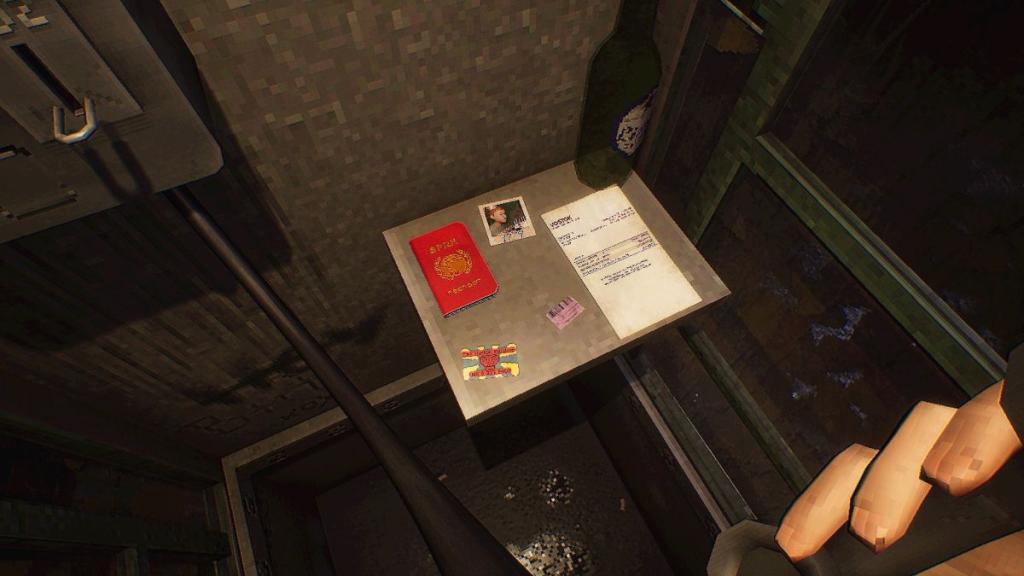
A significant narrative and gameplay progression point hinges on deciphering the Phone puzzle. This challenge centers on retrieving crucial information from a dilapidated phone booth to facilitate a vital delivery to an entity known as VOSTOK. The game ingeniously embeds all necessary clues within the confines of the phone booth itself, requiring players to meticulously examine its contents. The information is presented in a fragmented manner, demanding chronological ordering to form a coherent sequence of events and recipient details.
The puzzle necessitates gathering specific documents and images, such as a passport, a photograph from Petro’s sixth birthday, and a VOSTOK invoice. The critical element is to arrange these items in the order dictated by the narrative, culminating in the correct delivery instructions for VOSTOK. This puzzle not only tests observational skills but also reinforces the game’s thematic exploration of memory, identity, and the blurred lines between reality and delusion. The chronological arrangement of these disparate pieces of information serves as a microcosm of the protagonist’s struggle to assemble their own fractured memories and understand their place in the unfolding crisis. The visual presentation of these items within the phone booth—often weathered and slightly out of focus—enhances the game’s oppressive atmosphere.
Restoring the Heartbeat: The Engine Puzzle
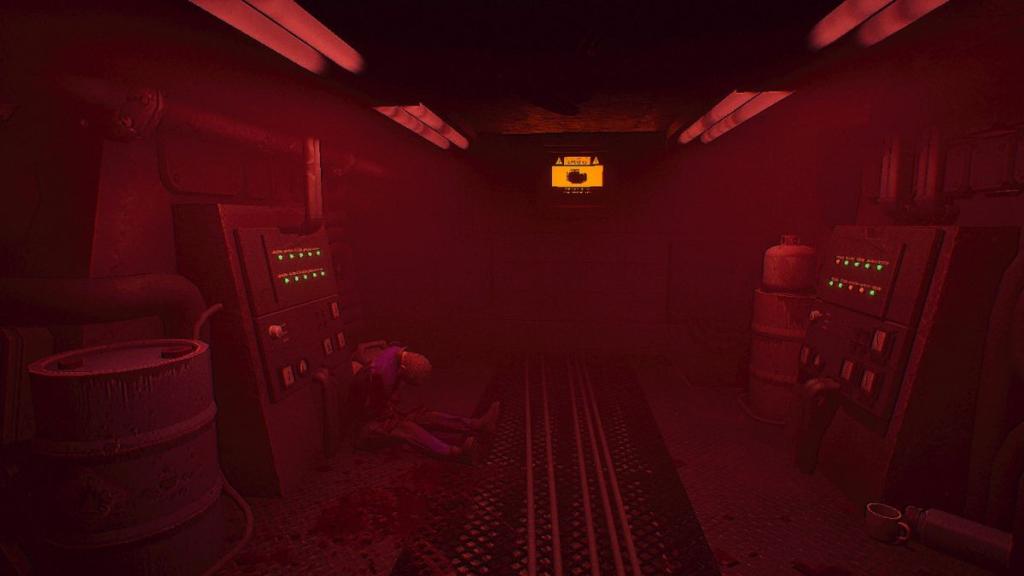
The Engine room presents a multi-faceted puzzle that requires players to repair critical machinery, a task made more somber by the presence of the deceased engineer, Bohdan Pluzhnik. The repairs are divided into three distinct stages: Ventilation, Pumps, and Coolant. Each stage demands the acquisition and application of specific tools and components found within the game’s environments.
-
Ventilation: The first step involves locating a replacement fan. This component can be found at the rear of the Engine area, amidst Pluzhnik’s scattered equipment and volatile propane tanks. Once acquired, the player must return to the main Engine room, navigate to the back-right corner, and utilize a screwdriver to remove the damaged fan and install the new one. This process underscores the importance of environmental interaction and the retrieval of crucial items.
-
Pumps: To address the issues with the pumps, players must access a crawlspace situated in the close-right corner of the Engine room, directly beneath the machinery in question. Within this confined space, a loose fuse will be found on the floor. However, this is insufficient. An additional fuse must be retrieved from the Fusebox in the Rec sector. This second fuse is then used to replace a faulty component within the pump mechanism, thereby restoring power to 100V. The game strategically advises players to retain any remaining fuses for future use, highlighting a resource management aspect that extends beyond immediate puzzle resolution.
-
Coolant: The final stage of the Engine puzzle involves addressing a coolant leak. The necessary tool for this repair is the Wrench, which can be found on Pluzhnik’s workbench in the main Engine sector, opposite the torpedo locker. With the Wrench in hand, players must proceed to the Engine room, turn right, pass the crawlspace, and crouch beneath the intricate pipework. This leads to a small, obscured area where steam is visibly escaping from a compromised pipe. The Wrench is then used to tighten the loose bolt nut, sealing the leak and completing the repair.
The Engine puzzle is a prime example of MOLE‘s layered approach, requiring players to traverse different areas, collect specific items, and perform precise actions to overcome obstacles. The presence of Pluzhnik’s body serves as a grim reminder of the stakes involved and the potential consequences of failure, amplifying the psychological horror element.
Navigating the Medical Labyrinth: The Hospital Puzzle
The Hospital puzzle introduces a layer of abstract problem-solving, requiring players to interact with both the physical and ethereal aspects of the environment. The core objective is to access Petro’s hospital room and facilitate the transfer of his memory onto a VOSTOK cassette. This involves a series of steps that blend direct observation with interaction with seemingly intangible elements.
The puzzle begins behind the receptionist desk, where players interact with a monitor displaying a patient on life support. Subsequently, venturing into the lobby and interacting with the hospital bed initiates the first stage of the puzzle. The initial numerical clue, "3," is revealed upon this interaction. The game then directs players to locate a lounge in the back-right corner of the hospital wing, accessible by consulting the reception map. Interacting with a television in the lounge triggers an auditory cue—the sound of an invisible entity moving—and provides the second numerical clue.
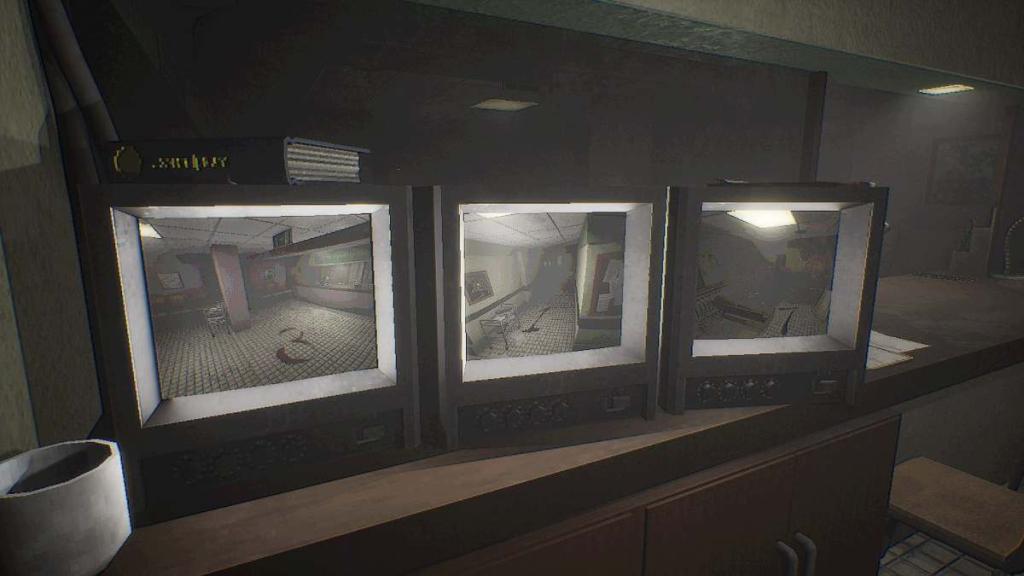
The crucial step involves locating room 311 and entering it. Upon exiting room 311, players must return to the receptionist desk to receive the final numerical sequence: "3 1 7." This code is only fully displayed across all three monitors when the sequence is correctly derived. With the room number obtained, players can proceed to Petro’s hospital room. Inside, they must interact with the console and input a specific sequence of switch activations: 2-4-3-5-1, followed by turning off the console. This sequence is critical for the memory transfer process and represents a significant narrative turning point. The puzzle’s design, involving invisible entities and sequential unlocking of information, reflects the protagonist’s struggle with perception and reality.
The Precision of Destruction: The Torpedo Puzzle
The Torpedo puzzle, situated in a dedicated room adjacent to the Engine sector, demands precision and adherence to a specific procedure. The ultimate goal is to successfully launch and detonate a torpedo at a designated target. This puzzle involves manipulating a torpedo pod, loading a torpedo, and then activating a detonator at the opportune moment.
The initial step requires players to locate a key within the room that unlocks the locker containing the torpedoes in the engineer’s room. Once the torpedo locker is accessed, the player must return to the torpedo pod. Here, they must spin a wheel to raise a metal prod, then use arrow keys to disengage a lock mechanism, allowing the pod to be opened. A torpedo is then placed inside. The process is reversed to securely seal the explosive.
With the torpedo loaded, the detonator becomes active. Players must then consult the depth meter to track the torpedo’s trajectory towards its target. The detonator is activated by pressing a button. The crucial phase involves waiting for the torpedo’s indicator on the depth meter to align with the target marker before interacting with the detonator a second time to initiate detonation. This puzzle emphasizes spatial reasoning and precise timing, mirroring the calculated actions required in a real-world military scenario, albeit within the context of a psychological thriller.
Securing the Means of Defense: The Gun Case Puzzle
The Gun Case puzzle offers a comparatively straightforward challenge, primarily testing the player’s ability to follow written instructions and conduct a brief environmental search. The objective is to unlock a gun case by deciphering a four-digit combination.
A note affixed to the gun case provides the necessary guidance: players are instructed to search the dormitories and locate specific numbers. These numbers are found as red sticky notes within the quarters of the Administrator, Navigator, Geologist, and Engineer. Each of these individuals’ rooms contains one digit of the four-digit code. By visiting each of these quarters and retrieving the corresponding sticky notes, players can assemble the complete combination. The solution, as revealed by these notes, is 8 3 5 7. Entering this code into the gun case unlocks the weapon, which will likely play a role in later stages of the game, either for defense or as part of a narrative resolution.
The Art of Memory: The Mosaic Puzzle
The final puzzle encountered in MOLE, the Mosaic puzzle, presents a unique challenge that can be hampered by the game’s mechanics, particularly its item interaction system. Players are tasked with arranging religious mosaics in a specific order, a sequence dictated by the scripture referenced within each slot. The constraint that players can only replace one item with another, without the ability to drop items, adds a layer of complexity and potential frustration.

The core of this puzzle lies in understanding the narrative context of the "White Rabbit" story, which is gradually revealed through "Throne excerpts" found in the Cockpit as players progress. These excerpts provide the scriptural basis for the correct arrangement of the mosaics. The order from left to right, as dictated by the narrative progression and scripture, is crucial for successfully completing this final puzzle. The visual representations of the mosaics themselves are likely to be symbolic, further reinforcing the game’s thematic exploration of faith, delusion, and the search for meaning. Successfully completing this puzzle signifies a critical juncture in the protagonist’s journey and their understanding of the unfolding events, leading towards the game’s ultimate conclusion.
MOLE‘s intricate puzzle design, woven into its narrative and atmospheric horror, creates an experience that is both demanding and deeply rewarding. By offering a comprehensive guide to these challenges, players can more readily engage with the game’s complex themes and uncover the full scope of its disturbing narrative. The success of MOLE lies not just in its scares, but in its ability to make the player feel like an active participant in piecing together a shattered reality, one puzzle at a time.