


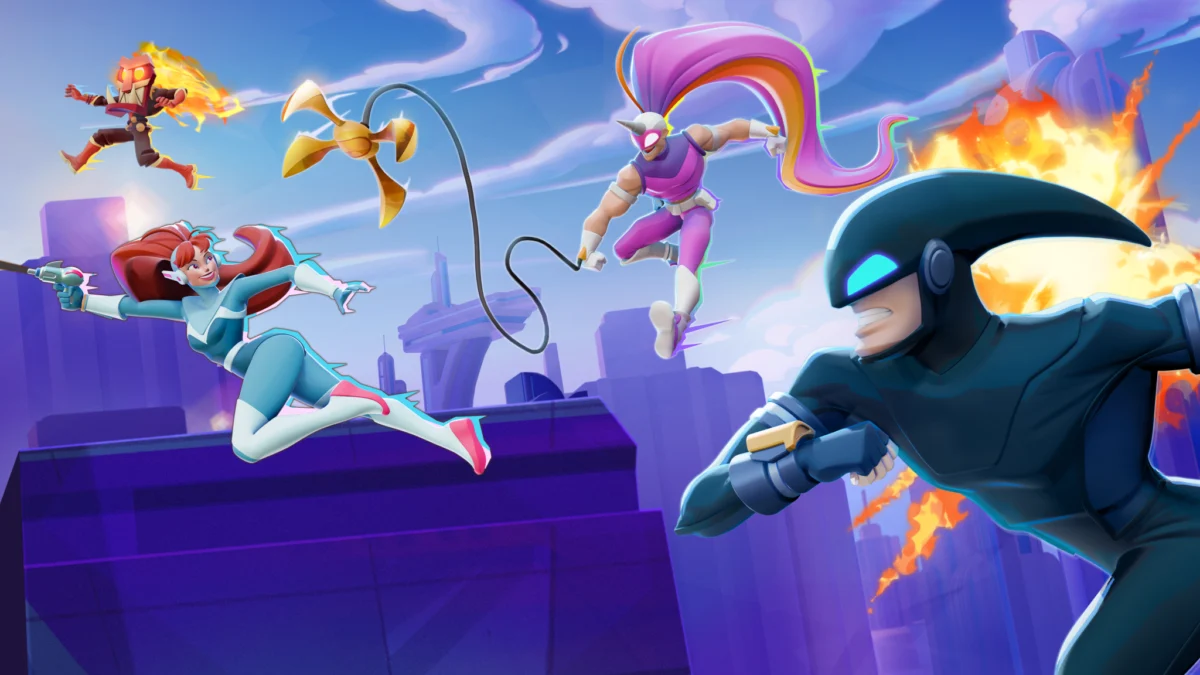
The Evolution of the Speedrunners Formula
The original Speedrunners, which emerged from Steam Early Access in 2013 before a full release in 2016, established a unique niche in the indie gaming landscape. It combined the momentum-based movement of traditional platformers with the aggressive item-usage of kart racers. The sequel, Speedrunners 2: King of Speed, maintains this foundational logic. Players compete in a 2D side-scrolling environment where the primary objective is to maintain enough speed to stay within the camera’s view. As players fall behind and exit the screen’s boundaries, they are eliminated.

The mechanics of the "Ring of Fire"—a shrinking play area that activates once the first player is eliminated—returns as the central tension-building device. This mechanic forces remaining competitors into a progressively smaller space, emphasizing precision over raw speed. The sequel retains the signature grappling hook, which allows players to swing from ceilings and, more importantly, latch onto opponents to steal their momentum. This "trolling" aspect, as described by long-term community members, remains the focal point of the social experience.
Expansion of Multiplayer Capabilities and Technical Specifications
One of the most significant technical upgrades in Speedrunners 2: King of Speed is the expansion of the lobby system. While the original game was limited to four-player matches, the sequel doubles the potential chaos by supporting up to eight players simultaneously. This shift required a substantial rework of the game’s camera logic and netcode to ensure that eight different characters could be tracked across high-speed environments without losing visual clarity.

The game launched with eight entirely new maps, each featuring eight distinct variants. This provides a total of 64 layout iterations at launch, a significant increase over the initial offering of the first game. These maps are designed to take advantage of the new graphical engine, which replaces the minimalist, flash-inspired aesthetic of the original with more detailed environments, dynamic lighting, and fluid character animations.
On the hardware side, the game has been optimized for the current generation of consoles, including the Xbox Series X/S and PlayStation 5, alongside a robust PC release. Despite these upgrades, early reports from the launch window indicate that the transition to more complex networking has not been without hurdles. Connectivity issues, particularly in custom lobbies on both PC and Xbox platforms, have resulted in frequent restarts and synchronization errors.

The Rush City Campaign: Narrative and Structure
In an effort to provide value for solo players, the developers introduced a single-player campaign set in the fictional "Rush City." The narrative follows a cast of superhero-themed runners tasked with defending the city from various threats. This mode serves a dual purpose: it functions as an extended tutorial for the game’s complex movement tech—such as wall-jumping, sliding, and boost management—and introduces boss encounters.
These boss fights represent a departure from the series’ standard racing format. Players must utilize power-ups found within the levels to damage large-scale enemies while maintaining their pace through the environment. However, early critical analysis suggests that the campaign lacks the frantic energy of the multiplayer experience. The inclusion of an "XP" system and unlockable character skins via the campaign has been characterized by some as a move toward modern "live-service" tropes that may not align with the arcade roots of the franchise.

Analysis of New Gameplay Modes
Beyond the classic competitive mode, Speedrunners 2: King of Speed introduces several alternative ways to play, though their reception has been mixed compared to the "Classic" format:
- Token Hunt Rally: In this mode, the traditional elimination-based "Ring of Fire" is removed. Instead, players must collect and retain tokens scattered throughout the map. Damage taken from obstacles or opponent items results in the loss of tokens. The winner is determined by the total count at the end of a timer.
- Lap Race: A more traditional racing format where players compete over three laps of a circuit. This mode removes the elimination mechanic entirely, catering to a more casual audience or those looking for a pure test of speed without the pressure of the shrinking camera.
- Skyfall Rush: This mode introduces randomized environmental hazards and "unfair" obstacles designed to disrupt even the most experienced players. While intended to add a layer of unpredictability, some early testers have noted that it can lead to frustration due to a perceived lack of counter-play.
User Interface and Quality of Life Concerns
Despite the polished visuals, the user interface (UI) of Speedrunners 2: King of Speed has faced criticism for certain design oversights. A notable issue identified in the launch version involves the custom lobby system. Currently, players are unable to change the game mode (e.g., switching from Classic to Lap Race) without disbanding the lobby and reforming it from the main menu.

This lack of a dynamic lobby system is seen as a regression from modern multiplayer standards, particularly for a game intended to be played in long sessions with friends. Furthermore, while the game supports bots to fill empty slots, the integration of these AI competitors in the more complex new modes like Token Hunt Rally has been described as inconsistent.
Historical Context and Franchise Timeline
The journey of the Speedrunners franchise reflects the broader evolution of the indie "Brawler/Racer" subgenre:

- 2013: Speedrunners enters Steam Early Access, gaining viral popularity through YouTube and Twitch influencers.
- 2016: Full release on PC, followed by ports to Xbox One and PlayStation 4. The game becomes a staple of the ESL (Electronic Sports League) for a brief period.
- 2017-2024: The original game maintains a "Very Positive" rating on Steam, bolstered by a robust level editor and Steam Workshop support, which saw thousands of community-made maps.
- 2025: The sequel is officially announced with a focus on "King of Speed" branding and 8-player support.
- September 3, 2026: Speedrunners 2: King of Speed launches globally.
Industry Implications and Broader Impact
The release of Speedrunners 2: King of Speed highlights a common challenge for successful indie sequels: the balance between innovation and "feature creep." By adding a campaign, XP systems, and multiple divergent modes, the developers have attempted to broaden the game’s appeal. However, the core audience remains primarily interested in the high-skill ceiling of the competitive platforming.
Market analysts suggest that the success of the sequel will depend heavily on its community features. The original game’s longevity was almost entirely due to the user-created content. While the sequel offers more official maps and variants, the long-term viability of the title will likely hinge on whether the developers can successfully integrate a new level editor that matches the accessibility of the first game’s tools.

Furthermore, the technical performance of the 8-player mode will be a deciding factor in whether the game replaces its predecessor at LAN parties and competitive events. If the connectivity issues identified at launch are resolved, the increased player count could redefine the game as a premier "chaos" racer. If those issues persist, the community may find itself retreating to the more stable, albeit less visually impressive, original title.
In the broader context of the gaming industry in 2026, Speedrunners 2 represents a push back toward local and "social" multiplayer experiences in an era often dominated by massive open-world titles. Its success or failure will serve as a bellwether for the appetite for high-intensity, short-session competitive indies. As it stands, the game offers a refined version of an already excellent engine, though it remains to be seen if the new "King of Speed" can maintain its crown amidst a sea of unnecessary additions and launch-day technical friction.