


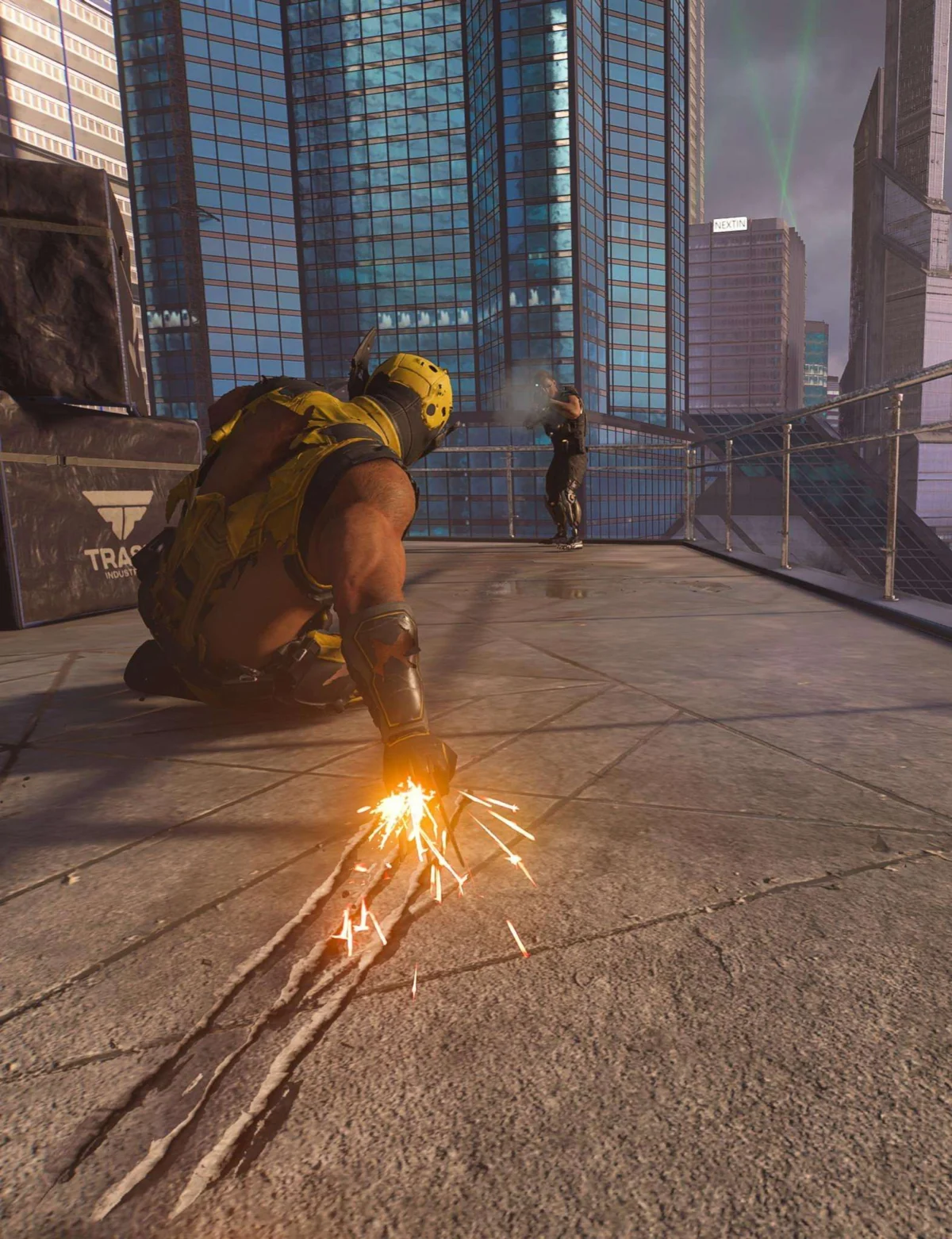
Marvel’s Wolverine marks a significant milestone in interactive entertainment, representing the first solo video game dedicated to the titular X-Men member in nearly two decades. Developed by Insomniac Games, the studio lauded for its work on the critically acclaimed Marvel’s Spider-Man series, the title arrives as a cornerstone of the PlayStation 5’s first-party lineup. This release carries the weight of immense fan expectation, seeking to translate the visceral, uncompromising nature of James "Logan" Howlett into a modern, high-fidelity action experience. As a first-party exclusive, it serves not only as a character study but also as a showcase for the technical capabilities of current-generation hardware, blending cinematic storytelling with a refined, albeit familiar, combat loop.

Narrative Foundation and Character Dynamics
The narrative architecture of Marvel’s Wolverine is rooted in a blend of established comic book lore and original world-building. The experience begins in a non-linear fashion, initially grounding players in Logan’s past. The story introduces Nathaniel Essex—a figure well-known to Marvel aficionados as the precursor to Mr. Sinister—who serves as a catalyst for the plot. Essex is depicted as a manipulative strategist who coaxes a feral Logan out of the Canadian wilderness and back into the fold of civilization, specifically into the fold of Team X. This elite, clandestine group of mutants includes other prominent figures such as Mystique and Sabretooth, establishing a tense, volatile dynamic from the outset.

Following this prologue, the game leaps forward in time, transitioning into a globetrotting adventure. The campaign takes players through a diverse array of environments, ranging from the claustrophobic, snow-dusted forests of Canada to the neon-drenched urban sprawl of Tokyo and the lawless, tropical enclave of Madripoor. This geographical variety is not merely cosmetic; it provides the backdrop for a story that focuses heavily on Logan’s fractured psyche and his recurring struggle with amnesia.

A central pillar of the emotional arc is Logan’s relationship with Jean Grey, voiced by Krizia Bajos. Their interactions provide a necessary counterpoint to the game’s frequent outbursts of violence, grounding the character in a relatable, human vulnerability. Liam McIntyre delivers a performance that captures the weary, tortured essence of Logan, while Troy Baker’s portrayal of Nathaniel Essex provides a sophisticated, "scenery-chewing" antagonist that adds a layer of theatricality to the proceedings.

The Mechanics of Adamantium Combat
At its core, Marvel’s Wolverine is a third-person action title that prioritizes the lethal efficiency of Logan’s claws. Insomniac Games has developed a combat system that feels responsive and impactful, emphasizing the character’s role as a "living weapon." The combat is defined by several key maneuvers:

- Standard Shred Attacks: Rapid-fire claw strikes used to break down enemy defenses and manage crowds.
- Pounce and Leap Attacks: Long-range mobility options that allow Logan to close the distance between himself and armed combatants instantly.
- Defensive Maneuvers: A sophisticated system of dodges, rolls, and parries.
The game utilizes a color-coded indicator system to telegraph enemy intentions. Blue flashes indicate attacks that can be parried, while red flashes signify unblockable attacks that require a well-timed dodge. A third category, gold attacks, represents a high-risk, high-reward scenario where a successful parry can result in devastating counter-attacks, though failure leads to significant health loss.

The "Berserk" or Rage meter is a critical component of the combat loop. As players dispatch enemies, the meter fills, eventually allowing Logan to enter a state of heightened aggression. During this phase, the screen desaturates, leaving only the vibrant red of blood, and Logan’s damage output increases exponentially. This mechanic encourages an aggressive playstyle, rewarding players for maintaining momentum. However, as the game progresses, certain enemy types—particularly the "Reavers," or cybernetically augmented goons—exhibit significant health pools. These "spongy" enemies can occasionally disrupt the visceral flow of combat, turning what should be a quick execution into a protracted encounter.

Progression, Exploration, and "Smell-o-Vision"
To add depth to the hack-and-slash gameplay, Insomniac has integrated a leveling system and an "X-gene" progression tree. Players can unlock special abilities mapped to the L2 trigger and face buttons, including area-of-effect (AoE) spin attacks and brutal single-target finishers. These upgrades are essential for managing the increasingly difficult waves of soldiers and augmented threats encountered in the latter half of the campaign.

Exploration is guided by Logan’s innate tracking abilities, colloquially referred to by the community as "smell-o-vision." This mechanic allows players to highlight environmental clues, scents, and hidden items. While efficient, some critics and players have noted that the system can feel overly prescriptive, often pointing directly to the next objective and limiting the player’s sense of discovery.

The game also features "Nightmare Doors," which are magical, root-covered portals that lead to standalone challenges. These trials are categorized into combat-based wave survival and time-based platforming sequences. Completing these challenges earns the player "Adaptation" points, which are used to further customize Logan’s combat perks. Furthermore, the game offers a wide variety of unlockable suits, ranging from classic comic book yellow-and-tan to more contemporary and even "cartoony" aesthetic options, providing a high degree of visual customization.

Technical Execution and Level Design
Visually, Marvel’s Wolverine adheres to the high standards of Sony’s first-party output. The environments feature a high level of detail and a surprising amount of destructibility. Combat arenas often end up littered with debris and environmental damage, reinforcing the chaotic nature of Logan’s fights. The transition between cinematic cutscenes and gameplay is seamless, utilizing the PlayStation 5’s high-speed SSD to eliminate traditional loading screens.

However, the level design leans heavily on the "combat arena" trope. Players will frequently find themselves entering large, open spaces that clearly signal an impending ambush. Between these fights, the game incorporates light platforming and investigation sequences. The platforming is notably streamlined, with a "semi-autopilot" feel that ensures players rarely fail a jump or miss a ledge. While this maintains the game’s cinematic pacing, it reduces the sense of player agency in non-combat sections.

The game also includes vehicle-based sequences, such as motorcycle chases. These sections are visually spectacular but mechanically shallow, often feeling like "on-rails" segments designed for spectacle rather than interactive depth.

Historical Context and Industry Impact
To understand the significance of Marvel’s Wolverine, one must look at the history of the character in the gaming medium. The last major solo outing for the character was 2009’s X-Men Origins: Wolverine, a game that was praised for its mature tone and gore but was ultimately a tie-in to a film. Before that, games like X2: Wolverine’s Revenge (2003) offered a more comic-accurate take but suffered from the technical limitations of the era.

Insomniac’s take is the first time a top-tier developer has been given the freedom to create a standalone, AAA Wolverine experience without the constraints of a movie release schedule. This reflects a broader shift in the industry where Marvel properties are being treated with the same reverence as prestige original IPs. The success of this title is likely to influence how other "mature" Marvel characters, such as Daredevil or Blade, are handled in future interactive adaptations.

Critical Analysis: Pacing and Length
While the core combat and performances are universally praised, the game’s pacing has been a point of contention. The campaign lasts approximately 16 hours, a duration that some argue is too long for the relatively focused combat loop. The middle chapters of the story feature elements that can feel like "padding," including repetitive enemy encounters and exposition-heavy walking segments.

A leaner 8-to-10-hour experience might have resulted in a more energetic and impactful narrative. As it stands, the game occasionally feels like "butter scraped over too much bread," where the mechanical variety does not quite keep pace with the story’s length. This has led to the game being described by some as a "comforting" or "familiar" experience—a high-budget "Dad-game" that provides a polished, predictable, and satisfying loop for players who want a cinematic superhero experience without reinventing the wheel.

Broader Implications and Official Reception
The release of Marvel’s Wolverine is expected to be a significant driver of PlayStation 5 hardware sales, particularly in the holiday window. While Sony and Marvel Games have not yet released official sales figures, early critical reception suggests a strong commercial performance. The game’s "after-credits" scene further hints at a burgeoning "Insomniac Marvel Universe," suggesting that Logan may eventually cross paths with other heroes in future titles.

In conclusion, Marvel’s Wolverine is a polished, violent, and emotionally resonant portrayal of one of fiction’s most enduring anti-heroes. It successfully captures the "Snikt" factor that fans have craved, backed by industry-leading production values and stellar voice acting. While it may suffer from some modern AAA conventions—such as streamlined exploration and pacing issues—it stands as the definitive Wolverine video game experience. For the PlayStation 5 audience, it is a visceral reminder of why Logan remains the best there is at what he does, even if what he does isn’t always pretty.