


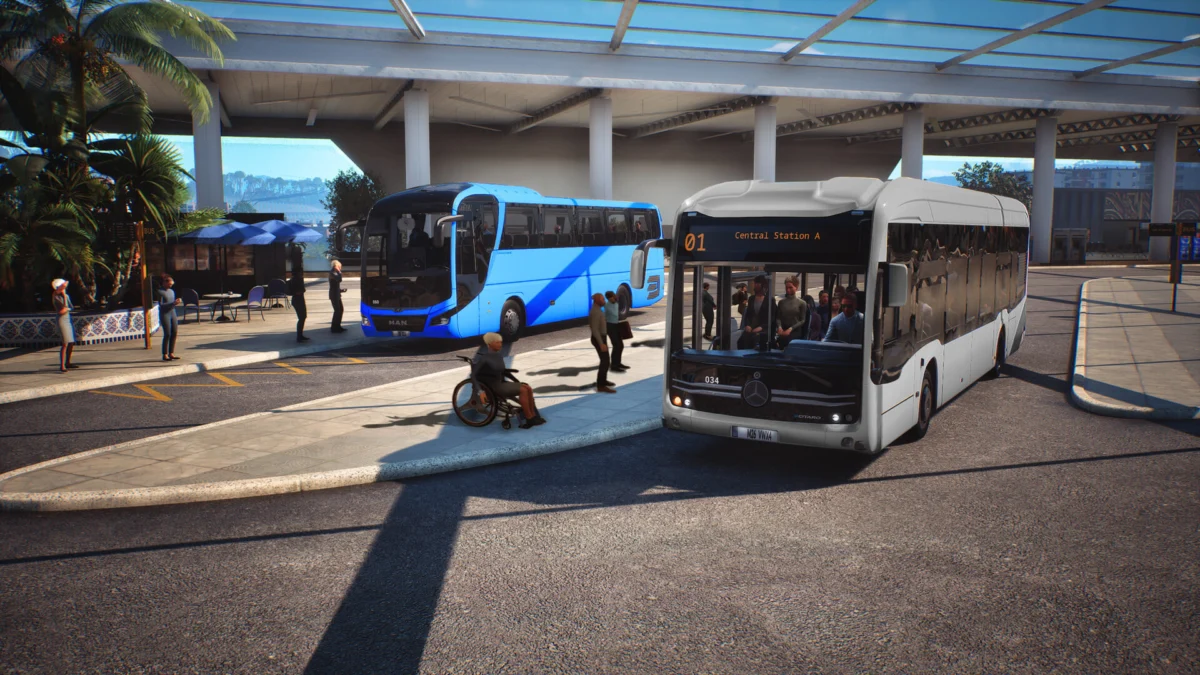
The simulation gaming landscape has reached a significant milestone in 2026 with the release of Bus Simulator 27, the latest installment in a franchise that has long defined the public transportation sub-genre. Developed by Simteract and published by Astragon Entertainment, the title represents a pivotal shift for the series, moving away from long-time developer Stillalive Studios and transitioning to the technologically advanced Unreal Engine 5. As the fourth major bus-themed simulation to hit consoles and PC within the current calendar year, Bus Simulator 27 enters a crowded market alongside competitors such as Bus Driving Simulator: EVO, The Bus, and Bus Bound. This iteration seeks to consolidate the franchise’s reputation for deep management systems and realistic driving mechanics while introducing a new Mediterranean-inspired setting and expanded fleet options.
Historical Context and the Developer Transition
To understand the positioning of Bus Simulator 27, it is necessary to examine the "developer carousel" that has shaped the genre over the last five years. For much of the franchise’s history, Stillalive Studios was the primary architect of the series’ success, culminating in the widely praised Bus Simulator 21. However, in a strategic shift within the industry, Stillalive Studios moved on to develop Bus Bound, a title focusing more heavily on the driving experience than the administrative management of a transit company.

Simteract, the studio now at the helm, previously gained recognition for Taxi Life: A City Driving Simulator. While Taxi Life was noted for its detailed urban environments, it operated on a smaller scale than the Bus Simulator series. Consequently, Bus Simulator 27 serves as a high-stakes debut for Simteract, tasking the developer with maintaining the complex systems established by its predecessors while utilizing Unreal Engine 5 to meet modern graphical expectations.
A Comprehensive Simulation of Public Transit Management
Bus Simulator 27 distinguishes itself from more arcade-leaning titles by emphasizing a "360-degree management" philosophy. The gameplay is split between the granular details of operating a heavy vehicle and the macro-level logistics of running a profitable enterprise. On the operational side, players are responsible for a suite of realistic tasks that go beyond steering and braking. These include:
- Vehicle Operation: Managing individual door controls, ignition sequences, and interior lighting.
- Accessibility Compliance: Deploying ramps for passengers using wheelchairs and ensuring proper boarding procedures.
- Revenue Protection: Selling and validating tickets while managing passenger interactions.
- Environmental Awareness: Navigating complex traffic patterns and adhering to strict schedules.
The management layer is equally robust. Players are tasked with rebuilding the public transportation infrastructure of Felicia Bay, a fictional setting inspired by the coastal regions of Spain and Portugal. The narrative premise involves a city recovering from a period of systemic corruption that led to the collapse of the previous transit authority. Players must purchase new vehicles, design efficient routes through diverse districts, and manage the company’s economy to ensure long-term viability.

Technical Specifications and the Unreal Engine 5 Integration
The move to Unreal Engine 5 was intended to provide a generational leap in visual fidelity and physics simulation. However, technical analysis across various platforms reveals a discrepancy between the engine’s potential and the game’s current optimization.
On the Xbox Series X, the game generally maintains a stable experience, though performance is occasionally marred by uneven framerates in high-density urban areas. The PC version, however, demonstrates a wider variance in performance based on hardware configurations. Technical reports from testing environments provide the following data:
- Handheld/Entry-Level Hardware: On devices such as the ROG Ally running Bazzite, the game requires AMD’s FidelityFX Super Resolution (FSR) set to "Balanced" mode to maintain a consistent 30 frames per second at medium settings. Analysts have noted significant "ghosting" and "shimmering" effects on 2D interfaces, suggesting the use of an older iteration of FSR upscaling.
- High-End Configurations: Systems equipped with an AMD Ryzen 9 7900X and Intel B580 hardware can utilize ray tracing and advanced lighting features. While the 3D environments perform adequately, reports indicate that the User Interface (UI) often renders at a lower resolution than the primary game world, creating a visual disconnect.
- Stability Issues: Across all PC configurations, the software has been prone to critical failures. Testers have documented frequent "crashes to desktop" (CTD) and freezes during the autosave process. These stability issues represent a significant barrier to the immersive experience intended by the developers.
The Fleet and Environmental Design
Despite technical hurdles, the scope of content in Bus Simulator 27 is extensive. The game features 45 officially licensed buses from world-renowned manufacturers, including IVECO, MAN, and Mercedes-Benz. Each vehicle is modeled with high attention to detail, featuring functional cockpits where almost every switch and dial serves a purpose.

The map of Felicia Bay represents a significant expansion over previous entries. It consists of two major cities and multiple outlying districts, each with distinct architectural styles and traffic behaviors. The Mediterranean setting offers a departure from the Central European and North American environments of previous games, providing sunny vistas and narrow, winding coastal roads that challenge the player’s driving precision. For the first time, the "walkable" nature of the world has been emphasized, allowing players to exit the bus, explore points of interest on foot, and interact with the pedestrian population.
Customization and Accessibility Features
Recognizing the varying skill levels within the simulation community, Simteract has implemented an extensive suite of customization options. These "leeway" settings allow players to tailor the difficulty of the simulation to their preference. Users can automate complex tasks such as engine management and ticket sales, or they can opt for a "hardcore" experience where every traffic infraction results in a financial penalty.
Traffic density and AI aggressiveness are also adjustable. This flexibility ensures that the game can function as both a high-stakes management simulator and a "chill" driving experience. Furthermore, the inclusion of a "Free Mode" allows players to bypass the story and economic constraints, granting immediate access to all licensed vehicles and map regions.

Community and Multiplayer Dynamics
A major selling point for Bus Simulator 27 is its integrated co-op mode. The game supports up to four players in a shared world, featuring full crossplay functionality between Xbox and PC. This allows friends to manage the same transit company, driving different routes simultaneously to maximize the company’s efficiency.
The social aspect of the game extends to the "Bus Empire" mechanics, where players can see the impact of their teammates’ routes on the overall city economy. However, the current technical instability has impacted the multiplayer experience, with reports of synchronization errors and lobby disconnects that the developer will need to address in future patches.
Chronology of the 2026 Simulation Market
The release of Bus Simulator 27 concludes a prolific period for the genre. The following timeline illustrates the competitive environment in which the game was launched:

- April 2026: Launch of Bus Bound, emphasizing physics-based driving and vehicle handling.
- June 2026: Release of Bus Driving Simulator: EVO, catering to the budget-conscious segment of the market.
- August 2026: Early Access updates for The Bus, focusing on a 1:1 recreation of Berlin.
- September 2026: Global launch of Bus Simulator 27, aiming to be the definitive "all-in-one" management and driving package.
Broader Impact and Industry Implications
The launch of Bus Simulator 27 highlights a growing trend in the simulation industry: the move toward "Platform as a Service." Much like its predecessor, Bus Simulator 21, which received years of post-launch content and a "Next Stop" expansion, Bus Simulator 27 is designed to be a foundation for future growth.
However, the "jank" and technical inconsistencies noted at launch serve as a cautionary tale for studios transitioning to Unreal Engine 5. While the engine offers superior lighting and assets, the complexity of simulating a living city with hundreds of AI agents (pedestrians and vehicles) remains a significant optimization challenge. The "infuriating" pedestrian AI—which often blocks bus paths without alternative pathfinding—indicates that while the visual shell of the game has evolved, the underlying logic requires further refinement.
Conclusion and Future Outlook
Bus Simulator 27 stands as a highly ambitious but currently unpolished addition to the simulation genre. It successfully retains the "soul" of the franchise by offering a level of depth in bus management that remains unmatched by its 2026 competitors. The Mediterranean atmosphere of Felicia Bay and the massive roster of 45 licensed vehicles provide a strong incentive for fans to invest their time.

The future of the title depends heavily on Simteract’s commitment to post-launch support. If the developer can rectify the "crash-happy" nature
of the PC port and smooth out the framerate issues on consoles, Bus Simulator 27 has the potential to become the standard-bearer for the genre for years to come. For now, it is a title that offers a "strong foundation" but requires a series of significant updates before it can fully realize the potential of its "Simulator" namesake. Players are advised to monitor official patch notes from Simteract and Astragon as they work to fine-tune the experience in the months following the September release.