


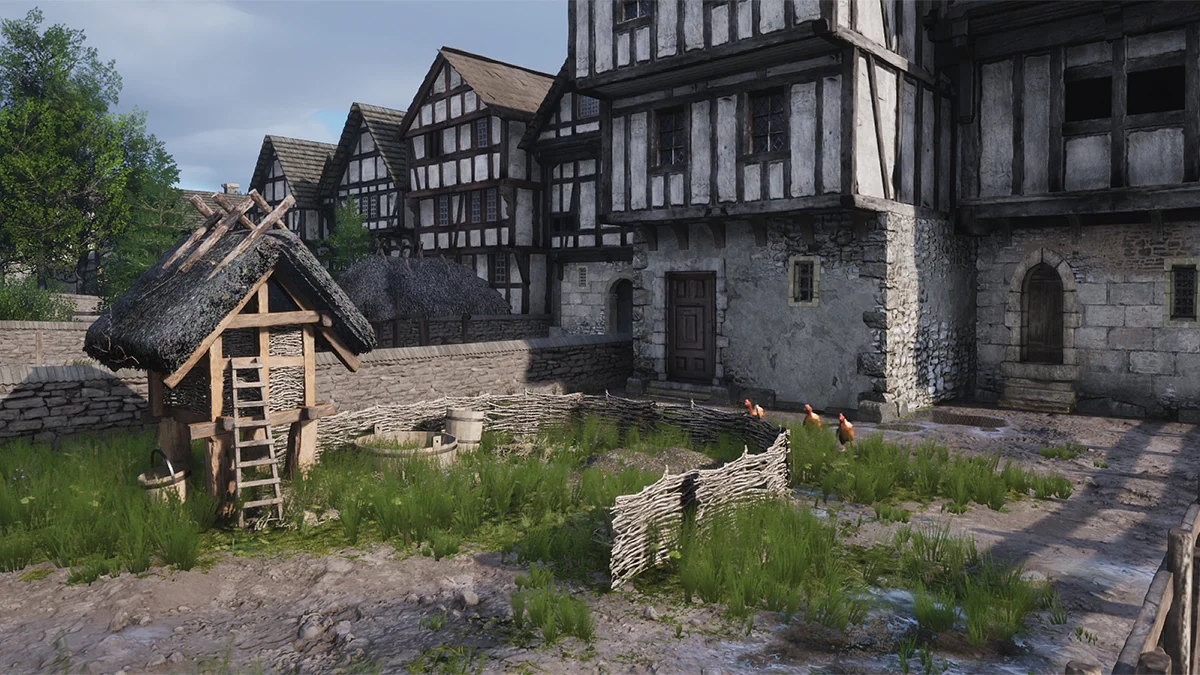
When first starting out playing Manor Lords, players are immediately presented with a foundational challenge: a nascent settlement comprising just five families. This initial population is a stark reminder of the fundamental need for growth, as these few households are quickly insufficient to staff the burgeoning infrastructure required for a thriving medieval village. The mechanism for attracting new families to live and work in one’s fledgling domain, however, is not always immediately apparent, forming a core strategic element that underpins all subsequent development.
The Pillars of Population Growth: Approval and Living Space
At the heart of Manor Lords‘ population dynamics are two critical elements: Approval and Living Space. These interconnected factors dictate the rate at which new families migrate to the player’s settlement, acting as a direct measure of the village’s desirability and capacity. Understanding and managing these metrics is paramount for any lord aspiring to transform a humble encampment into a bustling town.
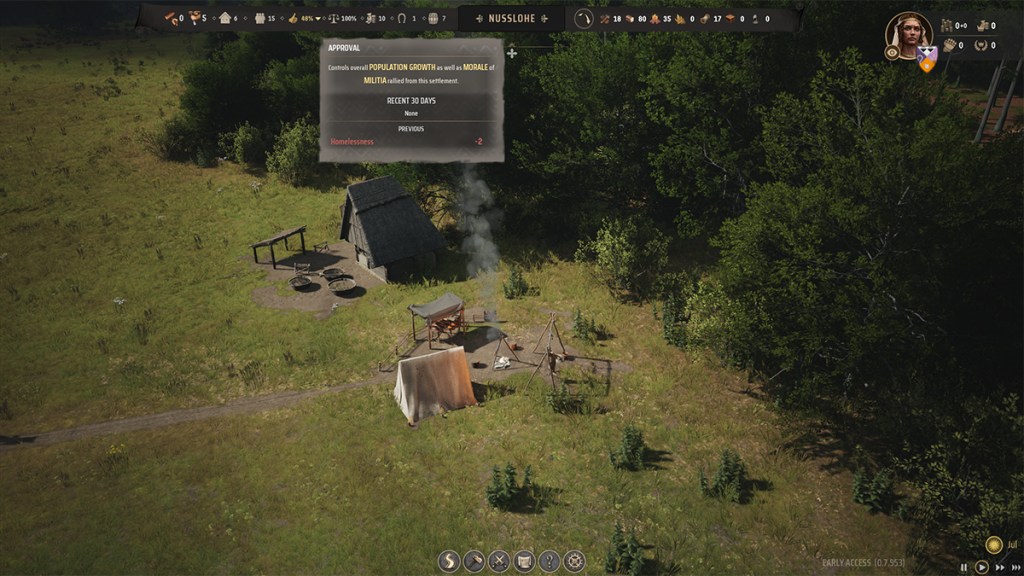
Approval, represented by a prominent bar located on the top-left of the user interface, serves as a comprehensive indicator of the populace’s general satisfaction. This metric is not merely a cosmetic detail but a dynamic force directly influencing immigration. A minimum Approval rate of 50% is essential to initiate the influx of new families, with one household migrating to the village approximately every month. Surpassing this threshold significantly accelerates growth; an Approval rate of 75% or more will attract two new families each month, effectively doubling the rate of expansion. Conversely, neglecting the well-being of the villagers carries severe consequences. Should Approval plummet below 25%, the tide of migration reverses, leading to existing villagers to abandon the settlement in search of more favorable living conditions elsewhere. This mechanic underscores the importance of proactive management, as a declining population can quickly spiral into economic stagnation and eventual collapse.
Living Space, the second crucial element, refers to the availability of suitable housing for new arrivals. Even with high Approval, new families cannot settle if there are no homes for them. This necessitates the construction of Burgage Plots, the primary residential buildings in Manor Lords. These plots are not merely shelters; they are dynamic entities that can be upgraded and expanded, providing not only living quarters but also space for backyard extensions that can contribute to the local economy. The strategic placement and timely construction of Burgage Plots are as vital as maintaining high Approval, as a lack of available homes directly bottlenecks population growth, regardless of how content the current residents may be.
Early Game Strategies for Sustained Immigration: A Chronology of Needs
The initial phases of Manor Lords are characterized by a delicate balancing act, prioritizing immediate needs to stabilize the existing population and lay the groundwork for future growth. The journey from five families to a burgeoning community follows a logical progression of addressing fundamental requirements.
Phase 1: Securing Basic Necessities (Initial Settlement – First Year)
Upon establishing the first settlement, the immediate priorities revolve around sustenance and shelter. The five starting families will quickly deplete initial resources, necessitating the rapid establishment of basic infrastructure.
-
Food Variety: One of the most straightforward and impactful ways to boost early Approval is by ensuring a diverse and consistent food supply. Relying on a single food source is precarious and often insufficient for long-term satisfaction.
- Hunting Camps: These structures allow villagers to hunt wild game, primarily deer, providing a reliable source of meat. Their effectiveness is often tied to proximity to forested areas with animal populations.
- Forager Huts: Complementing hunting, Forager Huts enable villagers to gather berries and mushrooms from the wilderness. These seasonal resources add crucial variety to the diet, which significantly contributes to Approval.
- Strategic Placement: Both structures benefit from careful placement to maximize resource gathering efficiency, reducing travel time and ensuring a steady flow of provisions to the village market.
- Market Stalls: Beyond mere production, food needs to be distributed efficiently. Setting up market stalls ensures that villagers have easy access to the varied food supplies, further enhancing their satisfaction. A diversified market, offering both meat and berries, is a quick win for early Approval.
-
Sufficient Housing (Burgage Plots Level 1): Providing adequate shelter is the other cornerstone of early Approval. Homelessness has a profound negative impact on villager morale and, consequently, Approval.
- Constructing Burgage Plots: Players should prioritize building enough Burgage Plots to house existing families and proactively construct a few additional ones. This foresight ensures that as new families arrive, they immediately have a place to live, preventing the negative Approval modifier associated with homelessness.
- Basic Amenities: Burgage Plots, even at Level 1, demand certain amenities to satisfy their residents. The most fundamental are:
- Well: Access to fresh water is non-negotiable for medieval settlements. Constructing a well within reasonable proximity to Burgage Plots is a basic requirement for health and satisfaction.
- Church: Religious needs are important in medieval society. Erecting a wooden church not only fulfills a spiritual requirement but also significantly boosts Approval, acting as a community focal point.
- Planning for Expansion: When laying out Burgage Plots, considering future upgrades and additional amenities is crucial. Leaving space for larger plots or adjacent structures can save time and resources later.
Phase 2: Expanding and Specializing (Mid-Game Growth)
As the population begins to steadily grow, new opportunities and challenges emerge. The increased workforce allows for specialization and the development of more complex economic chains, further enhancing Approval and accelerating growth.
-
Agricultural Development: With more hands available, shifting from pure foraging/hunting to more sustainable agriculture becomes viable.
- Farms and Fields: Establishing farms for growing grains (wheat, barley, rye) provides a stable and scalable food source. These grains can be processed into flour at a Windmill and then baked into bread at a Communal Oven, offering a highly efficient food source that contributes significantly to Approval due to its caloric value and variety.
- Orchards and Vegetable Gardens: Beyond grains, cultivating orchards or vegetable gardens on Burgage Plot extensions can provide even greater food diversity and improve local food security.
-
Resource Extraction and Crafting: A larger population can support dedicated workers for resource extraction and processing.
- Mines: Accessing mineral deposits (iron, clay, stone) allows for the production of tools, construction materials, and eventually advanced weaponry.
- Logging Camps and Sawmills: Efficient timber production is vital for construction and fuel.
- Crafting Workshops: These workshops, often built as Burgage Plot extensions, allow families to specialize in producing goods like tools, clothes, and even ale. The availability of diverse goods at market stalls further elevates Approval.
-
The Social Hub: Taverns and Ale: Once barley is being farmed, the production of ale becomes a significant driver of Approval.
- Malt House and Brewery: These facilities process barley into malt and then brew it into ale.
- Tavern: Constructing a tavern provides a social gathering place where villagers can consume ale. A well-stocked tavern with a steady supply of ale is a powerful boost to Approval, reflecting a community with leisure options and a higher quality of life. The revenue generated from ale sales also contributes to the regional wealth, which can be reinvested into the settlement.
Advanced Approval Management: Sustaining a Thriving Populace
As the settlement matures into a town, maintaining high Approval becomes more nuanced, requiring attention to a broader range of factors.
- Market Supply and Diversity: Beyond basic food, villagers desire a variety of goods. Ensuring a constant supply of diverse items – clothes, tools, shoes, and processed foods – through trade or local production is crucial. Upgrading market stalls and ensuring efficient logistics are key.
- Higher-Tier Burgage Plots and Amenities: As Burgage Plots are upgraded to Level 2 and Level 3, their amenity requirements become more sophisticated.
- Level 2 Requirements: Often include a nearby Tavern, a Church (potentially upgraded), and more diverse market access. These plots typically offer more living space and opportunities for specialized backyard extensions.
- Level 3 Requirements: Demand access to even more advanced amenities, potentially including a Manor House (player’s residence), a School, or a Guild Hall, reflecting a fully developed urban center. Fulfilling these advanced needs represents a significant investment but yields substantial Approval bonuses.
- Security and Defense: While not explicitly tied to Approval in the same way as food or housing, a sense of security contributes to overall villager contentment. As settlements grow, they become more attractive targets for bandits or rival lords. Establishing a militia and building defensive structures indirectly assures the villagers of their safety, preventing potential negative impacts on Approval from unrest or raids.
- Taxes and Welfare: While taxes are necessary for the lord’s treasury, excessive taxation or a lack of public services can negatively impact Approval. Balancing taxation with investment in community infrastructure (e.g., more wells, upgraded churches, public spaces) is vital. The collection of taxes, fueled by a productive and growing population, enables further expansion and provides a robust economic backbone for the entire region.
The Developer’s Vision: Organic Growth and Strategic Depth
The design philosophy behind Manor Lords, articulated by its solo developer Slavic Magic and supported by publisher Hooded Horse, strongly emphasizes organic growth and player agency. The population mechanics are not merely a numbers game but an intricate system reflecting the complex interdependencies of a medieval society. This design choice ensures that players must actively manage their burgeoning settlements, making strategic decisions that ripple through every aspect of gameplay.
The emphasis on Approval and Living Space encourages players to adopt a holistic approach to city-building. It’s not enough to simply build; one must build thoughtfully, considering the needs and satisfaction of the virtual populace. This approach fosters a deep sense of immersion and strategic depth, differentiating Manor Lords from more abstract city-builders. The challenge lies in balancing immediate needs with long-term planning, anticipating population demands, and proactively addressing potential bottlenecks in housing, food, or amenities.
Long-Term Implications and the Evolving Settlement
The initial struggle to attract those first few families quickly gives way to a dynamic process of expansion and refinement. Once the initial hump of securing basic needs is overcome and a steady stream of new families begins populating the village, the game’s pace accelerates. More people mean more available labor, which in turn unlocks the capacity to build more complex structures—extensive farms, productive mines, and specialized workshops. This increased productivity feeds a virtuous cycle: more goods lead to better market supply, higher living standards, and thus higher Approval, attracting even more families.
The journey from a humble hamlet to a bustling town, and eventually a city, is fundamentally driven by effective population management. Each new family represents not just another mouth to feed but also another pair of hands to work, contributing to the agricultural output, crafting industries, or defense of the settlement. The availability of diverse goods, from the simple ale brewed in a local tavern to the sophisticated tools forged by a blacksmith, directly correlates with the overall happiness and growth potential of the populace. These satisfied villagers, singing their praises (and paying their taxes), form the very foundation of the lord’s regional power and wealth.
In essence, Manor Lords frames population growth not as a simple numerical increase but as a direct reflection of a well-managed, prosperous, and appealing medieval society. The interplay between Approval, living conditions, resource availability, and economic activity creates a challenging yet rewarding gameplay loop, where foresight and adaptability are key to transforming a handful of families into a thriving, self-sufficient domain.