


A Legacy of Asymmetrical Horror Development
To understand the context of Halloween: The Game, one must examine the trajectory of IllFonic. The studio gained notoriety for Friday the 13th: The Game, which, despite its eventual legal entanglements and delisting, proved that there was a massive market for high-fidelity, license-specific asymmetrical horror outside of the industry leader, Dead by Daylight. While Dead by Daylight operates as a "museum of horror" with a wide variety of licenses, IllFonic’s strategy has consistently focused on deep-diving into a single intellectual property (IP), attempting to replicate the specific atmosphere, mechanics, and "rules" of that specific cinematic universe.

Halloween: The Game enters a crowded market where player retention is notoriously difficult. The game is built on a 1v4 foundation, a standard for the genre, but it attempts to differentiate itself by introducing environmental complexity and a heavy emphasis on the "stalking" behavior synonymous with the character of Michael Myers, also known as The Shape.
The Narrative Framework: 30th October 1978
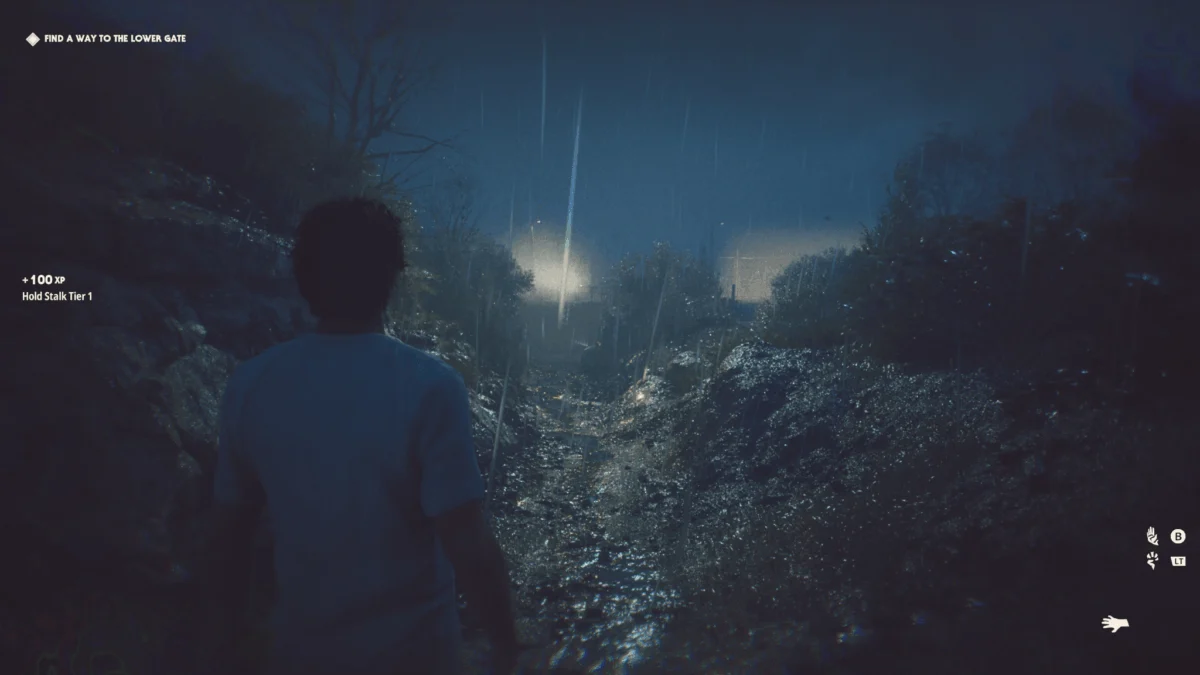
Departing from the purely multiplayer focus of some of its predecessors, Halloween: The Game includes a dedicated single-player component. This mode serves a dual purpose: it functions as a narrative retelling of the events leading up to the 1978 film’s climax and acts as a comprehensive, albeit short, tutorial for the killer’s mechanics. Spanning five distinct chapters with a total runtime of approximately two hours, the mode follows Michael Myers from his initial escape from Smith’s Grove Sanitarium to his arrival in Haddonfield and his eventual confrontation with Laurie Strode.

While the single-player mode is not substantial enough to justify the purchase for solo players alone, it provides a level of cinematic framing often missing from asymmetrical titles. Each chapter includes specific challenges and varying difficulty levels, encouraging players to master Michael’s movement and "stalk" mechanics before venturing into the competitive online environment. This mode also highlights the studio’s commitment to the 1978 license, featuring recreations of iconic scenes and locales that serve as a foundation for the multiplayer maps.
Core Multiplayer Mechanics: The Shape vs. The Survivors
The heart of the experience is the multiplayer mode, which pits one player as Michael Myers against four survivors. At launch, the game features four maps, all centered around the suburban environments of Haddonfield. These maps are designed with high density, offering numerous hiding spots, multi-story houses, and intricate backyard layouts that facilitate a "cat-and-mouse" gameplay loop.

The Survivor Experience
Survivors are tasked with securing one of several randomized escape routes. This requires locating key items—such as car keys or gate fuses—while managing the safety of non-playable character (NPC) neighbors. Unlike other games in the genre where survivors are often isolated, Halloween: The Game emphasizes the "neighborhood" aspect; the more NPCs the survivors can lead to safety, the higher their final score.
Survivor gameplay relies heavily on skill checks—timed button presses reminiscent of those found in Dead by Daylight but applied to a wider variety of contextual actions. Survivors can also call for police assistance or utilize temporary defensive weapons to stun Michael. A unique feature of this title is the "post-death" mechanic: players who are killed can still contribute by completing skill checks to buff remaining teammates or, in some instances, respawning as high-value characters like Dr. Samuel Loomis or an armed police officer.

The Killer Experience
Playing as Michael Myers focuses on the "Stalk" mechanic. Rather than simply chasing survivors, the player is incentivized to watch them from a distance. This builds a meter that, when filled, grants Michael increased lethality and access to brutal, context-sensitive environmental kills.
Michael’s kit includes several supernatural and physical abilities:

- Detection Pulse: A short-range sonar used to find survivors hiding in closets or bushes.
- Shadow Strike: A ranged blinding attack that disorients targets.
- Blackout: A map-wide ability that disables electrical lights and streetlamps.
- Shape Jump: Michael’s primary mobility tool, allowing him to teleport between shadowed areas, simulating his cinematic ability to appear and disappear.
Technical Implementation and Unreal Engine 5
Halloween: The Game is one of the first major asymmetrical horror titles built from the ground up using Unreal Engine 5. This choice is reflected in the game’s visual fidelity. On the Xbox Series X, the game offers a "Quality Mode" targeting 30fps and a "Performance Mode" targeting 60fps. The use of advanced lighting and volumetric fog creates a legitimately oppressive atmosphere, with rain-slicked streets and film-grain filters that pay homage to 1970s cinematography.
However, the transition to Unreal Engine 5 has not been without significant hurdles. Technical analysis during the launch window revealed inconsistent performance. Even on high-end consoles, frame rate drops are common during high-intensity sequences, such as when the "Blackout" ability is triggered. Furthermore, the "Performance Mode" involves a substantial reduction in resolution, which can impact gameplay by making distant survivors or small interactive items difficult to distinguish.

Progression Systems and Player Economy
The game employs a perk-based progression system, but with a controversial "gacha" twist. Players build loadouts from a deck of perk cards, but these cards are drawn randomly during a match based on the player’s performance and objective completion. This randomized element is designed to prevent "meta-gaming," where players use identical, optimized builds in every match. However, it also introduces a layer of unpredictability that can frustrate players looking for a consistent strategic experience.
Unlocking these perks and cosmetic items requires significant time investment. The game features a linear challenge system for every character and weapon, leading to what some players have described as an excessive "grind." More concerning to the community is the fact that some of Michael Myers’ core gameplay abilities are locked behind high player levels, potentially creating a power imbalance between new players and veterans.

Critical Issues and Launch Stability
Despite the strength of the IP, the launch of Halloween: The Game has been marred by severe technical instability. Reports from the "Day One" period indicate frequent hard crashes, particularly when players utilize specific perk cards. The multiplayer environment has also struggled with latency issues, with "yellow" and "red" ping indicators being the norm in pre-match lobbies regardless of a player’s actual internet speed.
Specific gameplay bugs identified at launch include:

- Geometry Clipping: Police vehicles and NPCs frequently becoming stuck on map borders, preventing match completion.
- Animation Soft-Locks: Survivors becoming stuck in interaction animations (e.g., searching a drawer) and being unable to move for the remainder of the match.
- Visual Glitches: Reports of Michael Myers’ character model losing textures or "clothing" mid-match, and audio desynchronization where survivor voices do not match the selected character.
- UI Failures: A lack of tutorials for the survivor side, leaving new players with no explanation of item effects or scoring mechanics.
Broader Impact and Industry Implications
The release of Halloween: The Game serves as a litmus test for the viability of single-IP asymmetrical horror in 2026. While the "Halloween" name carries immense weight, the game’s narrow focus on the 1978 film—excluding content from the numerous sequels and the recent Blumhouse trilogy—may limit its long-term appeal to a broader audience.
Industry analysts suggest that for the game to survive its first year, IllFonic must address two primary concerns: technical stability and the learning curve for survivors. The absence of a survivor tutorial is a significant oversight in a genre known for its high barrier to entry. Furthermore, the lack of a "fail state" for the killer—where a match continues until every last NPC is hunted down even after all human players have escaped—creates pacing issues that could lead to player burnout.

Conclusion
Halloween: The Game is a title of high highs and low lows. When the technical elements align, it offers the most authentic recreation of the Michael Myers mythos ever seen in interactive media. The atmospheric lighting of Unreal Engine 5 and the innovative "Shape Jump" mechanic successfully capture the essence of the 1978 film. However, the current state of the game—defined by frequent crashes, progression bugs, and poorly explained mechanics—suggests that it may have been released prematurely.
For fans of the franchise, the attention to detail in Haddonfield may be enough to warrant an initial look. For the general multiplayer audience, however, the game requires significant post-launch support and rebalancing before it can truly challenge the established titans of the asymmetrical horror genre. The future of Halloween: The Game will depend entirely on how quickly IllFonic can transition from "beta-testing" in a live environment to providing a stable, polished experience worthy of its legendary cinematic namesake.