


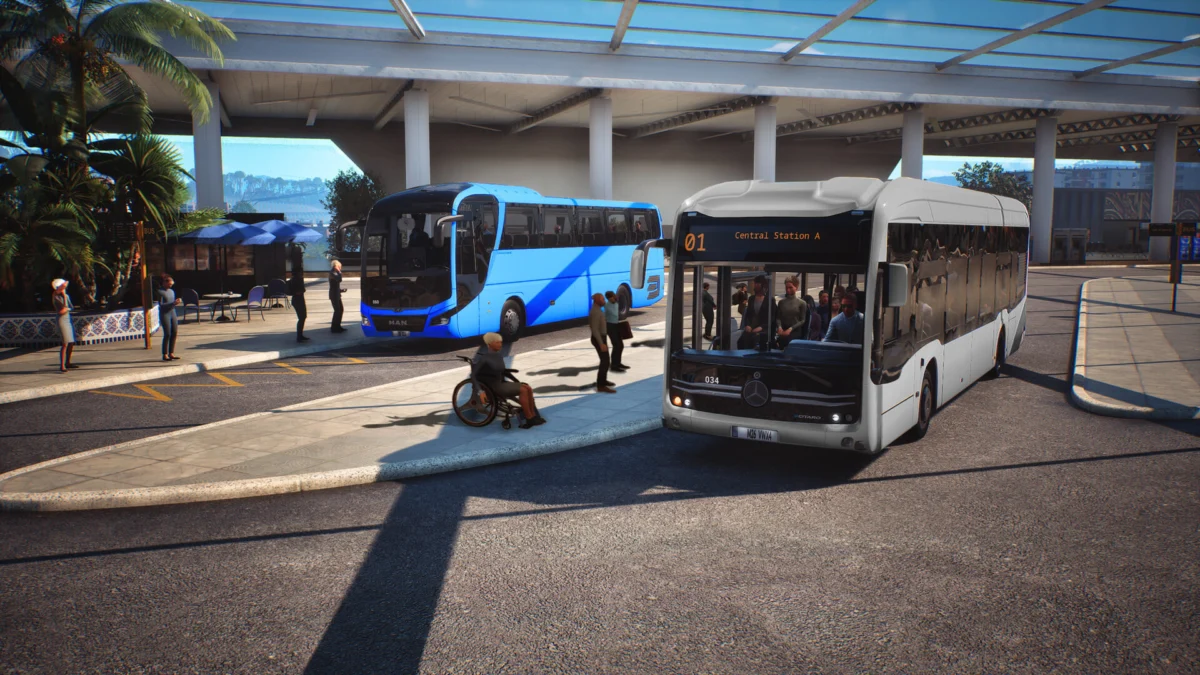
The release of Bus Simulator 27 marks a significant pivot for one of the simulation genre’s most enduring franchises, as development duties have officially shifted from longtime creator Stillalive Studios to Simteract, the studio previously known for Taxi Life: A City Driving Simulator. Published by Astragon Entertainment, the latest entry in the long-running series attempts to set a new technical benchmark by transitioning to Unreal Engine 5, offering a sprawling Mediterranean-inspired open world and a fleet of 45 officially licensed vehicles. While the title successfully maintains the granular management depth that fans have come to expect, its launch on Xbox Series X and PC has been characterized by a dichotomy of high-level ambition and persistent technical instability.
The Evolution of a Genre Giant: A Brief Chronology
To understand the weight of Bus Simulator 27, one must look at the trajectory of the series over the last decade. Since the breakout success of Bus Simulator 16 and the subsequent refinement in Bus Simulator 18, the franchise has stood as the gold standard for urban transit simulation. Bus Simulator 21 further expanded the scope with its American-themed "Angel Shores" map and improved cooperative play.

However, 2026 has emerged as an unprecedented year for the niche market. Before the arrival of Bus Simulator 27, the calendar year saw the release of Bus Driving Simulator: EVO, the massive-scale project titled The Bus, and the highly anticipated Bus Bound—the latter being developed by the original Bus Simulator team, Stillalive Studios. This "developer carousel" has created a unique competitive landscape where Simteract must now prove it can handle the legacy of the primary brand while competing against the very team that defined its identity.
Setting the Stage in Felicia Bay
The narrative and geographical heart of Bus Simulator 27 is Felicia Bay, a fictional region heavily inspired by the coastal aesthetics of Portugal and Spain. The setting represents a departure from the Central European and North American locales of previous entries, offering sunny vistas, narrow Mediterranean corridors, and a distinct architectural flair.
The game’s campaign is built upon a premise of civic restoration. Players are tasked with rebuilding the public transportation infrastructure of Felicia Bay from the ground up following the collapse of the previous transit authority due to systemic corruption. This provides a structured progression system where players must not only drive routes but also navigate political and economic hurdles to restore public trust in the transit system. The map is divided into two major cities and multiple outlying districts, each featuring unique points of interest and varying traffic densities that challenge the player’s navigational skills.

Core Mechanics and Management Depth
At its core, Bus Simulator 27 remains a "360-degree" management simulation. Unlike more arcade-leaning titles like Bus Bound, which prioritize the tactile sensation of driving, Simteract has doubled down on the procedural minutiae of the job. Players are responsible for:
- Vehicle Interaction: Manually operating individual doors, kneeling the bus for curb access, and extending ramps for passengers using wheelchairs.
- Financial Oversight: Selling tickets with correct change, checking for "black riders" (fare evaders), and managing the company’s macro-economy.
- Infrastructure Design: Creating custom bus lines, setting stop frequencies, and balancing the budget to purchase more advanced eco-friendly models.
The licensing suite is a cornerstone of the experience, featuring 45 meticulously modeled buses from industry leaders including Mercedes-Benz, MAN, IVECO, and the electric-focused Ebusco. The inclusion of the Ebusco 3.0, in particular, highlights the game’s focus on modern, sustainable transit trends.
Technical Specifications and Performance Analysis
The transition to Unreal Engine 5 was intended to provide a visual leap for the series, but the current state of the game suggests a difficult development cycle. On the Xbox Series X, the game maintains a generally playable state, though it is prone to inconsistent frame rates in high-density urban areas. The PC port, however, reveals more significant optimization hurdles.

Testing across various hardware configurations—ranging from the handheld ROG Ally to high-end desktop rigs featuring the AMD Ryzen 9 7900X and Intel B580—indicates a lack of polish. On lower-powered devices like the ROG Ally, the game requires the use of AMD’s FSR (FidelityFX Super Resolution) to maintain a stable 30 frames per second at medium settings. However, early reports suggest that the implementation uses an older version of the upscaler, resulting in noticeable ghosting and shimmering, particularly on 2D UI elements and onboard bus computers.
On high-end PCs, while the engine supports ray tracing and advanced lighting, the visual fidelity is often undermined by a UI that appears to render at a lower internal resolution than the 3D environment. More critically, the PC version has been reported as "crash-heavy," with frequent returns to the desktop during autosaves or when navigating complex routes.
AI and Physics: The Simulation Gap
One of the most criticized aspects of the launch version involves the artificial intelligence of pedestrians and traffic. In a simulation where punctuality and safety are the primary metrics of success, the AI frequently creates unsolvable bottlenecks. Pedestrians often block paths with no alternative pathfinding logic, and vehicular traffic is prone to total gridlock in Felicia Bay’s tighter intersections.

The physics engine also displays inconsistencies. While the weight and momentum of the buses feel authentic on straightaways, interactions with the environment—such as clipping a curb or minor collisions—can result in exaggerated physical reactions. These "janky" elements detract from the immersion that Unreal Engine 5’s lighting and sound design work so hard to establish.
Accessibility and Customization
Despite the technical flaws, Simteract has introduced an impressive suite of customization options that allow players to tailor the difficulty of the simulation. This modular approach to "realism" is one of the game’s strongest features. Players can toggle several assists, including:
- Automatic Engine Management: Allowing the bus to handle ignition and cooling.
- Traffic Leeway: Adjusting the severity of penalties for speeding or minor traffic infractions.
- Density Scaling: Reducing the number of AI cars and pedestrians for a more "chill" driving experience.
This flexibility ensures that the game remains accessible to newcomers while providing the high-stakes, high-stress environment that veteran "simmers" crave.

Multiplayer and Social Integration
Bus Simulator 27 features a robust co-op mode, supporting up to four players in a shared company. The inclusion of crossplay between Xbox and PC is a significant addition, allowing friends to manage the same transit network regardless of their platform. In this mode, players can see each other’s buses on the route, coordinate schedules in real-time, and work together to unlock new districts. When functioning correctly, the social aspect of the game elevates the experience from a solitary chore to a collaborative enterprise.
Broader Impact and Industry Implications
The launch of Bus Simulator 27 serves as a case study for the current state of the "AA" simulation market. The pressure to move to high-end engines like Unreal Engine 5 often clashes with the budgetary and time constraints of niche development. Simteract has clearly built a strong foundation with Felicia Bay and its licensed roster, but the technical debt at launch suggests that the "Early Access" feel of many modern simulators is becoming the industry standard, even for full releases.
Furthermore, the competition with Stillalive Studios’ Bus Bound creates a "split" in the community. Players must now choose between the brand recognition and management depth of Bus Simulator 27 or the potentially more polished, driving-focused experience of the original developers’ new project.

Conclusion and Future Outlook
Bus Simulator 27 is a title of immense potential that is currently hampered by its own technical ambitions. On paper, it is the most comprehensive bus simulation ever created, offering a massive map, a deep career mode, and an unparalleled list of licensed vehicles. However, the reality of the launch is defined by bugs, crashes, and AI pathfinding issues.
For the franchise to maintain its dominance, Simteract will need to provide a transparent roadmap for patches and optimization. Much like Bus Simulator 21, which saw significant improvements through its "Next Generation" update, Bus Simulator 27 will likely require several months of post-launch support to reach its full potential. For now, it remains a "buy with caution" for PC users, while console players may find a more stable, albeit imperfect, entry point into the sunny streets of Felicia Bay. The foundation for a masterpiece is present; the final construction, however, remains a work in progress.