


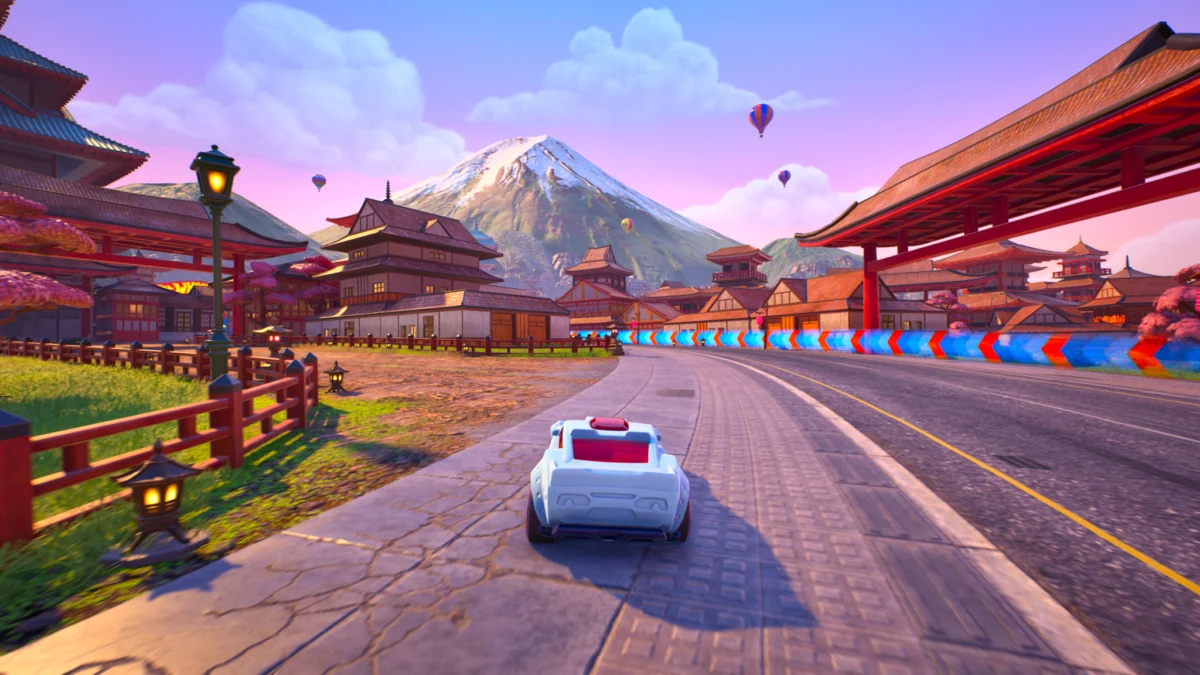
The release of Hot Wheels Infinite Rush marks a significant evolutionary step for the partnership between Italian developer Milestone and toy giant Mattel, transitioning the franchise from its traditional corridor-based arcade roots into a sprawling open-world environment. Following the critical and commercial success of the Hot Wheels Unleashed series, Milestone has leveraged its technical expertise in racing simulation and arcade mechanics to deliver a title that mirrors the industry’s shift toward sandbox exploration. By integrating the established toy-car physics of previous entries with four distinct, acrobatic island environments, the developer seeks to challenge the dominance of established open-world racers while maintaining the nostalgic charm of the die-cast brand.
The Evolution of Milestone’s Racing Portfolio
To understand the positioning of Hot Wheels Infinite Rush, it is necessary to examine Milestone’s prolific output leading into late 2026. The Milan-based studio has spent the calendar year reinforcing its reputation as a premiere racing developer, having already released the anime-stylized arcade racer Screamer, the expansive motorcycle odyssey RIDE 6, and the highly technical MotoGP 26. While those titles targeted specific niches within the motorsport community, the Hot Wheels franchise remains Milestone’s broadest intellectual property, appealing to both a younger demographic and adult collectors.

The transition to an open-world format follows a trajectory established by the Forza Horizon series and Ubisoft’s The Crew. However, where those titles focus on automotive culture and realism, Hot Wheels Infinite Rush leans into the "toy-logic" established in 2021’s Hot Wheels Unleashed. The previous installment, Hot Wheels Unleashed 2: Turbocharged, introduced mechanics such as jumping and lateral dashing, which served as the mechanical foundation for the verticality and exploration found in this latest release.
Mechanical Foundations and Toy-Physics Integration
A core component of the Hot Wheels Infinite Rush experience is the preservation of the series’ unique handling model. Unlike the high-friction grip found in titles like Mario Kart, Milestone utilizes a physics engine that emphasizes the weight and material properties of die-cast metal and plastic. The vehicles are notoriously fickle; hitting a ramp at an incorrect angle or clipping a piece of track geometry results in the car bouncing and flipping in a manner consistent with real-world Hot Wheels toys.
This "demanding arcade" approach requires players to master wide drifts and strategic boosting. The inclusion of side-swipes serves both an offensive and defensive purpose, allowing players to knock rivals off elevated tracks or correct their own trajectory mid-air. While the game offers various difficulty settings to accommodate younger players, the high-level gameplay remains technical, requiring precise management of momentum and vehicle orientation.

Structural Overview of the Four Islands
The game’s world is divided into four primary themed islands, each offering a distinct aesthetic and geographical challenge. This compartmentalized approach allows Milestone to experiment with different environmental hazards and track designs without the need for a singular, contiguous landmass.
- Wheelswood: A dense, urban-themed environment that mimics a giant playroom version of a metropolitan city. It serves as the introductory area, focusing on street racing and basic navigation.
- Drifty Temples: A Japan-inspired region that emphasizes technical cornering and high-altitude plastic tracks. This area reflects a broader 2026 industry trend of Japanese-themed racing environments, also seen in contemporary titles like Forza Horizon 6 and Gear.Club Unlimited 3.
- The remaining two islands focus on natural valleys and volcanic landscapes, providing high-contrast visuals and varying surface types that affect vehicle performance.
Each island contains 300 collectible "gears," incentivizing players to explore off the beaten path. These collectibles are often hidden in areas that require the use of the game’s jumping mechanics or hidden shortcuts through the environment.
Progression, Vehicle Classes, and Transformation Mechanics
Hot Wheels Infinite Rush utilizes a progression system centered on car collection and specialization. The game features a vast roster of iconic Mattel designs, which can be acquired through event victories or purchased with in-game credits earned during exploration.

The gameplay loop necessitates the maintenance of a diverse garage, as vehicles are categorized into specific classes such as Speeder, Drifter, and Heavy Duty. Certain challenges and "Daredevil" AI encounters are gated by these classifications, requiring the player to utilize a specific type of vehicle to succeed. A notable addition to this entry is the "on-the-fly" transformation mechanic. Similar to the system seen in LEGO 2K Drive, players can switch between their selected vehicles instantly, with the car model transforming on the spot to suit the terrain or race requirements.
The "Daredevil" system acts as the game’s primary rival mechanic. Roaming AI adversaries populate the islands, and successfully challenging and defeating them allows the player to add the rival’s specific vehicle to their own collection. This provides a constant sense of progression even outside of formal race events.
Event Diversity and World Activities
Beyond free-roaming exploration, the game offers a traditional suite of racing activities. These include:

- Standard Circuit Races: Competitions against 11 AI opponents featuring boosts and obstacles.
- Time Attacks: Precision-based trials focused on optimal racing lines.
- Eliminator Races: Survival-based events where the last-placed car is removed at set intervals.
- Boss Encounters: Large-scale, multi-stage challenges that serve as the "gatekeepers" for new island unlocks.
Milestone has designed the campaign to be relatively accessible; players can unlock all four islands within a few hours by completing a handful of races and a boss encounter on each. This low barrier to entry is balanced by the extensive "end-game" content, which involves clearing every event, finding all 1,200 gears, and mastering the visual customization system.
Technical Performance and Social Features
Reviewed on the Xbox Series X, Hot Wheels Infinite Rush demonstrates Milestone’s mastery of the Unreal Engine. The game maintains a stable frame rate despite the high-speed action and complex vertical geometry. The visual fidelity is particularly evident in the materials of the cars, which show realistic paint flakes, plastic molding lines, and surface scratches as the race progresses.
The title includes several features aimed at long-term engagement:

- Track Editor: A robust, yet accessible tool that allows players to build and share their own plastic track configurations within the open world.
- Split-Screen Multiplayer: Support for up to four players locally, a feature increasingly rare in modern racing titles.
- Online Module: A comprehensive suite of competitive modes and leaderboards.
While the game lacks a granular fast-travel system—limiting players to jumping between islands rather than specific events—the density of the world and the speed of the vehicles mitigate much of the potential frustration associated with backtracking.
Broader Industry Impact and Implications
The shift to an open-world format for the Hot Wheels franchise suggests a broader strategic move by Mattel to compete more directly with major gaming brands. By moving away from the "toy box" room environments of the Unleashed series and into "real-world" islands, the franchise is positioning itself as a legitimate alternative to realistic simulators.
Industry analysts note that Milestone’s ability to release four high-quality racing titles in a single year (2026) indicates a highly efficient development pipeline. Hot Wheels Infinite Rush, in particular, represents a successful blend of licensed property appeal and genuine mechanical depth. The game’s "on-the-fly" transformation and vertical track design provide a unique selling point that distinguishes it from more grounded competitors like Forza Horizon.

For the consumer, the title offers a "chill" exploration experience interspersed with high-octane racing. While the open-world activities—such as speed traps and drift zones—follow a familiar formula, the execution remains high. Milestone has successfully transitioned the Hot Wheels brand into the sandbox era without sacrificing the fickle, challenging physics that made the original Unleashed a sleeper hit.
Conclusion
Hot Wheels Infinite Rush is a comprehensive package that capitalizes on the strengths of its predecessors while expanding its scope significantly. By combining a demanding physics model with a vibrant, vertical open world, Milestone has created a title that serves as both a nostalgic tribute to a classic toy brand and a modern, competitive arcade racer. With its robust collection mechanics, extensive customization, and local multiplayer support, it stands as one of the most versatile racing entries in the 2026 gaming landscape. While it does not reinvent the open-world genre, it adapts it with enough "Hot Wheels" flair to ensure it remains a distinct and engaging experience for a wide range of players.