


Narrative Architecture and Character Genesis
The plot of Resonance: A Plague Tale Legacy functions as an origin story, exploring the formative years of Sophia before her encounter with Amicia and Hugo de Rune. The narrative begins within the confines of a secluded convent, where a young Sophia is subjected to a mysterious ritual involving a "tarry substance" linked to the Macula—the ancient blood curse that defined the previous titles. This exposure triggers a series of vivid, haunting visions depicting an ancient Greek civilization on a remote island, blending historical maritime lore with the series’ signature supernatural elements.

Following her rescue by her father, a prominent pirate captain, Sophia embarks on a multi-decade quest to uncover the truth behind her visions. The story emphasizes the psychological toll of this pursuit, focusing on the search for a legendary "island of gold" that Sophia believes holds a cure for her condition. Central to the emotional core of the game is Sophia’s relationship with Leni, a close companion and love interest who serves as a grounding influence amidst the escalating chaos of their pirate life. This narrative structure allows the game to bridge the gap between historical realism and the fantastical, providing context for Sophia’s hardened demeanor in the main series.
Evolution of Gameplay Mechanics
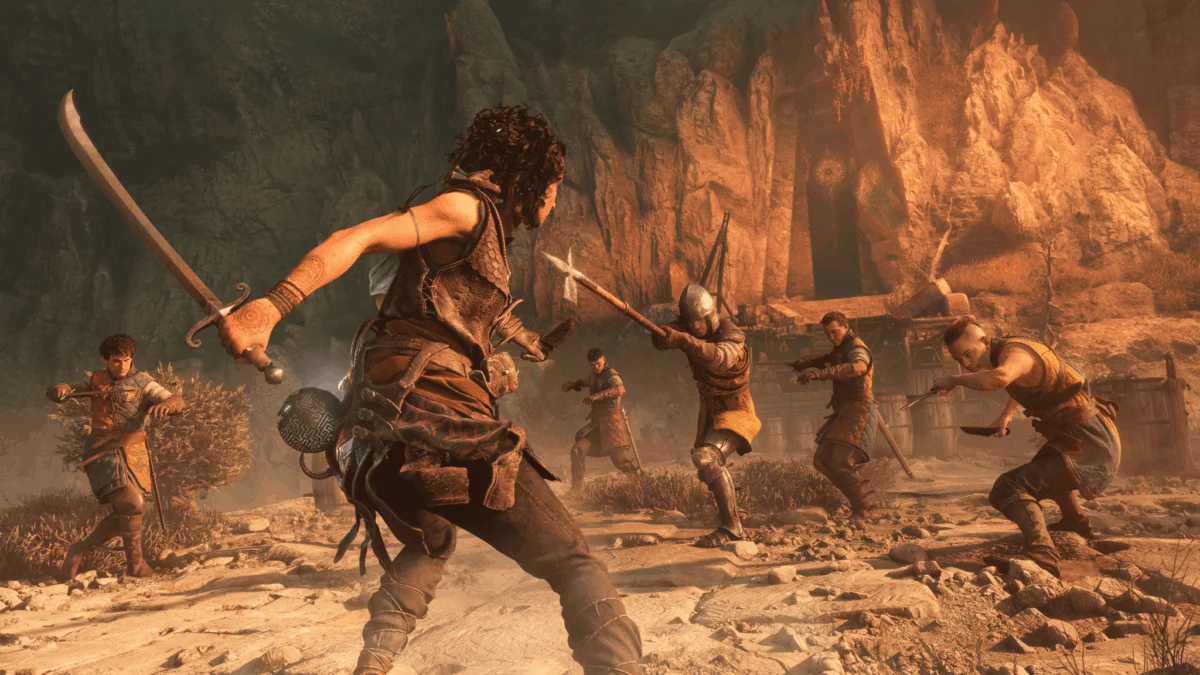
While the Plague Tale series has historically prioritized avoidance and environmental manipulation, Resonance: A Plague Tale Legacy introduces a robust combat system designed to reflect Sophia’s background as a trained combatant. The protagonist utilizes a sophisticated sword-and-dagger configuration, allowing for a more direct engagement with adversaries.

Combat and the Resonance System
The combat loop is built around a timing-based parry mechanic. Standard attacks can be deflected by default, while "red-light" heavy attacks require specific upgrades to counter. This progression is managed through "Resonance Points," a skill-tree currency that allows players to customize Sophia’s lethality. Notably, the game features a "refund" mechanic for these points, permitting players to reconfigure their build to suit specific combat encounters or playstyles.
Sophia’s arsenal is further expanded by a multi-functional grapnel hook. This tool serves dual purposes: it acts as a navigational aid for vertical traversal and a tactical weapon capable of pulling enemies off balance or stripping them of protective armor. Additionally, certain narrative sequences allow Sophia to "channel" the spirits of ancient warriors, temporarily altering the combat flow and introducing unique animations and power sets, though these segments are integrated into the broader action-adventure structure rather than replacing it.

Environmental Puzzles and the Sphere
Despite the increased focus on combat, environmental interaction remains a fundamental pillar of the experience. The primary tool for world interaction is a mysterious "sphere" capable of activating ancient technology found throughout the island. This leads to complex puzzles involving:
- Light Manipulation: Redirecting beams of light to clear paths or trigger mechanisms.
- Symbolic Deciphering: Using Sophia’s journal to match ancient Greek symbols with environmental cues.
- Color Matching: Solving chromatic locks to access hidden chambers.
Technical Performance and Visual Fidelity
Asobo Studio has utilized a refined version of its proprietary engine to deliver visuals that rival major "AAA" productions. The game’s environmental design focuses on the juxtaposition of natural island beauty and the decaying, "cursed" ruins of a lost civilization.

Hardware Benchmarking
Technical analysis conducted on the PC version indicates a highly optimized experience. On high-end desktop hardware at Ultra 4K settings, the game maintains a stable 100 frames per second (FPS). The title also demonstrates significant scalability for portable hardware. On the Xbox Ally X (a high-performance handheld PC), the game achieves a locked 30 FPS at a 17w power draw, with the potential to approach 60 FPS when utilized in "Turbo" mode.
Motion Capture and Animation
A significant portion of the game’s emotional impact is derived from its facial animation technology. The developers have employed advanced motion capture to render micro-expressions, including realistic ocular movements and the physiological signs of distress, such as eyes welling with tears. Industry analysts have compared the fidelity of these performances to high-budget titles like The Last of Us Part II, noting that the "emotive tech" is a primary driver for the game’s narrative immersion.

Chronology of the Plague Tale Franchise
The release of Resonance: A Plague Tale Legacy marks a significant milestone in the franchise’s timeline, which has seen steady growth since its inception:
- A Plague Tale: Innocence (2019): Introduced the De Rune siblings and the rat plague in 14th-century France. It established the series’ focus on stealth and emotional storytelling.
- A Plague Tale: Requiem (2022): Expanded the scope and mechanical depth, introducing Sophia as a supporting character and concluding the primary arc of Hugo de Rune.
- Resonance: A Plague Tale Legacy (Current): A prequel/side-story that refines the engine and shifts the genre toward action-adventure while providing essential lore regarding the Macula’s history and Sophia’s origins.
Industry Implications and Market Strategy
The decision to launch Resonance: A Plague Tale Legacy as a day-one title on Xbox Game Pass reflects a broader industry trend toward subscription-based distribution for narrative-focused titles. For Focus Entertainment, this strategy ensures an immediate player base and mitigates the risks associated with a genre shift.

Market Analysis
Market analysts suggest that the shift to an action-focus is an attempt to broaden the franchise’s appeal. While the original games were lauded for their atmosphere, some players found the restrictive stealth mechanics to be a barrier to entry. By empowering the player with a "stone-cold killer" protagonist like Sophia, Asobo Studio is positioning the IP to compete more directly with established action-adventure franchises like Tomb Raider or God of War, albeit with a darker, horror-infused aesthetic.
Studio Trajectory
Asobo Studio’s growth from a specialized technical house to a premier narrative developer is highlighted by this release. The studio, which also maintains the Microsoft Flight Simulator franchise, has demonstrated a unique ability to balance extreme technical optimization with high-concept storytelling. Resonance serves as a "proof of concept" for the studio’s ability to handle more complex combat systems, potentially hinting at the direction of future projects.

Official Responses and Critical Reception
While official statements from Asobo Studio emphasize the "Legacy" aspect of the title—honoring the characters and themes established in the first two games—early feedback from the gaming community has focused on the balance between horror and action.
A spokesperson for Focus Entertainment stated, "With Resonance, we wanted to explore the dark corners of the Plague Tale world through a different lens. Sophia’s story allows us to maintain the emotional weight our fans expect while introducing a faster, more visceral gameplay loop."

Early critical assessments have praised the game’s 12-hour length as "lean and focused," avoiding the "open-world bloat" that has affected other modern action-adventure titles. However, some critiques have pointed toward the repetitive nature of the combat toward the end of the campaign, suggesting that while the action is competent, the game’s true strength remains its atmosphere and narrative delivery.
Broader Impact on the Genre
Resonance: A Plague Tale Legacy contributes to the ongoing evolution of the "AA" gaming space—titles that sit between independent productions and the massive "AAA" blockbusters. By focusing on high-fidelity facial animation and a tightly scripted narrative, Asobo Studio is proving that mid-sized teams can produce experiences that match the visual and emotional benchmarks of the industry’s largest players.

The game’s exploration of "Reality vs. Myth" and its use of historical settings as a backdrop for supernatural horror continues to be a defining trait of French game development. As the industry moves forward, the success of Resonance may encourage other developers to explore supporting characters from established franchises through dedicated, genre-shifting spin-offs, further enriching the lore of successful IPs without requiring a full-scale sequel.