


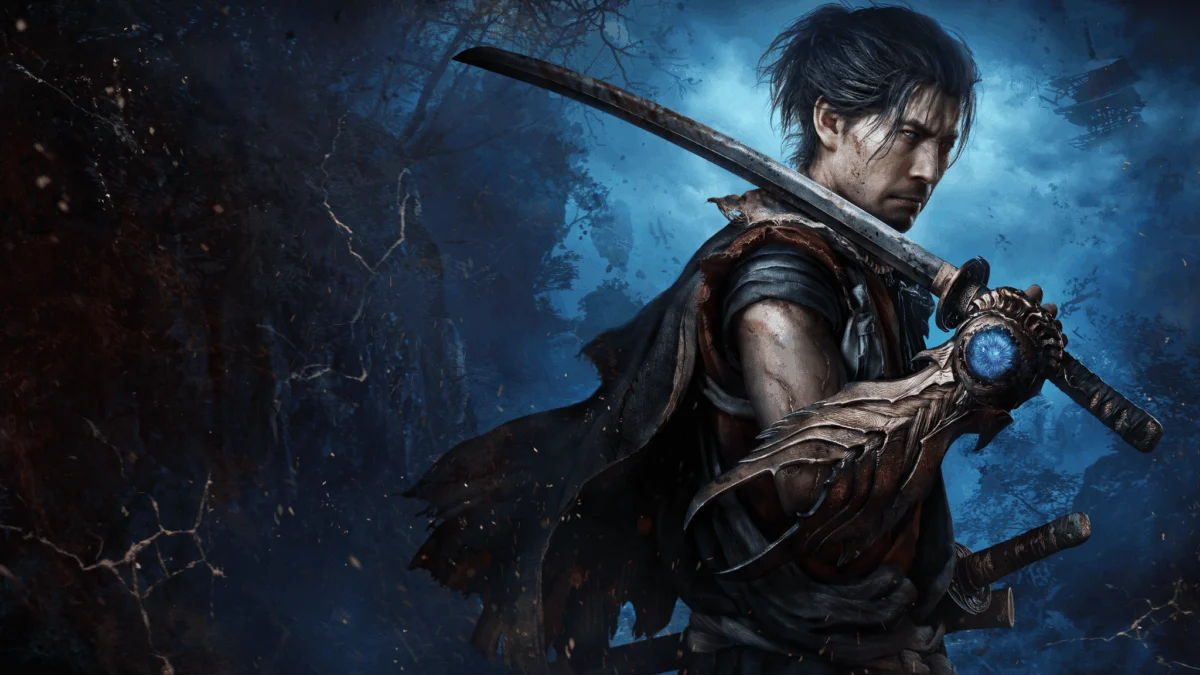
Capcom has officially revitalized one of its most storied franchises with the release of Onimusha: Way of the Sword, a title that marks a significant pivot for the series toward high-fidelity historical fiction and technical combat. Set against the backdrop of the Edo period in Eastern Kyoto, the game serves as both a reboot and a refinement of the "character action" genre, leveraging the proprietary RE Engine to deliver a visual and mechanical experience tailored for the latest hardware iterations, including the PlayStation 5 Pro. As the first major entry in the series in over a decade, the title attempts to balance the expectations of long-term fans with the demands of a modern gaming audience, focusing heavily on a "deliberate" combat system that emphasizes timing and precision over button-mashing.

Narrative Foundations and Historical Fiction
Onimusha: Way of the Sword centers its narrative on a fictionalized version of Miyamoto Musashi, perhaps the most famous swordsman in Japanese history. In this iteration, Musashi is portrayed as an ambitious, solitary warrior driven by a singular desire to become the strongest swordsman in the world. However, his journey takes a supernatural turn when the Genma—a demonic race central to the Onimusha mythos—emerge to threaten Japan. Musashi finds his conventional skills insufficient against these otherworldly foes, leading to an early-game defeat that sees him sent to a metaphorical and literal hell.

The protagonist’s resurrection is facilitated by an Oni gauntlet, a mystical artifact that bestows him with the power to combat the Genma. This setup provides the mechanical justification for the game’s "Oni Armaments" and soul-absorption systems. Musashi is joined by a supporting cast that includes a local Onimusha guarding the gates of hell, an apprentice, and an Oni spirit inhabiting his gauntlet. While the narrative follows a predictable trajectory typical of traditional samurai cinema, the emotional weight is carried by the protagonist’s growth and the atmospheric world-building of a demon-infested Kyoto.

Technical Prowess and the RE Engine
From a technical standpoint, Onimusha: Way of the Sword represents a benchmark for Capcom’s RE Engine. On the PlayStation 5 Pro, the game features a dedicated performance mode that targets high frame rates, supporting 120Hz displays for ultra-smooth input response—a critical feature for a game built on frame-perfect parrying. The visual fidelity is particularly evident in the character models. Musashi’s face is modeled after the legendary actor Toshiro Mifune, with the full cooperation and consent of the late actor’s estate. This use of "digital puppetry" allows the game to capture the nuanced dramatic and comedic expressions that defined Mifune’s career in films like Yojimbo and Seven Samurai.

The environmental design focuses on Eastern Kyoto and its surrounding mountainous regions. The game utilizes a "Spirit Mirror" system, which serves as the primary checkpoint and hub for players to upgrade equipment, manage resources, and fast-travel between unlocked locations. Lighting and particle effects are used extensively to differentiate the serene beauty of traditional Japanese architecture from the visceral, blood-soaked aesthetic of the "Malice Rifts"—interdimensional gateways that players must close throughout the campaign.

The Mechanics of the "Way of the Sword"
The core appeal of the title lies in its "Way of the Sword" combat system, which rejects the frantic pace of modern hack-and-slash games in favor of a more methodical, rhythmic approach. The control scheme is built around specific roles for each button:

- Quick Attack (X/Square): For maintaining pressure.
- Heavy Slash (Y/Triangle): A high-risk, high-reward two-handed strike.
- Dodge (B/Circle): Essential for repositioning.
- Interact (A/X): For environmental engagement.
- Parry/Block (L1/LB): The foundational mechanic for high-level play.
The defining feature of combat is the "Issen," a frame-perfect counter-attack executed by striking just moments before an enemy’s hit connects. Successfully pulling off an Issen results in an instant kill for most standard enemies and massive damage against bosses. This system is complemented by the "Composure Meter." Both Musashi and his enemies possess a health bar and a composure bar; depleting an enemy’s composure allows for a "Devastating Attack." During boss encounters, this system evolves into a targeted strike mechanic, where different colored targets indicate specific rewards, such as health or special energy.

Longevity, Difficulty, and Content Variety
A standard playthrough of the main campaign on Normal difficulty is estimated to take between 15 and 25 hours. However, completionists engaging with all side content can expect to invest upwards of 30 hours. The game features a significant difficulty spike at its conclusion, with reports indicating that the final boss encounter is exponentially more challenging than previous fights, sometimes requiring dozens of attempts and extended battle durations of over 20 minutes.

To accommodate a broader range of players, Capcom has included a "Story Difficulty" option. This mode reduces incoming damage, increases player output, and provides on-screen prompts for button inputs. Conversely, completing the game unlocks a higher difficulty tier that allows for New Game Plus-style progression, carrying over certain upgrades while significantly increasing enemy aggression and damage.

Despite the praise for its combat, the game has faced some criticism regarding enemy variety. In the latter half of the campaign, players frequently encounter recycled boss types and standard "Genma" fodder. This repetition is most noticeable when completing side missions, which often involve closing "Malice Rifts" that culminate in fights against familiar enemy archetypes. While these side quests offer essential resources for upgrading swords, clothing, and the Oni gauntlet, the writing and production values of these missions are notably lower than the main story arcs, often lacking full voice acting.

Audio and Localization Analysis
The auditory experience of Onimusha: Way of the Sword is a tale of two halves. The Japanese voice track has been lauded for its authenticity, capturing the tonal shifts between stoic samurai drama and the eccentric humor found in classic 1950s and 60s Japanese cinema. The performance of the Musashi character in Japanese is considered the definitive way to experience the story, as it aligns perfectly with the Mifune-inspired facial animations.

The English dub, however, has proven more divisive. In a stylistic choice that appears to pay homage to the "British-accented" dubs of mid-century international cinema, the entire English cast utilizes various British dialects. This has resulted in a disconnect for some players, particularly with the English voice for Musashi, whose delivery has been described as "slurry" or overly elongated. Despite this, Capcom has provided a wide array of localization options, ensuring the game is accessible to a global market, even if the creative direction of the English dub does not appeal to all.

Broader Impact and Future of the Franchise
The release of Onimusha: Way of the Sword is more than just a single game launch; it is a signal of Capcom’s intent to maintain its "renaissance" by revitalizing dormant intellectual properties. By applying the successful formula used for the Resident Evil remakes and Monster Hunter—high-end visuals, refined mechanics, and the use of the RE Engine—Capcom has successfully reintroduced Onimusha to a generation of players who may never have played the original PlayStation 2 titles.

Industry analysts suggest that the success of this title could pave the way for a new trilogy or a series of remakes of the original games. The "Way of the Sword" combat system, in particular, sets a new standard for how traditional weapon-based combat can feel "heavy" and "deliberate" without feeling sluggish. While the issues with enemy variety and predictable storytelling prevent it from reaching absolute perfection, the game stands as a robust foundation for the future.

As players navigate the dark, demon-filled streets of Eastern Kyoto, the message from Capcom is clear: the Way of the Sword is a discipline of patience, timing, and technical mastery. Onimusha: Way of the Sword is not just a nostalgic trip, but a forward-looking action title that proves there is still significant room in the market for focused, single-player character action games that prioritize mechanical depth over open-world bloat. With its high-performance optimization on hardware like the PS5 Pro and its reverent treatment of Japanese cinematic history, the title secures its place as one of the standout action experiences of 2026.