


The initial foray into the meticulously crafted medieval world of Manor Lords presents players with a nascent settlement, typically beginning with a modest cohort of five families. This limited demographic quickly underscores a fundamental truth of feudal governance and economic development: expansion and sustainability are inextricably linked to a burgeoning population. Attracting additional families to settle, work, and contribute to the fledgling village is not an intuitive process for newcomers, demanding a nuanced understanding of core game mechanics and strategic resource management. This comprehensive guide delves into the intricate systems governing population growth, providing a structured approach to transform a small hamlet into a thriving medieval hub.
The Foundational Pillars of Population Expansion
At the heart of Manor Lords‘ demographic system are two critical, interconnected elements: Approval and Living Space. These are not merely metrics but reflections of the villagers’ contentment and the practical capacity of the settlement to house new arrivals. Players must consistently monitor and actively manage both to ensure a steady influx of new families.
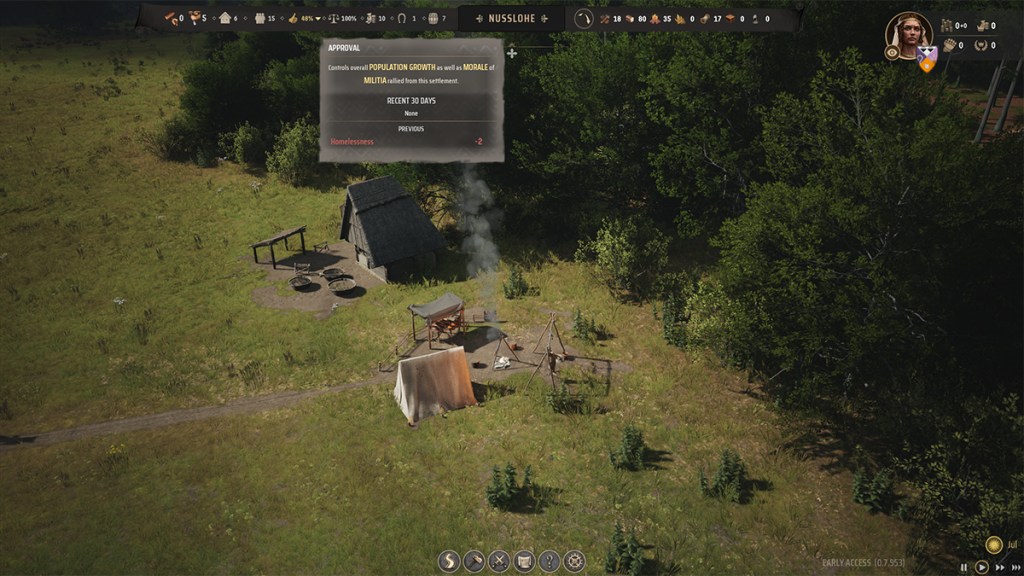
Approval, represented by a prominent bar at the top-left of the user interface, serves as the primary indicator of your village’s desirability. Maintaining a high Approval rating is paramount, as it directly dictates the rate at which new families are willing to relocate. A minimum Approval threshold of 50% is required for the arrival of even a single family per month. Surpassing this, achieving an Approval rate of 75% or higher, significantly accelerates growth, attracting two families monthly. Conversely, neglecting the well-being of your populace carries severe consequences: an Approval rating plummeting below 25% will trigger an exodus, as existing families abandon your village in search of more favorable conditions, potentially leading to a devastating downward spiral.
Living Space, the second pillar, is simpler in concept but equally vital. It refers to the availability of vacant Burgage Plots – the residential buildings within your settlement. New families require a home upon arrival; without an unoccupied Burgage Plot, even a sky-high Approval rating will fail to attract new settlers. Thus, proactive construction of housing is as crucial as fostering a positive living environment.
Chronology of Growth: From Humble Beginnings to Bustling Settlements
The journey of population growth in Manor Lords can be segmented into distinct phases, each with its own challenges and priorities, reflecting a natural progression of medieval settlement development.
Phase 1: Establishing the Core – Early Survival and Initial Attraction (0-50% Approval)
Upon founding a new settlement, the immediate priority is survival and laying the groundwork for basic functionality. With only five families, every decision carries significant weight.
- Initial Resource Gathering: The first families must be assigned to essential tasks. A Logging Camp is critical for timber, while a Woodcutter’s Lodge ensures a steady supply of fuel. Without fuel, families will freeze in winter, leading to rapid Approval drops and potential death.
- Securing Food Sources: Diversified food is key even at this early stage. Constructing a Hunting Camp provides meat, while a Forager Hut gathers berries, offering crucial variety. These initial buildings, along when assigned workers, ensure a basic food supply that prevents starvation and contributes positively to Approval.
- Basic Housing: The initial five families are housed, but to attract more, additional Burgage Plots must be constructed. These should be placed strategically, ideally with enough space for future extensions and proximity to essential services. Aim to have at least one or two vacant plots ready.
- Infrastructure: A Storehouse and Granary are fundamental for managing resources and preventing spoilage, which can negatively impact the economy and, indirectly, Approval. Basic road networks, while not directly increasing Approval, enhance efficiency and connectivity, which are vital for a growing village.
Achieving and maintaining an Approval rating above 50% in this phase is about meeting fundamental needs: food, fuel, and shelter. Failure to provide any of these will stall growth and risk early abandonment.
Phase 2: Fostering Stability and Expanding Amenities (50-75% Approval)
Once a steady trickle of new families begins, the focus shifts from mere survival to establishing a stable, appealing environment that encourages sustained growth.
- Diversifying Food Production: While hunting and foraging are excellent starting points, they are not scalable for a rapidly growing population. The introduction of Farming becomes paramount. Establishing Farmhouses and designating fertile land for crops like wheat or rye ensures a long-term, stable food supply. Animal husbandry, through Goat Sheds or Sheep Farms, can further diversify food and provide wool for clothing.
- Essential Amenities: To elevate Approval further, villagers require basic communal services.
- Wells: Proximity to a Well is a fundamental requirement for Burgage Plot Level 1 upgrades and significantly boosts Approval by ensuring access to clean water. Strategic placement is crucial to cover multiple plots.
- Churches: Constructing a Church fulfills another Level 1 amenity requirement and provides a significant Approval boost by addressing the spiritual needs of the populace. Its presence signals a more established and civilized settlement.
- Marketplace Development: A Marketplace is crucial for distributing goods efficiently. Assigning a family to a Market Stall allows them to sell excess food, fuel, and eventually other goods directly to villagers, improving access and further boosting Approval. Variety in market goods is highly valued.
- Fuel Production Expansion: As the population grows, so does the demand for fuel. Supplementing the Woodcutter’s Lodge with a Charcoal Kiln (which converts timber into more efficient charcoal) or expanding logging operations becomes necessary.
- Addressing Homelessness Proactively: As new families arrive, ensuring immediate housing is available is critical. Homelessness has a direct and significant negative impact on Approval. It is a prudent strategy to always have a few empty Burgage Plots available to accommodate new arrivals seamlessly.
This phase is about moving beyond subsistence, creating a village that offers comfort and community, thereby solidifying the positive perception of the settlement among potential new residents.
Phase 3: Achieving Prosperity and Sustained Expansion (75%+ Approval)
With a strong foundation, the village can aim for accelerated growth and greater prosperity, unlocking more advanced production chains and social structures.
- Burgage Plot Upgrades: Upgrading Burgage Plots to Level 2 and eventually Level 3 becomes a key objective. Each upgrade requires additional amenities and access to a wider variety of goods, but in return, they provide significantly higher Approval boosts and unlock backyard extensions for specialized workshops.
- Taverns: A Tavern is a critical Level 2 amenity. It requires a supply of Ale, which typically involves cultivating barley, malting it in a Malt House, and brewing it in a Brewery. The presence of a Tavern significantly enhances Approval and provides a source of regional wealth through sales.
- Diverse Market Goods: Level 2 and 3 plots demand access to more varied goods beyond basic food and fuel, such as clothing (linen, leather), tools, and eventually finer goods. This necessitates the development of workshops like Weaver’s Workshops, Tanneries, Blacksmiths, and later Tailor’s Shops and Cobbler’s Shops.
- Industrial Development: A larger population provides the workforce necessary to establish more complex industries.
- Mines: Constructing Mining Pits for iron ore or clay (depending on the region) allows for the production of tools, weapons, and pottery.
- Crafting: With raw materials, various crafting buildings can be established to produce valuable goods for trade or internal consumption, further improving market access and Approval.
- Trade Routes: As production scales, establishing Trade Posts and engaging in regional trade becomes vital for acquiring resources not locally available and for selling surplus goods, generating regional wealth. This wealth can then be reinvested into further village expansion and improvements.
In this advanced phase, population growth is not just about numbers but about creating a specialized workforce that can support a complex economy and a high standard of living, ensuring sustained high Approval.
Deep Dive into Approval Mechanics: Factors and Management
Understanding the specific factors that influence Approval is crucial for effective management. Manor Lords simulates a dynamic medieval society where various elements contribute to the overall mood of the populace.
Positive Contributors to Approval:
- Food Variety: This is arguably the most impactful early-game factor. Providing at least two distinct types of food (e.g., meat from hunting, berries from foraging) significantly boosts Approval. As the village grows, introducing more types like bread (from farming wheat), vegetables, and eggs further enhances this bonus.
- Housing Quality and Availability: Having a roof over one’s head is non-negotiable. Sufficient Burgage Plots, especially with upgrades, provide a steady Approval bonus. The absence of homelessness is a strong positive.
- Amenities: Proximity to essential services like Wells and Churches (for Level 1 plots), and Taverns (for Level 2 plots) are direct and significant drivers of Approval. Their presence signifies a well-ordered and comfortable settlement.
- Market Access and Variety: Villagers appreciate readily available goods. A well-stocked marketplace with a diverse array of food, fuel, and manufactured goods (clothes, tools) contributes positively to Approval. Efficient supply chains ensure these stalls remain stocked.
- Job Availability: A thriving economy with ample employment opportunities keeps families busy, productive, and content. High unemployment can lead to dissatisfaction.
- Public Order (Indirect): While not directly an "Approval" factor in the early game, a sense of security and stability contributes to overall well-being. Later, as banditry becomes a concern, maintaining a militia and defense structures will indirectly support Approval.
Negative Contributors to Approval:
- Homelessness: A single homeless family can drastically reduce overall Approval, triggering a cascade effect. Proactive housing construction is the best defense.
- Food Shortages/Starvation: Running out of food is a critical failure. Starving villagers will quickly lose Approval and eventually die or abandon the settlement.
- Fuel Shortages: Particularly during colder months, a lack of fuel for heating will cause rapid Approval decline and potentially lead to families freezing to death.
- High Taxes: While taxation is necessary for the Regional Wealth and Treasury, excessively high taxes can quickly erode Approval, especially if services and living conditions do not justify them. This is a later-game balancing act.
- Disease/Plague: Outbreaks of sickness can severely impact Approval, productivity, and population numbers. Access to clean water (wells) and potentially later, medical facilities, mitigates this.
- Banditry/Lack of Security: Unchecked bandit raids on trade routes or the village itself will cause fear and significantly drop Approval.
The Strategic Importance of Living Space and Burgage Plots
Burgage Plots are more than just houses; they are the fundamental units of your workforce and economy. Their design and placement have long-term implications.
- Plot Size and Extensions: Larger Burgage Plots allow for backyard extensions, which can be converted into workshops (e.g., Tannery, Cobbler, Brewery) or provide space for gardens and animal pens. This allows families to generate income and contribute to production directly from their homes, boosting both their individual prosperity and the village’s economy. Planning for these extensions from the outset is a smart strategy.
- Proximity to Amenities: The efficiency and impact of amenities like Wells, Churches, and Taverns are often tied to their proximity to Burgage Plots. A well-designed layout ensures maximum coverage and benefit.
- Homelessness Prevention: As highlighted, having a buffer of vacant plots is crucial. It smooths the transition for new families and prevents immediate Approval penalties. This often means building a few more houses than currently needed, anticipating future growth.
Inferred Developer Intent and Game Design Philosophy
Slavic Magic, the solo developer behind Manor Lords, with publisher Hooded Horse, has consistently communicated a vision centered on historical realism, organic growth, and player agency. The intricate population mechanics are a testament to this philosophy. Villagers are not abstract numbers but individual families with needs, desires, and a clear impact on the settlement’s fortunes. This design choice forces players to think like a medieval lord, balancing economic necessity with the well-being of their subjects. The early access phase of Manor Lords further underscores this, with the development team actively refining these systems based on player feedback, indicating that population dynamics remain a core pillar of the game’s evolving experience. The deliberate, often challenging, pace of growth is intended to make each new family feel like a significant achievement, rewarding thoughtful planning over rapid expansion.
Broader Impact and Long-Term Implications
The effective management of population growth in Manor Lords reverberates throughout every aspect of the game, shaping the economic, social, and strategic trajectory of your dominion.
- Economic Vibrancy: A growing and satisfied population is the engine of a thriving medieval economy. More families mean more available workers to staff farms, mines, workshops, and trade posts. This allows for diversification of production, creation of complex supply chains, and generation of surplus goods for trade, which in turn fuels regional wealth and the lord’s personal treasury. Without a robust workforce, advanced industries and extensive trade are impossible.
- Social Stability and Well-being: A high Approval rating signifies a content populace. This social stability is invaluable, reducing the likelihood of unrest, abandonment, and ensuring a cooperative workforce. Happy villagers are productive villagers, contributing to the overall harmony and reputation of the settlement. Conversely, a discontent population can lead to economic stagnation and eventual collapse.
- Strategic Capability: Population is directly linked to military strength. Each family contributes a number of able-bodied men to your militia pool. A larger population allows for the recruitment and maintenance of a more substantial military force, crucial for defending against bandits, rival lords, or for expanding your influence into new territories. Without sufficient population, strategic ambitions remain constrained.
- Long-Term Sustainability: The challenge of Manor Lords is not just to grow but to sustain that growth. As the village expands, demands on resources, infrastructure, and services intensify. Maintaining high Approval becomes increasingly complex, requiring continuous investment in new amenities, efficient resource allocation, and adaptation to evolving needs. This constant balancing act ensures the game remains engaging and challenging through its various stages.
- Player Immersion and Engagement: The detailed simulation of individual family needs and their collective impact fosters a deep sense of immersion. Players develop a connection to their villagers, understanding that their strategic decisions have tangible consequences on the lives of their virtual subjects. This human element elevates Manor Lords beyond a mere resource management simulator into a rich, narrative-driven experience.
In conclusion, attracting and retaining families in Manor Lords is a multifaceted challenge that forms the bedrock of all successful village development. By meticulously managing Approval through the provision of diverse food, adequate housing, essential amenities, and a stable economy, players can ensure a steady influx of new settlers. This, coupled with proactive construction of Living Space, will transform an initial handful of families into a bustling, prosperous medieval domain, capable of weathering challenges and expanding its influence across the land. The journey from five families to a thriving population is a testament to strategic foresight, meticulous planning, and a deep understanding of the delicate balance required to nurture a medieval society.