


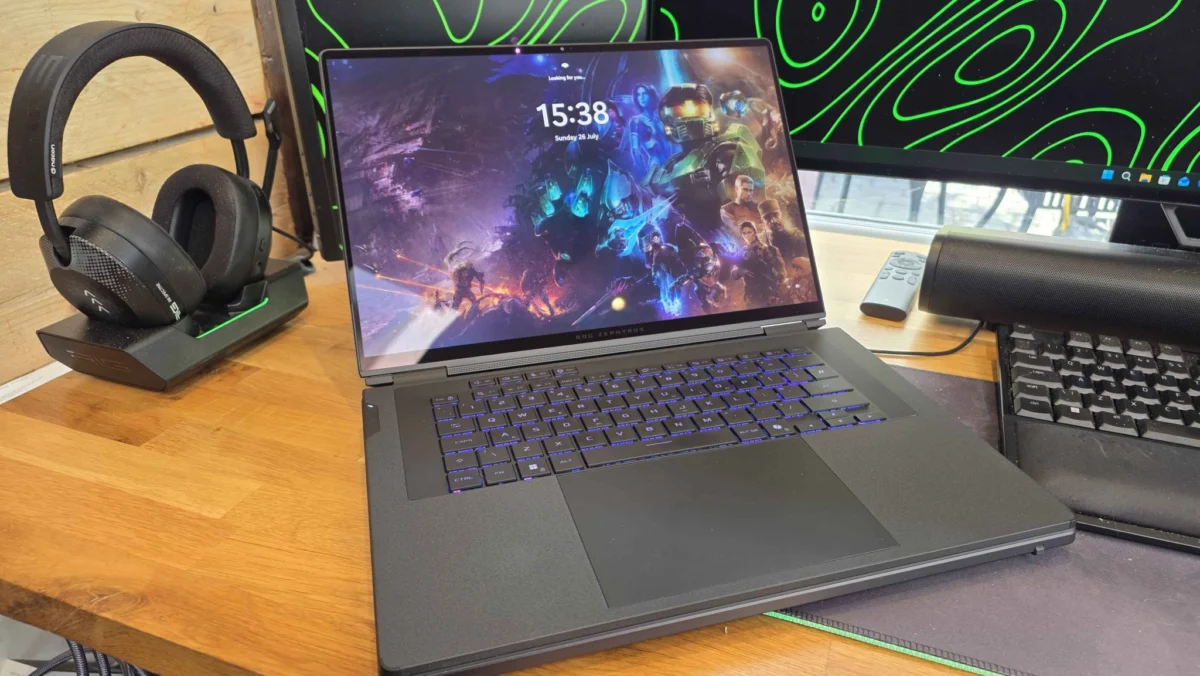
The ROG Zephyrus Duo 2026 marks a significant milestone in the evolution of multi-display portable computing, positioning itself as the premier choice for professionals and enthusiasts who require extensive screen real estate without sacrificing mobility. As the latest iteration in ASUSTeK Computer Inc.’s flagship gaming line, the GX651 model integrates cutting-edge silicon from Intel and NVIDIA with a refined dual-screen chassis. This review examines the machine’s technical specifications, ergonomic performance, and its broader implications for the high-end workstation and gaming markets.

Architectural Overview and Technical Specifications
The 2026 ROG Zephyrus Duo is built around the Intel Core Ultra 9 Processor 386H, a member of the "Panther Lake" family. This processor features 16 cores and 16 threads, with a maximum boost clock of 4.9 GHz. A critical addition to this architecture is the integrated Neural Processing Unit (NPU), capable of delivering up to 50 TOPS (Trillions of Operations Per Second) for localized artificial intelligence tasks. This shift toward AI-accelerated hardware reflects a broader industry trend where the CPU and GPU are no longer the sole arbiters of performance.
Graphics are handled by the NVIDIA GeForce RTX 5090 Laptop GPU, equipped with a substantial 24GB of GDDR7 VRAM. This represents a generational leap in memory bandwidth and capacity, allowing the device to handle complex 3D rendering, 8K video editing, and high-fidelity gaming with minimal latency. The system is further bolstered by 64GB of LPDDR5X-8533 MT/s RAM and a 1TB PCIe 5.0 NVMe M.2 SSD, ensuring that data throughput matches the processing power of the core components.

Detailed Specification Table
| Component | Specification |
|---|---|
| Model | GX651 (2026) |
| Processor | Intel Core Ultra 9 386H (Up to 4.9 GHz, 16 Cores) |
| Graphics | NVIDIA GeForce RTX 5090 (24GB GDDR7) |
| Memory | 64GB LPDDR5X-8533 |
| Primary Display | 16-inch ROG Nebula HDR OLED, 3K (2880×1800), 120Hz |
| Secondary Display | 16-inch Touchscreen OLED, 3K (2880×1800), 120Hz |
| Storage | 1TB PCIe 5.0 NVMe SSD |
| Connectivity | Wi-Fi 7, Bluetooth 6.0, Thunderbolt 4 |
| Battery | 90Wh with 250W Power Adapter |
| Weight | 2.82 kg |
Design Evolution and the Dual-Screen Interface
The hallmark of the Zephyrus Duo series has always been its secondary display, and the 2026 model elevates this concept by utilizing dual 16-inch ROG Nebula HDR OLED panels. Both screens feature a 16:10 aspect ratio and a resolution of 2880×1800. The transition to OLED technology across both displays ensures color consistency, a critical requirement for content creators who move windows between the upper and lower screens. With a peak brightness of 1100 nits and 100% DCI-P3 color gamut coverage, the displays meet VESA DisplayHDR True Black 1000 standards.
The chassis is CNC-milled from high-grade aluminum, finished in a professional gray aesthetic. ASUS has replaced traditional RGB strips on the lid with a "Slash Lighting Array," a customizable 35-zone LED system that provides a more understated "premium" feel compared to previous "gamer-centric" designs.

Ergonomically, the device introduces a detachable wireless keyboard. This keyboard connects via Bluetooth or a physical magnetic dock located on the lower screen. When docked, the keyboard charges automatically; when detached, it allows the user to position the screens at eye level using the integrated kickstand. This modularity transforms the laptop from a traditional clamshell into a vertical workstation, effectively mimicking a multi-monitor desktop setup in a portable form factor.
Performance Benchmarks and Real-World Utility
While the ROG Zephyrus Duo is marketed as a gaming powerhouse, its performance in productivity environments is where the hardware truly distinguishes itself. In creative workflows, such as video editing within DaVinci Resolve, the dual-screen setup allows for a unique distribution of labor. Editors can maintain a full-screen preview on the primary display while keeping the timeline, media pool, and color grading tools on the secondary touch-enabled panel.

Gaming and Thermal Management
In gaming scenarios, the RTX 5090 ensures that even the most demanding titles, such as high-fidelity campaign shooters or open-world simulators, run at maximum settings with high frame rates. The primary screen supports NVIDIA G-SYNC to eliminate screen tearing.
To manage the heat generated by the Core Ultra 9 and the RTX 5090, ASUS employs an advanced cooling solution. The secondary screen tilts upward when the laptop is opened (or acts as a stand when detached), exposing large air intakes that increase airflow to the internal fans. This "Active Aerodynamic System" is essential for maintaining the 2.49 cm slim profile while preventing thermal throttling during sustained workloads.

Battery Longevity and Power Efficiency
One of the most notable improvements in the 2026 model is the dual-mode battery performance. In "High-Performance Mode," utilizing the dedicated GPU and both screens, the 90Wh battery provides approximately two hours of runtime. However, the inclusion of the Intel Panther Lake architecture allows for a "Productivity Mode" that utilizes the NPU and integrated graphics. In testing, this mode extended battery life to over 10 hours, a significant achievement for a device weighing 2.82 kg and housing workstation-grade internals.
Connectivity and Peripheral Integration
The I/O selection on the GX651 is designed to support a full desktop replacement setup. It includes:

- Thunderbolt 4: Two ports supporting Power Delivery and DisplayPort 2.1.
- USB 3.2 Gen 2 Type-A: Two ports for legacy peripherals.
- HDMI 2.1 FRL: Allowing for connection to 4K/120Hz or 8K external displays.
- UHS-II SD Card Reader: A vital inclusion for photographers and videographers.
- Audio: A six-speaker system featuring four woofers and two tweeters with Dolby Atmos support.
The 1080p IR camera supports Windows Hello for biometric security. While industry feedback suggests that Windows Hello remains occasionally inconsistent across the Windows ecosystem, the camera’s performance in varying lighting conditions is reported as stable for professional conferencing.
Market Context and Industry Implications
The release of the ROG Zephyrus Duo 2026 comes at a time when the boundaries between "gaming" and "creator" laptops are blurring. Market analysts note that high-end users are increasingly willing to invest in non-traditional form factors if they offer tangible productivity gains. With a starting price of $4,499.99, the Duo is positioned in the ultra-premium segment, competing directly with the Razer Blade 18 and the Apple MacBook Pro 16.

Industry experts suggest that the "dual-screen" experiment has moved beyond the "gimmick" phase. The success of the Duo series has forced competitors to re-evaluate their single-screen designs, leading to a rise in foldable displays and external portable monitors. ASUS’s decision to stick with two distinct, high-quality rigid panels rather than a single foldable screen appears to be a calculated move to prioritize durability and professional color accuracy.
Conclusion: A Specialized Tool for a Modern Workflow
The ROG Zephyrus Duo 2026 is not a mass-market device; it is a specialized tool designed to solve the "real estate" problem inherent in mobile computing. By successfully integrating a secondary 16-inch display without significantly increasing the device’s footprint or weight, ASUS has created a unique value proposition.

The combination of the Intel Core Ultra 9 386H and the NVIDIA RTX 5090 ensures that the machine will remain relevant for several years, even as AI-driven software becomes the standard. While the high entry price and the minor fragility of the magnetic keyboard dock are points of contention, the overall package represents a pinnacle of engineering in the portable workstation category. For users who find themselves limited by the constraints of a single laptop screen, the GX651 offers a glimpse into the future of mobile productivity.