


Narrative Architecture and the Origin of the Smuggler
The story of Resonance: A Plague Tale Legacy is structured as a prequel-sequel hybrid, utilizing a prologue to establish Sophia’s early life before connecting her journey to the broader mythos established in the previous titles. The narrative begins with a young Sophia held captive in a convent, where she is subjected to a mysterious ritual involving a tarry substance. This substance triggers visceral visions of an ancient Greek civilization on a remote island, a recurring motif that drives the game’s primary conflict.

Following her rescue by her father—a pirate captain—Sophia transitions into an apprenticeship in the world of maritime plundering. However, the haunting dreams of the Greek island persist, suggesting a connection to the Macula that predates the 14th-century French setting of the original games. The quest for this island, believed by Sophia’s father to hold a cure or immense treasure, becomes a decades-long obsession that shapes the crew’s destiny. Central to this emotional journey is Sophia’s relationship with Leni, a close companion and love interest who serves as the narrative’s moral compass. This character-driven approach allows Asobo Studio to explore themes of heartbreak, ruin, and the weight of legacy, while maintaining the series’ signature grim atmosphere.
Gameplay Evolution: From Shadows to Steel
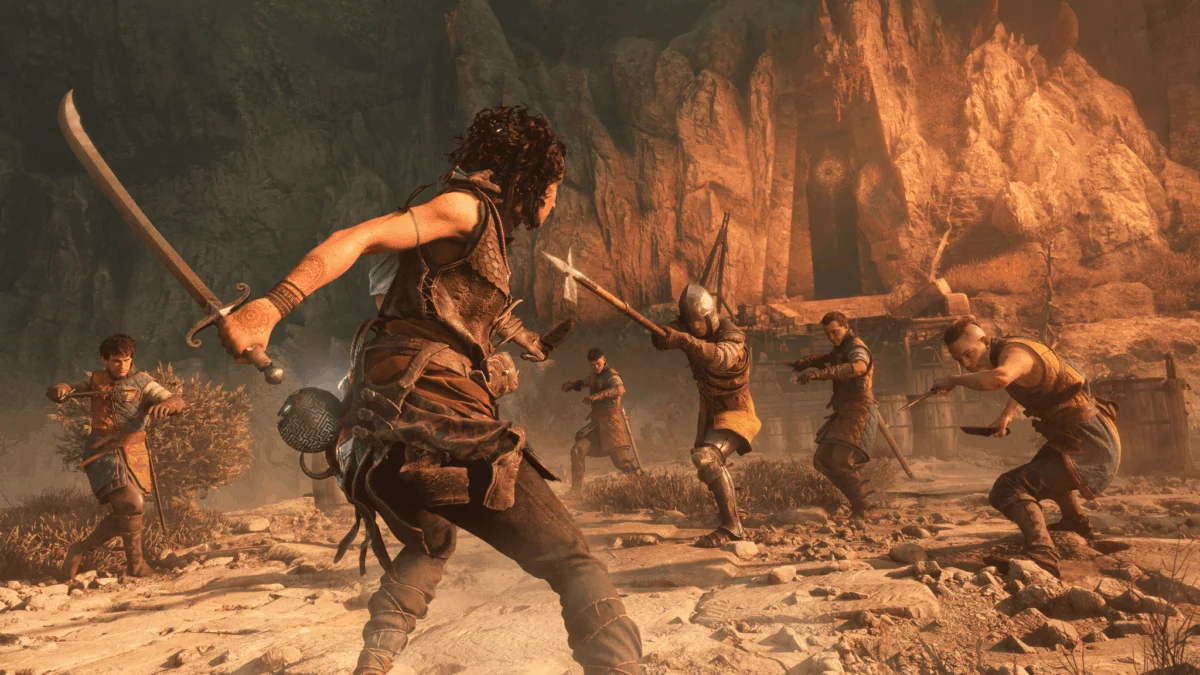
While stealth remains a viable and often necessary component of the gameplay loop, Resonance introduces a more robust combat system. Sophia is portrayed as a trained killer, a stark contrast to the desperate survivalist tactics of Amicia de Rune. The combat mechanics are built around a sword-and-dagger configuration, emphasizing timing and defensive maneuvers.

The Combat Mechanics
Players are equipped with a parry system that allows for the deflection of most standard attacks. High-level threats, indicated by red visual cues, are initially unblockable, requiring players to invest in the "Resonance" progression system to unlock advanced parry capabilities. Sophia’s arsenal is further expanded by a multipurpose grapnel hook, which serves both as a traversal tool for climbing and a tactical weapon used to pull enemies off balance.
The progression system is designed with flexibility in mind. "Resonance points" earned through gameplay can be allocated to various power-ups and passive buffs. Notably, the game allows for an instant refund of these points, encouraging players to experiment with different builds depending on the encounter. This is supplemented by an artifact and trinket system, which provides minor passive enhancements to Sophia’s combat efficiency and survival.

Stealth and Environmental Interaction
Despite the increased focus on direct engagement, the game retains the series’ "hide-and-seek" horror elements. Certain sequences feature overwhelming odds where combat is impossible, forcing players to utilize light sources and environmental hazards to evade pursuers. A central mechanic involves a mysterious sphere that can empower ancient technology found on the cursed island. This leads to intricate puzzles involving light beams, color matching, and the interpretation of ancient symbols found in Sophia’s journal.
Technical Performance and Visual Fidelity
Asobo Studio has leveraged its proprietary engine to deliver a title that rivals the industry’s most expensive productions in terms of visual fidelity. The game’s environmental design focuses on the contrast between the natural beauty of the Mediterranean and the grotesque manifestations of the plague.

Performance Data
On high-end PC hardware, Resonance: A Plague Tale Legacy demonstrates significant optimization. Testing at 4K resolution with Ultra settings reveals a stable performance of 100 frames per second (FPS) on modern desktop configurations. The game also shows high scalability for handheld devices. On the ASUS ROG Ally X, the title maintains a locked 30 FPS at a 17w power draw, with the potential to approach 60 FPS in "Turbo" mode.
Animation and Motion Capture
The technical standout of the production is the facial animation system. Utilizing advanced motion capture, the characters exhibit nuanced emotional expressions, with eyes that dart and well up with tears in response to narrative stressors. Industry analysts have compared the quality of these performances to those found in Naughty Dog’s The Last of Us Part II, noting that the emotional resonance of the story is significantly bolstered by the "digital acting" on display.

Chronology of the Plague Tale Universe
To understand the placement of Resonance, it is necessary to view the franchise’s timeline. The series has consistently blended historical reality with supernatural fiction:
- Ancient Era (Visions): The era of the Greek civilization explored in Sophia’s dreams, hinting at the true origins of the Macula.
- The Prologue: Sophia’s childhood in the convent and her early years at sea.
- Resonance (Main Game): Sophia’s decades-long search for the island and her evolution into the smuggler seen in Requiem.
- A Plague Tale: Innocence (1348): The journey of Amicia and Hugo during the initial outbreak in Guyenne.
- A Plague Tale: Requiem (1349): Sophia meets the De Rune siblings, and her previous knowledge of the "Island" (La Cuna) becomes a pivotal plot point.
By filling in the gaps of Sophia’s history, Resonance provides context for her motivations in Requiem, explaining her cynicism and her eventual willingness to assist Amicia.

Industry Implications and Market Strategy
The release of Resonance: A Plague Tale Legacy as a day-one Game Pass title highlights a continuing trend in the gaming industry where mid-sized publishers utilize subscription services to reach a broader audience. For Focus Entertainment, this strategy mitigates the risk of launching a spin-off title while ensuring a high initial player count.
Asobo Studio’s growth from a support studio to a premier developer of narrative-driven action games is evident in the polished nature of this release. While some critics have pointed to a degree of repetition in the combat encounters toward the end of the 12-hour campaign, the general consensus emphasizes the studio’s success in expanding the scope of the franchise.

The "Legacy" branding suggests that Asobo may be looking toward an anthology-style future for the series, potentially exploring other characters touched by the Macula throughout history. This approach allows the developer to maintain the IP’s relevance without necessarily continuing the story of Amicia, which reached a definitive conclusion in the previous entry.
Conclusion: A New Standard for the Series
Resonance: A Plague Tale Legacy succeeds in deepening the lore of one of gaming’s most unique settings. By focusing on a character who was previously a secondary player, Asobo Studio has managed to refresh the gameplay loop while maintaining the emotional intensity that fans expect. The combination of high-end technical achievement, a refined (if occasionally repetitive) combat system, and a compelling prequel narrative makes it a significant entry in the 2026 gaming calendar. As the franchise continues to evolve, Resonance stands as a testament to the power of character-focused storytelling within the framework of historical horror.