


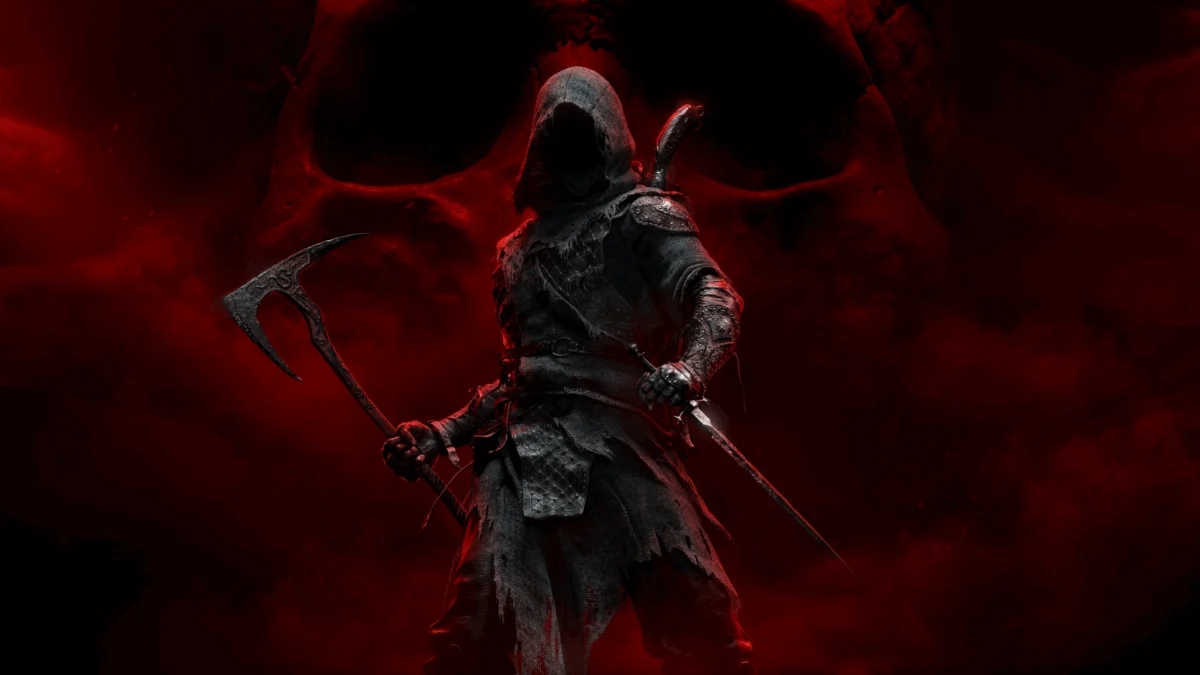
Mortal Shell II represents a significant expansion and refinement of the dark fantasy universe established by developer Cold Symmetry, delivering a sequel that seeks to outpace its predecessor in mechanical complexity, visual fidelity, and narrative depth. Set in a desolate, barren landscape following the events of the original 2020 title, the game places players in the role of the Harbinger—a faceless, sexless Godling capable of inhabiting the remains of fallen warriors. The central narrative revolves around the UnderMether, an interdimensional cosmic deity who has crashed onto the terrestrial plane. Infected by a parasitic entity known as the "Unwanted Passenger," the UnderMether’s survival depends on the Harbinger’s ability to recover her stolen "Ova" (eggs) and cleanse the rot pervading the land. This sequel leverages the power of Unreal Engine 5 to create a more expansive and frenetic experience that adheres to the rigorous standards of the soulslike genre while introducing unique iterations on established tropes.

Narrative Framework and World-Building
The lore of Mortal Shell II is delivered with a cryptic, atmospheric precision reminiscent of traditional genre leaders. The game’s introduction depicts a populace of "commonfolk" worshipping the birth of the Harbinger, establishing the player character as a messianic figure intended to serve as a vessel for the UnderMether’s will. The crash of the UnderMether has fundamentally altered the socio-religious landscape of the world, leading to the rise of various cults devoted to her remains and her life-giving Ova.
The recovery of these Ova serves as the primary objective and the driver of progression. Players must navigate a "rotten, miserable world" to unlock fast travel points that act as beacons of stability. Many of these points require ritual cleansing, which yields between one and three eggs. Larger Chaos Gates serve as the thresholds for major boss encounters, where the bulk of the Ova are hoarded. The narrative structure is bifurcated; while the initial half focuses on the recovery of the seeds of life, the latter half gradually reveals the true nature of the "Unwanted Passenger," a parasitic force that adds a layer of existential urgency to the Harbinger’s quest.

The Evolution of Combat Mechanics
Combat in Mortal Shell II is characterized by a marked increase in pace compared to the deliberate, heavy movement of the first game. The core loop remains rooted in stamina management and precise timing, but the sequel introduces a more "frenetic" cadence. The control scheme follows standard industry conventions for the genre, utilizing shoulder buttons for light and heavy attacks, while the left bumper manages defensive maneuvers.
The defining mechanic of the franchise—Hardening—returns with significant enhancements. By activating the hardening ability just before an impact, players can negate damage and instantly refill their stamina meter. This allows for aggressive chains of parries and counters that can eventually break an enemy’s poise. Successful poise-breaks lead to high-damage "canned" execution animations, which provide both a tactical advantage and a visual reward for skillful play.

The Shell System and Character Customization
The namesake "Shells" remain the cornerstone of the game’s progression and playstyle variety. Throughout the world, players discover the corpses of legendary figures, each offering a unique set of hidden statistics across three primary pillars: Health, Resolve (mana), and Stamina.
- The Knight: A heavy-hitting shell focused on soul redemption, capable of utilizing a shoulder charge to disrupt enemy formations.
- The Thief: The initial unlockable shell, prioritizing agility and stealth. This shell excels at dealing massive stabbing damage from the shadows.
- The Huntress (Proxima): A specialized shell that emphasizes ranged capabilities and mobility. Her design has already garnered significant attention for its distinct aesthetic choices, which the developers have utilized to differentiate her from more traditional character models found in competing titles like Marvel Rivals.
Character building is further deepened through the implementation of Tarstones and artifacts. Tarstones serve as modular upgrades, offering a mix of passive buffs and active abilities. These can range from adding elemental affinities to weaponry to increasing the damage output of ranged attacks. The user interface has been optimized to clearly indicate which Tarstones are compatible with specific weapons, mitigating the complexity for newer players. Artifacts provide additional utility, such as a "mushroom" item for health regeneration or a "moonshine bottle" for varying levels of damage reduction.

Progression, Economy, and the "Double Death" Risk
The game utilizes a dual-currency system that maintains the high-stakes tension inherent to the soulslike genre. "Gloom" serves as the equivalent of souls, used to level up the Harbinger’s core attributes and the stats of individual Shells. Following the "double death" mechanic, players risk losing their accumulated Gloom if they fail to retrieve it after a defeat.
Weapon progression is more restricted, requiring limited upgrade materials and "coins." Because these resources are finite per playthrough, players are encouraged to experiment with different Shells—aided by a refundable "Shell Point" system—before committing to permanent weapon enhancements. The inclusion of a New Game Plus mode provides a pathway for dedicated players to eventually max out all available equipment and abilities, though the initial run remains a rigorous test of skill.

Environmental Design and Dungeon Structure
The world of Mortal Shell II is geographically divided into Northern and Southern regions, each offering a distinct difficulty curve and aesthetic identity.
- The Northern Territory: Recommended for early-game exploration, the North features a diverse array of environments and enemy counts. While challenging initially, players who invest in leveling will find themselves able to dominate these areas by the mid-game.
- The Southern Territory: This region represents a significant difficulty spike, often referred to as the "big leagues" of the game’s combat. Enemies in the South are capable of one-shotting under-leveled players, necessitating a mastery of the hardening and dodging mechanics.
The map is punctuated by "grey mist" doorways that lead to small and medium-sized dungeons. These instances often feature specific gimmicks or environmental hazards, adding variety to the exploration. Despite the perceived scale of the world, the actual playable landmass is concentrated; a significant portion of the visual map serves as atmospheric backdrop rather than navigable space.

Technical Analysis: Unreal Engine 5 and Performance
From a technical standpoint, Mortal Shell II is a showcase for Unreal Engine 5’s capabilities on high-end hardware. Benchmarking on a PC equipped with an NVIDIA GeForce RTX 5080 and an AMD Ryzen 5800X, the game consistently maintained performance exceeding 100 FPS at 4K resolution with DLSS (Quality mode) enabled.
The animation quality is a critical component of the gameplay experience, as it allows for the "telegraphing" of enemy attacks necessary for the parry system. Outside of a few specific enemy types with relentless attack patterns, the animations are described as clean and legible. However, some environmental collision issues persist, with players occasionally becoming trapped in corners during encounters with large groups of enemies.

The auditory experience is defined by professional, mostly British-accented voice acting that complements the grim atmosphere. The musical score, consisting primarily of slow, heavy guitar riffs, provides a unique sonic identity, though its "lazy" tempo during high-stakes boss fights has been noted as a potentially polarizing creative choice.
Broader Impact and Genre Implications
The release of Mortal Shell II signals a maturation of the "AA" soulslike market. By expanding on the niche mechanics of the first game—specifically the hardening system—and integrating them into a more polished, high-performance package, Cold Symmetry has solidified its position as a serious contender in a genre often dominated by larger studios.

The game’s focus on mechanical experimentation through the Shell and Tarstone systems addresses one of the common criticisms of the original: a lack of long-term variety. Furthermore, the use of Unreal Engine 5 sets a new graphical benchmark for independent soulslikes, suggesting that the gap between "indie" and "triple-A" production values is continuing to narrow.
Conclusion
Mortal Shell II is a comprehensive "glow-up" that addresses the limitations of its predecessor while doubling down on its unique strengths. With a more robust narrative, refined combat, and high-end technical performance, it stands as a significant achievement in the 2026 gaming landscape. For veterans of the genre, it offers a familiar yet fresh challenge; for newcomers, it provides a visually stunning entry point into one of gaming’s most demanding sub-genres. As the title moves into its post-launch phase, the community’s focus will likely shift to the nuances of the New Game Plus experience and the potential for future content expansions within the UnderMether’s desolate domain.