


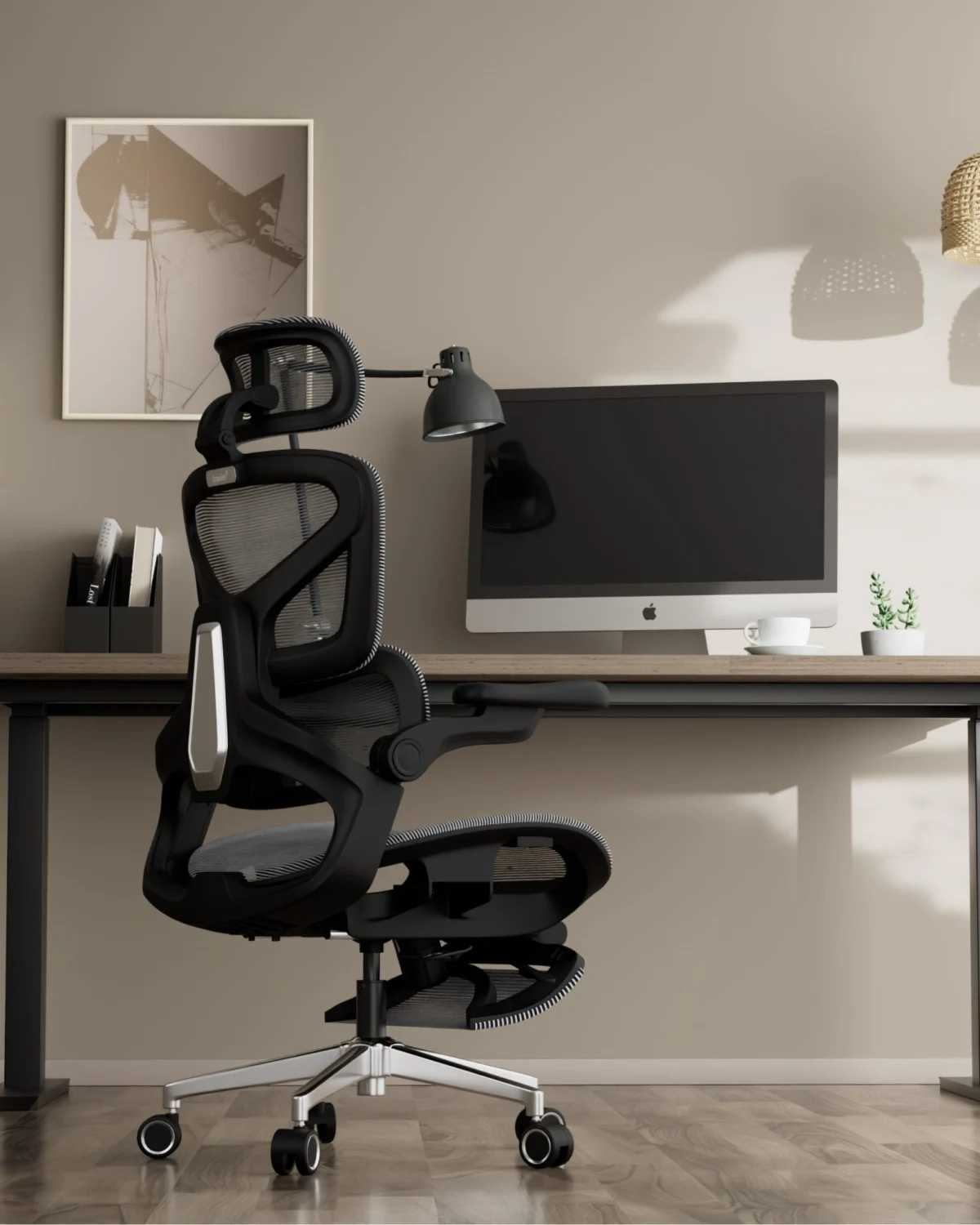
The Boulies EP500 ergonomic office chair represents a strategic expansion for the manufacturer into the high-performance, full-mesh seating market, targeting professionals who require sustained support during extended work periods. Following the release of the MagVida Standing Desk, the EP500 is positioned as a foundational component of a modern ergonomic workstation. This review examines the chair’s design, assembly, and long-term utility, with a specific focus on how its engineering caters to different body types and the demands of the contemporary home office.
Market Context and Ergonomic Evolution
The demand for specialized ergonomic furniture has seen a significant uptick since 2020, driven by the global shift toward remote and hybrid work models. Within this sector, mesh-style chairs have become increasingly popular due to their breathability and adaptive support. Boulies, a brand traditionally associated with gaming-centric designs, has pivoted toward a more professional aesthetic with the EP series. The EP500 specifically addresses the "all-mesh" segment, competing with enterprise-level solutions while maintaining a price point accessible to the individual consumer.

The ergonomic philosophy behind the EP500 is rooted in pressure distribution and thermal regulation. Unlike traditional foam-padded chairs, mesh designs utilize tensioned fabric to cradle the user’s weight, theoretically eliminating "hot spots" where pressure might build up on the thighs or lower back. Furthermore, the inclusion of integrated lumbar support and a dedicated footrest suggests a design intended for both focused productivity and brief periods of relaxation.
Assembly and Initial Configuration
The logistics of the Boulies EP500 begin with its delivery in a single, high-mass container. Despite the weight—common in chairs utilizing heavy-duty steel and reinforced plastic frames—the packaging is designed for individual handling. The assembly process is a notable strength of the product’s design. Technical assessments indicate that the chair can be fully constructed in under 20 minutes, a timeframe that includes the unboxing and sorting of components.
The manufacturer provides all necessary tools, and the connection points between the wheelbase, gas lift, seat pan, and backrest are engineered for seamless alignment. This ease of assembly is a critical factor for the direct-to-consumer market, where complex construction can often lead to user frustration or improper setup, which in turn compromises the chair’s ergonomic benefits.

Design Philosophy: Engineering for the Larger Frame
A critical finding in the evaluation of the EP500 is its target demographic. While many office chairs aim for a "one-size-fits-all" approach, the EP500 is explicitly engineered with larger-framed individuals in mind. This is evident in the width of the seat pan and the height of the backrest. For users on the smaller end of the anthropometric scale—such as those standing 5’6” and weighing approximately 57kg—the chair presents a unique set of ergonomic challenges.
The "prominent" lumbar support is a central feature of the backrest. While it is vertically adjustable, it lacks a depth-adjustment mechanism. For users with specific spinal curvatures, such as an anterior pelvic tilt, this protruding support may offer significant relief. However, for more petite users, the lack of depth adjustment can result in the lumbar support feeling overly aggressive, potentially pushing the torso too far forward and preventing the user from utilizing the headrest effectively.
Technical Specifications and Material Performance
The EP500 utilizes a premium mesh fabric across the seat, backrest, and footrest. In climate-controlled or naturally warm environments, this material choice proves superior to traditional fabric or leather alternatives. The mesh allows for constant airflow, which regulates the user’s body temperature and prevents the discomfort associated with heat retention during long sessions.

However, the material’s texture introduces specific maintenance considerations. The mesh acts as a high-friction surface that can attract and trap particulate matter, such as pet fur or dust. Additionally, the structural frame includes a recessed area behind the seat pan that can collect debris, requiring regular cleaning to maintain the chair’s aesthetic and hygienic standards.
Adjustment Mechanics and Limitations
The EP500 features a suite of adjustable components, including:
- Lateral Armrests: These provide width adjustment to accommodate different shoulder breadths.
- Height Adjustment: Controlled by a standard pneumatic gas lift.
- Recline and Tilt: The chair offers a significant degree of recline, intended to be paired with the retractable footrest.
Despite these features, there are notable omissions in the adjustment suite. The armrests lack height and angle (pivot) adjustments. This is a significant consideration for users who prefer to align their armrests precisely with their desk surface or those who sit in non-traditional positions, such as cross-legged. Furthermore, because the armrests are fixed to the seat frame at a specific angle, they tilt upward when the chair is reclined, which may be counter-intuitive for users attempting to work or game in a tilted position.

The Recline Mechanism and User Weight Correlation
The recline feature of the EP500 is designed with a high-tension spring system. This is a deliberate engineering choice to support heavier users safely. However, this creates a functional barrier for lighter individuals. During testing, it was observed that a user weighing 57kg may lack the sufficient body mass to overcome the spring’s resistance.
In such cases, the chair tends to "push back" against the user, requiring constant muscular effort to remain in a reclined position. Without the ability to lock the recline at any specific angle—or without a more sensitive tension adjustment—lighter users may find the recline feature effectively unusable. This reinforces the conclusion that the EP500 is optimized for a specific weight bracket, likely starting at 75kg and above, where the user’s mass can more naturally interact with the chair’s mechanical resistance.
Comparative Analysis and Value Proposition
The Boulies EP500 retails at approximately £349, with promotional pricing often bringing the cost down to £289.99. When compared to market leaders in the mesh category:

- Herman Miller Aeron: While the gold standard, the Aeron costs significantly more (often upwards of £1,000) and offers more granular adjustments but lacks a built-in footrest.
- Secretlab NeueChair: Positioned at a higher price point, it offers similar mesh benefits but a different aesthetic.
- Entry-level Mesh Chairs: Many budget options under £200 use lower-quality mesh that sags over time; the EP500’s mesh feels considerably more durable and "premium" by comparison.
The inclusion of the footrest, which is also upholstered in the same breathable mesh, adds a "lounge" dimension to the chair that is rarely found in strictly "office" furniture. This makes it a hybrid product suitable for both professional tasks and media consumption.
Broader Impact on Workspace Ergonomics
The release of the EP500 highlights a growing trend in the furniture industry: the specialization of ergonomic products for specific body types. As companies like Boulies move away from generic designs, consumers must become more diligent in matching their physical dimensions to the product’s specifications.
For the "larger-than-average" professional, the EP500 represents a high-value acquisition. It provides the structural integrity and spatial requirements that are often lacking in standard office seating. For the "petite" demographic, however, the chair serves as a reminder that "ergonomic" is a relative term; a chair that is medically supportive for one person may be a source of strain for another if the proportions do not align.

Conclusion and Recommendations
The Boulies EP500 is a well-constructed, aesthetically professional, and thermally efficient seating solution. Its strengths lie in its ease of assembly, the quality of its mesh materials, and its robust support for users with larger frames. The chair successfully bridges the gap between gaming comfort and office utility.
Prospective buyers should consider the following before purchase:
- Weight and Height: This chair is most effective for users who possess the mass to operate the recline tension and the height to align with the fixed lumbar and headrest positions.
- Maintenance: Users with pets should be prepared for frequent cleaning of the mesh surface.
- Armrest Requirements: If 4D armrests (height, width, depth, and angle) are a requirement for your workflow, the EP500’s lateral-only adjustment may be a limitation.
Ultimately, the Boulies EP500 is a formidable contender in the mid-range ergonomic market. It offers a premium experience that belies its sub-£300 sale price, provided the user falls within its intended ergonomic "sweet spot." For those who fit its dimensions, it is a significant upgrade over traditional foam-based seating, offering a blend of durability and breathable comfort that is essential for the modern digital workspace.