


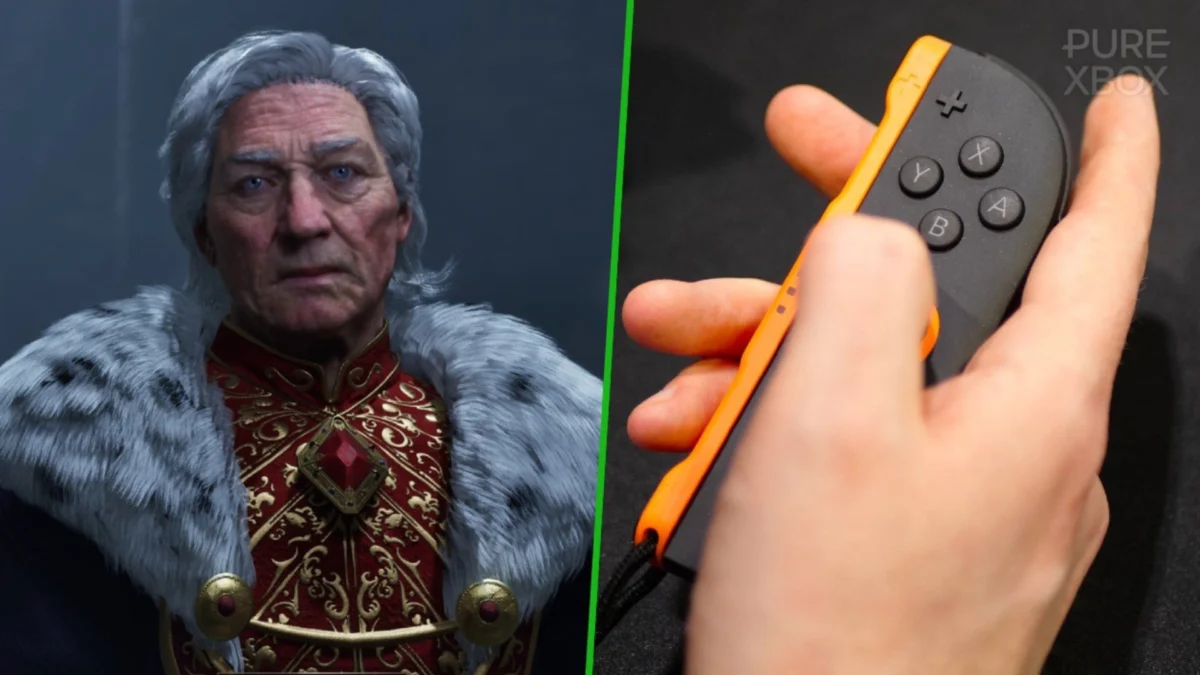
The long-anticipated arrival of The Elder Scrolls IV: Oblivion Remastered on the Nintendo Switch 2 has provided a landmark opportunity to evaluate how Nintendo’s latest hardware handles high-fidelity ports of modern Xbox first-party titles. As Bethesda’s classic 2006 RPG receives a comprehensive visual overhaul, technical analysts at Digital Foundry have conducted an exhaustive comparison between the Switch 2 version and the existing Xbox Series S edition. The findings reveal a complex technical landscape where the Nintendo Switch 2 excels in specific handheld optimizations and stability, even as the Xbox Series S maintains a general lead in overall visual density and asset quality.
Comparative Visual Fidelity and Asset Management
In the transition from the Xbox Series S to the Nintendo Switch 2, the remaster has undergone several targeted adjustments to accommodate the architectural differences between the two systems. Digital Foundry’s analysis indicates that while the Xbox Series S remains the superior version for players seeking the highest graphical fidelity on a budget-conscious console, the Switch 2 version introduces surprising strengths in image clarity.
One of the most notable observations involves the "crispness" of the image. In environments where the camera is in close proximity to geometry—such as the intricate stone corridors of Ayleid ruins or the bustling streets of the Imperial City—the Switch 2 version occasionally surpasses the Xbox Series S in perceived sharpness. This is attributed to a more advanced implementation of upscaling technology on the Nintendo hardware, which manages to maintain edge integrity more effectively in specific localized scenarios.
However, this sharpness comes at the cost of environmental density. To maintain a stable experience, Bethesda has implemented more aggressive Level of Detail (LOD) settings on the Switch 2. Foliage density, a key component of the Cyrodiil wilderness, has been visibly pruned. In direct side-by-side comparisons, select trees and shrubs present in the Xbox Series S version are entirely absent on the Switch 2. Furthermore, draw distances for large-scale structures, such as the spires of Cloud Ruler Temple or the battlements of Kvatch, utilize lower-resolution models at a distance, leading to more noticeable "pop-in" as the player traverses the landscape.
Advanced Lighting and Rendering Techniques
A significant point of interest for technical enthusiasts is the inclusion of Unreal Engine-style lighting features, specifically Lumen-based reflections and Global Illumination (GI). Despite the hardware constraints of a portable-hybrid system, the Switch 2 successfully implements these features, albeit with modifications.
The hybrid lighting setup on the Switch 2 utilizes Screen Space Reflections (SSR) as a fallback mechanism, rendering at a lower resolution of 540p. Despite this reduction, the simulation of indirect light bounce within dungeons and towns remains largely consistent with the Xbox Series S. While the Switch 2 lacks the scattering accuracy found on the more powerful Xbox Series X, it manages to match the Series S in most lighting scenarios, ensuring that the remastered atmosphere of Cyrodiil remains intact. This achievement highlights the efficiency of the Switch 2’s GPU architecture in handling modern ray-traced or simulated lighting pipelines that were previously thought to be the exclusive domain of dedicated home consoles.
Performance Stability and the Degradation Issue
The performance of Oblivion Remastered has been a subject of scrutiny since its initial launch on Xbox and PlayStation 5. Previous reports from Digital Foundry highlighted significant technical hurdles on those platforms, including a notorious "performance degradation" bug. This issue, which saw frame rates steadily decline over extended play sessions, has plagued the Xbox Series S and PS5 versions for over a year, leading to community frustration.
In a surprising turn of events, the Switch 2 version appears to be more resilient to this specific flaw. During a rigorous one-hour testing window, analysts found no significant degradation in performance on the Nintendo hardware. While the Xbox and PS5 versions often target an unlocked 60 frames per second (fps)—making any dip in performance highly visible—the Switch 2 version utilizes a locked 30fps cap. Analysts suggest that this 30fps ceiling may effectively "mask" minor performance variances that would otherwise cause stuttering on higher-refresh displays.
Despite this stability, the Switch 2 is not without its own performance caveats. Traversal hitches—momentary stammers in the frame rate—are more prominent when the player is moving quickly across the terrain on horseback or when the engine is forced to load a high volume of enemy assets simultaneously. Additionally, the "camera judder" caused by inconsistent frame pacing, which has been a recurring complaint across all versions of the remaster, remains present on the Switch 2.
Chronology of the Oblivion Remastered Project
The journey of The Elder Scrolls IV: Oblivion Remastered has been one of the most documented development cycles in recent Bethesda history. To understand the current state of the Switch 2 port, it is essential to view it within the broader timeline of the game’s release and support cycle:
- May 2025: Oblivion Remastered launches on Xbox Series X|S and PlayStation 5. Shortly after launch, players report the "performance degradation" bug, where the game becomes increasingly sluggish after several hours of continuous play.
- May 2026: Digital Foundry publishes a comprehensive one-year-later analysis, confirming that many of the launch-day issues, including frame-pacing and camera judder, remain unresolved on the primary consoles.
- August 2026: Bethesda issues a public statement hinting at major engine updates intended to address long-standing performance bottlenecks on the Xbox platforms.
- Late 2026: The Nintendo Switch 2 version is released, incorporating several of the technical revisions developed during the preceding year of post-launch support on other platforms.
This chronology suggests that the Switch 2 version has benefited from the "lessons learned" during the rocky launch on Xbox and PlayStation, resulting in a more stable, if visually pared-back, experience.
Supporting Data: Technical Specifications Comparison
To provide a clearer picture of the hardware delta, the following data points summarize the key differences observed during the Digital Foundry analysis:
| Feature | Xbox Series S | Nintendo Switch 2 |
|---|---|---|
| Target Frame Rate | 60 FPS (Unlocked) | 30 FPS (Locked) |
| Upscaling Tech | Standard Spatial Upscaling | Advanced Reconstruction (DLSS-equivalent) |
| SSR Resolution | 720p – 1080p | 540p |
| Foliage Density | High | Medium-Low |
| LOD Distance | Standard | Aggressive (Shortened) |
| Performance Decay | Observed after 60+ minutes | Not observed in testing |
| Unique Features | HDR10 Support | Mouse Support, Small Install Size |
Official Responses and Industry Implications
While Bethesda has not released a specific statement regarding the Switch 2’s performance compared to the Xbox Series S, the studio has teased that further optimizations are in the pipeline. A Bethesda spokesperson recently noted that the team is "committed to refining the experience across all platforms," specifically mentioning the Xbox Series X and S as targets for upcoming stability patches.
The release of a major Xbox first-party title on Nintendo hardware serves as a significant case study for Microsoft’s evolving "everywhere" gaming strategy. By bringing a cornerstone of the Bethesda catalog to the Switch 2, Microsoft is testing the viability of its proprietary tech on mobile-oriented chipsets. The fact that Digital Foundry described the port as a "fascinating technical feat" suggests that the Switch 2 is a capable destination for current-generation remasters, provided the developers are willing to make the necessary concessions in draw distance and foliage density.
For Nintendo, the successful execution of Lumen reflections and Global Illumination on their hardware validates the generational leap from the original Switch. It positions the Switch 2 as a device capable of handling modern rendering pipelines, bridging the gap between portable convenience and the visual expectations of the modern era.
Broader Impact and Final Analysis
The technical profile of Oblivion Remastered on the Switch 2 reflects a broader trend in the gaming industry: the shift toward optimization over raw power for handheld devices. While the Xbox Series S remains the "definitive" way to play the remaster in terms of sheer environmental detail and frame rate potential, the Switch 2 offers a more consistent and bug-free experience for players who prioritize stability over peak graphical output.
The absence of the performance degradation bug on the Switch 2 is perhaps the most significant takeaway for the player base. If Bethesda can successfully backport the stability found in the Switch 2 version to the Xbox and PlayStation versions, it would resolve the primary criticism that has followed the remaster since its inception.
As the industry moves forward, the success of Oblivion Remastered on the Switch 2 may pave the way for other Bethesda classics, such as Fallout 3 or The Elder Scrolls V: Skyrim (Special Edition), to receive similar high-end technical treatments on Nintendo’s platform. For now, Cyrodiil remains a beautiful, if slightly pruned, world on the Switch 2, standing as a testament to the versatility of modern game engines and the surprisingly robust capabilities of Nintendo’s latest hardware. Players must now decide whether the allure of 60fps on the Xbox Series S outweighs the stability and portability of the Switch 2’s 30fps offering.