


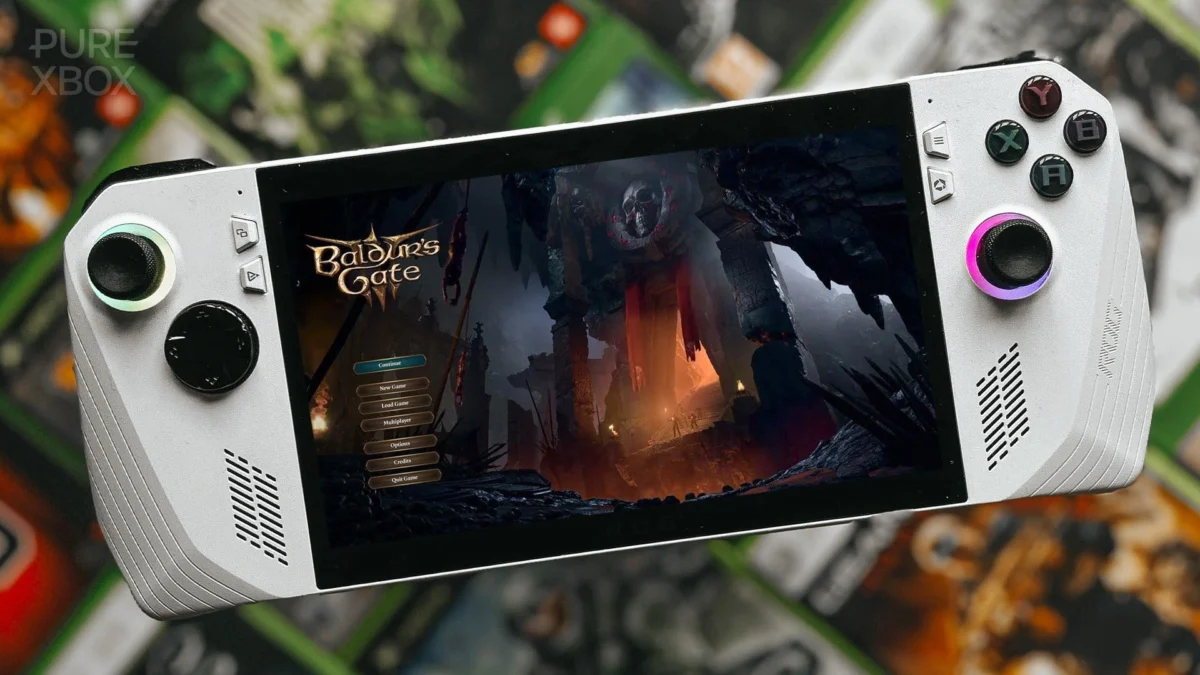
Larian Studios has officially expanded the accessibility of its flagship title, Baldur’s Gate 3, by integrating support for the Xbox Play Anywhere (XPA) program. This strategic move allows players who purchase the digital version of the game via the Microsoft Store to access the title across both Xbox Series X|S consoles and Windows 10/11 PCs under a single license. The integration includes full support for cross-save functionality and synchronized achievement tracking, effectively bridging the gap between desktop and living room environments for one of the most critically acclaimed role-playing games in recent history.
The decision to retrofit the game with XPA support comes nearly a year after its initial debut on the Xbox platform. Michael Douse, the Director of Publishing at Larian Studios, recently clarified the studio’s rationale for the update, framing it as a gesture of goodwill toward the Xbox community. In a statement addressing the implementation, Douse noted that the team viewed the feature as a "cool part of the Xbox ecosystem" and believed it would significantly enhance the experience for players invested in Microsoft’s unified platform. Douse further emphasized that the studio had the necessary resources and time to finalize the integration, concluding that the primary motivation was simply to "make a few folks happy."
The Strategic Importance of Xbox Play Anywhere
The Xbox Play Anywhere program, launched by Microsoft in 2016, represents a core pillar of the company’s "gaming beyond the box" strategy. By offering a "buy once, play anywhere" model, Microsoft incentivizes digital purchases through its own storefront rather than third-party platforms like Steam or Epic Games Store. For a high-profile title like Baldur’s Gate 3, the addition of XPA support is a significant endorsement of this model.
For the consumer, XPA provides two distinct advantages. First is the financial benefit of dual-platform ownership; a player can start a campaign on an Xbox Series X in the living room and continue that same journey on a high-end gaming PC or a portable Windows-based handheld, such as the ASUS ROG Ally or Lenovo Legion Go, without purchasing a second copy. Second is the technical convenience of the "Universal Windows Platform" architecture, which ensures that cloud saves are handled seamlessly at the OS level, reducing the friction often associated with manual cross-save uploads in third-party launchers.
Industry analysts suggest that Larian’s move is part of a broader trend where developers are beginning to view ecosystem-specific features as long-term retention tools. While Baldur’s Gate 3 already featured its own internal Larian accounts for cross-platform progression (allowing saves to move between PlayStation 5, PC, and Xbox), the native XPA support simplifies this process for the Microsoft-centric user base, removing the need for third-party account management for those staying within the Windows and Xbox environments.

Chronology of Baldur’s Gate 3 on the Xbox Platform
The journey of Baldur’s Gate 3 to the Xbox ecosystem was notably complex, marked by technical hurdles and a delayed launch relative to other platforms. Understanding this timeline provides context for why XPA support was implemented as a post-launch enhancement rather than a day-one feature.
- August 2023: Baldur’s Gate 3 launches on PC to universal acclaim, shattering concurrent player records on Steam.
- September 2023: The game arrives on PlayStation 5. During this period, Xbox fans expressed concern over the lack of a release date for Microsoft’s consoles.
- The Technical Hurdle: Larian Studios revealed that the delay was primarily due to technical challenges involving the Xbox Series S. Specifically, the studio struggled to optimize the game’s resource-intensive split-screen co-op mode to run effectively on the lower-spec hardware, while Microsoft’s "parity clause" initially required all gameplay features to be identical across both the Series X and Series S.
- August 2023 (Gamescom): Following a meeting between Larian CEO Swen Vincke and Microsoft Gaming CEO Phil Spencer, an exception was made. It was agreed that Baldur’s Gate 3 would launch on Xbox with split-screen co-op disabled on the Series S, allowing the release to move forward.
- December 2023: In a "shadow drop" during The Game Awards, Baldur’s Gate 3 was officially released on Xbox Series X|S.
- 2024 Updates: Throughout the year, Larian continued to provide robust support, including the massive "Patch 7," which introduced official modding tools to consoles.
- Late 2024: The implementation of Xbox Play Anywhere support is finalized, completing the game’s integration into the Microsoft ecosystem.
Technical Analysis of Ecosystem Integration
Implementing Xbox Play Anywhere is not merely a matter of checking a box in a developer portal; it requires a unified build structure that recognizes the Microsoft Store’s entitlement system across different hardware architectures. For Larian Studios, this meant ensuring that the Windows Store version of the game was functionally and technically equivalent to the Xbox console version in terms of metadata and save-state structure.
The technical implications are particularly relevant for achievement hunters. With XPA, the achievement list is shared. A player who earns the "Leave No One Behind" achievement on their PC will see it reflected instantly on their Xbox profile. This unified "gamerscore" is a major draw for the Xbox community. Furthermore, the integration supports "Smart Delivery," ensuring that the hardware automatically downloads the best possible version of the game—whether that is the 4K-capable Series X version or the optimized PC build—without user intervention.
This move also highlights the growing importance of cloud synchronization. Baldur’s Gate 3 is a massive game, with save files that can grow significantly in size due to the high number of tracked variables and world-state changes. Ensuring these files sync rapidly and reliably between a console and a PC via Microsoft’s Azure-backed cloud infrastructure is a significant quality-of-life improvement for the player base.
Broader Industry Impact and the "Xbox Reset"
The timing of this update coincides with what many industry insiders call the "Xbox Reset." Under the leadership of Phil Spencer and Sarah Bond, Microsoft Gaming has been pivoting toward a more platform-agnostic future. The goal is to make the "Xbox" brand synonymous with a service rather than a specific piece of plastic under a TV.
Asha Sharma, a key executive in the Xbox leadership team, has been vocal about the need to grow the ecosystem by meeting players where they are. The inclusion of high-tier third-party titles like Baldur’s Gate 3 in the XPA program serves as a proof of concept for this strategy. It demonstrates that even the most successful independent developers see value in Microsoft’s unified approach.

Furthermore, Baldur’s Gate 3 joins an elite list of upcoming and recently released titles that are embracing the XPA standard. Games such as Hades II, Subnautica 2, and the highly anticipated 007: First Light are all confirmed to support the feature. This creates a competitive advantage for the Microsoft Store over competitors like the PlayStation Store, which currently lacks a native "cross-buy" initiative with the PC platform for its first-party titles, usually requiring players to purchase separate copies for PS5 and Steam.
Market Reception and Implications for Digital Ownership
The reception from the gaming community has been overwhelmingly positive. On social media platforms and gaming forums, players have praised Larian Studios for continuing to add value to a product that has already achieved massive commercial success. In an era where many publishers are criticized for aggressive monetization and "live-service" models, Larian’s approach—offering free, substantial updates and ecosystem enhancements—is seen as a standard-setter for the industry.
From a market perspective, this move may influence how digital ownership is perceived. As the industry shifts toward a digital-only future, features like Xbox Play Anywhere provide a sense of "future-proofing." If a player decides to move away from console gaming and transition to a dedicated PC setup, their library—and specifically their progress in a 100-plus-hour epic like Baldur’s Gate 3—remains intact and accessible.
The decision also reflects well on Microsoft’s developer relations. By providing the tools and "ecosystem" benefits that Douse referred to, Microsoft has managed to secure a premium experience for its users, even after a rocky start regarding the Series S optimization.
Conclusion: The Future of Unified Platforms
Larian Studios’ implementation of Xbox Play Anywhere for Baldur’s Gate 3 is more than just a technical update; it is a validation of a specific vision for the future of gaming. It acknowledges that the modern gamer is mobile, multi-platform, and values the continuity of their digital identity.
As Baldur’s Gate 3 continues to maintain a high player count through its modding community and the enduring popularity of its narrative, the addition of XPA support ensures it remains a fixture of the Xbox and Windows libraries for years to come. For Microsoft, having the "Game of the Year" fully integrated into its most player-friendly program is a victory that reinforces the value proposition of its ecosystem. For Larian, it is a final, polished touch on a project that has already redefined the boundaries of the RPG genre. The message is clear: in the modern gaming landscape, accessibility and ecosystem flexibility are just as important as the gameplay itself.