


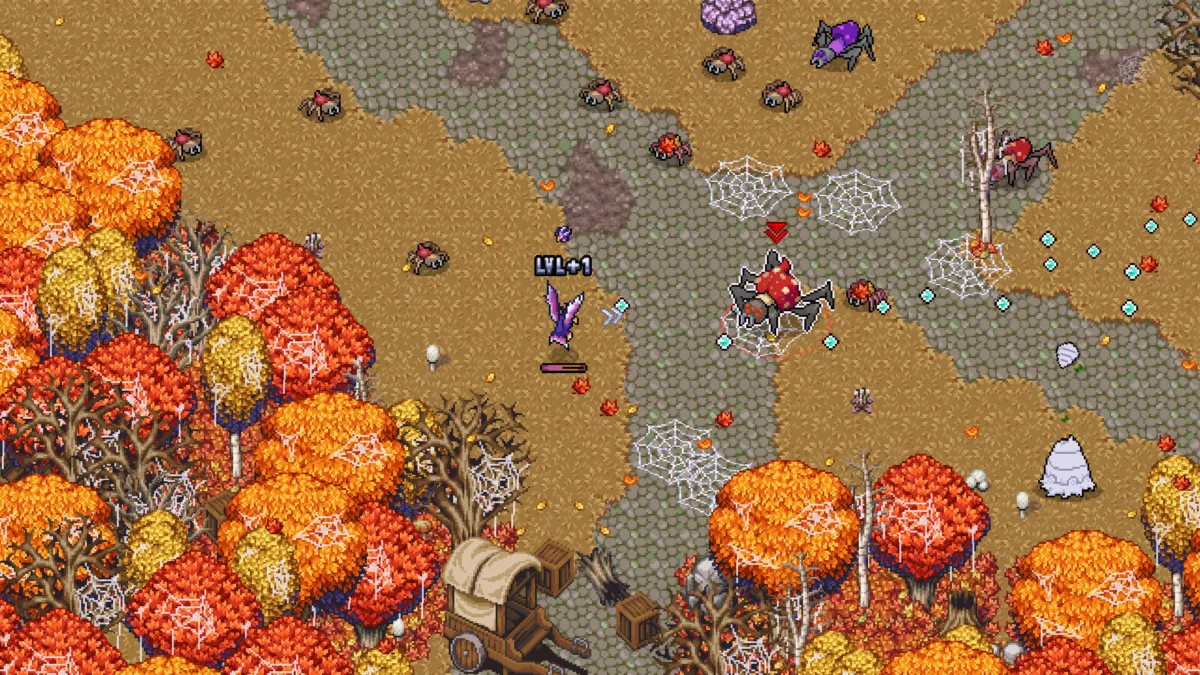
The digital landscape of the "bullet heaven" genre, popularized by the breakout success of titles like Vampire Survivors, continues to expand with the arrival of Shard Squad on modern gaming consoles. Developed by The Root Studios and published by Nuntius Games, this pixel-art roguelite has transitioned from a successful tenure on PC to a wide-scale release across the Xbox Series X|S, Xbox One, PlayStation 4, PlayStation 5, and Nintendo Switch. By synthesizing the monster-collection aesthetics of classic handheld RPGs with the frantic, high-density combat of survivors-like shooters, Shard Squad attempts to carve out a distinct niche in a saturated market. This review examines the title’s mechanics, content volume, and technical performance on the Xbox Series X, providing a comprehensive analysis of its contribution to the genre.
The Evolution of the Bullet Heaven Genre
The "bullet heaven" or "survivors-like" genre has seen a meteoric rise since 2022, characterized by a low barrier to entry, auto-firing mechanics, and a focus on power-scaling through randomized upgrades. Shard Squad enters this arena not merely as a clone, but as a thematic hybrid. While early genre entries focused on gothic horror or dark fantasy, Shard Squad leverages a vibrant, element-based creature system. This aesthetic choice draws immediate parallels to the Pokémon franchise, though the gameplay loop is firmly rooted in the roguelite tradition of "death and rebirth."
Market data indicates that the survivors-like sub-genre has become a staple of the indie development scene due to its addictive gameplay loops and high replayability. Shard Squad aims to capitalize on this trend by offering a "comfort food" gaming experience—an accessible title that allows players to engage in complex power-scaling while multitasking or seeking a low-stress session. The transition to consoles represents a significant milestone for The Root Studios, moving their IP from the niche PC enthusiast market to a broader, global audience.

Core Gameplay Mechanics and Creature Synergies
At the heart of Shard Squad is its unique approach to the "weapon" system. In traditional survivors-likes, players collect swords, magic staves, or projectiles. In Shard Squad, the weapons are the creatures themselves. Players begin a run by selecting one of approximately two dozen starter creatures, each possessing a primary and secondary attack. As the player traverses the top-down battlefield, they defeat waves of enemies to collect XP shards.
Upon leveling up, the player is presented with randomized choices. These choices include stat-based enhancements—such as increased movement speed, defense, or damage output—and the ability to "hire" additional creatures. These secondary creatures act as autonomous weapon systems, orbiting or following the player and deploying their specific elemental attacks on fixed intervals. This mechanic introduces a layer of tactical synergy; players must decide whether to stack creatures of the same element to maximize specific bonuses or diversify their squad to handle various enemy resistances.
The most prominent feature is the evolution system. Mirroring the progression found in monster-collection RPGs, creatures can evolve into more powerful forms once certain criteria are met. This evolution serves as the primary "power spike" in a run, often shifting the tide of battle during high-intensity waves. However, the game maintains a disciplined scope. Unlike traditional RPGs, there is no permanent capturing of monsters during a run; the focus remains entirely on the immediate survival and the optimization of the current squad.
Content Volume and Progression Systems
For a genre where longevity is determined by the depth of the "grind," Shard Squad provides a robust suite of content. The game features ten distinct levels, each with its own environmental hazards, enemy types, and boss encounters. The difficulty scaling is tiered, allowing players to revisit earlier stages with increased challenges to earn rare resources.

The progression is divided into two categories:
- In-Run Progression: Randomized level-up rewards, creature evolutions, and temporary relics found on the battlefield.
- Meta-Progression: Permanent upgrades purchased between runs using currency earned during gameplay. These include fundamental stat boosts and the unlocking of new creatures and stages.
While the game boasts a significant amount of content, the progression system is notably "grindy." Unlocking the full potential of the meta-progression tree requires dozens of hours of gameplay. For some, this provides a long-term goal that justifies the price of entry; for others, the repetitive nature of the early game may act as a barrier. The inclusion of "infinite modes" and varied difficulty settings aims to mitigate this by providing veteran players with high-stakes environments to test their builds.
Technical Performance and Console Integration
Tested on the Xbox Series X, Shard Squad demonstrates the benefits of a well-optimized console port. The pixel-art aesthetic, while nostalgic, is rendered with modern clarity, maintaining a stable frame rate even when the screen is saturated with hundreds of enemies and projectile effects. The developers have included both manual and automatic aiming options, catering to different player preferences.
The control scheme is intuitive, utilizing the twin-stick shooter layout for movement and manual aiming, while the dash mechanic is mapped to a dedicated shoulder button or trigger. The dash operates on a cooldown, serving as the primary mechanical skill required to navigate "bullet hell" patterns during boss fights.

A standout feature for the console release is the inclusion of two-player local co-op. In an era where local multiplayer is often overlooked, Shard Squad allows two players to share the screen, combining their creature squads for devastating elemental combos. This mode significantly alters the strategic landscape, as players can specialize their roles—one focusing on area-of-effect (AoE) crowd control while the other prioritizes single-target boss damage.
Chronology of Development and Release
The journey of Shard Squad began as a PC-centric project, gaining traction through community feedback and iterative updates.
- Initial Development: The Root Studios focused on creating a stable engine capable of handling high entity counts without performance degradation.
- PC Success: The game’s release on Steam and other PC platforms established a core fanbase, praised for its "clean" pixel art and creature variety.
- Console Porting: Nuntius Games spearheaded the effort to bring the title to consoles, ensuring that the UI was redesigned for television screens and that controller haptics were integrated.
- Cross-Generation Launch: The simultaneous release on both current-gen (Xbox Series X, PS5) and last-gen (Xbox One, PS4) hardware ensures maximum accessibility, though the current-gen versions benefit from faster load times and higher particle density.
Official Positioning and Industry Analysis
While The Root Studios has not issued a formal press release regarding specific sales targets, industry analysts suggest that Shard Squad is positioned as a "mid-tier" indie success. By pricing the game competitively, the publishers are targeting the segment of the market that has already exhausted the content in Vampire Survivors and is looking for a similar "hit" with a fresh aesthetic.
The broader implication of Shard Squad’s release is the continued validation of the survivors-like genre on consoles. What began as a mobile and PC phenomenon has successfully transitioned to the living room. The success of Shard Squad indicates that console players value the "roguelite-lite" experience—games that offer the depth of a roguelite without the punishing difficulty often associated with the genre.

Comparative Strengths and Limitations
In comparison to genre giants like Soulstone Survivors, Shard Squad is less about "breaking the game" with infinite loops and more about careful squad management. Its limitations lie in its build variety. Because most upgrades are tied to existing creature stats rather than transformative "rule-breaking" items, some runs can feel tactically similar. The mechanical depth is also relatively shallow; once a player masters the dash timing, the difficulty stems primarily from stat checks rather than complex enemy AI.
However, its strengths—the charm of its creature designs, the satisfaction of the evolution mechanic, and the implementation of local co-op—make it a compelling package. It successfully captures the "just one more run" essence that defines the most successful entries in the genre.
Conclusion and Future Outlook
Shard Squad represents a polished, if traditional, expansion of the bullet heaven formula. Its transition to consoles is seamless, offering a stable and visually appealing experience for players on the Xbox Series X and beyond. While it may not reinvent the fundamental mechanics of the survivors-like genre, its unique creature-based weapon system and evolution mechanics provide enough of a twist to keep players engaged through its lengthy meta-progression.
As the genre continues to evolve, Shard Squad stands as a testament to the enduring appeal of pixel-art action and the strategic depth found in monster-collection themes. For fans of roguelites and those seeking a high-quality "timewaster" on their console of choice, Shard Squad delivers a substantial and enjoyable experience that honors its inspirations while establishing its own identity. Future updates, potentially adding more creatures or online cooperative play, could further solidify its position as a must-play title for genre enthusiasts.