


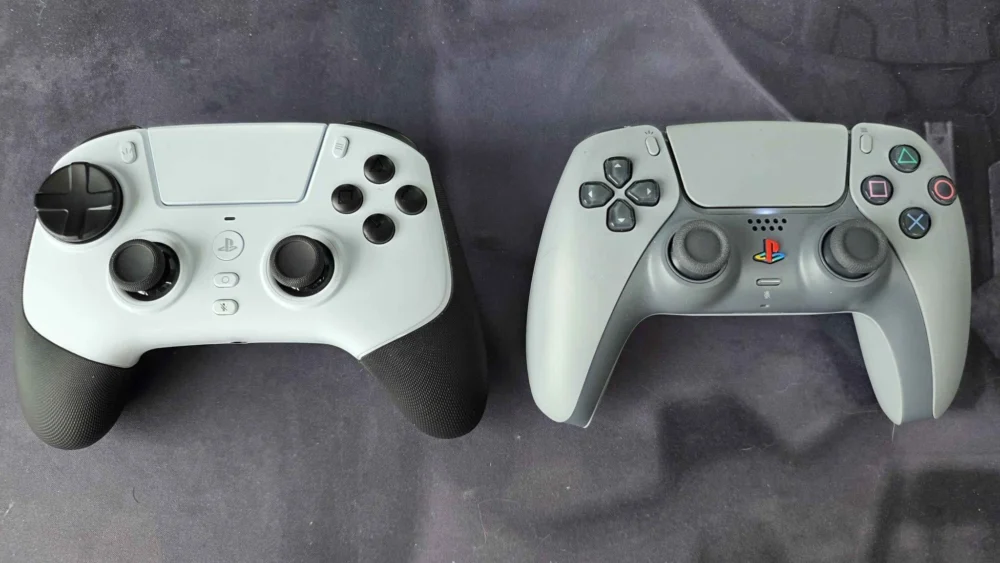
The landscape of high-end gaming peripherals has undergone a significant transformation since the launch of the ninth generation of consoles, with professional-grade controllers moving from a niche enthusiast market to a mainstream competitive requirement. As Sony’s PlayStation 5 enters its mid-lifecycle, the demand for "Pro" alternatives to the standard DualSense has intensified. Razer, a perennial leader in the gaming hardware sector, has addressed this demand with the release of the Raiju V3 Pro. This device represents the culmination of years of iterative design, positioning itself as a direct competitor to Sony’s own DualSense Edge and the high-performance SCUF Reflex. By integrating cutting-edge Tunneling Magnetoresistance (TMR) sensor technology and a suite of eSports-oriented features, the Raiju V3 Pro aims to redefine the expectations for symmetrical controller layouts on both the PlayStation 5 and PC platforms.

The Evolution of the Razer Raiju Lineage
Razer’s history with PlayStation-branded controllers dates back to the original Raiju for the PlayStation 4, which was followed by the Raiju Ultimate and the Raiju Tournament Edition. While those earlier models were praised for their mechanical buttons, they occasionally faced criticism regarding wireless latency and firmware stability. The Raiju V3 Pro appears to be built on the lessons learned from those previous iterations, as well as the success of the Wolverine V3 8K Pro, Razer’s flagship Xbox and PC controller.
Unlike the Wolverine series, which utilizes an asymmetrical (offset) stick layout favored by Xbox users, the Raiju V3 Pro retains the symmetrical stick configuration that has been the hallmark of the PlayStation brand since the introduction of the original DualShock in 1997. This design choice is critical for a specific demographic of competitive players whose muscle memory is intrinsically tied to the parallel placement of the thumbsticks. By merging this traditional layout with the advanced internal architecture of their modern "Pro" line, Razer has created a bridge for PlayStation purists seeking top-tier performance metrics.

Unboxing and Physical Architecture
The Razer Raiju V3 Pro is presented in premium, high-density packaging that signals its position at the top of the peripheral market. The inclusion of a hardshell carrying case is a standard but necessary feature for a device intended for travel to tournaments or LAN events. Inside the case, the ecosystem of the controller is revealed: a 10-foot braided USB-C to USB-A cable, a 2.4GHz HyperSpeed wireless dongle, two swappable thumbstick caps (one tall and concave, one short and convex), and a specialized screwdriver.
The physical footprint of the Raiju V3 Pro is notably larger than the standard DualSense. While it retains the general silhouette of a PlayStation controller, the handles are broader and more substantial, bearing a closer resemblance to the ergonomic profile of an Xbox Elite controller. The "White Edition" features a high-contrast aesthetic with black textured grips that wrap around the back of the handles. These grips utilize a specialized rubberized material designed to maintain friction during long-duration gaming sessions where perspiration can often lead to slippage.

Revolutionary Sensor Technology: The TMR Advantage
The most significant technical advancement in the Raiju V3 Pro is the implementation of Tunneling Magnetoresistance (TMR) sensors in the thumbsticks. To understand the importance of this feature, one must look at the current state of controller technology. Most standard controllers use carbon-track potentiometers, which are prone to physical wear and "stick drift." Many high-end third-party controllers have recently moved to Hall Effect sensors, which use magnets to detect movement without physical contact.
TMR sensors represent the next step in this evolution. While Hall Effect sensors measure the voltage change caused by a magnetic field, TMR sensors measure the change in electrical resistance. This allows for a much higher level of precision and sensitivity while consuming significantly less power. In a competitive environment, this translates to a controller that not only resists drifting over time but also provides a more granular response to minute thumb movements. This is particularly vital in first-person shooters (FPS) where micro-adjustments in aiming can determine the outcome of a match.

Mechanical Precision and Input Layout
Razer has equipped the Raiju V3 Pro with its proprietary Mecha-Tactile action buttons. These buttons combine the soft, cushioned touch of a membrane rubber dome with the crisp, audible click of a mechanical microswitch. The actuation distance is significantly shorter than that of the standard DualSense, allowing for faster repetitive presses.
The controller features an expansive array of remappable inputs:

- Four Rear Paddles: Located on the back of the controller, these paddles are positioned to be pressed by the middle and ring fingers.
- Two Top Bumpers (M1/M2): Situated next to the standard L1/R1 bumpers, these provide additional shortcuts for the index fingers.
- HyperTriggers: The L2 and R2 triggers feature a physical toggle on the underside of the controller. This allows users to switch between a full-range pull (ideal for racing games) and an instant, mouse-click actuation (ideal for shooters).
A unique design choice in the Raiju V3 Pro is the modularity of the rear paddles. Using the included screwdriver, players can remove the paddles entirely and replace the area with smooth silicon covers. This addresses a common complaint among gamers who find rear buttons intrusive or prone to accidental presses during high-tension moments.
Software Integration and Customization
For PC users, the Raiju V3 Pro integrates seamlessly with Razer Synapse, the company’s comprehensive hardware configuration suite. On the PlayStation 5, where system-level third-party software is restricted, Razer provides a dedicated mobile app available on iOS and Android. This app connects to the controller via Bluetooth, allowing players to adjust settings on the fly without interrupting their game.

The customization options are extensive:
- Button Mapping: Every additional button (M1-M6) can be assigned to mimic any standard controller function.
- Sensitivity Clutches: Players can map a button to temporarily lower or raise the sensitivity of the thumbsticks, a feature often used by snipers to steady their aim.
- Vibration Intensity: The strength of the haptic motors can be adjusted across different zones of the controller.
- Polling Rates: In wireless mode, the controller supports polling rates of up to 500Hz. When connected via a wired connection to a PC, the device can reach polling rates that significantly reduce input lag, catering to the needs of professional eSports athletes.
Connectivity and Battery Performance
One of the primary criticisms of the Sony DualSense and DualSense Edge is their relatively short battery life, which often ranges from four to eight hours. The Razer Raiju V3 Pro offers a substantial upgrade in this department. In testing, the controller consistently delivered over 20 hours of wireless gameplay on a single charge. This longevity is likely a result of the power-efficient TMR sensors and a larger internal battery cell.

Connectivity is handled through Razer’s HyperSpeed Wireless technology via the included USB-A dongle. This 2.4GHz connection is designed to provide lower latency than standard Bluetooth connections. While the controller does support Bluetooth for mobile app configuration and casual gaming, the HyperSpeed dongle is the recommended method for both PS5 and PC competitive play.
Comparative Analysis and Market Limitations
Despite its technical superiority in several areas, the Raiju V3 Pro exists within the limitations of the PlayStation licensing ecosystem. Because it is a third-party peripheral, it lacks certain proprietary Sony features. Most notably, it does not include the "Adaptive Triggers" (variable resistance) found in the DualSense, nor does it feature the high-definition "Haptic Feedback" (VCM actuators). Instead, it uses traditional rumble motors.

Furthermore, third-party controllers for the PlayStation 5 cannot "wake" the console from sleep mode by pressing the Home button. Users must manually turn on the console or use a standard DualSense to boot the system before switching to the Raiju. For the competitive target audience, these are often viewed as acceptable trade-offs for the improved battery life, superior stick precision, and mechanical button feel.
Economic Value and eSports Impact
At a retail price of €209.99 / $219.99 / £199.99, the Raiju V3 Pro is a significant investment. It is priced slightly higher than the DualSense Edge but offers more remappable buttons and significantly better battery life. From a professional standpoint, the inclusion of TMR sensors effectively eliminates the "cost of replacement" that often comes with potentiometer-based controllers that develop drift within six to twelve months of heavy use.

The broader implications for the gaming industry are clear: Razer is betting on a future where hardware durability and precision are the primary selling points for enthusiasts. As eSports continues to grow, the margin for error in hardware performance shrinks. The Raiju V3 Pro is positioned not just as a controller, but as a specialized tool for high-stakes competition.
Final Assessment
The Razer Raiju V3 Pro stands as a formidable entry in the premium controller market. It successfully addresses the ergonomic needs of players who prefer a symmetrical layout while providing a suite of features that outclass standard console hardware. By prioritizing battery longevity, sensor precision through TMR technology, and a highly customizable physical interface, Razer has delivered a product that justifies its "Pro" moniker. While the absence of Sony’s proprietary haptics may deter some casual users who enjoy the immersive qualities of the PS5, the Raiju V3 Pro is clearly designed for those who prioritize performance, reliability, and competitive advantage above all else. For the serious PlayStation or PC gamer, it represents one of the most complete and technically advanced input devices currently available in the global market.