


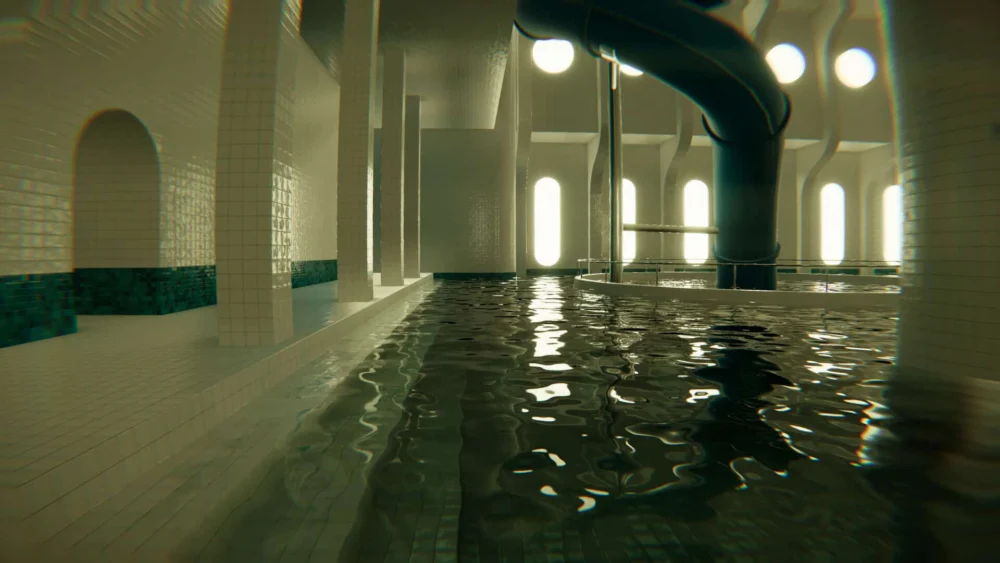
The release of POOLS on the Nintendo Switch 2 marks a significant expansion for the minimalist walking simulator originally developed by Tensori, bringing one of 2024’s most discussed indie titles to Nintendo’s latest hardware. Initially launched on PC and PlayStation 5, the game garnered critical acclaim for its hyper-realistic depiction of "liminal spaces," a psychological and aesthetic phenomenon that has permeated internet culture over the last several years. By transitioning to the Nintendo Switch 2, the title seeks to leverage the console’s updated processing power and DLSS capabilities to maintain its signature visual fidelity while offering the portability that has become a hallmark of the Nintendo ecosystem.
The emergence of POOLS coincides with a broader cultural fascination with the "Backrooms"—a creepypasta-inspired concept involving endless, non-Euclidean yellow hallways and sterile environments. Tensori’s take on this genre focuses specifically on the "Poolrooms" sub-aesthetic, characterized by sprawling, tiled aquatic complexes that evoke a sense of nostalgia, tranquility, and underlying dread. As the gaming industry continues to explore non-traditional narrative structures, POOLS stands as a definitive example of the "vibe-based" gaming movement, where atmosphere and environmental storytelling take precedence over traditional mechanics like combat, puzzles, or dialogue.
The Genesis of the Poolrooms Aesthetic and Development Context
The development of POOLS by the Finnish studio Tensori represents a focused effort to capture the "found footage" aesthetic that became popular through viral YouTube series such as those produced by Kane Pixels. While many games in the Backrooms genre rely on monsters or "entities" to provide tension, Tensori opted for a "pure" experience. The game consists of six distinct chapters, each exploring different architectural interpretations of indoor swimming facilities.

Historically, the project emerged during a period of intense competition within the liminal space genre. In 2023, a playable demo for a similar title, Dreamcore, was released, featuring a level titled "Dreampools." This led to frequent comparisons and some confusion within the gaming community regarding the relationship between the two titles. However, it is established that POOLS and Dreamcore are products of entirely different development teams. While Dreamcore eventually expanded into various environments, including suburban streets and forests, POOLS remained dedicated to the singular theme of water-based architecture, refining the sterile, tiled aesthetic to a high degree of technical polish.
The timeline of POOLS is noteworthy for its steady progression across platforms. Following its successful 2024 debut on high-end hardware, the 2026 port to the Nintendo Switch 2 serves as a litmus test for the new console’s ability to handle high-fidelity textures and complex lighting—elements that are essential for maintaining the game’s immersive qualities.
Gameplay Mechanics and the Rejection of Traditional HUDs
POOLS is frequently categorized as a "walking simulator," a term that has evolved from a pejorative descriptor into a recognized genre of atmospheric exploration. The game intentionally strips away almost every standard video game convention. There is no Head-Up Display (HUD), no inventory system, and no stamina bar. The player’s interaction with the world is limited to movement, looking, and the occasional use of a dedicated "Run" button.
The player views the world through the lens of a bodycam, complete with a wide-angle fisheye effect and subtle chromatic aberration. This perspective is designed to mimic the look of a GoPro or a similar portable recording device, reinforcing the "found footage" narrative. The protagonist remains unseen and unheard, acting as a silent observer whose presence is only felt through the sound of footsteps echoing on wet tiles or the splash of water as they wade through waist-deep pools.

This minimalist approach places the burden of engagement entirely on the environment. The level design shifts from intricate, maze-like structures in the early chapters to more linear, surrealist dreamscapes in the latter half. By removing traditional objectives, Tensori forces the player to focus on the nuances of the architecture—the way light filters through arched windows, the repetitive patterns of the ceramic tiles, and the unsettling scale of the water slides that seem to lead nowhere.
Technical Performance on the Nintendo Switch 2
The porting of a visually intensive game like POOLS to a Nintendo platform required significant technical considerations. On the Nintendo Switch 2, the game utilizes NVIDIA’s Deep Learning Super Sampling (DLSS) to bridge the gap between the console’s mobile chipset and the requirements of the game’s hyper-realistic assets.
Data from technical assessments indicates a disparity between docked and handheld performance. In docked mode, the Switch 2 outputs a resolution that maintains the crispness of the tile textures and the clarity of the water reflections, which are central to the game’s "uncanny" feel. The hardware is capable of rendering the sterile white walls and indistinct light sources with enough precision to preserve the intended atmosphere.
However, in portable mode, the resolution scaling becomes more aggressive. Reports indicate that while the frame rate remains stable, the use of DLSS in handheld mode can result in visible aliasing and "shimmering" artifacts on reflective surfaces. These white pixelated artifacts are most noticeable in areas with high-contrast lighting, such as the sauna rooms or the corridors featuring bright, circular ceiling lights. Despite these minor visual concessions, the port is considered a technical success, as it retains the core aesthetic that defined the PC and PS5 versions.

Psychological Implications of Liminal Spaces in Media
The success of POOLS can be attributed to its mastery of "liminality"—the psychological state of being on a threshold or in a transitional space. In architectural terms, spaces like hallways, waiting rooms, and locker rooms are designed to be passed through, not inhabited. When these spaces are emptied of people and extended into infinite loops, they trigger a specific type of cognitive dissonance.
Psychological analysis suggests that POOLS taps into "Anemoia," a sense of nostalgia for a time or place one has never actually known. The indoor pool aesthetic is particularly potent because it evokes childhood memories of public baths or school swimming lessons, but strips away the social context, leaving only the sterile, silent structure. The game’s progression reflects an intensifying state of anxiety. While the first few levels feel like a lonely but peaceful exploration of a high-end spa, the introduction of humanoid statues and deforming architecture in later chapters mimics the descent from a dream into a "fever dream" or nightmare.
Unlike traditional horror games, POOLS eschews jump-scares in favor of "environmental dread." The fear does not come from what is behind a door, but rather from the realization that the door leads to yet another identical room. This subversion of player expectation is a key component of the game’s critical reception.
Comparative Analysis: POOLS vs. Dreamcore
Because of the overlap in themes, a comparative analysis between POOLS and its contemporary, Dreamcore, is essential for understanding the niche market they occupy.

- Scope: POOLS is a specialized experience focusing almost exclusively on aquatic environments across its six chapters. Dreamcore is a broader exploration of the Backrooms mythos, moving through various types of liminal spaces.
- Atmosphere: POOLS leans more toward a polished, architectural surrealism. Dreamcore often embraces a grittier, VHS-heavy aesthetic that feels more aligned with the "found footage" horror roots of the genre.
- Narrative: Both games are light on explicit plot, but POOLS is even more abstract, offering no dialogue or written lore, whereas Dreamcore occasionally hints at a larger mystery.
Industry analysts suggest that POOLS served as a refinement of the concepts introduced in early Dreamcore demos. By focusing on a single, high-quality aesthetic, Tensori was able to create a more cohesive, albeit shorter, experience that appeals to players looking for a "pure" architectural walk-through.
Broader Impact on the Indie Gaming Landscape
The arrival of POOLS on the Switch 2 signifies the growing viability of experimental, non-combat games on mainstream consoles. Historically, Nintendo platforms were synonymous with character-driven platformers and RPGs. However, the success of titles like Firewatch, The Stanley Parable, and now POOLS demonstrates a shifting consumer appetite toward "experiential" gaming.
The "Poolrooms" phenomenon has also had a tangible impact on digital art and architectural visualization. The assets used in POOLS—the specific shades of turquoise water, the rounded edges of the concrete pillars, and the high-gloss tiles—have become a visual shorthand for the liminal aesthetic in online communities.
From a market perspective, the brevity of the game—approximately two hours—has sparked discussions regarding the pricing and value of indie titles. However, the consensus among enthusiasts of the genre is that the condensed length prevents the repetitive nature of the "walking simulator" from becoming tedious. The decision to include an extra level with a different tone in the console release further adds value for players who previously experienced the title on other platforms.

Conclusion and Future Outlook
POOLS remains a landmark title for the liminal space genre, successfully translating a niche internet aesthetic into a polished interactive experience. Its launch on the Nintendo Switch 2 ensures that a wider audience can access its unique blend of tranquility and unease. While the portable version faces some minor technical hurdles related to resolution and DLSS artifacts, the overall performance on the new hardware is robust.
As Tensori continues to support the title, and as the "Backrooms" trend evolves, POOLS stands as a testament to the power of environmental design in modern gaming. It proves that a game does not require complex systems or a traditional narrative to leave a lasting impression on the player. Instead, by focusing on the primal psychological responses to space, light, and sound, POOLS creates a digital dreamscape that is as beautiful as it is unsettling. The game’s legacy will likely be defined by its role in legitimizing "vibe-based" exploration as a standalone genre, paving the way for future developers to experiment with the boundaries of interactive media.