


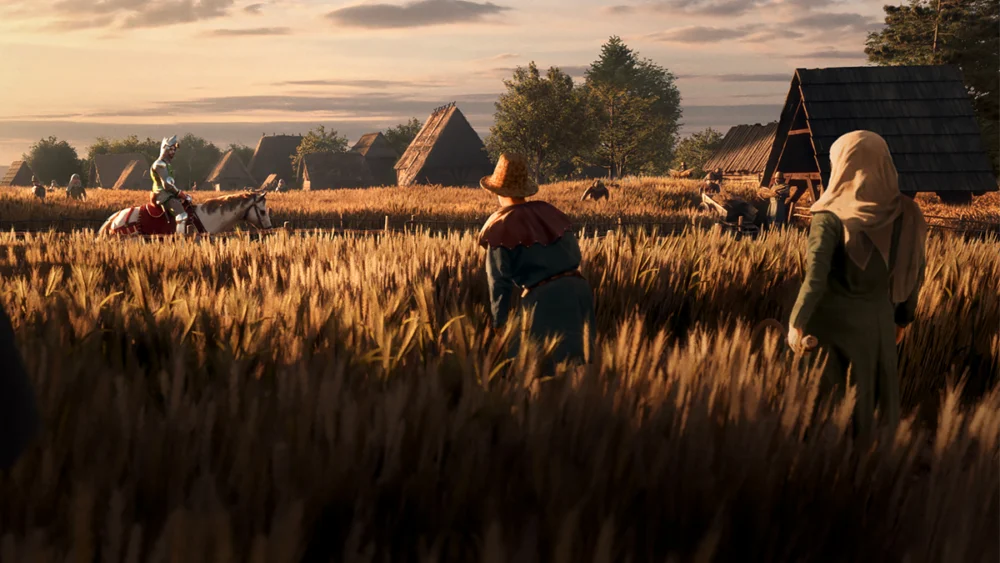
In the strategically rich world of Manor Lords, the meticulous management of agricultural resources stands as the bedrock of any thriving medieval settlement. Far from being a mere peripheral activity, farming is an immediate and paramount concern for aspiring lords, directly influencing food security, population growth, villager morale, and ultimately, the very survival and prosperity of their dominion. Understanding and optimizing the intricate agricultural system is not just advisable; it is essential for navigating the challenges of early settlement and fostering long-term stability.
The Foundation: Early Game Farming Priorities
From the moment a new settlement is founded, the priority shifts immediately to establishing a robust food supply. The initial settler families require sustenance, and without a steady influx of provisions, discontent and eventual starvation can quickly lead to the collapse of the nascent community. Wheat, often referred to by its historical counterpart "Emmer" within the game’s mechanics, is the cornerstone crop for this crucial early phase.
-
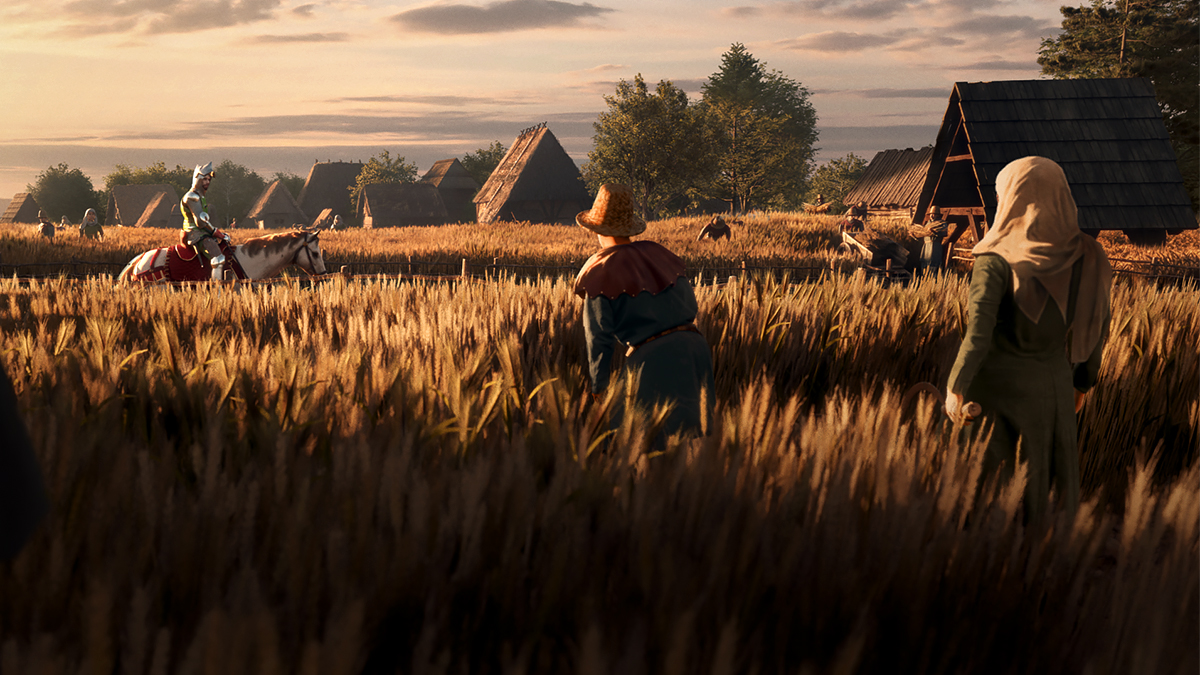
Wheat (Emmer): The Staple Crop: Wheat is indispensable because it directly translates into bread, the primary food source for your villagers. Its early cultivation is not merely about feeding the populace but about creating a critical surplus. The harsh realities of winter in Manor Lords mean no harvesting occurs, making a substantial autumn grain reserve non-negotiable for survival through the colder months. To transform raw grain into edible bread, players must construct a Windmill to mill grain into flour and a Communal Oven for baking. These processing structures are as vital as the fields themselves, forming an unbroken chain from field to table. Neglecting any link in this chain can render bountiful harvests useless.
-
Beyond Sustenance: The Rise of Barley and Ale: Once the immediate threat of starvation is mitigated and a stable wheat supply is established, the focus broadens. Barley emerges as the next strategic crop, primarily for its role in producing ale. While not a direct food source, ale is a significant contributor to villager approval and morale. A well-fed, well-watered, and well-ale’d population is a happy, productive, and loyal one. The production chain for ale involves growing barley, then processing it in a Malt House to create malt, and finally brewing it in a Brewery. This diversification not only improves quality of life but can also open avenues for trade, transforming surplus ale into valuable regional wealth.
Understanding Crop Types and Fertility Dynamics
Manor Lords incorporates a sophisticated fertility system that demands strategic planning for field placement and crop rotation. The game features four primary crop types, each with varying fertility requirements and applications:
- Emmer (Wheat): The essential food crop.
- Flax: Primarily used for textile production (linen, clothing).
- Barley: Crucial for ale production.
- Rye: A more resilient grain, often able to grow in less fertile soil, providing an alternative food source or animal feed.
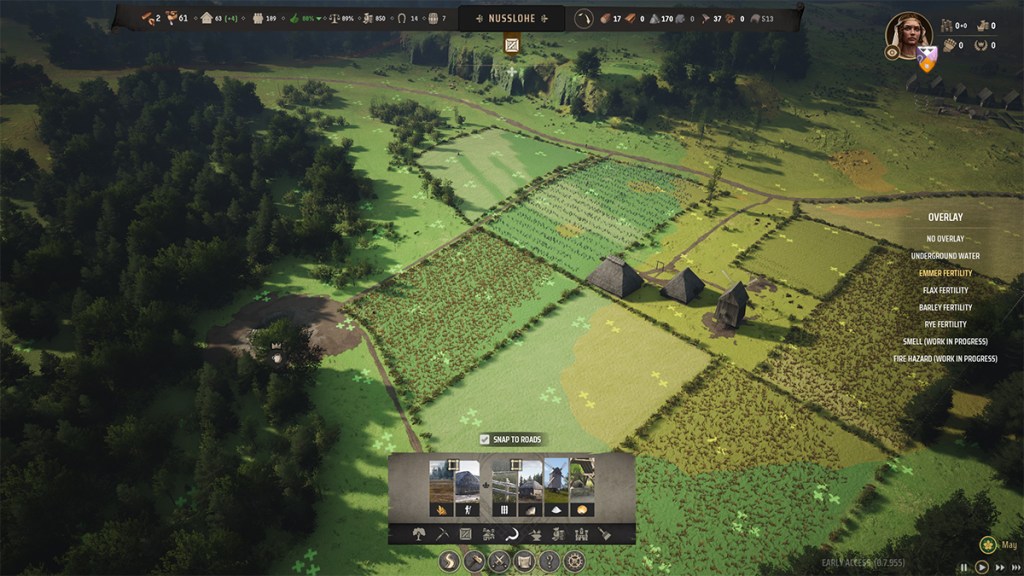
To aid in strategic planning, the game provides a "Farming" tab within the Construction menu. Selecting a specific crop (Emmer, Flax, Barley, or Rye) overlays a color-coded fertility indicator onto the map. Bright green areas denote highly fertile land ideal for that particular crop, while orange and red signify unsuitable or poor-yielding locations. This visual guide is indispensable for maximizing harvest yields and minimizing wasted effort.
The Enigma of Emmer: Historical Accuracy in Terminology
For players new to medieval terminology, the distinction between "Wheat Fertility" (which doesn’t explicitly appear) and "Emmer Fertility" can be a point of confusion. The game, in its commitment to historical authenticity, uses "Emmer," an ancient type of hulled wheat, as the specific designation for the grain crop. While a minor stylistic choice, it highlights the developers’ attention to historical detail, even if it requires players to learn a new, albeit historically accurate, vocabulary term. This subtle inclusion reinforces the game’s immersive medieval setting.
Sustainable Agriculture: The Imperative of Crop Rotation
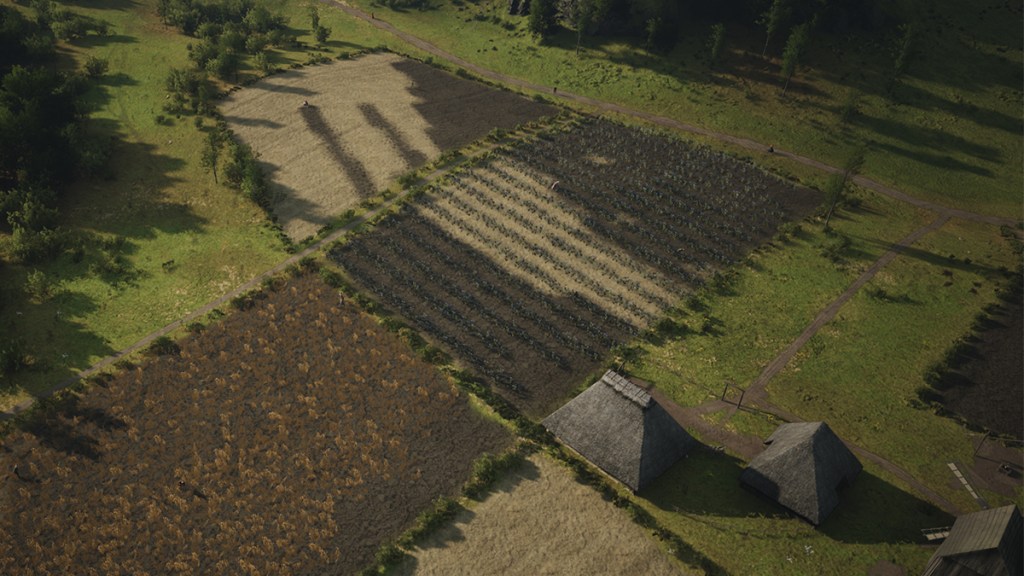
One of the most critical aspects of Manor Lords‘ farming system is the dynamic nature of soil fertility. Unlike some city-builders where land remains perpetually productive, fields in Manor Lords will gradually diminish in fertility with continuous use. This mechanic necessitates the implementation of a robust crop rotation system, mirroring real-world medieval agricultural practices.
-
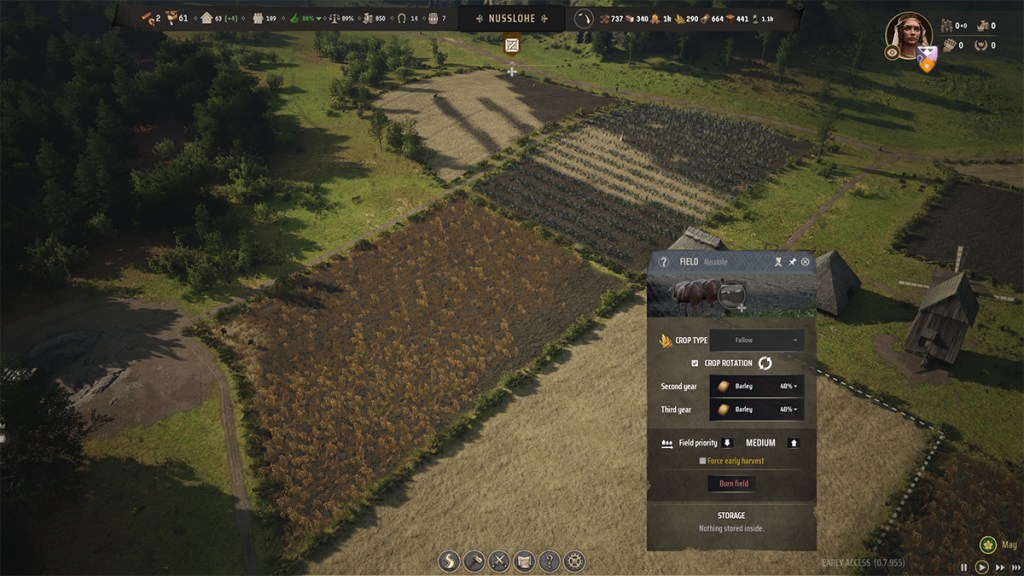
The Three-Field System: Players can schedule each field’s growing cycle over a three-year period. A common and highly effective strategy is the three-field system:
- Year 1: Cash crop (e.g., Wheat or Barley).
- Year 2: Another crop, or a different cash crop to balance nutrient draw.
- Year 3: Fallow. Allowing a field to lie fallow for at least one year is crucial for soil regeneration. During this period, the land recovers its nutrients, significantly boosting fertility for subsequent growing seasons. An alternative to pure fallow, which some players might explore, is using the field as a pasture, allowing livestock to graze and naturally fertilize the land, though the game’s mechanics might emphasize simple fallowing for fertility recovery.
-
Morgen: Understanding Land Measurement and Efficiency: Fields in Manor Lords are measured in "morgen," an archaic unit of land area historically defined as the amount of land a man could plough in a morning. A single family, dedicated to farming, can efficiently manage approximately 2/3 of a morgen per year. While an initial tooltip might suggest a 1-morgen field as sufficient to feed a small town with wheat, this advice must be tempered by the reality of diminishing fertility. To ensure sustainable production and accommodate fallow periods, it is generally recommended to establish at least three fields for every two active growing fields needed. For example, if you aim to have two 1-morgen fields actively growing crops each year, you would need a total of three 1-morgen fields in your rotation (two active, one fallow). This ensures a continuous supply without exhausting the land.
Key Structures for Agricultural Success
Effective farming extends beyond just fields and crops; it requires a network of supporting structures:
- Farmhouse: This is the central hub of agricultural activity. It houses the farming families and is where workers are assigned to fields. Farmers from the farmhouse undertake all field-related tasks, including plowing, sowing, and harvesting. Upgrading the farmhouse can sometimes increase its efficiency or capacity for workers.
- Windmill: Converts harvested grain (wheat/emmer, barley, rye) into flour. Essential for bread and malt production.
- Communal Oven: Transforms flour into bread, making it edible for villagers.
- Granary: While not directly a farming structure, a granary is critical for storing harvested grain and processed foods, protecting them from spoilage and providing easy access for distribution.
- Malt House: Converts barley grain into malt, a necessary ingredient for brewing ale.
- Brewery: Uses malt to produce ale, boosting villager morale and creating a valuable trade good.
- Weaver’s Workshop: (Indirectly related) Processes flax into linen, a prerequisite for clothing production.
Strategic Development: Enhancing Agricultural Output
As your settlement grows and burgage plots are upgraded, you earn Development Points, which can be invested in various skill trees. The "Farming" development tree offers crucial upgrades that significantly enhance agricultural productivity and efficiency:
- Heavy Plough: This development allows your farming families to utilize a heavy plough, drawn by oxen. This dramatically increases the amount of land a single family can manage per year (e.g., from 2/3 morgen to 1 morgen or more), making larger fields more viable and reducing the labor intensity for extensive farming operations.
- Fertilization: This upgrade often enhances the rate at which fallow fields recover their fertility, or potentially allows for the application of manure (though specific mechanics may vary), leading to higher yields in subsequent growing seasons and reducing the overall need for fallow periods.
- Fallow Fields (Enhanced): While basic fallowing is always an option, a development point might enhance its benefits, perhaps making the recovery faster or more potent.
- Irrigation (Speculative/Future): While not explicitly mentioned in the provided text, a common agricultural development in similar games could involve irrigation, which might allow for better yields in drier areas or provide a boost to growth. (As this is an enrichment based on inference, I’m including it as a potential future or implicit mechanic).
Strategic investment in these development points can transform your agricultural sector from a subsistence operation into a highly efficient engine of growth, supporting a much larger population with less strain on labor.
The Seasonal Cycle: A Farmer’s Calendar
Farming in Manor Lords is deeply tied to the changing seasons, requiring foresight and careful planning:
- Spring (March – May): The season for plowing and sowing. Fields must be prepared, and seeds planted. This is a critical window; delays can severely impact yields.
- Summer (June – August): The growing season. While less labor-intensive for field work, farmers may be involved in other tasks, and the crops require time to mature.
- Autumn (September – November): The harvest season. This is the most labor-intensive and time-sensitive period. All available hands are needed to bring in the crops before the first frosts. A successful autumn harvest is paramount for winter survival.
- Winter (December – February): No crops grow. Farmers shift their focus to threshing (separating grain from chaff), processing goods (milling flour, baking bread, brewing ale), and transporting goods to storage. This is also a crucial time for preparing for the next year’s spring planting.
Broader Impact and Implications
The success or failure of your agricultural endeavors in Manor Lords reverberates throughout your entire settlement:
- Population Growth and Health: A consistent and abundant food supply is the primary driver of population growth. Well-fed villagers are healthier, more productive, and less susceptible to disease. Food shortages, conversely, lead to starvation, illness, population decline, and ultimately, the collapse of the settlement.
- Economic Stability and Trade: Surplus food (bread, meat from livestock, berries) and processed agricultural goods (ale, linen) are valuable commodities for trade. Establishing trade routes and generating regional wealth allows for the acquisition of resources not locally available, funding military expansion, or upgrading infrastructure.
- Social Harmony and Morale: Beyond basic sustenance, access to amenities like ale significantly boosts villager approval. A high approval rating translates to increased productivity, faster population growth, and a reduced risk of banditry or rebellion.
- Settlement Expansion and Specialization: A strong agricultural base frees up labor for other industries like logging, mining, crafting, and military service. This allows for the development of specialized districts and a more complex, resilient economy.
- Strategic Depth and Realism: The detailed farming mechanics underscore the developers’ commitment to historical realism. The challenges of medieval agriculture – fluctuating yields, the need for crop rotation, and the constant threat of famine – are faithfully recreated, forcing players to adopt a long-term, strategic mindset rather than simply maximizing output in the short term.
In Manor Lords, farming transcends a simple game mechanic; it is a profound strategic pillar upon which all other aspects of settlement building rest. From the first seeds of wheat sown to the intricate dance of crop rotation and the strategic investment in agricultural developments, every decision impacts the delicate balance of survival and prosperity. Mastering these elements ensures that your digital villagers are not only fed but also content, enabling your manor to grow from a humble encampment into a formidable, self-sustaining medieval power. The verdant fields stretching to the horizon become not just an aesthetic pleasure but a tangible testament to thoughtful planning and successful stewardship.