


Capcom’s latest entry in its long-standing survival horror franchise, Resident Evil Requiem, represents a strategic pivot for the series, attempting to harmonize the claustrophobic horror of earlier titles with the high-octane action characteristic of the middle-era entries. Following the commercial and critical success of the Resident Evil 4 remake and Resident Evil Village, this new installment introduces a dual-protagonist narrative structure that separates the gameplay experience into two distinct yet intersecting paths. By leveraging the updated capabilities of the proprietary RE Engine, the title seeks to establish a new benchmark for technical fidelity and atmospheric storytelling within the genre.

Narrative Structure and Character Dynamics
The plot of Resident Evil Requiem centers on two primary figures: Leon S. Kennedy, a veteran of the Raccoon City incident and former government agent, and Grace Ashcroft, a newcomer to the series serving as an FBI analyst. The narrative begins with Ashcroft being deployed to a crime scene under the direction of her superior, who possesses a personal connection to the location—a hotel where his mother was murdered several years prior. This setup serves as the catalyst for a 10-to-15-hour campaign that explores themes of biological experimentation and corporate malfeasance.
The storytelling utilizes a parallel chronological format. While Grace Ashcroft’s sections focus on the immediate terror of discovery and survival, Leon Kennedy’s segments follow her path through the same environments shortly thereafter. This "intersecting timeline" approach allows players to witness the immediate aftermath of Grace’s actions and provides a broader context for the unfolding biohazard. The interaction between the two characters, though often separated by time and space, is anchored by a shared goal of uncovering the truth behind the "Requiem" virus and the clandestine medical research occurring within the facility.

Gameplay Mechanics: The Synthesis of Horror and Action
Resident Evil Requiem distinguishes itself by offering two fundamentally different gameplay loops based on the active protagonist. Grace Ashcroft’s segments are designed as a return to the "survival horror" roots of the franchise. Equipped with minimal weaponry—frequently referred to as a "peashooter" in early critical assessments—Grace must rely on her intellect and environmental awareness to navigate threats. Her sections emphasize resource management, puzzle-solving, and backtracking, reminiscent of the design philosophy seen in the 2017 release, Resident Evil 7: Biohazard.
A central mechanic in Grace’s gameplay is the "Injector System." This feature requires players to extract biological samples from infected enemies to craft tactical items. By slurping up infected blood into specialized tubes, players can synthesize various liquids, such as a purple compound that causes specific mutations in enemies to destabilize and explode. This system adds a layer of risk-versus-reward, as obtaining the necessary biological material requires getting into close proximity with lethal threats.

In contrast, Leon Kennedy’s segments shift the genre toward "action-horror." Reflecting his status as a seasoned operative, Leon begins his sections with a significantly larger inventory capacity and access to superior firepower. His primary unique tool is a high-durability tactical axe that requires sharpening rather than replacement, facilitating a more aggressive melee-focused combat style. Leon’s gameplay is characterized by large-scale set pieces and higher enemy density, addressing the "power fantasy" elements that were prominent in Resident Evil 6, though refined to maintain a sense of tension.
Technical Performance and RE Engine Optimization
Developed on the latest iteration of the RE Engine, Resident Evil Requiem showcases significant advancements in graphical fidelity and optimization. The title supports a wide array of modern features, including ray-tracing, high-resolution textures, and advanced lighting models. Technical analysis across multiple platforms reveals a tiered performance profile:

- PC Platform: On high-end hardware, such as systems equipped with the AMD Radeon RX 7900 XTX, the game is capable of maintaining an average of 100 frames per second at 4K resolution with all settings maximized. The implementation of FSR 3.1.5 (FidelityFX Super Resolution) allows for high-quality upscaling, ensuring smooth performance even with ray-tracing enabled.
- PS5 Pro and High-End Consoles: These versions benefit from enhanced hair-strand rendering and improved skin shaders, avoiding the "waxy" character models sometimes observed on base console hardware.
- Xbox Series X and PS5 Base: While the game remains visually impressive on these platforms, reports indicate that the Xbox Series X port may lack some of the specific optimizations found on the PS5, resulting in a 1:1 parity with the base PS5 model rather than leveraging the Series X’s additional raw power.
- Series S and Switch 2: To maintain stable frame rates on lower-powered hardware, these versions omit certain high-fidelity effects, such as individual hair-strand physics, though they retain the core lighting and environmental detail that define the experience.
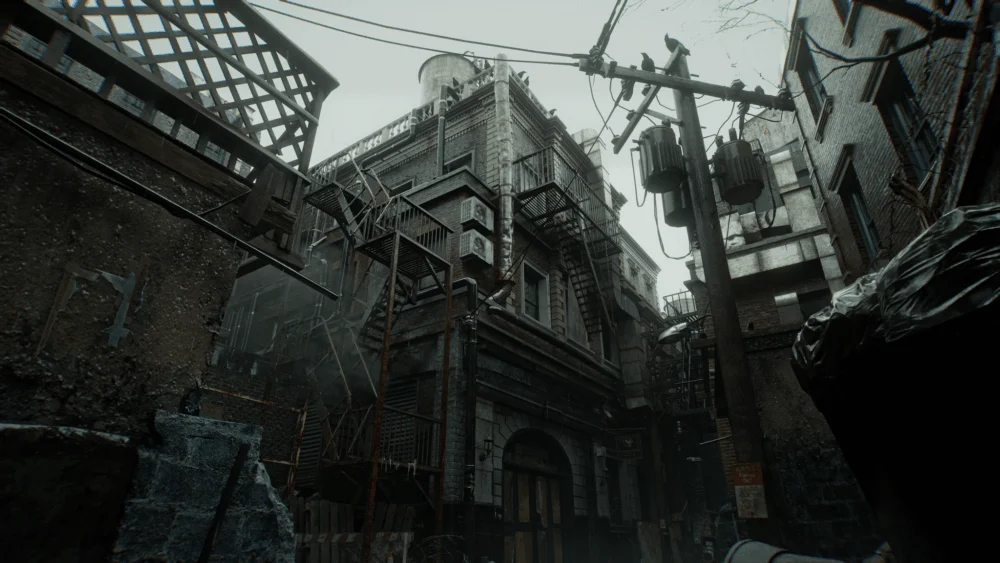
The environmental design focuses on verticality and atmospheric density. From dilapidated urban streets and foggy alleyways to ornate, dimly lit grand halls, the RE Engine’s ability to handle complex lighting and shadows is central to the game’s horror elements.
Audio Design and Performance
The auditory experience of Resident Evil Requiem is a critical component of its atmospheric success. The Foley work—the reproduction of everyday sound effects—is described as exceptional, providing the necessary audio cues for players to track enemies in the dark. The voice cast features both returning veterans and new talent:

- Nick Apostolides reprises his role as Leon S. Kennedy, delivering a performance that portrays the character as older, more cynical, and physically weathered.
- Angela Sant’Albano provides the voice and motion capture for Grace Ashcroft. Her performance has been noted for its "raw" emotional quality, particularly in scenes involving high stress or personal loss.
While the musical score is designed to be unobtrusive, focusing on building tension through ambient drones and sudden "stingers," it effectively supports the gameplay without overshadowing the sound effects. The voice acting for the secondary cast, including the "shady doctors" and antagonists, follows the franchise tradition of being slightly over-the-top, providing a stylistic link to the series’ B-movie inspirations.
Historical Context and Series Evolution
The release of Resident Evil Requiem comes at a time when Capcom has successfully revitalized the brand. Following the mixed reception of Resident Evil 6 in 2012, which many felt leaned too heavily into action, the company pivoted toward the first-person horror of Resident Evil 7. Since then, the franchise has maintained a delicate balance between these two extremes.

Requiem appears to be an intentional effort to satisfy both segments of the fanbase. By splitting the gameplay between Grace (horror) and Leon (action), Capcom avoids the tonal inconsistency that plagued previous attempts to merge the styles. The inclusion of classic elements, such as typewriters for saving and ink ribbons for the highest difficulty settings, serves as an homage to the 1996 original, while the fluid combat and modern crafting systems cater to contemporary standards.
Market Impact and Future Implications
Early critical reception suggests that Resident Evil Requiem may be one of the most well-paced entries in the franchise’s history. By capping the experience at roughly 15 hours, Capcom avoids the "pacing bloat" that some critics noted in the latter half of the Resident Evil 4 remake. The successful implementation of the dual-protagonist system could signal a future for the series where multiple gameplay perspectives become the standard, allowing for more diverse storytelling opportunities.

Furthermore, the technical success of the title on the Switch 2 and PC suggests that Capcom’s engine strategy remains robust, allowing them to scale their high-fidelity assets across a wide range of hardware. As the latest mainline entry, Requiem not only advances the lore of the Resident Evil universe but also reinforces the brand’s position as a leader in the survival horror market.
Conclusion and Final Assessment
Resident Evil Requiem stands as a comprehensive package that addresses the varied demands of the Resident Evil community. It provides the "abject terror" of being a vulnerable survivor through the eyes of Grace Ashcroft, while simultaneously delivering the "power fantasy" expected from a Leon Kennedy adventure. With top-tier production values, a stable technical foundation, and a narrative that bridges the gap between different eras of the franchise, Requiem is positioned as a landmark title for Capcom. Whether through its innovative "Injector" crafting system or its masterfully rendered environments, the game demonstrates that the Resident Evil series remains capable of evolving while staying true to its core identity as the premier name in digital horror.