


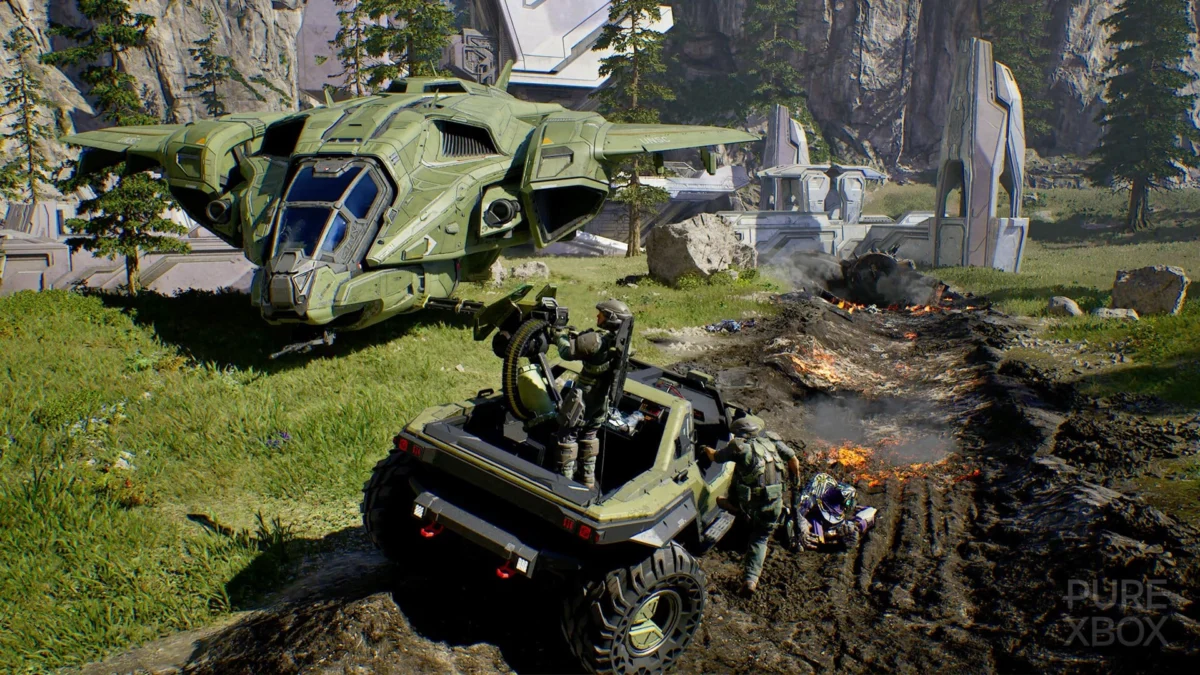
The release of Halo Campaign Evolved represents a definitive turning point for the Halo franchise, serving as both a technical showcase for the newly rebranded Halo Studios and a foundational reset for the intellectual property as it enters its twenty-fifth year. Following a protracted development cycle and a fundamental shift in the studio’s underlying technology, the title has arrived on Xbox Series X|S and PC, aiming to reconcile the legacy of the original 2001 masterpiece with the modern expectations of a mid-2020s audience. This release is not merely a graphical update but a comprehensive reimagining of the "Combat Evolved" narrative, utilizing the Unreal Engine 5 to deliver a level of fidelity and mechanical complexity previously unattainable under the franchise’s former proprietary engines.
Historical Context and the Transition to Halo Studios
To understand the significance of Halo Campaign Evolved, one must examine the turbulent period following the 2021 release of Halo Infinite. While Infinite was initially praised for its core gameplay mechanics, it faced significant criticism regarding its live-service delivery, content droughts, and the technical limitations of the Slipspace Engine. By late 2024, Microsoft and the leadership at what was then 343 Industries announced a massive organizational restructuring. The studio was rebranded as Halo Studios, a move intended to signal a "new chapter" for the series.
The most critical component of this transition was the abandonment of the Slipspace Engine in favor of Epic Games’ Unreal Engine 5. Leadership at the studio cited the need to reduce the "technical debt" associated with maintaining proprietary tools, which had historically slowed down content production. Halo Campaign Evolved was selected as the debut project for this new era, intended to serve as a "vertical slice" of what the franchise could achieve when unburdened by legacy software. This decision allowed the development team to focus on environmental density, advanced artificial intelligence, and lighting systems like Lumen and Nanite, which define the visual identity of the 2026 release.
Chronology of Development and Launch
The timeline leading to the launch of Halo Campaign Evolved reflects a calculated effort by Microsoft Gaming to stabilize its flagship IP.
- November 2021: Halo Infinite launches. Despite strong initial player counts, the community expresses dissatisfaction with the pace of seasonal updates.
- October 2024: 343 Industries officially rebrands to Halo Studios. The "Project Foundry" technical demo is released, showcasing Master Chief and Spartan environments rendered in Unreal Engine 5.
- June 2025: Halo Campaign Evolved is officially announced during the Xbox Games Showcase, positioned as a 25th-anniversary celebration of the franchise.
- January 2026: Closed technical previews begin, focusing on the "Remixed Campaign" features and the new AI behaviors.
- Early 2026: Halo Campaign Evolved launches globally on Xbox Series X|S, Windows PC, and via Xbox Game Pass.
The launch window was strategically chosen to precede the release of other major first-party titles, such as Gears of War: E-Day, ensuring that Halo remained the primary focus of the Xbox ecosystem for the first half of the fiscal year.
Technical Innovations and Gameplay Features
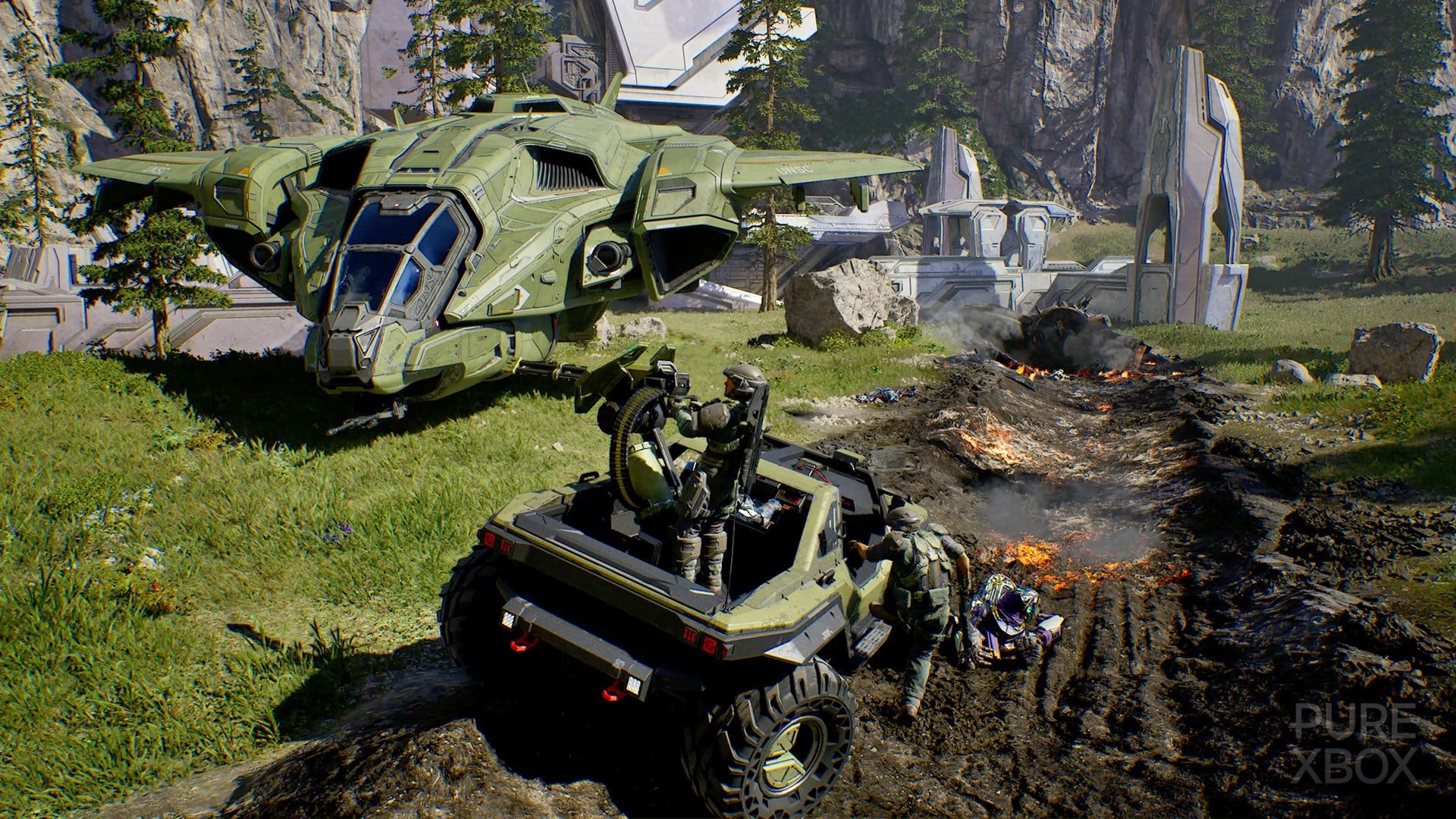
Halo Campaign Evolved differentiates itself from previous remasters, such as 2011’s Halo: Combat Evolved Anniversary, by fundamentally altering the player’s interaction with the environment. The "Remixed Campaign" mode is the centerpiece of this effort. Unlike a traditional linear progression, the remixed levels introduce dynamic encounters, shifting enemy spawns, and environmental hazards that change based on the player’s difficulty settings and active Skull modifiers.
The inclusion of new Skull modifiers has been a point of particular interest for the "Legendary All Skulls On" (LASO) community. These modifiers go beyond simple stat adjustments, introducing mechanical shifts such as "Gravity Flux," which alters projectile physics, and "Neural Link," which grants the Covenant Elites the ability to coordinate flanking maneuvers with higher tactical precision.
Furthermore, the game utilizes the high-speed I/O of the Xbox Series X to eliminate loading screens between the "Truth and Reconciliation" boarding sequence and the planetary exploration, creating a seamless narrative flow that was impossible in the 2001 original. The integration of Unreal Engine 5’s physics systems also allows for more interactive environments; trees can be uprooted by Wraith mortar fire, and structures can be partially deconstructed during heavy engagements, adding a layer of tactical depth to the sandbox gameplay.
Market Reception and Comparative Data
Initial data following the launch of Halo Campaign Evolved indicates a strong resurgence in player engagement for the franchise. According to internal Xbox metrics and third-party tracking, the game saw a 40% higher day-one player count than Halo Infinite’s campaign launch. This is attributed largely to the "Game Pass Effect," which lowered the barrier to entry for a new generation of players who had never experienced the original story of the Pillar of Autumn and the discovery of Installation 04.
| Metric | Halo Infinite (2021) | Halo Campaign Evolved (2026) |
|---|---|---|
| Engine | Slipspace Engine | Unreal Engine 5 |
| Initial Critic Score (Metacritic) | 87 | 91 |
| Day One Players (Estimated) | 20 Million (including F2P MP) | 12 Million (Campaign Only) |
| Development Cycle | 6 Years | 3.5 Years (UE5 transition) |
| Focus | Open World / Live Service | Linear / Replayable PvE |
While the raw player numbers for Halo Infinite were bolstered by its free-to-play multiplayer component, Halo Campaign Evolved has achieved higher "per-user" engagement time within its first month. Players are reportedly spending more time in the "Campaign Remix" and "Firefight Evolved" modes, suggesting that the focus on high-quality PvE (Player vs. Environment) content has successfully filled a gap in the market.
Industry and Community Responses
The response from industry analysts and the gaming community has been largely positive, though not without nuance. Financial analysts from firms like Wedbush Securities have noted that by focusing on a premium, single-player-centric experience, Microsoft has successfully mitigated the "live-service fatigue" that plagued earlier entries. "The move to Unreal Engine 5 has not only improved the visual fidelity but has significantly lowered the cost of content production for Halo Studios," noted one senior analyst. "This allows them to iterate faster and deliver the ‘quality over quantity’ experience that fans have been demanding."

However, a segment of the veteran community has expressed disappointment over the lack of a traditional PvP (Player vs. Player) multiplayer suite at launch. Halo Studios leadership addressed this in a recent press briefing, stating that the decision to omit PvP was intentional. "We wanted to ensure that the foundation of Halo—the combat dance, the AI, and the sense of wonder—was perfected before expanding into the competitive space," said Pierre Hintze, Studio Head of Halo Studios. This "Campaign First" strategy is a departure from the franchise’s history but is seen by many as a necessary step to restore the brand’s prestige.
Broader Impact and Implications for the Future
The success of Halo Campaign Evolved has significant implications for the future of the Xbox first-party lineup. It validates the strategy of "foundational remakes"—using modern technology to reinterpret classic IP rather than simply porting them to new hardware. This success is expected to influence the development of future titles, potentially leading to similar treatments for other legacy franchises like Fable or even older Gears of War entries.
Furthermore, the shift to Unreal Engine 5 has streamlined the recruitment process for Halo Studios. By using an industry-standard engine, the studio can now onboard talent from across the industry without the need for extensive training on proprietary, often temperamental, tools. This technical pivot is expected to shorten the development cycle for the next "major" Halo entry, which is rumored to be in pre-production.
As the year progresses, the focus of the Xbox ecosystem will shift toward the launch of Gears of War: E-Day. However, the sustained performance of Halo Campaign Evolved suggests that the two franchises can coexist by targeting different segments of the shooter market. While Gears of War continues to lean into its gritty, cinematic roots, Halo has successfully reclaimed its position as the premier "sandbox" shooter, emphasizing player agency, emergent gameplay, and a polished, high-fidelity narrative experience.
In conclusion, Halo Campaign Evolved is more than a nostalgic trip back to the Silent Cartographer or the Control Room. It is a calculated, technically ambitious reboot of a franchise that was once at risk of losing its identity. By prioritizing technical stability, PvE depth, and the strengths of Unreal Engine 5, Halo Studios has successfully laid the groundwork for the next decade of the Master Chief’s journey. The game stands as a testament to the idea that sometimes, to move forward, a franchise must first master the elements that made it iconic in the first place.