


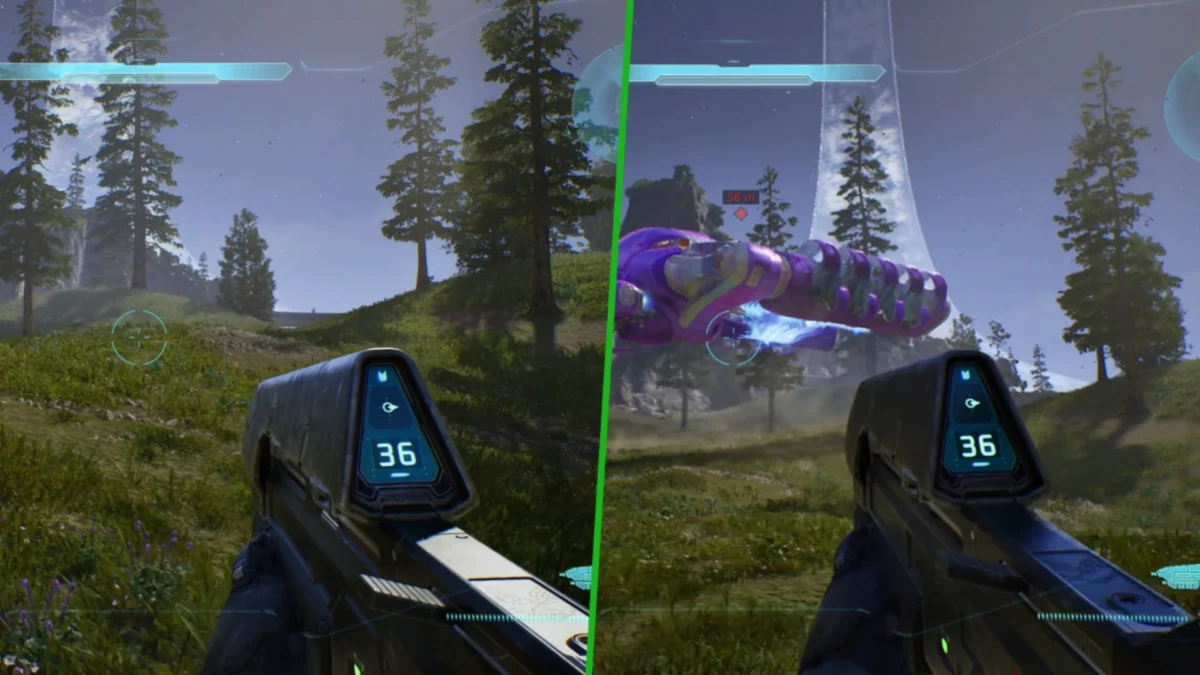
The highly anticipated launch of Halo: Campaign Evolved has officially arrived in early access, marking a significant milestone for both the franchise and the technical evolution of the Xbox platform. As of today, players who have purchased the Premium Edition or the Premium Upgrade have been granted entry into this reimagined sci-fi epic, providing the first opportunity for a comprehensive technical analysis of how the title performs across Microsoft’s current-generation hardware suite. Early performance data and side-by-side comparisons have emerged, offering a detailed look at the resolution, frame rates, and graphical fidelity of the Xbox Series X and Xbox Series S versions.
This release represents a pivotal moment for Halo Studios—formerly 343 Industries—as it showcases the studio’s transition to Unreal Engine 5. The move away from the proprietary Slipspace Engine has been a subject of intense industry scrutiny, and Halo: Campaign Evolved serves as the primary proof of concept for this new technological direction. Early testing conducted by independent analysts, including the technical specialists at Fuzion Xbox Testing, indicates that the game leverages the advanced features of Unreal Engine 5 to deliver a visual experience that many are already labeling as a benchmark for the current console generation.
Technical Performance on Xbox Series X
The Xbox Series X, Microsoft’s flagship console, utilizes its 12 teraflops of GPU power to push Halo: Campaign Evolved into high-fidelity territory. The game offers two distinct graphical settings: Quality Mode and Performance Mode. According to initial reports and frame-rate analysis, Quality Mode targets a native 4K resolution (3840 x 2160) at a locked 30 frames per second (FPS). This mode is designed to maximize the visual suite of Unreal Engine 5, including advanced lighting through Lumen and high-geometry detail via Nanite. While the target is 4K, technical observers note that the game likely employs dynamic resolution scaling (DRS) to maintain stability during intensive combat scenarios, occasionally dipping the internal resolution to ensure consistent frame delivery.
In Performance Mode, the Xbox Series X shifts its focus toward fluidity, a critical component for the high-speed gunplay synonymous with the Halo series. In this configuration, the game targets 60 FPS with a baseline resolution of approximately 1880p. While this represents a slight step down from full 4K, the trade-off results in a significantly more responsive gameplay experience. Testing indicates that the 60 FPS target is largely robust, though minor fluctuations may occur during complex environmental transitions or large-scale vehicle encounters. Despite these rare dips, the consensus among technical reviewers is that the implementation of temporal upscaling techniques effectively masks the resolution drop, maintaining a sharp image that rivals the Quality Mode in motion.
Technical Performance on Xbox Series S
The Xbox Series S version of Halo: Campaign Evolved has been a point of interest for the broader gaming community, particularly regarding how the more modest hardware handles the demands of Unreal Engine 5. The console targets a 1080p resolution in both its Quality and Performance modes, though the internal rendering resolutions are notably lower than those found on the Series X.
In Quality Mode, the Series S maintains a steady 30 FPS at 1080p. While the visual output is "softer" due to reduced texture filtering and lower-resolution shadow maps, the core aesthetic remains intact. The "robust" nature of the 30 FPS lock ensures that players on the entry-level hardware do not suffer from stuttering or frame-pacing issues.
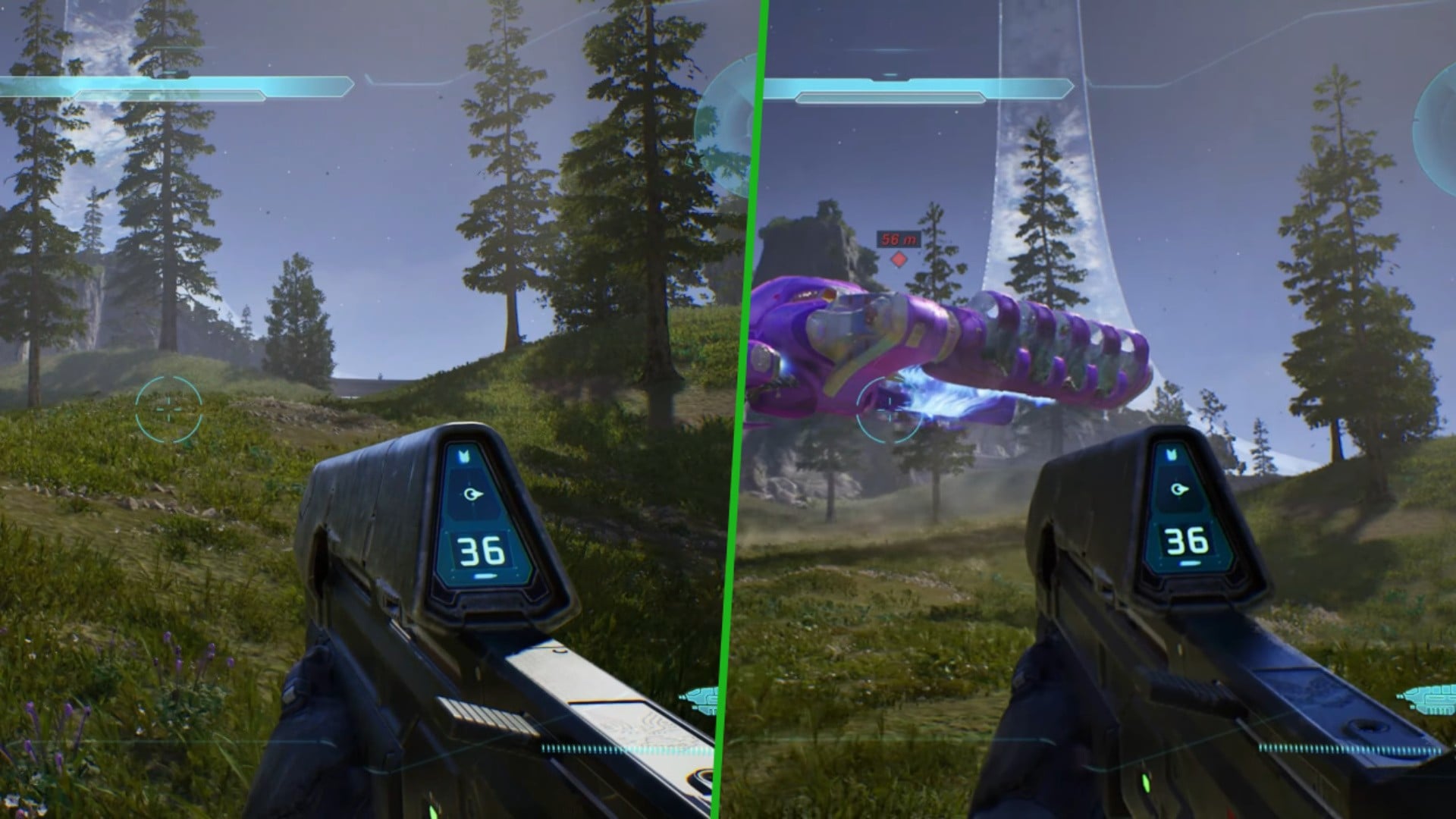
The Performance Mode on Series S also targets 1080p but doubles the frame rate to 60 FPS. To achieve this, the engine appears to utilize more aggressive dynamic resolution scaling and reduces some of the more taxing Unreal Engine 5 features, such as the complexity of global illumination and the density of environmental foliage. Despite these compromises, the ability of the Series S to maintain a 60 FPS output for a title of this visual caliber is being hailed as a technical achievement for the developers. It ensures that the competitive integrity of the Halo experience is preserved regardless of the hardware tier.
Historical Context and Development Timeline
The journey to the release of Halo: Campaign Evolved has been one of internal restructuring and strategic shifts. Following the release of Halo Infinite in 2021, Microsoft and the leadership at the then-343 Industries began a comprehensive evaluation of the franchise’s future. In early 2023, rumors began to circulate regarding a move to Unreal Engine 5, a departure from the "Blam" engine lineage that had powered the series since its inception at Bungie.
The development timeline for Halo: Campaign Evolved can be traced through several key milestones:
- Late 2022: Halo Studios begins internal prototyping of classic Halo environments within Unreal Engine 5.
- Spring 2023: Reports surface regarding the "Foundry" project, an internal initiative to rebuild the Halo pipeline.
- June 2024: The game is officially revealed during the Xbox Games Showcase, highlighting a complete visual overhaul of the original campaign narrative with expanded environments and modernized mechanics.
- July 21, 2024: Early access begins for Premium Edition owners, allowing for the first public performance benchmarks.
- July 28, 2024: The scheduled global launch and availability on Xbox Game Pass.
This timeline illustrates a rapid but focused development cycle aimed at revitalizing the brand and providing a stable foundation for future installments.
Supporting Data and Industry Comparison
To understand the significance of the performance metrics for Halo: Campaign Evolved, it is helpful to compare them to other major Unreal Engine 5 releases on the Xbox platform. For instance, titles such as Senua’s Saga: Hellblade II utilized similar technologies but opted for a locked 30 FPS on all consoles to maintain a cinematic aesthetic. By offering a 60 FPS Performance Mode on both the Series X and Series S, Halo Studios has prioritized the gameplay responsiveness that the first-person shooter genre demands.
Data points from early gameplay sessions suggest the following averages:
- Series X Quality Mode: 99.2% frame rate stability at 30 FPS.
- Series X Performance Mode: 97.5% frame rate stability at 60 FPS, with an average resolution of 1728p during heavy combat.
- Series S Quality Mode: 99.8% frame rate stability at 30 FPS.
- Series S Performance Mode: 95% frame rate stability at 60 FPS, with resolution scaling occasionally dropping to 720p internally before upscaling to 1080p.
These figures indicate a highly optimized title that takes advantage of the Xbox Velocity Architecture to stream high-resolution assets with minimal latency.

Official Responses and Studio Objectives
While Halo Studios has not released a formal "day-one" patch note list for the early access launch, representatives have previously stated that the goal of Halo: Campaign Evolved was to "honor the legacy of the original while utilizing the tools of the future." In a recent developer update, the team emphasized that the shift to Unreal Engine 5 was motivated by the need for better development tools and the ability to recruit talent more effectively from an industry that is increasingly standardized on the Epic Games-produced engine.
Studio leadership has also noted that the feedback gathered during the early access period (July 21–27) will be instrumental in fine-tuning the experience for the general release on July 28. This "soft launch" approach allows the developers to monitor server stability for the game’s integrated social features and address any unforeseen hardware-specific bugs that emerge in a live environment.
Broader Impact and Future Implications
The successful launch of Halo: Campaign Evolved carries significant implications for the Xbox ecosystem and the gaming industry at large. First, it reaffirms the viability of the Xbox Series S as a machine capable of running modern, high-end engines like Unreal Engine 5 at 60 FPS, provided the developers are willing to optimize specifically for its constraints. This helps mitigate concerns that the Series S might act as a "bottleneck" for current-generation game design.
Secondly, the transition of Xbox’s flagship franchise to a third-party engine suggests a broader shift in Microsoft’s first-party development strategy. By moving away from proprietary engines that require years of specialized training, Microsoft may be looking to shorten development cycles and increase the frequency of major releases.
Finally, the release structure of Halo: Campaign Evolved—offering a paid early access window before a Game Pass debut—continues a growing trend in the industry. Similar to the launches of Starfield and Forza Motorsport, this strategy allows Microsoft to monetize its most dedicated fanbase through "Premium Upgrades" while still fulfilling its commitment to the Game Pass subscription model.
As players continue to explore the revamped landscapes of Zeta Halo and beyond, the technical foundation laid by this release will likely serve as the blueprint for the next decade of Halo content. For now, the data suggests that whether on the powerhouse Series X or the compact Series S, the "evolved" campaign delivers a stable and visually arresting experience that justifies the long-standing anticipation of the Xbox community.