


Rayman 30th Anniversary Edition represents a significant milestone for Ubisoft’s long-standing mascot, serving as both a comprehensive retrospective of the character’s 1995 debut and a technical showcase of modern emulation capabilities. Developed in collaboration with Digital Eclipse, a studio renowned for its high-fidelity "interactive documentary" style of game preservation, this collection arrives at a transitional period for Ubisoft. Following a series of internal restructurings and the cancellation of several unannounced projects in late 2024 and early 2025, the release of this anniversary edition offers a curated look back at the origins of one of the industry’s most recognizable icons. While the title suggests a 2025 release to align with the 30th anniversary of the original game’s launch on the Atari Jaguar and PlayStation, the 2026 arrival positions the collection as a late but necessary celebration of the franchise’s enduring legacy.
The Genesis of a Limbless Icon: Historical Context and Chronology
To understand the significance of the Rayman 30th Anniversary Edition, one must examine the landscape of the mid-1990s video game industry. In 1995, the transition from 16-bit to 32-bit hardware was in full swing. While the industry was rapidly moving toward 3D environments, Michel Ancel and his team at Ubisoft Montpellier focused on pushing the boundaries of 2D animation. Rayman was originally conceived for the Super Nintendo Entertainment System (SNES), but as hardware shifted, the project was moved to the Atari Jaguar and eventually the Sony PlayStation, Sega Saturn, and MS-DOS.

The chronology of the original Rayman’s release is a complex tapestry of ports and regional variations:
- September 1995: Initial launch on the Atari Jaguar and Sony PlayStation (North America and Europe).
- October 1995: Release on the Sega Saturn.
- December 1995: MS-DOS version arrives, introducing a broader audience to the title.
- 1996-2001: Subsequent ports to the Game Boy Color and Game Boy Advance, each requiring significant architectural downgrades while attempting to maintain the core gameplay loop.
Rayman stood out during this era due to its "limbless" protagonist—a design choice born from technical necessity. By eliminating limbs, the developers saved on animation frames and processing power, allowing for more fluid movement and larger, more detailed character sprites. This aesthetic choice became the franchise’s hallmark, leading to a series of successful sequels, including the 3D-platforming pioneer Rayman 2: The Great Escape and the critically acclaimed UbiArt Framework titles, Rayman Origins and Rayman Legends.
Comprehensive Content and Version Parity
The 30th Anniversary Edition is positioned as the definitive archive of the first game. Rather than providing a single remastered version, Digital Eclipse has included virtually every major iteration of the title. This allows players to compare the nuances of the Atari Jaguar’s unique color palette against the PlayStation’s CD-quality audio and the MS-DOS version’s specific level layouts.

A standout inclusion in this package is the collection of over 100 levels originally featured in Rayman Designer and Rayman Gold. Previously exclusive to the PC ecosystem, these levels were often overlooked by console players. They represent some of the most difficult content in the franchise’s history, demanding pixel-perfect precision and a deep understanding of Rayman’s momentum-based movement.
Furthermore, the collection features a playable version of the lost SNES prototype. For decades, this version was considered "vaporware" until a ROM was discovered and shared by series creator Michel Ancel in 2016. While the prototype is brief and lacks the polish of the final 32-bit releases, its inclusion is a victory for video game historians, providing a tangible link to the franchise’s 16-bit roots.
Technical Enhancements and the Carbon Engine
Running on Digital Eclipse’s proprietary Carbon Engine, the 30th Anniversary Edition provides a suite of modern features designed to bridge the gap between 1995 hardware and 4K displays. On the Xbox Series X, the version utilized for this review, the game benefits from extremely low input latency and robust system-level features.

Key technical additions include:
- Variable Display Filters: Beyond standard scanline overlays, the collection includes sophisticated CRT filters that simulate the aperture grille and shadow mask characteristics of high-end 1990s monitors.
- State Management: Players can utilize save states and a 60-second rewind feature. Given the original game’s notorious difficulty spikes—particularly in the "Picture City" and "Candy Chateau" worlds—these tools make the experience accessible to a modern audience without altering the core game code.
- Performance Optimization: The long loading times associated with the original PlayStation CD-ROM have been eliminated. Transitions between the world map and individual stages are near-instantaneous.
- Quick Resume Support: On Xbox hardware, the ability to jump between the various versions of Rayman and the included documentary content without losing progress is a significant quality-of-life improvement.
The Soundtrack Controversy and Licensing Realities
Perhaps the most discussed aspect of this anniversary edition is the replacement of the original soundtrack. The 1995 score, composed by the late Rémi Gazel, is widely regarded as one of the finest of the 32-bit era, blending jazz, psychedelic rock, and whimsical orchestral themes. Due to complex licensing hurdles following Gazel’s passing in 2019, Ubisoft elected to commission brand-new arrangements for this collection.
The task fell to Christophe Héral, the composer behind the modern Rayman masterpieces Origins and Legends. While Héral’s work is of exceptional quality—maintaining the "spirit" of the original themes while utilizing modern recording techniques—the absence of the original red-book audio from the PlayStation and Saturn versions is a notable loss for purists. From a journalistic perspective, this highlights the ongoing challenges of music licensing in the digital age, where the rights to legacy media often become entangled in legal labyrinths that prevent true 1:1 preservation.

Archival Value: The "Rayman: A Legacy in Limbs" Documentary
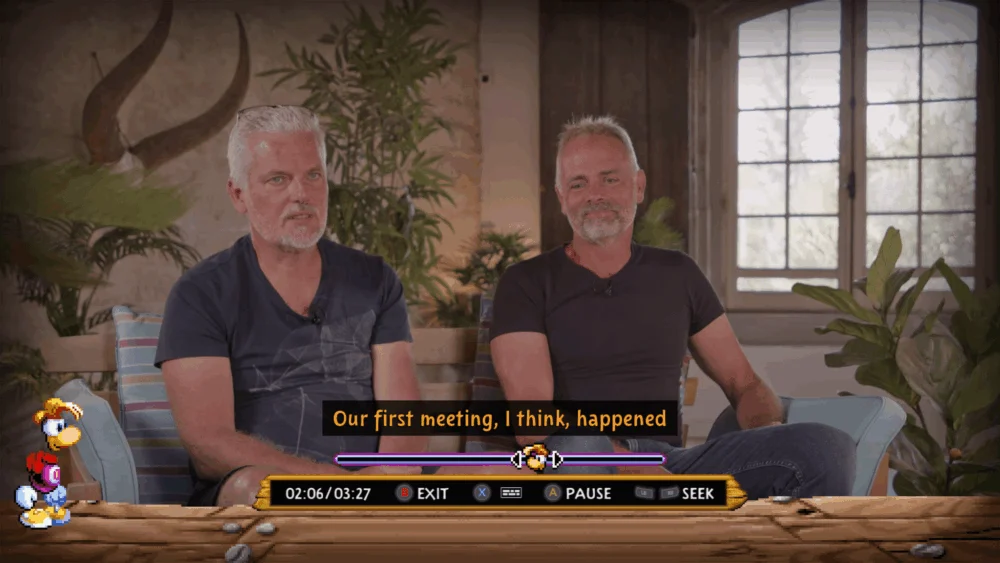
One of the primary selling points of Digital Eclipse’s "Gold Master Series" approach is the inclusion of museum-grade supplemental material. The 30th Anniversary Edition features a 50-minute documentary titled Rayman: A Legacy in Limbs, which provides an exhaustive look at the game’s production.
The documentary includes interviews with:
- Michel Ancel: The series creator discusses the artistic inspiration behind the character and the transition from 2D to 3D.
- Yves Guillemot: The Ubisoft CEO reflects on the company’s early years and how Rayman transformed Ubisoft from a regional distributor into a global publishing powerhouse.
- Lead Programmers and Artists: Technical staff explain the difficulties of developing for the Atari Jaguar’s notoriously difficult architecture.
The archival gallery is equally impressive, featuring high-resolution scans of original design documents, character sketches, and promotional materials that have never before been seen by the public. These documents reveal discarded concepts, such as a more combat-focused version of the game and early iterations of the "Betilla the Fairy" character design.

Market Positioning and Industry Implications
At a price point of $19.99 USD/EUR, Ubisoft has positioned the Rayman: 30th Anniversary Edition as a mid-tier legacy product. This strategy mirrors recent successful efforts by other publishers, such as Atari’s Atari 50: The Anniversary Celebration and Konami’s Cowabunga Collection. It suggests a growing recognition within the industry that legacy content, when presented with historical context and modern conveniences, has significant market value.
The timing of the release is also indicative of Ubisoft’s broader corporate strategy. After a period of focusing heavily on "live service" models and massive open-world titles, there appears to be a renewed interest in the company’s "AA" heritage. The success of this collection could potentially pave the way for similar treatments of Rayman 2: The Great Escape and Rayman 3: Hoodlum Havoc, both of which are currently difficult to play on modern hardware without resorting to third-party mods or aging hardware.
Final Analysis and Conclusion
Rayman 30th Anniversary Edition is a masterclass in how to handle a legacy intellectual property. While the omission of the original soundtrack remains a point of contention for long-time fans, the sheer volume of content and the quality of the archival materials make it an essential purchase for anyone interested in the history of the platforming genre.

The collection serves as a reminder of the craftsmanship that defined the mid-90s, a time when hand-drawn animation and challenging level design were the benchmarks of quality. By preserving the various versions of the original game—from the impressive handheld ports to the experimental SNES prototype—Digital Eclipse and Ubisoft have ensured that the origins of the limbless hero will remain accessible for future generations. As the industry continues to grapple with the issues of digital rot and the loss of source code, releases like this provide a blueprint for how to honor the past while serving the needs of the modern consumer. For Rayman, a character who has seen many ups and downs over three decades, this 30th (or 31st) anniversary celebration is a fitting tribute to a truly unique gaming icon.