


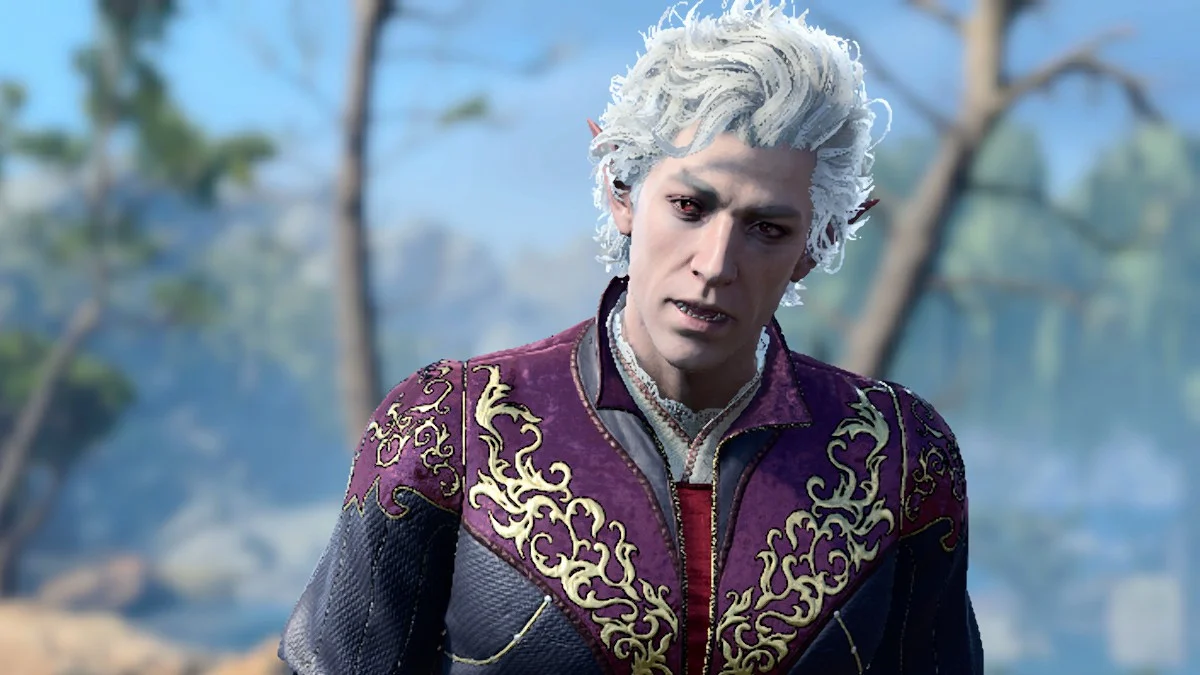
Larian Studios’ critically acclaimed and commercially triumphant role-playing game, Baldur’s Gate 3, officially launched on Xbox Series X/S platforms following a surprise announcement at The Game Awards 2023. While its arrival expands the game’s reach to a significant new player base, Larian Studios’ CEO, Swen Vincke, has definitively stated that the title will not be making its way to Microsoft’s Xbox Game Pass subscription service, a decision rooted in the game’s profound scope, quality, and the studio’s financial philosophy. This announcement comes as the game continues to garner widespread recognition, including the coveted Game of the Year award, solidifying its status as a landmark release in the gaming industry.
A Monumental Launch on Xbox Series X/S Platforms
The journey of Baldur’s Gate 3 to Xbox has been particularly noteworthy, marked by technical challenges and high anticipation. Initially released to overwhelming success on PC in August 2023, followed by a PlayStation 5 launch in September, the Xbox version faced delays primarily due to the complexities of implementing split-screen co-op functionality on the less powerful Xbox Series S console. Microsoft’s policy mandates feature parity across its console ecosystem, meaning Larian could not release the game on Series X without the Series S version being ready with all core features.
After extensive development and optimization efforts, particularly on the split-screen challenge, Larian Studios confirmed the imminent Xbox release during The Game Awards on December 7, 2023. This announcement was swiftly followed by a stealth launch of the game on Xbox Series X/S on December 8, 2023, allowing Xbox players to dive into the expansive world of Faerûn without further delay. The successful port represented a significant achievement for Larian, demonstrating their commitment to bringing the full Baldur’s Gate 3 experience to all major current-generation platforms. The Xbox release effectively completed the game’s multi-platform rollout, making it accessible to a broader audience of console players.
The Unprecedented Success of Baldur’s Gate 3
Baldur’s Gate 3 has not merely been a successful game; it has been a phenomenon. Upon its PC launch, it quickly ascended to critical and commercial heights, shattering expectations and setting new benchmarks for the CRPG genre. The game boasts an aggregate Metacritic score of 96 for its PC version and 96 for its PlayStation 5 version, placing it among the highest-rated games of all time. Reviewers universally lauded its intricate narrative, unparalleled player agency, deep character customization, strategic turn-based combat, and faithful adaptation of the Dungeons & Dragons 5th Edition ruleset.
Commercially, the game has been equally impactful. While Larian Studios, as a privately held company, does not regularly disclose specific sales figures, early reports and concurrent player numbers on Steam hinted at massive success. Within days of its PC launch, Baldur’s Gate 3 peaked at over 875,000 concurrent players on Steam, a figure typically reserved for long-established multiplayer titles, and it consistently maintained high player engagement for months. Industry analysts estimated initial sales in the millions shortly after its PC debut, with revenue generation likely exceeding hundreds of millions of dollars across platforms. This financial success has provided Larian Studios with significant autonomy and resources, directly influencing their decision-making regarding distribution models.
Player engagement has been another distinguishing factor. Data aggregated by platforms like HowLongToBeat indicates that an average playthrough of Baldur’s Gate 3 spans well over 50 hours, with many players reporting completion times exceeding 100 or even 200 hours, especially for those who explore all side quests, companion stories, and different narrative paths. This extraordinary replayability and depth underscore the immense value proposition the game offers to its purchasers, a point frequently emphasized by Larian’s leadership.
Larian Studios’ Stance: Value Over Subscription
The definitive stance against Game Pass integration was articulated by Larian Studios CEO Swen Vincke in a recent interview with IGN. Vincke clearly stated, "We made a big game, so I think there’s a fair price to be paid for that, and I think that that is okay." He further elaborated on the studio’s philosophy, emphasizing the absence of microtransactions within Baldur’s Gate 3, stating, "We don’t charge you any micro-transactions on top of it, so you get what you pay for. Upfront, it’s a big meaty game. So I think that should be able to exist as it is. This is what allows us to continue making other games."
This statement is not merely a pricing justification but a core tenet of Larian’s development and business model. The studio prides itself on delivering complete, premium experiences without resorting to common industry practices like season passes, paid cosmetics, or other forms of post-launch monetization beyond potential expansions. This approach has fostered immense goodwill within their player community, who appreciate the transparent value proposition.
Vincke’s comments reflect a belief that games of Baldur’s Gate 3‘s caliber and scope inherently command a premium price. The game, often sold at the standard new release price point of $60-70 USD, offers hundreds of hours of meticulously crafted content, a level of detail and player freedom rarely seen in modern AAA titles. For Larian, maintaining this direct transactional relationship with players ensures that the significant investment in time, talent, and resources required to create such a game is appropriately compensated, thereby securing the financial stability necessary for future ambitious projects. This philosophy stands in contrast to the subscription-based model, which, while offering broad access, typically involves substantial upfront payments from platform holders or a revenue share that might not align with Larian’s valuation of their flagship product.
The Economics of Game Pass and Third-Party Deals
Microsoft’s Xbox Game Pass is a cornerstone of its gaming strategy, offering subscribers access to a rotating library of hundreds of games for a monthly fee. A key differentiator for Game Pass has been the inclusion of first-party Xbox titles on day one of their release, alongside a significant number of third-party games, often acquired through substantial licensing deals. These deals typically involve Microsoft paying publishers an upfront fee, sometimes accompanied by performance-based bonuses or a revenue-sharing model based on engagement.
For publishers, Game Pass can offer several benefits: a guaranteed upfront payment, increased exposure to a vast subscriber base (which can boost sales of DLC or sequels), and a means to monetize older catalog titles. However, for a game like Baldur’s Gate 3, which has demonstrated unprecedented commercial success and critical acclaim, the calculus changes significantly. The potential revenue Larian stands to generate from direct sales at full price likely far outweighs what Microsoft would be willing or able to pay for Game Pass inclusion.
Estimates for major third-party Game Pass deals often range from tens of millions to over a hundred million dollars for day-one access, depending on the game’s anticipated impact. Given Baldur’s Gate 3‘s status as a Game of the Year contender and its proven sales trajectory, the cost for Microsoft to secure it for Game Pass would likely be astronomical, potentially setting an unsustainable precedent for future third-party acquisitions. Moreover, such a deal would divert revenue from direct sales, which Larian has explicitly stated is crucial for funding their next endeavors. Larian’s decision highlights a practical economic reality: for certain breakout hits, the traditional direct sales model remains the most lucrative and empowering for independent developers.
Industry Context: Premium Titles vs. Subscription Models
Larian’s decision also underscores a broader industry discussion about the value of games and the sustainability of different distribution models. The rise of subscription services like Game Pass, PlayStation Plus, and Netflix for games has shifted consumer expectations, with many players now accustomed to a vast library of titles accessible for a flat monthly fee. This model can be highly beneficial for consumers, offering tremendous value, and for smaller developers seeking visibility.
However, for developers of massive, high-budget, single-player experiences like Baldur’s Gate 3, a subscription model can present a dilemma. If a game’s primary monetization comes from an upfront payment by a platform holder, it can limit the developer’s direct connection to its player base and potentially cap its long-term revenue potential compared to sustained full-price sales. Larian, having invested years and significant resources into Baldur’s Gate 3 without external publisher mandates, likely prioritizes maximizing returns to ensure their continued independence and ability to fund future projects on their own terms.
The success of Baldur’s Gate 3 as a premium, full-price title, devoid of microtransactions, serves as a powerful counter-narrative to the prevailing trends of live service games and extensive post-launch monetization. It demonstrates that a deep, complete, and meticulously crafted single-player experience can still command premium pricing and achieve blockbuster sales, reaffirming the market’s appetite for quality over quantity in a subscription library.
Player Reactions and Expectations
The news of Baldur’s Gate 3‘s exclusion from Game Pass has elicited mixed reactions within the gaming community, particularly among Xbox players. For many, the expectation of major third-party titles eventually landing on Game Pass has become ingrained. Disappointment is understandable, especially for those who rely on the subscription service to access a wide array of games without individual purchases. The cost of a full-price game, especially one perceived as a niche CRPG by some, can be a barrier to entry.
Some Xbox fans had hoped that a Game Pass inclusion might offer an accessible entry point, perhaps even a demo, to experience the game’s lauded quality without the upfront financial commitment. This is particularly relevant for players new to the CRPG genre or those unfamiliar with the Dungeons & Dragons universe, who might be hesitant to spend $70 on an unfamiliar experience. A demo, potentially offered through Game Pass or as a standalone trial, could have served to alleviate these concerns and convert hesitant players into full-price buyers. However, Larian has indicated no current plans for such a demo.
Conversely, many players, particularly those familiar with Larian’s history, the game’s critical acclaim, and Vincke’s outspoken philosophy, have expressed understanding and support for the studio’s decision. They recognize the immense value Baldur’s Gate 3 offers for its price and appreciate Larian’s commitment to delivering a complete product without additional monetization. This segment of the community often champions developers who prioritize game quality and player experience over aggressive monetization strategies.
Implications for Larian and Microsoft
For Larian Studios, the decision to keep Baldur’s Gate 3 off Game Pass has several profound implications:
- Financial Independence: It allows Larian to maximize revenue directly from sales, reinforcing its financial independence and providing substantial capital for future projects without external pressures or diluted profit margins.
- Brand Philosophy: It solidifies Larian’s brand identity as a developer committed to premium, complete game experiences free from microtransactions, further strengthening goodwill with its dedicated fanbase.
- Control and Autonomy: By not entering into a Game Pass deal, Larian retains full control over the game’s distribution, pricing, and lifecycle, aligning with their independent studio ethos.
- Setting a Precedent: It establishes Baldur’s Gate 3 as a benchmark for high-value, full-price titles that do not necessarily need subscription services for success, potentially influencing other developers.
For Microsoft and Xbox Game Pass, Larian’s decision, while perhaps anticipated given the game’s success, carries its own set of implications:
- Missed Opportunity: Baldur’s Gate 3 would have been an immense draw for Game Pass subscribers, especially as a Game of the Year winner. Its absence means Game Pass misses out on a significant boost to its content library and marketing appeal.
- Reinforcing Value Proposition: The decision implicitly acknowledges the extraordinary value of Baldur’s Gate 3, suggesting that not every major title can or should be acquired for Game Pass, particularly when its market value is exceptionally high.
- Content Strategy: It highlights the ongoing challenge for Game Pass to secure all top-tier third-party titles, particularly those that are breakout hits. Microsoft must continue to balance the cost of acquiring premium content with the subscriber growth and retention it generates.
- Subscriber Expectations: While Game Pass remains a compelling service, the absence of a universally acclaimed title like Baldur’s Gate 3 serves as a reminder to subscribers that not every major release will be a day-one Game Pass offering, particularly from highly successful independent studios.
Looking Ahead
Larian Studios’ resolute decision regarding Baldur’s Gate 3 and Game Pass is more than just a pricing announcement; it is a statement about artistic integrity, economic independence, and the perceived value of a meticulously crafted entertainment product. In an industry increasingly dominated by subscription models, live services, and extensive monetization strategies, Baldur’s Gate 3 stands as a testament to the enduring appeal and financial viability of a premium, complete, single-player experience.
As Baldur’s Gate 3 continues its triumphant run, its developers are now firmly positioned to leverage this success for future projects, confident in their ability to deliver games of immense scope and quality on their own terms. For Microsoft, the challenge remains to continuously enrich Game Pass while navigating the complex economics of acquiring the industry’s most coveted titles, respecting the diverse business models of its publishing partners. The landscape of game distribution continues to evolve, but Larian Studios has made it clear that for Baldur’s Gate 3, its value is absolute and uncompromising.