


The shadowy corners of the internet in Welcome to the Game 3 harbor a bazaar of digital tools and countermeasures, accessible through the enigmatic DarkDrop. At the dawn of any perilous night within this virtual realm, players are presented with an initial arsenal of 26 items. However, the true efficacy of many upgrades, particularly software advancements organized within a tiered system, hinges on the methodical acquisition of preceding levels. This intricate dependency transforms players into digital detectives, akin to Inspector Gadget, tasked with meticulously fortifying their defenses before the ever-present threats of virtual assassins close in. Understanding the nuances of the DarkDrop is not merely a gameplay mechanic; it is the bedrock of survival in the high-stakes environment of Welcome to the Game 3.

Navigating the DarkDrop: Essential Tools for Survival
The clandestine marketplace known as DarkDrop serves as the primary conduit for players to procure the necessary software and hardware to navigate the treacherous digital landscape of Welcome to the Game 3. A consistent influx of DOS Coin, the in-game cryptocurrency, is paramount to acquiring any item or software upgrade. The following is an exhaustive breakdown of the available items, their functionalities, costs, and their strategic importance in the player’s progression.

| Item | Price | Function | Unlock Priority |
|---|---|---|---|
| VirtMesh | 50 DOS | Hijack computers for mounting (access) or mining DOS Coin. | Essential |
| ShadowFetch | 20 DOS | Converts website URLs into MP4 files. | Essential |
| A.C.R.S | 30 DOS | Chat room for contacting dealers, hackers, and individuals seeking video content. | Essential |
| SecCam | 40 DOS | Access GoCam footage, akin to surveillance cameras. | Medium |
| DareDash | 30 DOS | Application for purchasing illicit substances using a dealer ID. | Medium |
| Backdoor Hack | 5 DOS | Steal DOS Coins from hackers after successfully repelling their attacks. | Essential |
| NOP Sled | 15 DOS | Skip a hacking attempt entirely using mouse scroll (does not consume Backdoor Hack). | High |
| VM Grid Tier II | 75 DOS | Expands VirtMesh access, increasing mounting duration and mining potential. | High |
| VM Grid Tier III | 250 DOS | Significantly expands VirtMesh access. | Medium |
| VM Mount Tier II | 40 DOS | Increases the number of mountable computers from two to four. | High |
| VM Mount Tier III | 85 DOS | Increases the number of mountable computers from four to six. | High |
| VM Crypto Miner | 50 DOS | Transforms a hacked computer on VirtMesh into a cryptocurrency miner. | Low |
| Motion Alert | 20 DOS | Software to detect and alert to motion sensor triggers. | High |
| Sig. Boost Monitor | 25 DOS | Displays signal strength on the taskbar. | High |
| Firewall Tier I | 25 DOS | Passively prevents incoming hacks with a 20% success rate. | Low |
| Firewall Tier II | 45 DOS | Passively prevents incoming hacks with a 40% success rate. | Low |
| Firewall Tier III | 65 DOS | Passively prevents incoming hacks with a 60% success rate. | Low |
| Firewall Tier IV | 85 DOS | Passively prevents incoming hacks with an 80% success rate. | Low |
| Firewall Tier V | 100 DOS | Passively prevents incoming hacks with a 98% success rate. | Low |
| Key Cue | 100 DOS | Displays a small key icon near the top right of the A.N.N. browser when a Key Hash is present on a website. | High |
| Key Cue Plus | 50 DOS | The Key icon glows gold when on a page featuring a Key Hash. | High |
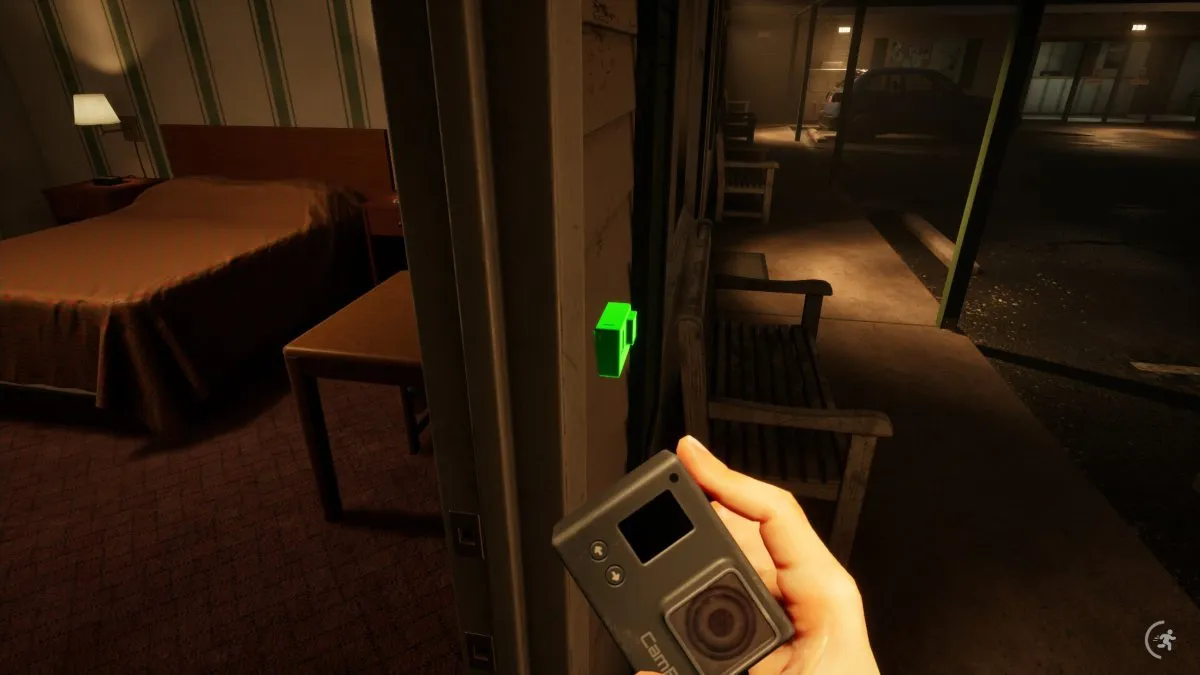
| GoCam | 40 DOS | Portable camera that can be placed on designated spots and viewed via SecCam. | Medium |
| Motion Sensor | 30 DOS | Portable sensor that detects movement, linking with Motion Alert for notifications. | Essential |
| Aid Pods | 110 DOS | Increases the range of all audio detections. | Medium |
| Signal Booster | 200 DOS | Temporarily boosts signal strength when placed in an optimal location. | High |
| Ringonome | 25 DOS | A metronome feature to assist with timing and counting. | Low (High for 1337 Mode) |
Strategic Prioritization: Early Game Investments for Survival
The initial hours of Welcome to the Game 3, typically between 9 PM and 10 PM, are critical for establishing a foundational defense against the escalating digital and physical threats. Players must strategically allocate their limited DOS Coin to acquire the most impactful items. Beyond the core triumvirate of essential applications – VirtMesh, ShadowFetch, and A.C.R.S – several DarkDrop items warrant immediate attention.

The Backdoor Hack stands out as a crucial counter-offensive tool. Its modest cost of 5 DOS Coin makes it an easily replaceable asset, especially when considering the rapid replenishment of DOS Coin through mining on a hijacked VirtMesh computer. Successfully fending off a hacker not only nullifies their intrusion but also yields a portion of their ill-gotten gains, effectively turning their aggression into a source of income. This symbiotic relationship between defense and revenue generation underscores the importance of this early acquisition.
Given the necessity of constantly rotating hijacked computers for both reconnaissance on the Dark Net and DOS Coin mining, expanding capabilities within the VirtMesh environment is a prudent investment. Acquiring upgrades like VM Mount and VM Grid is vital for maintaining a consistent flow of DOS Coin and mitigating the risk of being ejected from a compromised system. The tiered nature of these upgrades means that investing in VM Mount Tier II (40 DOS) and VM Grid Tier II (75 DOS) early on provides a significant boost to operational efficiency and resource generation. This allows for a more robust and sustainable hacking operation, which is essential for long-term survival.

Fortifying the Perimeter: Surveillance and Early Warning Systems
The introduction of physical threats, such as the notorious killers Lucas and Tanner, necessitates a proactive approach to physical security. Motion Sensors, priced at 30 DOS Coin each, are indispensable for this purpose. Players can deploy up to six of these sensors per playthrough, and their acquisition should be prioritized as early as possible. A strategic placement of two sensors – one in the alleyway behind the player’s location and another near the motel room closest to the road, angled towards the parking lot – can provide crucial early warnings of approaching adversaries. As the night progresses and DOS Coin reserves increase, acquiring additional sensors to cover all potential entry points becomes a paramount objective.

Complementing the Motion Sensors is the Motion Alert software (20 DOS). This application is the linchpin of the early warning system, providing audible and visual notifications whenever a motion sensor is triggered. Without this software, the physical sensors would be rendered largely ineffective, leaving players vulnerable to surprise encounters. The synergy between these two items creates an indispensable early detection system that can provide precious seconds to react and prepare for an incoming threat.

For players who find themselves struggling to defend against both digital and physical assailants, the Key Cue (100 DOS) and its upgraded variant, Key Cue Plus (50 DOS), offer a significant advantage in navigating the Dark Net. The basic Key Cue provides a visual indicator on the A.N.N. browser when a website contains a Key Hash, a critical element for progression and often guarded by dangerous entities. The Key Cue Plus enhances this by making the key icon glow gold when actively on a page with a Key Hash, offering an even more immediate and intuitive alert. Acquiring and upgrading this software rapidly allows players to identify and target high-value opportunities with greater speed and less risk, accelerating their progress through the game’s objectives.

The Unfolding Narrative: A Chronology of Threat and Response
The narrative of Welcome to the Game 3 unfolds in a series of escalating challenges, typically spanning several in-game nights. The initial hours (9 PM – 10 PM) are characterized by a period of relative calm, allowing players to establish their digital infrastructure and begin their cryptocurrency mining operations. This is the crucial window for acquiring essential software and hardware from the DarkDrop.

As the in-game clock progresses into the later hours (10 PM onwards), the threats begin to materialize. Hackers launch increasingly sophisticated attacks, demanding immediate attention and the use of defensive tools like the Backdoor Hack or passive measures like Firewalls. Simultaneously, the presence of physical pursuers becomes more pronounced, necessitating the strategic deployment of Motion Sensors and reliance on Motion Alerts for early detection.

The acquisition of specific items, particularly those within tiered upgrade systems, dictates the pace of player progression and their ability to withstand increasingly formidable challenges. For instance, players who fail to invest in VM Mount and VM Grid upgrades may find their DOS Coin generation stagnating, making it difficult to afford higher-tier defenses or crucial investigative tools. Conversely, those who effectively leverage the DarkDrop to build a robust digital and physical security framework are better positioned to complete objectives and survive the night.

The game’s structure implicitly creates a timeline of risk and reward. Early game focus on VirtMesh and Backdoor Hacks provides the financial and defensive foundation. Mid-game investments often shift towards enhancing surveillance (SecCam, GoCam) and improving hacker defense (higher-tier Firewalls). Late-game acquisitions might involve signal boosters or specialized tools for specific objectives, depending on player experience and in-game events.

Analysis of Implications: The Digital Arms Race
The DarkDrop system in Welcome to the Game 3 simulates a constant digital arms race. Players are not only reacting to threats but are also actively investing in offensive and defensive capabilities that shape their experience. The tiered nature of upgrades, such as the VM Grid and Firewall series, introduces a strategic layer of resource management and long-term planning. A player who consistently invests in lower-tier firewalls might find themselves overwhelmed by more potent attacks later in the game, whereas a player who saves for a higher-tier firewall might have a more secure albeit slower initial progression.

The availability of items like the DareDash, which facilitates the acquisition of illicit substances, hints at a broader, albeit fictional, underworld economy that the player is attempting to infiltrate or exploit. The game’s design suggests that understanding and manipulating these underground networks is as crucial as mastering the technical aspects of cybersecurity.

The existence of items like the Ringonome, with its peculiar utility for timing, suggests that even seemingly niche tools can have significant applications, particularly in specialized game modes like "1337 Mode." This emphasizes the depth of the game’s mechanics and the potential for emergent gameplay strategies based on the synergistic use of various DarkDrop acquisitions.

The implications of the DarkDrop extend beyond simple item acquisition. It serves as a core mechanic that directly influences player agency, forcing difficult choices between immediate defense, long-term growth, and the pursuit of critical objectives. The success or failure of a player in Welcome to the Game 3 is intrinsically linked to their ability to strategically navigate this digital marketplace and deploy their resources effectively against a relentless tide of digital and physical dangers. The game masterfully uses the DarkDrop to simulate the high-stakes environment of operating on the fringes of legality and safety, where every purchase can mean the difference between survival and demise.