


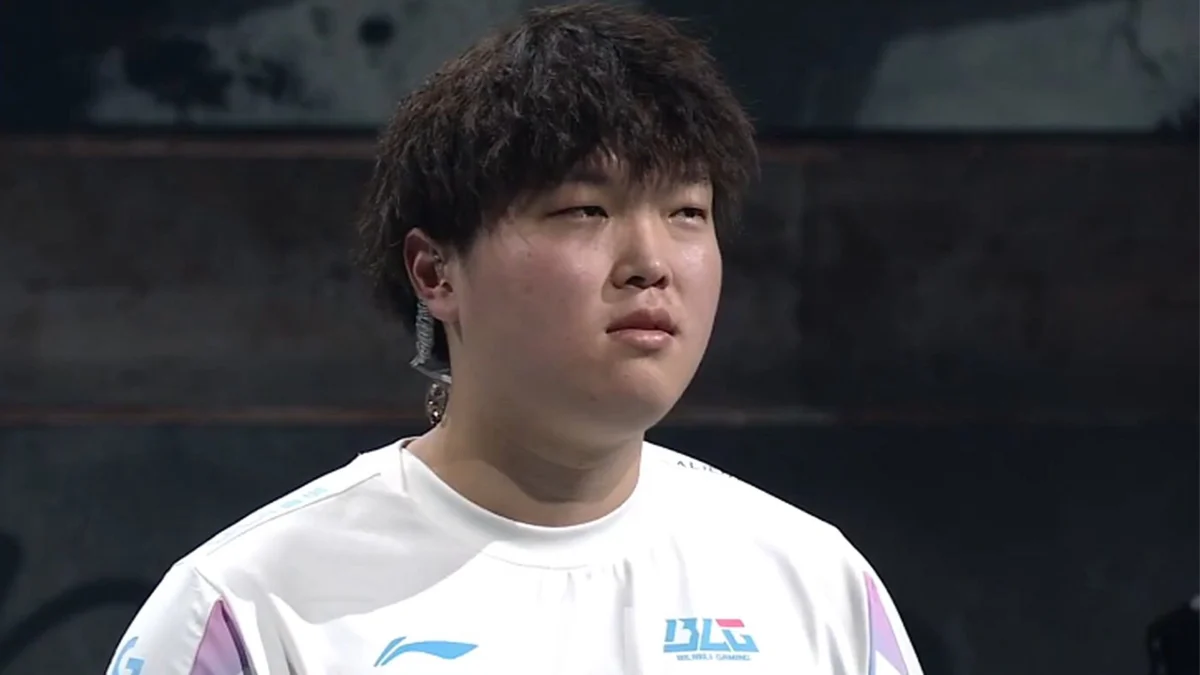
Chen "Bin" Zebin, the top laner for Bilibili Gaming (BLG), has been levied a significant fine by the League of Legends Pro League (LPL) for failing to fulfill his contractual obligation of interacting with fans, specifically by refusing to offer high-fives following his team’s decisive victory over EDward Gaming (EDG) in a recent match. The incident, which occurred on Wednesday, June 3, has sparked discussion within the esports community regarding player conduct, fan engagement, and the enforcement of league regulations.
The match itself was a dominant performance by Bilibili Gaming, who swept EDward Gaming with a commanding 3-0 scoreline. This victory underscored BLG’s strong form in the LPL season. However, the post-match proceedings became the focal point of controversy. According to an official statement released by the LPL, Bin’s failure to engage in the customary high-five ritual with fans present at the arena constituted a breach of his contractual obligations. The league’s statement elaborated that this omission "disrupted the match and negatively impacted the viewing experience and enthusiasm of the audience."
Chronology of the Incident and LPL’s Response
The LPL’s investigation into the matter commenced shortly after the conclusion of the BLG vs. EDG series. The league meticulously reviewed the events, including player conduct and pre-match management protocols. Their findings indicated that BLG’s internal management of player behavior and their oversight leading up to the day’s matches were "inadequate" and "failed to effectively fulfill its supervisory and management responsibilities." This suggests a systemic issue within the BLG organization, not solely attributable to the player’s individual actions.
Following the investigation, the LPL issued its disciplinary measures. Bilibili Gaming, as an organization, was fined a substantial ¥50,000 (approximately $7,300 USD) and received a public reprimand. Bin Zebin, the individual player at the center of the controversy, faced a more severe financial penalty of ¥150,000 (approximately $22,000 USD). In addition to the fine, Bin was also subjected to public criticism and mandated to undergo "relevant training and education." The LPL emphasized the importance of professional conduct, stating, "Players should strictly adhere to professional conduct and maintain a positive attitude both on and off the field, respecting the competition and the audience." The league also addressed the organizational aspect, urging clubs to "comprehensively improve their management mechanisms to prevent similar incidents from recurring" and expressing a hope that "all league personnel will learn from this incident, adhere to professional standards, and cherish every viewer."
Background: The Importance of Fan Interaction in Esports
In the rapidly growing landscape of professional esports, fan engagement has become an increasingly vital component of the overall experience for both players and the audience. League of Legends, with its massive global following, places a significant emphasis on the connection between players and their supporters. High-fives, autograph sessions, and post-match interviews are not merely optional gestures but are often integrated into player contracts and league regulations as a means to foster a positive and interactive environment. These interactions serve several purposes:
- Building Fan Loyalty: Direct engagement helps fans feel a personal connection to their favorite players and teams, fostering deeper loyalty and support.
- Enhancing the Spectacle: The visual and physical interaction between players and fans adds to the excitement and atmosphere of live esports events.
- Promoting the League: Positive fan experiences contribute to the overall perception and appeal of the league, attracting new viewers and sponsors.
- Professionalism and Representation: Player conduct on and off the stage reflects on the entire league, and adherence to established protocols is seen as a mark of professionalism.
The LPL’s stringent enforcement of these fan interaction clauses highlights the league’s commitment to maintaining high standards of player conduct and fan experience. The specific mention of "contractual obligations" indicates that this was not an arbitrary rule but a formalized requirement for players like Bin.

Analysis of the Penalties and Fan Reactions
The financial penalties imposed on both BLG and Bin are noteworthy. A ¥150,000 fine for an individual player is a significant sum, reflecting the LPL’s stance on the seriousness of the infraction. The additional ¥50,000 fine for the club points to a broader accountability for organizational oversight.
Fan reactions to the news have been varied, illustrating the diverse perspectives within the esports community. Some fans expressed disbelief, viewing the penalty as disproportionate for what might seem like a minor oversight. Comments on social media platforms like X (formerly Twitter) included sentiments such as, "This is a prank, right?" indicating surprise at the severity of the punishment.
Others, however, defended the LPL’s decision, emphasizing that Bin’s actions constituted a failure to meet a clear contractual obligation. One fan pointed out, "He didn’t high-five the VIP ticket section where you’re supposed to give high-fives. VIP is probably hella expensive, and fans paid extra for that interaction." This comment suggests that the high-five in question might have been specifically designated for premium ticket holders, adding another layer of expectation and potential disappointment for those who paid for an enhanced experience. This perspective underscores the idea that fan interaction is not just a courtesy but can be part of a purchased experience.
The debate also touches upon the inherent pressures and expectations placed on professional athletes, including esports players. While their primary role is to perform at a high level in their respective games, their public personas and interactions with fans are also critical aspects of their careers and the league’s brand.
Broader Implications for the LPL and Esports
This incident carries several broader implications for the LPL and the wider esports industry:
- Reinforcement of Professional Standards: The LPL’s decisive action serves as a clear message to all players and organizations within the league that adherence to contractual obligations and professional conduct is paramount. This can help prevent future incidents and maintain the integrity of the league.
- Importance of Player Education and Management: The LPL’s critique of BLG’s management highlights the crucial role of team organizations in educating their players on league rules, professional etiquette, and the importance of fan engagement. Effective management can mitigate risks and ensure compliance.
- Balancing Player Well-being and Fan Expectations: While fan interaction is important, leagues and teams must also consider player well-being. The LPL’s call for "training and education" for Bin could potentially address any underlying issues that contributed to his actions, whether it be fatigue, stress, or a lack of understanding.
- The Evolving Nature of Esports Professionalism: As esports mature, the definition of professionalism expands beyond in-game performance to encompass public relations, media interaction, and community engagement. Incidents like this highlight the ongoing development of these standards.
- Financial Accountability: The substantial fines serve as a deterrent and demonstrate that the LPL is willing to impose significant financial consequences for breaches of conduct, both for individual players and their parent organizations.
As of the reporting of this incident, neither Bin Zebin nor Bilibili Gaming have issued a public statement addressing the fine. The league’s clear articulation of the infraction and its disciplinary measures, however, leaves little room for ambiguity regarding the expectation of player conduct within the LPL. The outcome of this situation will likely be closely observed by other major esports leagues as they continue to navigate the complex relationship between player performance, fan engagement, and professional accountability.