


The 2026 Microsoft Rewards Overhaul: A Strategic Shift
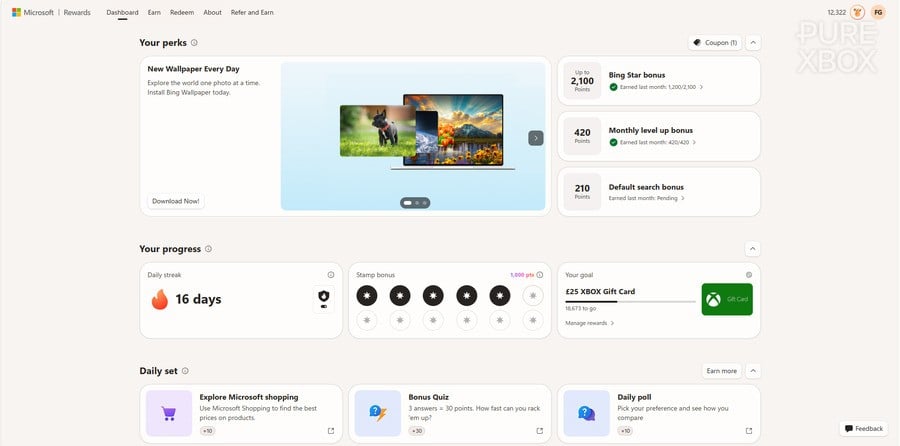
In May 2026, Microsoft initiated a comprehensive restructuring of the Rewards program, transitioning from the long-standing Level 1 and Level 2 system to a tiered "Silver" and "Gold" membership model. This change, which began rolling out across European and Asian markets before reaching North American users in July 2026, represents a shift in how the tech giant incentivizes user engagement across its software suite. Under the new Gold status, users gain access to consolidated search bonuses and enhanced multipliers for Xbox-related activities.
The primary objective of this overhaul appears to be the integration of "natural search behavior." Microsoft has moved away from rewarding rapid-fire queries, instead utilizing AI-driven metrics to reward consistent, genuine interaction with the Bing search engine and the Xbox dashboard. For users, this means that while the total point ceiling has lowered compared to the 2020-2023 era, the methods for accumulation have become more streamlined within the mobile and console applications.
Daily Accumulation Protocols
The foundation of a high-yield Microsoft Rewards strategy rests on daily consistency. Under the 2026 guidelines, the daily task list is divided between web-based activities and console-specific engagement.
Bing Search Integration and Visual Search
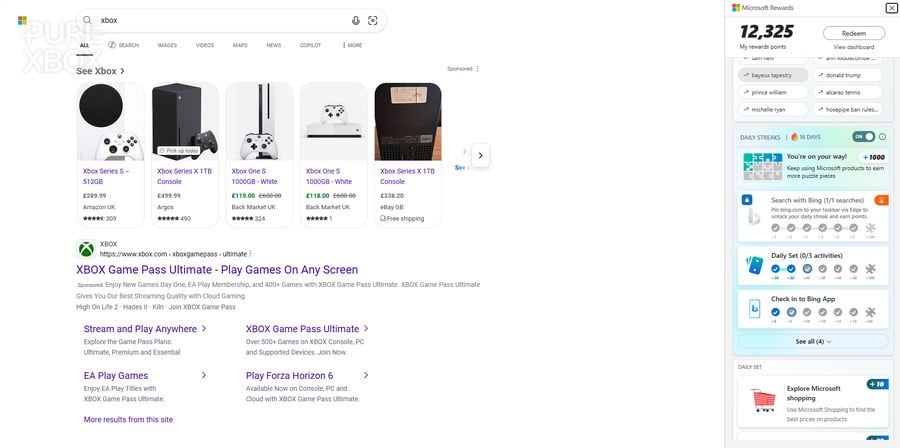
Once a user achieves Gold status, they are eligible for up to 60 points daily through Microsoft Bing searches. Unlike previous years where mobile and PC searches were tracked via separate pools, the 2026 system utilizes a unified counter across all logged-in devices. Supplementing these basic searches is the "Explore on Bing" section, which provides 10 points for specific curated queries.
A notable addition to the daily routine is the "Visual Search" requirement. By utilizing the Bing Camera interface—either via a mobile device or by uploading images on a PC—users can secure a reliable 5 points daily, with randomized "bonus strikes" occasionally awarding 100 points. This encourages the use of Microsoft’s proprietary image-recognition technology, a key area of competition against rival platforms.
The "Read to Earn" and Mobile Check-In Features
The Microsoft Bing mobile app has become an essential tool for point maximization. The "Read to Earn" feature rewards users with 3 points per news article read, capped at 30 points daily. To prevent automated farming, the system requires users to scroll to the bottom of the article to trigger the credit. Furthermore, the "Daily Check-In" and "Search 3 Times" features provide a weekly trajectory of points, often totaling 200 points per week for users who maintain a seven-day streak.
The Xbox Game Pass Synergy
The integration between Microsoft Rewards and Xbox Game Pass remains the most lucrative avenue for gamers. However, the 2026 system introduces a significant disparity based on subscription tiers.
Tiered Daily Play Rewards
Users subscribed to Xbox Game Pass Ultimate receive the highest daily yields. Playing any title within the Ultimate library for a minimum of 15 minutes awards 20 points per day. In contrast, those on the "Essential" or "Premium" tiers see these rewards halved or restricted to 10 points. Over a 30-day month, this single activity accounts for a 600-point difference between the highest and lowest subscription tiers.
Xbox App Bonuses
The Xbox mobile and PC apps offer additional daily quests, such as playing the "Jewel" mini-game or launching a PC-based title. Following a policy adjustment in late 2025, Ultimate members can earn up to 50 points daily through these app-based tasks, while Essential members are capped at 25. This tiered approach reinforces the value proposition of the higher-cost Ultimate subscription.
Weekly and Monthly Milestones
While daily tasks provide a steady trickle of points, the bulk of the 10,000-point monthly goal is achieved through weekly bonuses and monthly "Punch Cards."
Console and PC Loyalty Bonuses
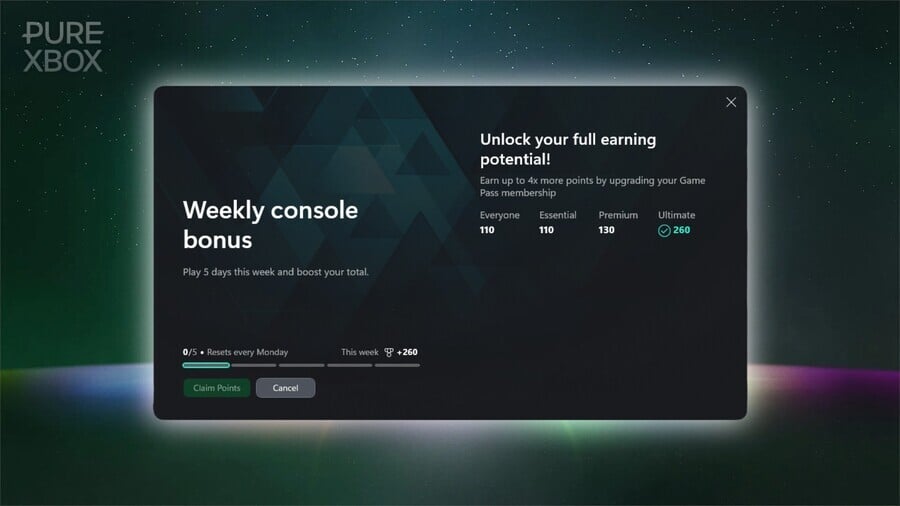
The "Weekly Console Bonus" rewards players for engaging with their hardware for five consecutive days. In 2026, Microsoft buffed these rewards for Ultimate members, allowing them to earn up to 260 points per week. A parallel "Weekly PC Bonus" exists for those utilizing the Xbox app on Windows, potentially netting an additional 1,000 points per month.
Monthly Game Pass "Packs"
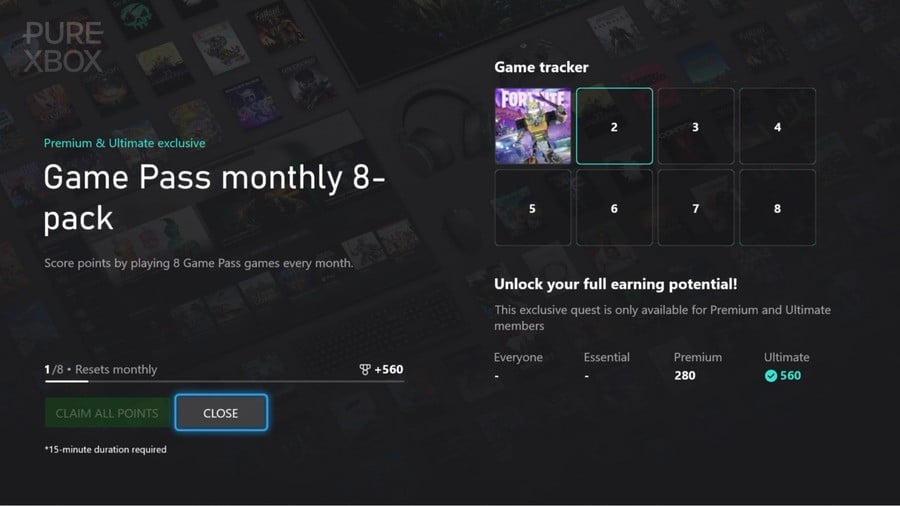
Monthly tasks are designed to encourage library diversification. The "Game Pass Monthly 8-Pack" requires users to play eight different titles for at least 15 minutes each throughout the month. For an Ultimate subscriber, completing this task yields 560 points. There is also a "Multi-Platform" bonus of 150 points for users who log playtime across console, PC, and Xbox Cloud Gaming within a single 30-day window.
Chronology of Program Evolution (2023–2026)
To understand the current state of the program, one must look at the timeline of adjustments made by Microsoft:
- Late 2023: Microsoft introduced "search cooldowns," limiting how quickly users could earn points from consecutive searches to combat botting.
- Early 2024: Significant "nerfs" were applied to the Xbox Rewards app on consoles, removing high-value weekly streaks that previously allowed for 20,000+ points per month.
- October 2025: A rebalancing of points occurred, increasing rewards for Game Pass Ultimate members while decreasing them for non-subscribers.
- May 2026: The global rollout of the Silver/Gold membership system began, replacing the legacy Level 1/2 structure and consolidating search point pools.
Economic Impact and User Implications
The transition of Microsoft Rewards from a high-yield "side hustle" for gamers to a structured engagement tool has broader implications for the gaming industry. By offering approximately $120 in annual credit, Microsoft effectively offsets the cost of a Game Pass subscription or provides enough credit for two full-priced "AAA" game releases per year.
Industry analysts suggest that this program is a key factor in Xbox’s high user retention rates. Unlike Sony’s "PlayStation Stars," which focuses heavily on digital collectibles and specific purchase-based challenges, Microsoft Rewards remains more accessible to "free-to-play" users who are willing to invest time rather than capital. However, the 2026 shift toward tiered rewards suggests that Microsoft is increasingly using the program as a "lock-in" mechanism for its Ultimate subscription tier.
Broader Context: The Role of Bing in the Rewards Ecosystem
It is important to note that Microsoft Rewards is not merely a gaming program; it is a data and search engine market share strategy. By tying Xbox credits to Bing searches and "Visual Search" tasks, Microsoft ensures a consistent daily active user base for its search products. This helps the company maintain a competitive edge in the advertising market, as the Rewards program provides a controlled environment of logged-in users whose preferences and behaviors can be analyzed with high precision.
The introduction of the "Bing Star Bonus" in 2026—a randomized monthly reward for "natural" interaction—further underscores this. By moving away from predictable point values, Microsoft discourages "check-list" behavior and encourages users to adopt Bing as their primary search tool for daily needs.
Conclusion and Future Outlook
For the modern Xbox user, achieving 10,000 Microsoft Rewards points per month is an attainable goal, provided they are willing to integrate the Bing and Xbox ecosystems into their daily routine. While the era of 20,000-point monthly hauls has largely passed, the current system offers a more stable, albeit tiered, experience. As the Silver and Gold system continues to roll out globally through the remainder of 2026, users should expect further refinements aimed at mobile app engagement and cloud gaming participation. The program remains a unique facet of the gaming world, turning digital engagement into tangible purchasing power in an increasingly expensive hobby.