


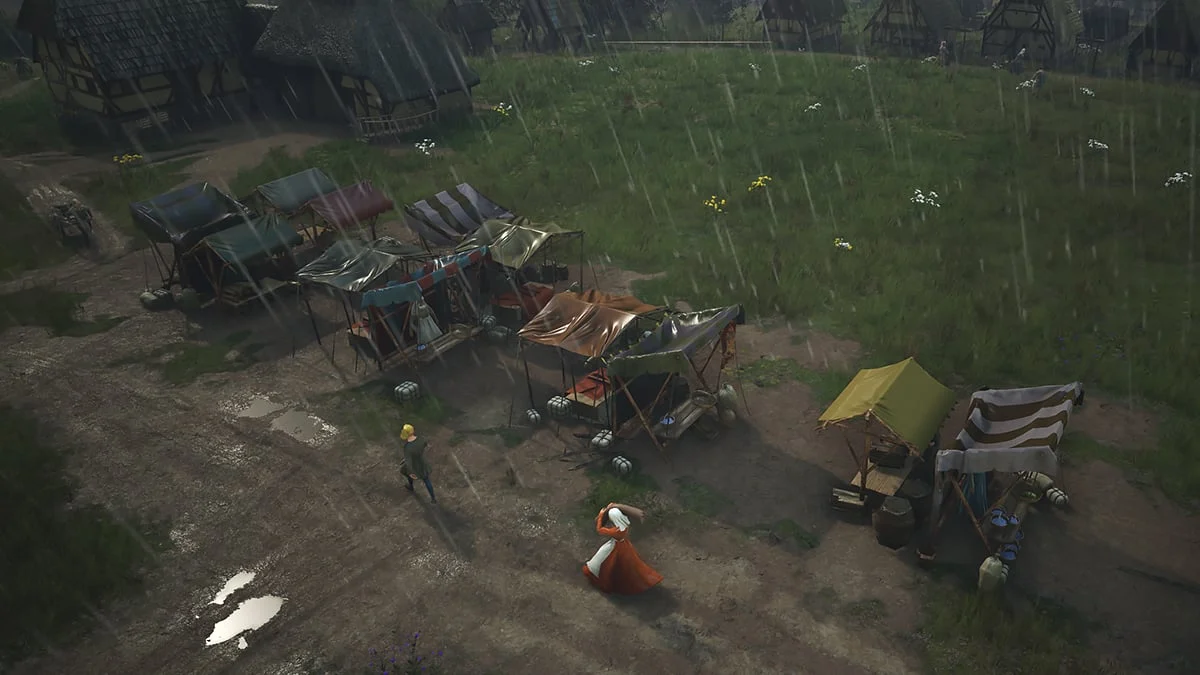
The burgeoning world of Manor Lords, a critically acclaimed medieval city-builder and real-time strategy game, presents players with a richly detailed and challenging simulation of early medieval settlement management. While its realistic mechanics and stunning visuals have garnered widespread praise, one persistent element continues to puzzle and, at times, frustrate aspiring lords: the enigmatic persistence of discarded resources. Piles of timber, stone, and other vital supplies frequently remain scattered across the landscape after a building is demolished or a resource-gathering operation moves on, creating both visual clutter and significant logistical hurdles. These seemingly innocuous heaps of materials are not merely an aesthetic concern; if left unattended, they are susceptible to decay from the elements, rendering them useless, and critically, they can impede the construction of new buildings, stalling development and disrupting the carefully laid plans of a growing town.
This phenomenon is particularly vexing given the game’s emphasis on intricate supply chains and efficient labor. Players often find themselves observing abandoned logs or building materials, seemingly overlooked by their diligent villagers, even when a well-stocked storehouse or granary is within easy reach and a contingent of idle workers stands ready. The disjunction between available resources, storage capacity, and worker readiness to transport these items creates a perplexing gameplay loop that demands specific, often counter-intuitive, management strategies. Understanding the underlying mechanics and implementing targeted interventions is crucial for maintaining order, accelerating construction, and ensuring the long-term prosperity of one’s settlement.
The Challenge of Resource Persistence: A Deep Dive into Game Mechanics
Manor Lords, developed by the solo creator Slavic Magic and published by Hooded Horse, prides itself on a degree of historical realism and a complex simulation engine. This depth extends to its resource management, where materials are not abstract numbers but physical entities moved by villagers and oxen. The lingering presence of discarded goods is a direct consequence of this design philosophy, combined with the game’s worker AI prioritization. Villagers, by design, are not simply cleanup crews; they prioritize tasks based on a hierarchy that often favors production, construction, and fulfilling immediate needs over the general tidying of the landscape.
When a building is demolished, its constituent materials are "returned" to the game world as physical piles. Similarly, when logging camps or foraging huts operate, resources like timber or berries are initially deposited on the ground before being transported. The game’s system expects these items to be moved to designated storage buildings – Storehouses for general goods, Granaries for food items, and Logging Camps for timber. However, several factors can prevent this smooth transfer. Pathfinding inefficiencies, the sheer distance between the scattered resources and storage facilities, the limited number of available transport animals (oxen), and the prioritization of other, seemingly more urgent tasks by the village’s workforce can all contribute to items being left exposed.
The "exposed goods" warning icon, which occasionally appears at the top of the screen, serves as a vital indicator of this issue. It signals that valuable resources are at risk of deteriorating due to weather exposure, representing a tangible loss to the player’s economy if not addressed promptly. This decay mechanism adds a layer of urgency to resource management, transforming what might seem like a minor aesthetic inconvenience into a critical strategic challenge. The developer’s intent here appears to be to force players into active management rather than relying on an automated, invisible cleanup process, thus integrating logistical challenges more deeply into the core gameplay loop.
Optimizing Supply Chain Logistics: Strategies for General Goods
Addressing the issue of scattered general supplies, such as timber, stone, planks, or leather, requires a multi-pronged approach that blends strategic planning with tactical micro-management. While patience is occasionally a virtue in Manor Lords, simply waiting for villagers to eventually clear the mess is rarely the most efficient or sustainable solution, especially when construction projects are stalled.
Initial Steps: The Foundation of Efficiency
The first line of defense against resource clutter lies in optimizing the fundamental elements of your supply chain:
-
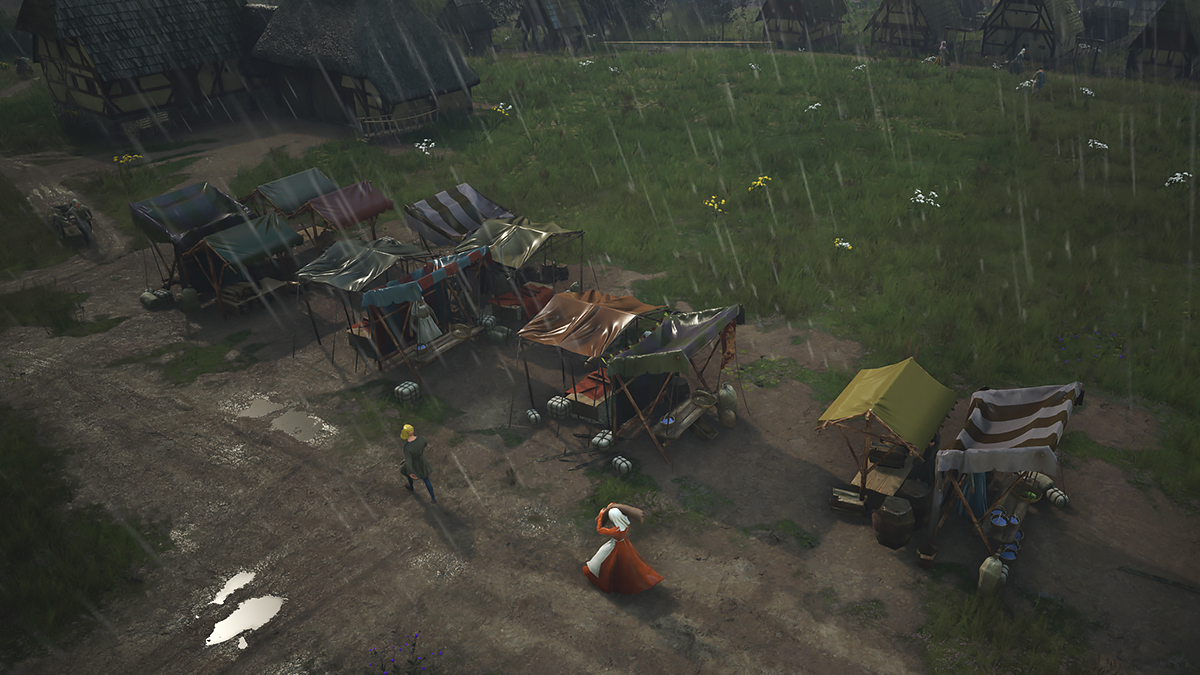
Worker Allocation to Storage: The most straightforward, yet often underestimated, solution is to ensure an adequate number of villagers are assigned to your Storehouses and Granaries. These workers are the dedicated transporters of goods. A single worker in a large, spread-out village will struggle to keep up with the demands of collecting and storing scattered items, alongside their regular duties of distributing goods to markets and processing facilities. Increasing the workforce in these key buildings directly translates to more hands available for moving items, including those left on the ground. It is advisable to have at least two to three workers in your primary Storehouses and Granaries, especially during periods of high construction or demolition activity. This also ensures that oxen, critical for moving heavy loads like timber, are more readily available for transport tasks.
-
Infrastructure: The Role of Roads: Manor Lords simulates travel time and distance. Villagers move significantly faster on established roads than over open terrain. Therefore, a well-planned road network is paramount. Ensure that the areas where supplies are frequently abandoned – such as demolition sites, resource extraction zones, or newly cleared plots – are directly connected by roads to your storage facilities. The initial investment in roads pays dividends in vastly improved transport efficiency, not just for cleanup but for the entire economic flow of your town. This reduces the time villagers spend walking, allowing them to complete more tasks, including collecting exposed goods, in a given day.
-
Strategic Storage Placement: Proactive placement of storage buildings can significantly mitigate future cleanup headaches. When planning new districts or large construction projects, consider situating Storehouses and Granaries centrally or strategically close to where resources will be generated or demolished. For instance, if you anticipate demolishing several early burgage plots to make way for a larger development, having a Storehouse nearby will dramatically shorten the distance villagers need to travel to collect the salvaged materials. This foresight can prevent large accumulations of exposed goods in the first place.
Targeted Intervention: Leveraging "Limit Work Area"
For stubborn piles of supplies that persist despite optimized worker allocation and infrastructure, Manor Lords provides a powerful micro-management tool: the "Limit Work Area" function. This feature allows players to temporarily override the default AI priorities and direct workers to focus exclusively on a specific geographical zone.
To utilize this for general supplies:
- Select the relevant Storehouse or Granary.
- Click on the "Limit Work Area" button (often represented by a circular icon or a similar designation).
- A green overlay will appear, allowing you to define a specific area on the map. Drag and resize this area to encompass the precise location of the exposed goods you wish to clear.
- Workers assigned to that storage building will then prioritize collecting items only within that defined zone, ignoring other potential tasks or scattered resources outside it.
This technique is exceptionally effective for quickly clearing specific problem areas that are impeding construction. However, it is a tactical intervention, not a permanent solution. Once the targeted area is clear, it is crucial to return to the storage building’s interface and select "Clear Work Area" (or a similar button) to allow your workers to resume their normal duties and collect resources from across the entire settlement. Forgetting this step can lead to other areas of your town becoming neglected as workers remain confined to a now-empty zone.
Managing Timber: Specific Tactics for Logs
Logs, as a foundational resource for almost all construction and industry in Manor Lords, have their own dedicated storage and transport mechanics. Unlike other general supplies, logs are primarily stored in Logging Camps and Woodcutter’s Lodges, not Storehouses. This distinction necessitates a slightly different set of strategies for managing scattered timber.
Logging Camps as Dedicated Hubs
Logging Camps are essential for processing and storing timber. When trees are felled, logs are initially left on the ground. Workers from Logging Camps, often assisted by oxen, are responsible for transporting these logs back to the camp for storage or to sawmills for processing into planks.
Targeted Timber Collection
Similar to general supplies, the "Limit Work Area" function is equally vital for Logging Camps. If a large pile of logs is preventing construction or simply cluttering an important area, you can direct your loggers to focus on that specific spot:
- Select the Logging Camp.
- Activate "Limit Work Area."
- Define the area around the abandoned logs.
- Your loggers will then prioritize collecting these logs, ensuring they are moved to the camp. Remember to clear the work area once the task is complete.
Dynamic Worker Reassignment and Oxen Management
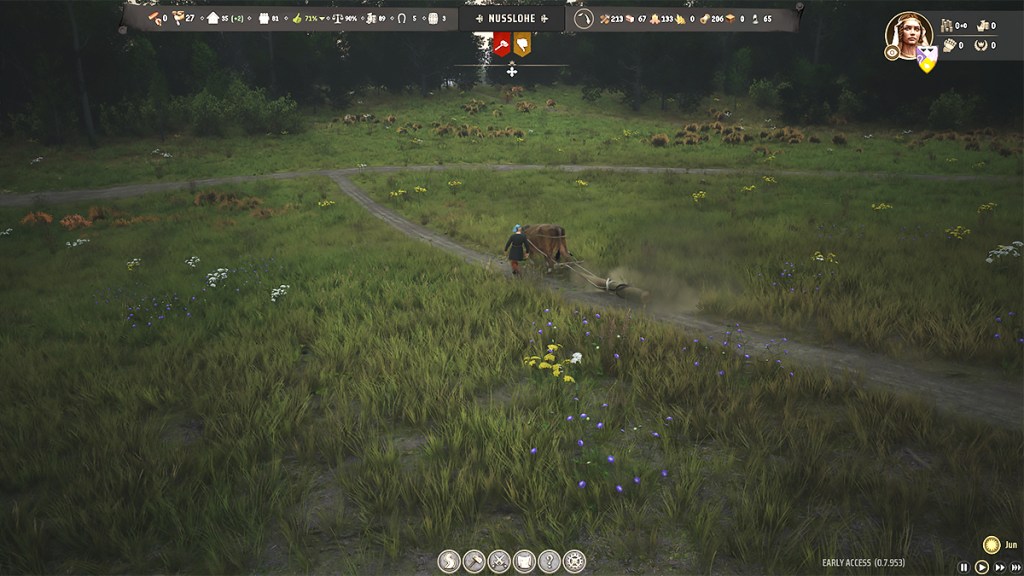
The movement of logs is heavily reliant on oxen, which are the only animals capable of hauling multiple logs at once. If your loggers are busy felling new trees or transporting logs from active forestry zones, they may not prioritize scattered logs from a demolition site. Here, a more dynamic approach is required:
-
Un-assigning Workers: A surprisingly effective tactic is to temporarily un-assign all workers from an existing Logging Camp. This action has two immediate effects:
- It frees up any oxen associated with that camp, making them available for general transport tasks.
- The now idle villagers, previously assigned to logging, often re-prioritize and begin picking up scattered logs and moving them to the nearest available Logging Camp or even a construction site if needed. This effectively turns them into temporary cleanup crew. Once the logs are cleared, you can re-assign them to their original duties.
-
Building Temporary Logging Camps: For particularly large or isolated piles of logs, especially those far from your main Logging Camps, consider building a new, temporary Logging Camp closer to the problem area. While this incurs a small resource cost (timber and potentially planks), the proximity drastically reduces travel time for workers and oxen, leading to a much faster cleanup. Once the logs are cleared, you can demolish the temporary camp, reclaiming some of the resources. This is particularly useful when clearing a large area for a new district or farming field.
The availability and efficient management of oxen are central to timber logistics. Ensure you have enough oxen for your logging operations and other heavy transport needs. Acquiring more oxen from the trading post can significantly boost your overall logistical capacity, reducing bottlenecks in resource movement.
Proactive Planning: Minimizing Future Clutter
While reactive strategies are essential for addressing existing clutter, proactive planning is key to minimizing the problem in the long run and fostering a truly efficient medieval town.
Demolition Strategies: Before demolishing any structure, especially larger ones like Burgage Plots or workshops, consider the resources that will be yielded. If you anticipate a significant amount of salvageable material, ensure your storage facilities are adequately staffed and positioned, or prepare to use the "Limit Work Area" function immediately after demolition. Planning your demolitions during periods of lower construction activity can also free up workers for cleanup.
Optimized Resource Production Zones: Think critically about where you establish resource production buildings. Placing a Forester’s Hut and a Logging Camp in close proximity to a Sawmill, for example, creates an efficient timber processing hub that minimizes the distance logs need to travel and reduces the likelihood of them being left scattered. Similarly, placing granaries near farms and hunting camps helps manage food resources efficiently.
Seasonal Considerations: Manor Lords incorporates a dynamic weather system. During harsh winters, villagers move slower, and extreme weather can accelerate resource decay. Planning major demolition or reorganization projects during milder seasons can prevent resources from being lost to the elements while workers struggle with reduced efficiency.
Balancing Economy and Aesthetics: Beyond mere functionality, an uncluttered town contributes significantly to its visual appeal and the player’s immersion. Efficient resource management is not just about raw economic output; it’s also about creating a well-ordered, thriving settlement that reflects careful planning and effective leadership. The satisfaction of seeing a clean, organized town where resources flow smoothly is a reward in itself.
Developer’s Perspective and Community Response
Manor Lords is currently in Early Access, a development stage where player feedback is invaluable. The intricate, sometimes challenging, resource management system, including the persistence of discarded goods, is a frequent topic of discussion within the game’s vibrant community forums and social media channels. Players actively share tips, lament shared frustrations, and collectively seek optimal strategies, much like the ones outlined here.

From a developer’s standpoint, the current system likely represents a deliberate balance between simulating a believable medieval economy and providing a manageable gameplay experience. The "quirks" of worker AI and resource persistence add to the game’s depth, forcing players to think critically about logistics rather than relying on an invisible, automated cleanup service. This aligns with the game’s broader design philosophy of presenting genuine challenges that require strategic solutions. However, as an Early Access title, it is reasonable to infer that the developer, Slavic Magic, is continuously monitoring player experiences. Future updates may introduce refinements to worker AI, potentially adding dedicated "cleanup" tasks, or providing more intuitive tools for managing scattered resources, especially if community feedback consistently points to this as a major pain point that detracts from the overall experience rather than enhancing it. Such adjustments would be a natural evolution for a game in active development, aiming to strike the optimal balance between realism, challenge, and player enjoyment.
Broader Implications for Town Development
Mastering the art of clearing discarded supplies and logs transcends mere tidiness; it has profound implications for the overall development trajectory and efficiency of your Manor Lords settlement.
Firstly, preventing resource decay has a direct economic benefit. Every log or stone lost to the weather is a material that needs to be re-gathered or re-produced, representing a drain on labor and time. By efficiently clearing exposed goods, players conserve valuable resources, which can then be immediately channeled into construction, trade, or military endeavors, accelerating the town’s growth.
Secondly, a clear construction site is a fast construction site. Obstructions from abandoned materials can literally halt building projects, leading to wasted worker time and delayed expansion. The ability to quickly clear a plot ensures that new burgage plots, workshops, or defensive structures can be erected without unnecessary delays, allowing for smoother and more predictable growth.
Finally, effective resource management is a core skill for any successful lord in Manor Lords. It teaches players to think proactively about logistics, worker prioritization, and spatial planning. It transforms what initially appears as a frustrating oversight into an engaging puzzle to solve, deepening the strategic layer of the game. The satisfaction derived from efficiently organizing a bustling medieval town, where every resource has its place and every worker contributes effectively, is central to the game’s appeal.
In conclusion, while the sight of lingering piles of resources in Manor Lords can be a source of momentary exasperation, it is a challenge that is entirely surmountable with the right knowledge and application of specific in-game mechanics. By strategically allocating workers, optimizing road networks, judiciously placing storage facilities, and leveraging the "Limit Work Area" function for both general supplies and timber, players can effectively manage and clear abandoned goods. These strategies not only resolve immediate logistical bottlenecks but also contribute to a more efficient, prosperous, and aesthetically pleasing medieval settlement, proving that even the smallest details of resource management are crucial for building a formidable manor. The ongoing evolution of Manor Lords promises continued refinement, but for now, the diligent lord who masters these cleanup tactics will undoubtedly see their domain flourish.