


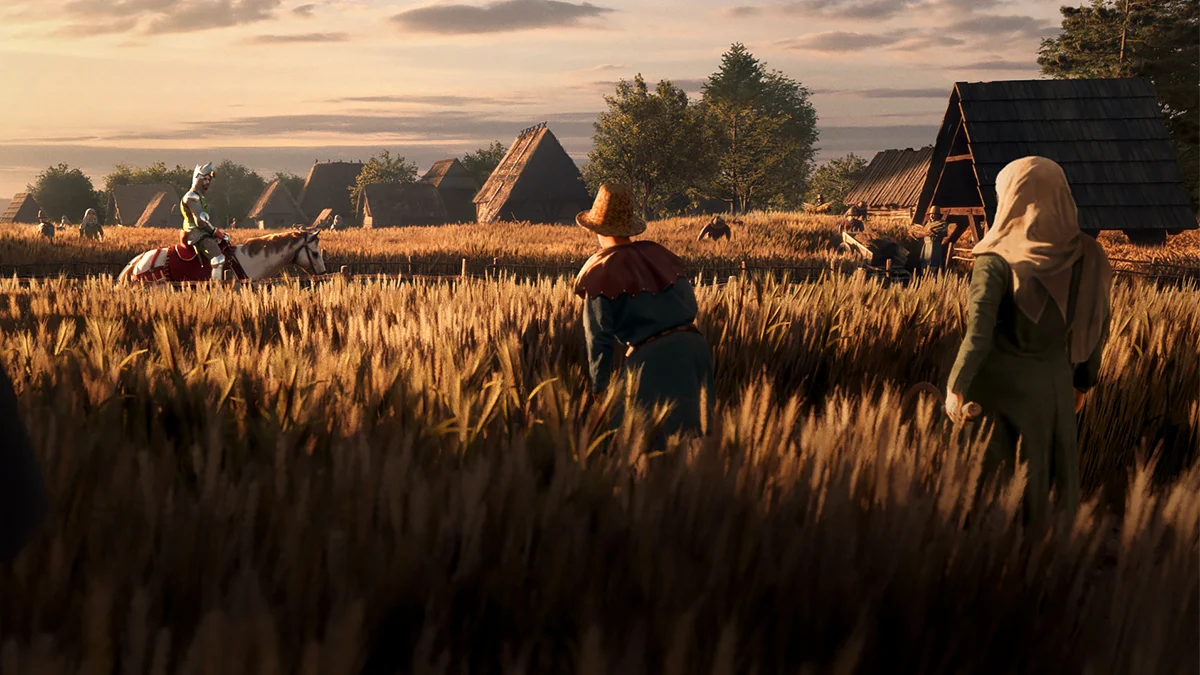
Farming is one of the most critical activities players will want to prioritize immediately in Manor Lords, forming the foundational backbone of any burgeoning medieval settlement. It provides the essential food source for digital villagers, ensuring their survival through harsh seasons, and fuels their leisure activities through the production of ale. The strategic management of agricultural resources directly correlates with a settlement’s stability, population growth, and overall economic prosperity, making it a cornerstone of successful regional development in the game’s meticulously crafted medieval simulation.
The Early Harvest: Prioritizing Survival with Wheat (Emmer)
In the initial stages of Manor Lords, the primary objective is to establish a sustainable food supply to prevent starvation, especially during the unforgiving winter months. Wheat, known in the game as Emmer, stands as the most crucial crop for this early survival. Its direct conversion into flour and then bread provides the staple diet for the townsfolk. A well-planned agricultural strategy from the outset can dictate whether a nascent settlement endures its first few winters or succumbs to famine.
The seasonal cycle in Manor Lords plays a pivotal role in farming operations. Winter offers no harvest, making it imperative for players to accumulate a significant surplus of grain by the end of autumn. This necessitates not only planting sufficient wheat fields but also constructing the necessary processing infrastructure: a Windmill to convert raw wheat into flour and a Communal Oven (or later, a Bakery) to transform flour into edible bread. Without these critical links in the food chain, even abundant harvests can spoil or remain unusable. Successful early game farming, therefore, requires a holistic approach, encompassing cultivation, processing, and storage.
Once the immediate threat of food scarcity is mitigated and a reliable stock of wheat and bread is secured, players can diversify their agricultural efforts. The next logical step often involves cultivating Barley, which is essential for producing ale. Ale serves not only as a morale booster for villagers but also as a crucial trade commodity, contributing to the settlement’s regional wealth and providing opportunities for further expansion.
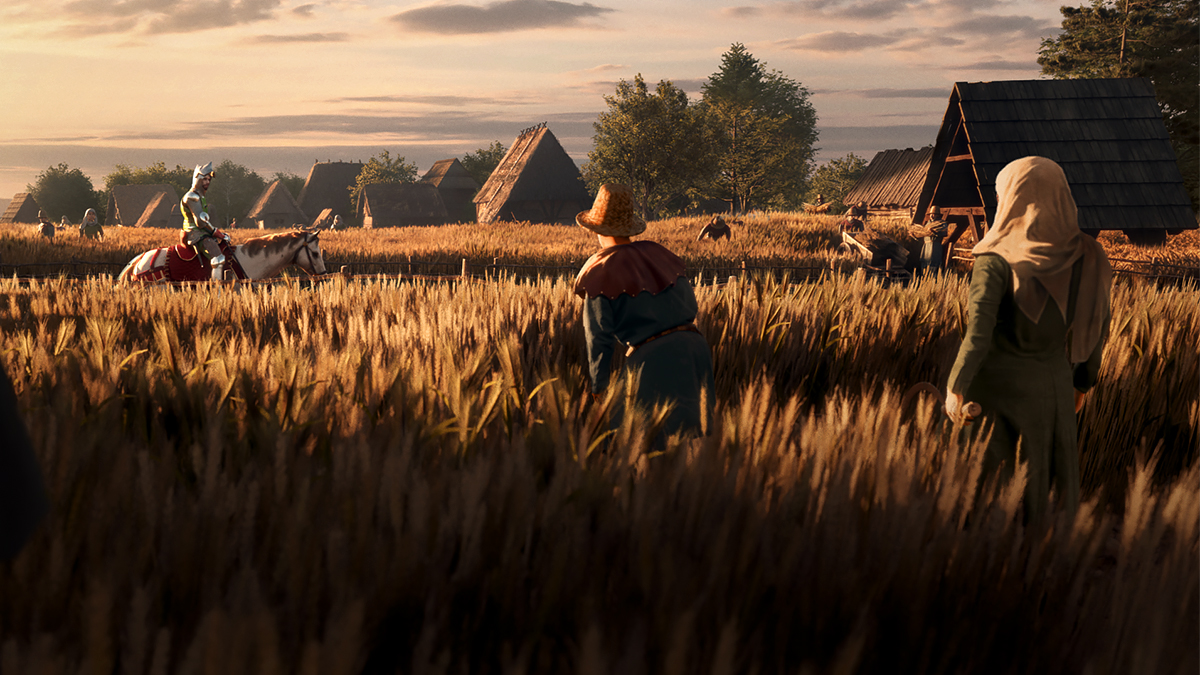
Beyond Sustenance: Brewing Ale and Cultivating Resources
Manor Lords offers four primary crop types, each serving distinct purposes beyond basic sustenance:
- Emmer (Wheat): The most vital food crop, processed into flour and then bread. Its early cultivation is non-negotiable for survival.
- Barley: The primary ingredient for brewing ale, a significant morale booster and trade good. Requires a Malt House and Brewery for processing.
- Flax: Cultivated for its fibers, which are processed into Linen at a Weaver Workshop. Linen is used for clothing, improving villager satisfaction and opening up textile trade opportunities.
- Rye: A more resilient grain than wheat, capable of growing in less fertile soil and offering higher yields in certain conditions. It can also be milled into flour for bread, providing a valuable alternative or supplement to wheat production, especially in challenging terrains.
The strategic choice of which crops to grow and where to plant them is paramount. While wheat ensures survival, barley fuels recreation and trade, and flax contributes to higher living standards and diverse economic output. Rye offers a robust alternative, particularly in regions with limited optimal wheat fertility.
Understanding the Land: Fertility and Crop Selection
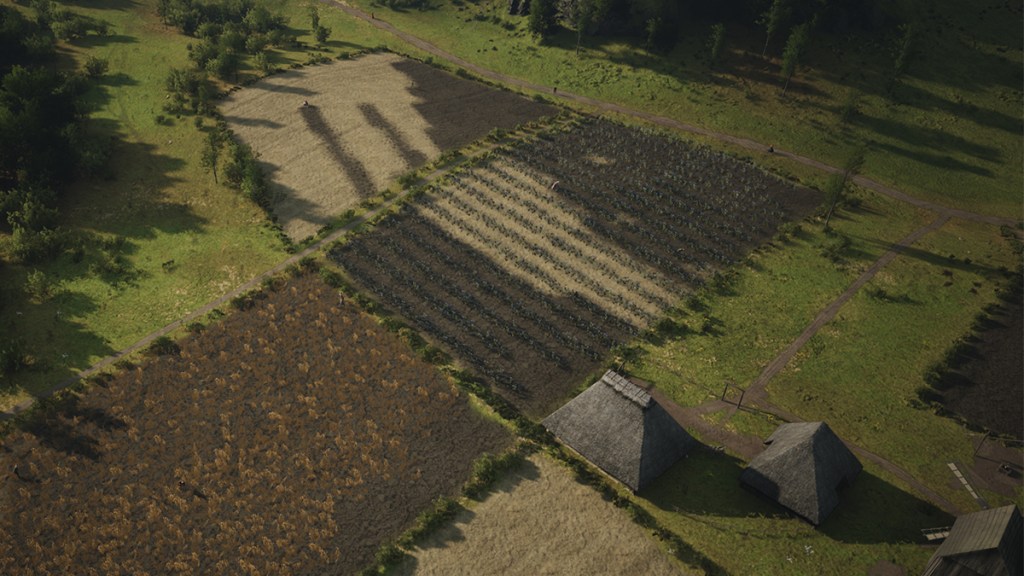
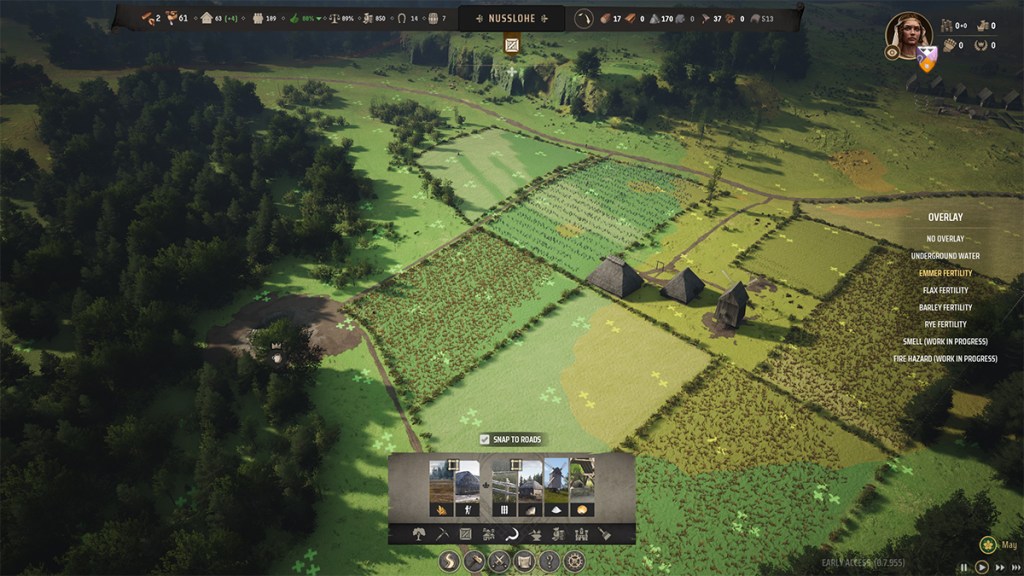
One of Manor Lords’ sophisticated mechanics is its detailed land fertility system. Before laying out fields, players must consult the game’s fertility overlay, accessed via the Farming tab in the Construction menu. This feature reveals the suitability of the land for each specific crop type.
Upon selecting a crop (Emmer, Flax, Barley, or Rye Fertility), the map transforms into a color-coded indicator. Bright green signifies highly fertile land, promising optimal yields, while shades of orange and red denote poor fertility, which should generally be avoided for that particular crop. This visual guide is indispensable for maximizing agricultural output and preventing wasted labor on unproductive fields.
A common point of confusion for new players often arises with the "Emmer Fertility" indicator. Many anticipate a separate "Wheat Fertility" option, leading to speculation about late-game crop introductions. However, Emmer is simply an archaic term for a type of wheat, specifically an ancient hulled wheat species. This historical detail, while perhaps initially perplexing due to inconsistent terminology, serves as a subtle nod to the game’s commitment to historical authenticity, even if it adds a minor learning curve for players. Understanding that Emmer is Wheat is key to correctly identifying optimal planting zones for the staple food crop.
The Cycle of Growth: Crop Rotation and Soil Management
Maintaining soil health is as critical as planting itself. Manor Lords accurately simulates the medieval understanding of agricultural sustainability by introducing soil fertility degradation. Repeatedly growing the same crop on a plot of land will deplete its nutrients, leading to diminishing returns over time. To counteract this, implementing a robust crop rotation system is essential.
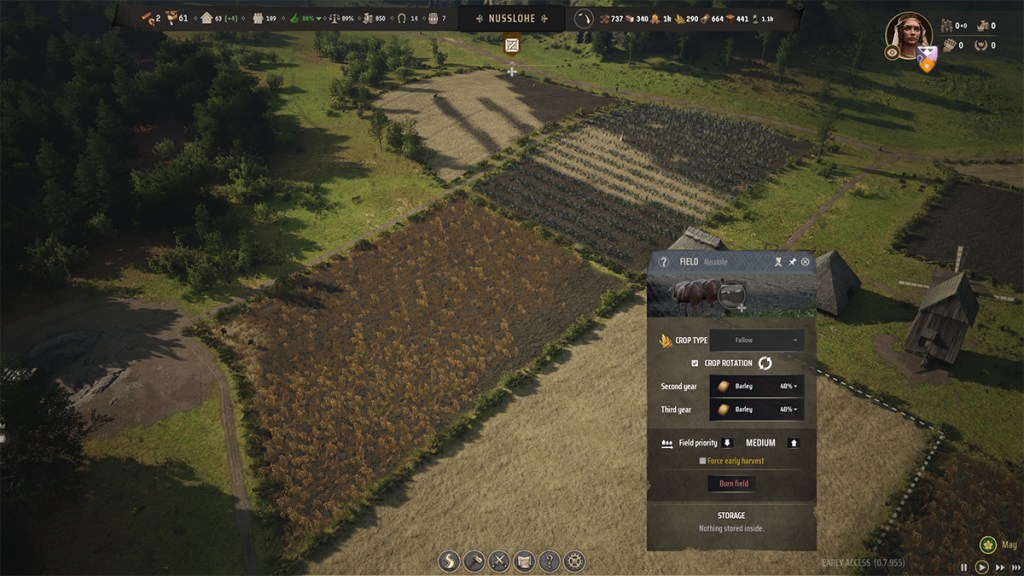
Players can enable crop rotation for each field, allowing them to schedule its growing cycle over a three-year period. A recommended strategy involves letting a field lie fallow for at least one of these years. A fallow field is left unplanted, allowing the soil to naturally regenerate its fertility, ensuring sustained yields in subsequent growing seasons. Alternatively, a fallow field can be temporarily converted into pasture, allowing livestock (such as sheep) to graze and, in real-world historical context, deposit manure that would further enrich the soil. While the direct mechanics of manure-based fertilization for crop fields might not be explicitly detailed in Manor Lords, the principle of resting the land remains vital.
Fields in Manor Lords are measured in morgen, an ancient Germanic unit of land measurement, historically representing the amount of land a single individual could plow in a morning. A single family assigned to a Farmhouse can realistically manage approximately 2/3 of a morgen per year. When establishing an initial farm, the game often provides a tooltip advising fields to be roughly 1 morgen in size. A single 1-morgen plot of wheat, when optimally managed, can produce enough grain to sustain a small town.
However, due to the aforementioned diminishing land fertility, relying on just one field is unsustainable. A practical and highly recommended strategy is to establish at least three fields for each primary crop: two actively growing crops in rotation and one lying fallow or being used for pasture. This ensures a continuous harvest while preserving soil health, preventing a catastrophic drop in food production. For instance, in a three-field system for wheat, year one might see Field A planted, Field B fallow, Field C planted. Year two, Field A fallow, Field B planted, Field C fallow. Year three, Field A planted, Field B fallow, Field C planted. This systematic approach is crucial for long-term agricultural viability.
Essential Agricultural Infrastructure
Effective farming extends beyond just planting; it requires a network of supporting structures to process, store, and distribute goods:
- Farmhouse: The central hub for all agricultural activities. Families assigned here will manage fields, plant, harvest, and transport raw crops. Upgrading it can increase efficiency and worker capacity.
- Windmill: Converts raw wheat (Emmer) and rye into flour. Its proximity to fields and the communal oven or bakery can significantly impact logistical efficiency.
- Communal Oven/Bakery: Transforms flour into bread, the primary food source. Upgrading from a Communal Oven to a Bakery allows for higher production rates and potentially more efficient use of labor.
- Malt House: Processes barley into malt, a crucial ingredient for ale production.
- Brewery: Utilizes malt to brew ale, which is vital for villager happiness and potential trade.
- Granary: Essential for storing raw food resources like grain, berries, and meat. Proper storage prevents spoilage and ensures supplies are available year-round.
- Storehouse: Used for storing processed goods and non-food items, including linen, which is produced from flax.
- Trading Post: While not directly an agricultural building, it is crucial for selling surplus farm products (grain, bread, ale, linen) to generate regional wealth or importing necessary goods that cannot be produced locally.
The strategic placement of these buildings is key to optimizing workflow. Locating processing buildings like Windmills and Bakeries close to farmhouses and residential areas minimizes travel time for workers, increasing overall productivity.
Strategic Investments: Development Points for Agricultural Efficiency
As a settlement grows and Burgage Plots are upgraded, players earn Development Points. These points can be invested into four distinct skill trees, one of which is dedicated to enhancing agricultural capabilities. Strategic allocation of these points can dramatically improve farming efficiency and output.
Key agricultural development options include:
- Heavy Plow: Allows farmers to utilize oxen to plow fields, significantly speeding up the planting process, especially for larger fields. This is a critical early investment for expanding agricultural capacity.
- Fertilization: Enhances soil fertility regeneration, making fallow periods more effective and potentially reducing the frequency of fallow years needed or increasing yields.
- Field Management: Improves the efficiency of farm workers, leading to faster planting and harvesting times.
- Rye Cultivation: Unlocks or enhances the ability to grow Rye, a more resilient grain that can thrive in less fertile conditions, offering strategic diversification for food production.
- Advanced Husbandry/Animal Husbandry (if applicable): While primarily focused on livestock, some aspects might indirectly benefit farming through increased efficiency of draft animals or the production of manure for fields (though direct manure application is not a primary game mechanic for field fertility currently).
Careful consideration of the settlement’s needs and the local terrain should guide the allocation of Development Points. Investing early in Heavy Plow, for instance, can significantly accelerate agricultural expansion, providing a stable food supply necessary for subsequent population growth and economic development.
The Broader Impact: Agriculture as the Engine of Expansion
Mastering farming in Manor Lords extends far beyond merely feeding villagers; it is the fundamental engine driving all aspects of settlement growth and regional influence.
- Population Growth: A consistent and abundant food supply is a prerequisite for attracting new families and upgrading Burgage Plots. Without enough food, a settlement stagnates, unable to expand or progress to higher tiers.
- Economic Stability and Trade: Surplus agricultural products—bread, ale, linen—become valuable commodities for trade. Exporting these goods through the Trading Post generates regional wealth, which can then be used to import essential resources (like iron or tools) or fund military endeavors. A diversified agricultural economy reduces reliance on a single resource, making the settlement more resilient to market fluctuations.
- Military Sustenance: Sustaining a retinue and raising militia for defense or conquest requires consistent food provisions. A robust agricultural base ensures that military units can be maintained without crippling the civilian population.
- Resource Management and Logistics: Efficient farming necessitates thoughtful management of resources beyond just crops. It involves the production of tools for farmers, the provision of oxen for plowing, and the construction of adequate storage facilities to prevent spoilage.
- Environmental Impact and Sustainability: The game’s emphasis on crop rotation and fertility management subtly educates players on the historical challenges of agricultural sustainability, forcing them to think long-term about land use.
In essence, a thriving agricultural sector frees up labor for other vital industries—timber, mining, crafting, and defense—allowing for specialization and a more complex economy. The initial modest farmlands, once established, become the bedrock upon which mighty manors and bustling towns are built.
Historically, medieval European societies were overwhelmingly agrarian, with the vast majority of the population engaged in farming. Manor Lords reflects this reality, making agricultural management an intricate and deeply rewarding aspect of the gameplay experience. While historical illustrations often depict sprawling farmlands stretching to the horizon, a necessity for feeding vast populations in reality, Manor Lords allows for a more compact yet highly efficient approach. With a solid understanding of fertility, crop rotation, and infrastructural needs, players can cultivate enough resources to sustain their populace and drive expansion without necessarily blanketing the entire map with fields. The decision to expand farmlands beyond immediate necessity thus transforms from a haphazard mistake into an aesthetic choice, allowing players to craft the pastoral landscape of their medieval dreams with strategic intent. Mastery of the fields is, ultimately, mastery of the manor.